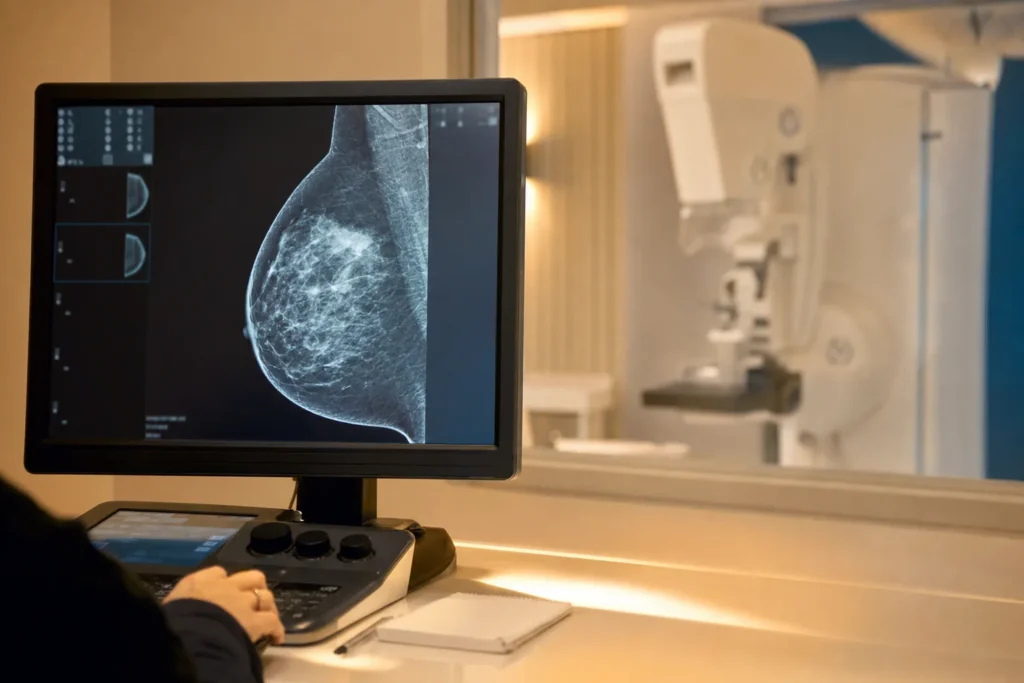
DCIS (ductal carcinoma in situ)
Being told you have DCIS can feel frightening, especially when the word "carcinoma" is involved. The reassuring reality is that DCIS is the earliest and most treatable form of breast cancer, and almost everyone who has it does very well. This guide explains, in plain language, what DCIS is, how doctors find and treat it, and what questions to ask, so you can make calm, informed decisions with your medical team.
What DCIS is
DCIS stands for ductal carcinoma in situ. To understand the name, it helps to break it into pieces. The breast contains tiny tubes called ducts that carry milk. Carcinoma means a cancer that begins in the cells lining these tubes. In situ is Latin for "in its original place" — meaning the abnormal cells are still sitting inside the duct where they started, and have not broken through the wall of the duct into the surrounding breast tissue.
This last point is the most important thing to understand. Because the cells in DCIS have not spread beyond the duct, DCIS cannot travel to the lymph nodes or to other parts of the body. For this reason doctors call it non-invasive or pre-invasive breast cancer, and it is also known as stage 0 breast cancer. Some doctors describe it as the very earliest step on the path to breast cancer, caught before it has had a chance to become invasive.
DCIS is common. According to the American Cancer Society and Cleveland Clinic, it makes up roughly one in five to one in four of all new breast cancer diagnoses. It is found mostly in women, and is very rare in men. The outlook is excellent: the major cancer organisations agree that nearly everyone with DCIS can be cured with treatment.
Why treat something that has not spread? Because DCIS can sometimes, over time, develop into invasive cancer that could spread. At present there is no fully reliable way to predict which cases of DCIS would have gone on to become invasive and which would have stayed harmless. Treatment aims to remove the abnormal cells and lower the chance of invasive cancer developing later.
Types and grades of DCIS
DCIS is not all the same. Rather than "types" in the way other cancers have subtypes, DCIS is mainly described by its grade — how abnormal the cells look under the microscope and how quickly they appear to be growing. The grade helps your team estimate how DCIS is likely to behave and how to treat it.
- Low grade (grade 1): the cells look fairly similar to normal breast cells and tend to grow slowly. They are the least likely to become invasive.
- Intermediate grade (grade 2): the cells fall somewhere in between, growing faster than normal cells and looking somewhat abnormal.
- High grade (grade 3): the cells look clearly different from normal cells and grow more quickly. High-grade DCIS is more likely to come back after treatment or to be linked with invasive cancer, so it is usually treated more actively.
Pathologists (doctors who examine tissue) may also note the pattern of the cells and whether there is an area of dead cells in the centre, called comedo necrosis, which is more often seen with high-grade DCIS.
Another important piece of information is whether the DCIS is hormone-receptor positive. Some breast cells have receptors that respond to the hormones oestrogen or progesterone. If the DCIS cells carry these receptors, certain hormone-blocking tablets may help reduce the risk of cancer returning. Your pathology report will usually state your grade and hormone-receptor status, and these guide the conversation about treatment.
Causes and risk factors
DCIS begins when cells lining a milk duct develop changes (mutations) in their genetic material and start to grow in an uncontrolled way, while still staying inside the duct. As Mayo Clinic and Cleveland Clinic explain, the exact reason these changes happen in any one person is usually not known. Having DCIS is not anyone's fault, and in most cases there is no single identifiable cause.
Doctors do recognise some factors that raise the chance of developing DCIS or breast cancer in general. Having one or more of these does not mean you will get DCIS, and many people with DCIS have none of them:
- Getting older
- A personal history of breast cancer or certain non-cancerous breast conditions
- A family history of breast cancer
- Inherited gene changes, such as BRCA1 or BRCA2
- Dense breast tissue, which can also make changes harder to see on a mammogram
- Starting periods early (before about age 12) or starting menopause later
- Having a first pregnancy after about age 30, or not having children
- Past radiation treatment to the chest area
- Some hormone use after menopause
Lifestyle factors that are linked to breast cancer risk generally — such as being overweight after menopause, regular alcohol use and physical inactivity — are worth discussing with your doctor, though they cannot be used to predict any individual case.
Signs, symptoms, and when to see a doctor
One of the most striking things about DCIS is that it usually causes no symptoms at all. Most cases are found on a routine breast screening mammogram before anything can be felt or noticed. This is why screening matters so much for picking it up.
When DCIS does cause something noticeable, the possible signs include:
- A lump in the breast
- Discharge from the nipple, which may be clear or blood-stained
- A scaly, itchy or red patch of skin on or around the nipple
These symptoms are far more often caused by harmless, non-cancerous conditions than by DCIS. But because they can occasionally point to something that needs attention, it is sensible to have any of the following checked by a doctor without delay:
- A new lump or thickening in the breast or armpit
- Any change in the size or shape of a breast
- Nipple discharge, especially if it is bloody or comes from one breast only
- A nipple that turns inward, or skin changes such as dimpling, redness or a rash
Seeing a doctor about a symptom is not the same as having cancer. Most people who get checked are reassured. Prompt assessment simply means that, if something does need treatment, it can be dealt with early.
Screening and early detection
DCIS is one of the clearest examples of why breast screening is valuable. Because it so rarely produces symptoms, the great majority of cases are discovered on a screening mammogram — a low-dose X-ray of the breast. DCIS often shows up as tiny flecks of calcium, called microcalcifications, which appear as small white specks on the image. Cleveland Clinic notes that mammography detects the large majority of DCIS cases.
National screening programmes invite women in particular age ranges for regular mammograms; in the UK, for example, DCIS is frequently picked up through the NHS Breast Screening Programme. Cancer Research UK reports that around 7,300 women are diagnosed with DCIS each year in the UK, the majority through screening. If you are unsure whether you are due for screening, your doctor or local screening service can advise based on your age, history and the guidelines where you live.
There is no separate, standalone "DCIS test" beyond the breast imaging and tissue tests used for breast cancer in general. For people at higher risk — for example, those with a strong family history or a known BRCA gene change — doctors may recommend starting screening earlier, screening more often, or adding breast MRI. This is an individual decision to make with a specialist.
How DCIS is diagnosed
When a mammogram shows an area of concern, or when a symptom needs investigating, the next steps usually follow a clear sequence designed to get a precise answer.
- Further imaging: additional mammogram views, an ultrasound scan, and sometimes a breast MRI give a clearer picture of the area and its size.
- Biopsy: the only way to confirm DCIS is to take a small sample of the suspicious tissue and examine it under a microscope. This is usually done with a core needle biopsy, where a hollow needle removes a thin sample, often guided by mammogram or ultrasound. It is a minor procedure done with local anaesthetic.
- Pathology report: a pathologist examines the sample and reports whether DCIS is present, its grade, and whether the cells are hormone-receptor positive. This report shapes the treatment plan.
DCIS is, by definition, stage 0. In the TNM system that doctors use, it is written as Tis N0 M0 — meaning a tumour that is still "in situ", with no spread to lymph nodes (N0) and no spread to distant organs (M0). Because DCIS has not invaded beyond the duct, extensive staging scans of the rest of the body are generally not needed, which is one of the reasons the work-up is relatively quick. In some situations — for instance, with large or high-grade areas, or when a mastectomy is planned — your surgeon may check the nearby lymph nodes with a sentinel lymph node biopsy, in case a small area of invasive cancer is found alongside the DCIS.
Treatment options
Treatment for DCIS is planned by a multidisciplinary team — typically a breast surgeon, a cancer doctor (oncologist), a radiologist, a pathologist and specialist nurses — who review your case together and recommend options. The aim is to remove the DCIS and reduce the chance of it returning or developing into invasive cancer. The right plan depends on the size, grade and location of the DCIS, your hormone-receptor status, and your own preferences.
Surgery is the main treatment, and there are two broad choices:
- Breast-conserving surgery (lumpectomy or wide local excision): the surgeon removes the DCIS together with a rim of normal tissue around it, keeping the rest of the breast. Pathologists check the edges (called margins) to confirm that no DCIS reaches the cut edge; if it does, a further operation may be advised.
- Mastectomy: removal of the whole breast. This may be recommended when the DCIS is large, affects more than one area, or when breast-conserving surgery is not suitable. Many people who have a mastectomy can choose breast reconstruction.
Radiation therapy (radiotherapy) uses targeted X-ray beams and is often given after breast-conserving surgery to lower the risk of DCIS coming back in the same breast. It is not usually needed after a mastectomy.
Hormone therapy may be offered if the DCIS is hormone-receptor positive. Tablets such as tamoxifen or an aromatase inhibitor, usually taken for about five years, can lower the chance of a new or returning breast cancer. Your team will explain the possible benefits and side effects so you can decide together.
Because DCIS itself does not spread, chemotherapy is not part of standard DCIS treatment. Supportive care — including emotional support, counselling and help with decision-making — is an important part of looking after the whole person, not just the condition.
Outlook: what to expect
The outlook for DCIS is among the most reassuring in all of cancer care. The major authorities — including the American Cancer Society, Mayo Clinic and Cleveland Clinic — agree that nearly everyone with DCIS can be cured with appropriate treatment, and that DCIS is very rarely life-threatening.
It is worth being clear about what "coming back" means with DCIS. After treatment, a small number of people may develop a recurrence in the same breast, which could be DCIS again or, less often, an invasive cancer. The chance of this depends on factors such as the grade, the size, whether clear margins were achieved, and whether radiation or hormone therapy were used. Cancer Research UK notes that after a mastectomy DCIS almost never returns, and that after breast-conserving surgery the chance of return is higher but still depends on these individual factors. Adding radiation and, where appropriate, hormone therapy further lowers that risk.
Any survival or recurrence figures you read are population-level averages, drawn from large groups of people studied in the past. They describe trends across many patients and are not a prediction for any one person. Your own outlook depends on the specific features of your DCIS and your treatment, which is why a conversation with your own specialist is the best source of personalised information.
Living with DCIS and follow-up
Most people return to normal daily life after DCIS treatment. The emotional side, however, is real: it is common to feel anxious, low or simply tired after a cancer diagnosis, even one with such a good outlook. Talking to your breast care nurse, your doctor, a counsellor or a support group can help, and there is no need to manage these feelings alone.
Follow-up is an important part of care. Cleveland Clinic describes a typical pattern of physical examinations every six to twelve months for the first few years, then yearly, along with a mammogram once a year. The purpose of follow-up is to keep an eye on both breasts and to catch any new change early, when it is easiest to treat.
If you are taking hormone therapy, take it as prescribed and tell your team about any side effects — many can be managed or eased. Practical steps that support general breast health and wellbeing include staying physically active, keeping to a healthy weight, limiting alcohol, and attending all your appointments. Knowing what is normal for your own breasts, and reporting any new lump, skin change or nipple change promptly, gives you a sense of control and helps your team support you.
Planning treatment abroad: what affects cost and how to prepare your records
Some people choose to arrange DCIS care abroad, for reasons such as shorter waiting times, access to a particular specialist team, or coordinated care in one place. If you are considering treatment in another country, it helps to understand what shapes the overall cost and how to prepare so that planning is smooth and accurate.
Several factors influence the cost of DCIS treatment, which is why no honest figure can be given without reviewing your specific situation:
- The type of surgery (breast-conserving surgery versus mastectomy, with or without reconstruction)
- Whether radiation therapy is needed, and how many sessions
- Whether hormone therapy is recommended and for how long
- The imaging and laboratory tests required for accurate diagnosis and planning
- Length of hospital stay and any aftercare
- Accommodation, travel, translation and coordination services during your visit
To get a realistic, personalised estimate, it helps to gather your medical records in advance. Useful items include your mammogram, ultrasound and any MRI images (ideally on disc or in digital form), your biopsy and pathology reports including grade and hormone-receptor status, a summary letter from your current doctor, and a list of any medicines and allergies. With these in hand, an international team can review your case and provide a tailored plan. We are glad to help you organise these documents and arrange a free, no-obligation consultation so you can receive an estimate based on your own needs rather than a generic price.
Why Turkiye, and how to choose a good centre
Turkiye (Turkey) has become a well-known destination for breast cancer care, including DCIS, with many private hospitals offering modern imaging, surgery, radiation and reconstruction, often with shorter waiting times and coordinated international patient services. As with anywhere, the quality of individual centres varies, so it is worth knowing what to look for rather than relying on rankings or marketing claims.
When choosing a centre for DCIS care, consider verifying the following:
- Accreditation: look for internationally recognised quality accreditation such as JCI (Joint Commission International), which sets standards for safety and quality of care.
- A genuine multidisciplinary team: the best practice for breast cancer is a tumour board where surgeons, oncologists, radiologists, pathologists and nurses jointly review each case. Ask whether your case will be discussed by such a team.
- Specialist experience: ask about the breast surgery and breast oncology experience of the team who would treat you, and whether they follow recognised international guidelines (for example, those of ESMO or NCCN).
- Clear communication: confirm that you will receive your pathology results, treatment plan and costs in writing and in a language you understand, with interpreter support if needed.
- Continuity of care: ask how follow-up will be arranged once you return home, and how your records will be shared with your local doctor.
Taking the time to verify these points helps you feel confident that you are receiving careful, guideline-based care. A reputable concierge service can help you compare accredited centres and arrange a second opinion before you commit to anything.
Self-care, clinical trials and second opinions
Because DCIS is so treatable, there is real room to make decisions calmly and on your own terms. Two things are especially worth knowing.
First, active monitoring is an area of active research for certain low-risk cases. The recent COMET clinical trial, published in JAMA in 2024, studied women with low-grade (grade 1 or 2), hormone-receptor-positive DCIS and compared close monitoring against standard surgery-based treatment. Over two years, the rate of finding invasive cancer in the same breast was similar in both groups (4.2% with active monitoring versus 5.9% with standard care), and quality of life was comparable. This does not mean monitoring is right for everyone — it applies only to carefully selected low-risk DCIS, and longer follow-up is ongoing — but it shows that, for some people, there may be more than one reasonable option. It is a good topic to raise with your specialist.
Second, asking for a second opinion is completely normal and often encouraged. Reviewing your pathology and imaging with another qualified specialist can confirm the diagnosis and grade, and make sure the proposed plan fits your situation. Good doctors welcome this.
For self-care, the general measures that support breast health are sensible: keep physically active, maintain a healthy weight, limit alcohol, do not smoke, attend your screening and follow-up appointments, and report any new breast changes promptly. None of these is a guarantee, but together they support your overall wellbeing and your ongoing care.
Frequently asked questions
Is DCIS really cancer, or is it pre-cancer?
Can DCIS spread to other parts of my body?
Will I definitely need surgery?
Do I need chemotherapy for DCIS?
What does the grade of my DCIS mean?
What is hormone-receptor positive DCIS?
Can DCIS come back after treatment?
How is DCIS usually found if it has no symptoms?
What follow-up will I need after treatment?
Should I get a second opinion before treatment?
What information do I need to prepare if I am considering treatment abroad?
This article is for general information only and is not medical advice. Always consult a qualified doctor about your individual case.
Considering this procedure?
Send us your photos and questions. A BergemHealth coordinator and a department-head specialist will review your case and reply with honest, personalised guidance — no obligation.
Free consultation