Chronic sinusitis & nasal polyps
Chronic sinusitis means the lining of your sinuses stays inflamed and blocked for three months or longer, often leaving you congested, tired, and unable to smell properly. Sometimes soft growths called nasal polyps form alongside it. The good news is that this is a well-understood, treatable condition, and most people improve a great deal with the right combination of medicines and, when needed, a straightforward operation. This guide explains, in everyday language, what is happening, why it happens, how doctors diagnose it, and what your treatment choices are, so you can have a calm, informed conversation with a specialist.
What chronic sinusitis and nasal polyps are
Your sinuses are a set of hollow, air-filled spaces in the bones around your nose, cheeks, eyes, and forehead. They are lined with a thin layer of tissue that makes mucus and gently sweeps it out through small drainage openings into the nose. When that lining becomes inflamed (swollen and irritated), the openings narrow, mucus builds up, and you feel blocked and uncomfortable. Doctors call this sinusitis, or more precisely rhinosinusitis, because the nose lining is involved too.
Sinusitis becomes chronic when the swelling and symptoms last for 12 weeks (about three months) or longer, according to the Cleveland Clinic, NHS, and the American Academy of Otolaryngology. By contrast, acute sinusitis lasts under four weeks and usually follows a cold. Importantly, chronic sinusitis is mostly a problem of ongoing inflammation rather than an active infection, as the ENT specialty body explains it: the nose and sinuses behave as if they are overreacting to something, and stay swollen.
Nasal polyps are soft, painless, teardrop-shaped growths that can develop on the inflamed lining of the nose and sinuses. The Cleveland Clinic and NHS describe them as benign (not cancer). They are essentially swollen, fluid-filled folds of the lining. Small polyps may cause no trouble; larger ones can block the nose and sinuses, making congestion and loss of smell worse. Not everyone with chronic sinusitis has polyps, and not everyone with polyps has severe symptoms.
Types and subtypes
Doctors group sinus problems in a few useful ways. The first is by how long they last (definitions from the Cleveland Clinic and ENT health resources):
- Acute: symptoms lasting less than 4 weeks, usually after a cold.
- Subacute: lasting 4 to 12 weeks.
- Chronic: lasting 12 weeks or more.
- Recurrent acute: four or more separate acute episodes in a year, with no symptoms in between.
Within chronic rhinosinusitis (often shortened to CRS), specialists make a key distinction based on whether polyps are present:
- CRS with nasal polyps (CRSwNP): chronic inflammation together with visible polyps.
- CRS without nasal polyps (CRSsNP): chronic inflammation but no polyps.
This matters because the two types can behave differently and respond to different treatments. Many people with polyps have what doctors call a type 2 (T2) inflammation pattern, an allergic-style immune response. Published reviews in allergy journals report that a T2 inflammatory signature is found in a large share of CRSwNP patients in Western countries, which helps explain why certain newer biologic medicines (described later) can work for them.
A small number of people have specific recognised patterns, such as aspirin-exacerbated respiratory disease (AERD), sometimes called Samter's triad, which combines nasal polyps, asthma, and reactions to aspirin and similar painkillers. Others develop allergic fungal sinusitis, where the immune system overreacts to harmless fungus in the nose. Knowing your subtype helps your team tailor treatment.
Causes and risk factors
Chronic sinusitis usually develops from a combination of things that keep the lining inflamed and stop the sinuses draining properly, rather than a single cause. According to MedlinePlus, the Cleveland Clinic, and the NHS, contributing factors include:
- Ongoing inflammation from allergies (such as hay fever) or an overactive immune response in the lining.
- Structural issues that block drainage, such as a deviated (crooked) nasal septum, the wall of cartilage and bone between the nostrils, or nasal polyps themselves.
- Problems with the tiny hairs (cilia) that normally move mucus along, so it pools instead.
- Repeated or lingering infections (viral, and sometimes bacterial or fungal) that keep irritating the lining.
Things that raise your risk include asthma, allergic rhinitis (allergy-related nasal inflammation), aspirin sensitivity, smoking or exposure to smoke and pollutants, a weakened immune system, and inherited conditions such as cystic fibrosis. For nasal polyps specifically, the Cleveland Clinic and NHS note that the exact cause is not fully understood, but they are strongly linked to asthma, aspirin sensitivity, and chronic sinus inflammation, and they are uncommon in children. None of these factors mean you did something wrong; they simply reflect how your airway lining tends to react.
Signs and symptoms, and when to see a doctor
Chronic sinusitis tends to cause milder but longer-lasting symptoms than a short sinus infection. Drawing on the NHS, Cleveland Clinic, and MedlinePlus, common symptoms include:
- Blocked or stuffy nose (nasal congestion) that makes breathing through the nose difficult.
- Thick nasal discharge, which may be clear, yellow, or green, or mucus dripping down the back of the throat (postnasal drip).
- Facial pressure, fullness, or mild pain around the nose, eyes, cheeks, or forehead.
- Reduced or lost sense of smell and taste, which is especially common when polyps are present.
- Cough, sore or irritated throat, bad breath, ear pressure, and tiredness.
It is sensible to see a doctor if nasal and sinus symptoms last more than about 10 days to a few weeks without improving, keep coming back, or significantly affect your sleep, work, or quality of life. The NHS advises seeking same-day or urgent care if you develop warning signs such as severe headache, swelling or redness around an eye, vision changes (double or reduced vision), a very high temperature, confusion, or a stiff neck. These are rare, but they can signal that infection is spreading and need prompt attention. If you are unsure, it is always reasonable to ask a healthcare professional.
Screening and early detection
There is no routine population screening test for chronic sinusitis or nasal polyps, in the way there is for some cancers. Because these are not cancers and develop gradually, the usual path to diagnosis is recognising persistent symptoms and seeing a doctor, rather than being screened while well.
The most useful thing you can do for early detection is to pay attention to symptoms that do not settle. A blocked nose, ongoing facial pressure, or a fading sense of smell that lasts for several weeks is worth getting checked, rather than assuming it is just a long cold. People who already have asthma, allergies, or aspirin sensitivity should mention any new or worsening nasal symptoms to their doctor early, since they are more prone to chronic sinusitis and polyps. Catching the inflammation sooner often means it can be controlled with simpler treatments before it becomes more entrenched.
How it is diagnosed
Diagnosis starts with a conversation about your symptoms and how long they have lasted, followed by a look inside your nose. Based on guidance from the Cleveland Clinic, MedlinePlus, and ENT specialists, the main tools are:
- Physical examination: the doctor examines your nose and face, sometimes shining a light to look for swelling and tenderness.
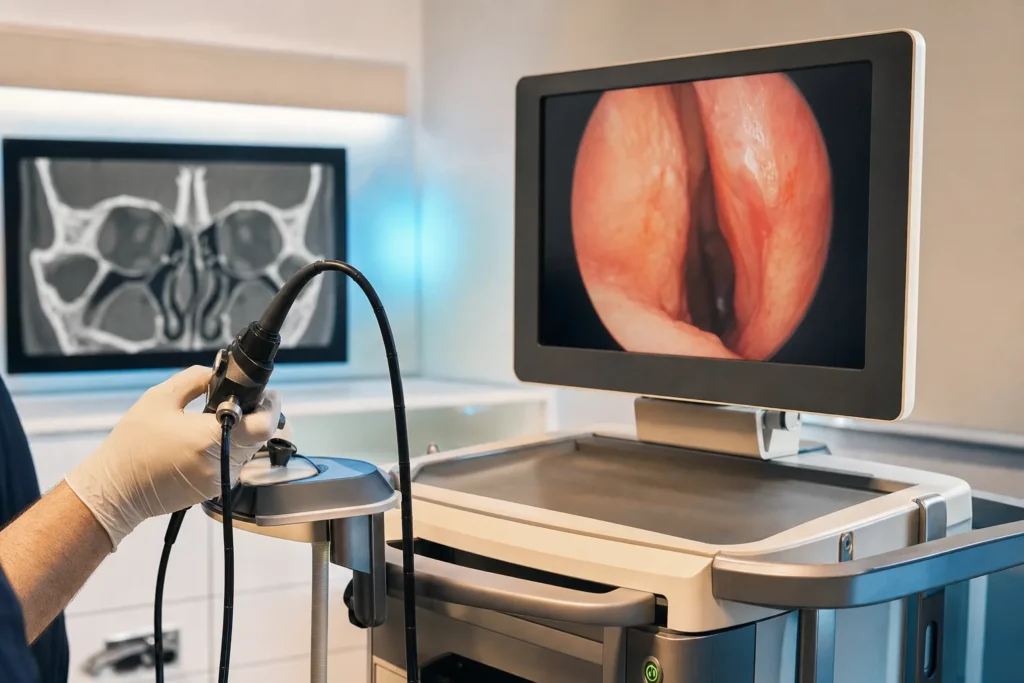
- Nasal endoscopy: a thin, flexible tube with a tiny camera and light is gently passed into the nose after a numbing spray. This lets the specialist see inflammation, pus, or polyps directly. It is usually quick and well tolerated.
- CT scan (computed tomography): a detailed X-ray-based scan that shows the sinuses, how blocked they are, and the anatomy, which is especially important if surgery is being considered.
- Allergy testing and, in selected cases, tests for immune problems or cystic fibrosis, to find treatable underlying causes.
- Nasal swabs or a small tissue sample (biopsy) in some cases, for example to identify a particular infection or to confirm the nature of a growth.
Unlike cancers, chronic sinusitis and nasal polyps are not formally "staged". Instead, specialists describe how extensive the inflammation or polyps are (for example, scoring polyps by size on endoscopy) and how much they affect your daily life, which helps guide treatment decisions.
Treatment options
Treatment aims to calm the inflammation, open up drainage, and improve symptoms and quality of life. Most people are managed by a team that may include an ear, nose and throat (ENT) surgeon (otolaryngologist), an allergy or immunology specialist, and sometimes a respiratory (lung) doctor, since sinus disease and asthma often go together. Care usually starts with the gentlest effective options and steps up only if needed.
Medical (non-surgical) treatment
- Saltwater nasal rinses (saline irrigation): rinsing the nose with salt water to clear mucus and allergens. The NHS and ENT bodies recommend this as a simple, low-risk first step.
- Steroid nasal sprays or drops: these reduce inflammation in the lining and are a mainstay of treatment; the NHS notes they may be used for several months and can also help shrink polyps.
- Short courses of oral steroids (corticosteroid tablets): sometimes used for a brief period to reduce larger polyps or marked inflammation.
- Treating underlying allergies: antihistamines or allergy management where allergy is a driver.
- Antibiotics: used only when a bacterial infection is suspected, as most sinusitis is not bacterial; they are not a standard treatment for chronic inflammation.
Biologic medicines
For some people with hard-to-control CRS with nasal polyps, newer injectable medicines called biologics can help. These are antibody-based drugs that target specific parts of the type 2 inflammation pathway. Published reviews and regulators describe several approved for CRSwNP, including dupilumab, omalizumab, and mepolizumab. They can shrink polyps and improve symptoms, and in people with aspirin-exacerbated respiratory disease may also help asthma. A specialist decides whether a biologic is appropriate.
Surgical treatment
If symptoms persist despite a good trial of medicines (often around three months), surgery may be offered. The most common operation is functional endoscopic sinus surgery (FESS), done through the nostrils with an endoscope, no external cuts. The surgeon removes polyps and inflamed tissue and widens the natural sinus openings so they can drain and so that nasal medicines reach the lining better. A balloon sinus dilation (balloon sinuplasty), in which a small balloon gently widens a sinus opening, is suitable for selected cases. If a deviated septum contributes, it may be straightened (septoplasty) at the same time.
Supportive care
Continuing nasal rinses and steroid sprays after surgery is important, because they help keep inflammation and polyps from coming back. Stopping smoking and managing allergies and asthma also support long-term results.
Outlook and what to expect
Chronic sinusitis is a long-term but very manageable condition. According to MedlinePlus, most cases improve well with appropriate treatment, and serious complications are rare. The realistic goal for most people is good, lasting symptom control, breathing more easily, sleeping better, and often regaining sense of smell, rather than a one-time permanent cure, because the underlying tendency to inflammation can persist.
It is honest to say that nasal polyps can come back after treatment or surgery. The NHS notes polyps commonly regrow over a period of years, and that continuing to use steroid nasal sprays afterwards helps slow this. Many people manage recurrence successfully with ongoing medicines, and only some need repeat procedures over time.
Complications of chronic sinusitis are uncommon. When they do occur, MedlinePlus and the Cleveland Clinic note that infection can rarely spread to nearby structures such as the eye socket or, very rarely, the area around the brain; this is why the urgent warning signs in the symptoms section matter. With modern care and follow-up, the overall outlook for living comfortably with this condition is reassuring.
Living with it and follow-up
Living well with chronic sinusitis is mostly about steady, ongoing care rather than dramatic interventions. A few habits make a real difference:
- Keep up your maintenance treatment. Using your steroid nasal spray and saline rinses regularly, even when you feel reasonably well, helps keep inflammation and polyps in check.
- Manage triggers. Controlling allergies, avoiding cigarette smoke, and treating asthma all reduce flare-ups.
- Attend follow-up appointments. Your ENT team may use repeat endoscopy to check on polyps and inflammation and adjust treatment. After surgery, follow-up visits to clean the nose and monitor healing are an important part of a good result.
- Watch for changes. Tell your doctor if your symptoms worsen, your sense of smell drops again, or you develop the urgent warning signs described earlier.
It is also worth acknowledging the everyday impact: constant congestion, poor sleep, fatigue, and losing your sense of smell can wear you down. These effects are real and recognised, and improving them is a legitimate reason to seek and continue treatment. Many people find that once their inflammation is controlled, their energy, sleep, and enjoyment of food and scents improve noticeably.
Planning treatment abroad: what affects cost and how to prepare your records
If you are considering having sinus treatment or surgery in another country, it helps to understand what shapes the overall cost so you can ask the right questions and get an accurate, personalised quote. We do not list prices here because the right plan, and therefore the cost, depends entirely on your individual situation. Factors that typically influence it include:
- What is actually needed: medical management alone, a biologic medicine, balloon dilation, or full functional endoscopic sinus surgery, sometimes combined with septoplasty.
- The complexity of your case: how extensive the polyps or inflammation are, whether previous surgery has been done, and any underlying conditions such as asthma or aspirin sensitivity.
- Diagnostic tests: nasal endoscopy, CT scanning, and allergy or immune testing.
- Type of anaesthesia and any hospital stay, which depend on the procedure.
- Follow-up care and any medicines you continue afterwards.
To prepare, gather your medical records: a summary of your symptoms and how long you have had them, a list of treatments you have already tried (sprays, tablets, antibiotics, biologics) and how well they worked, any previous operations, and copies of recent CT scans and endoscopy reports on a disc or as digital files. Bring a current medication list and details of allergies and other conditions. Having these ready lets a specialist review your case properly and give you a realistic plan. The clearest way to understand your options and costs is to request a free consultation for a personalised estimate based on your records.
Why Turkiye, and how to choose a good centre
Turkiye (Turkey) has become a well-established destination for ear, nose and throat care, with many internationally accredited hospitals and experienced ENT surgeons, which is why patients from Europe, the Gulf, and beyond travel there for sinus treatment. As with any country, quality varies between providers, so it is worth checking a few things carefully rather than relying on marketing claims.
Sensible things to verify:
- Hospital accreditation. Look for Joint Commission International (JCI) accreditation, an internationally recognised standard for patient safety and quality. Confirm the specific hospital where your surgery will take place on the official JCI directory, since accreditation applies to a particular facility, not automatically to every clinic that advertises a link to one.
- Surgeon credentials and experience. Check that your surgeon is a qualified, board-certified ENT specialist and ask roughly how many sinus procedures they perform.
- A proper assessment. A good centre will review your scans and history and recommend the least invasive option that fits your case, not push surgery you may not need.
- Clear, written information. You should receive a clear treatment plan, an itemised personalised estimate, and details of follow-up and what happens if you have problems after returning home.
- Communication and aftercare. Confirm the language of care, what is included, and how post-operative checks and any complications will be handled.
Avoid any provider that promises guaranteed results or pressures you to decide quickly. A reputable team will be happy to answer questions and give you time. As a medical-tourism concierge, our role is to help you reach accredited hospitals and qualified specialists and to organise the practical side of your visit.
Prevention and self-care
While you cannot always prevent chronic sinusitis, especially if you have asthma or allergies, several everyday measures can reduce flare-ups and support whatever treatment you are on. These are drawn from NHS and Cleveland Clinic guidance:
- Rinse your nose with salt water regularly to clear mucus and irritants.
- Avoid cigarette smoke and known irritants or pollutants, which inflame the lining. If you smoke, quitting is one of the most helpful steps you can take.
- Manage allergies by reducing exposure to your triggers and using treatments your doctor recommends.
- Treat colds early and gently with rest, fluids, and simple measures, and try not to let infections linger untreated.
- Keep up prescribed maintenance treatment, such as steroid nasal sprays, especially if you are prone to polyps.
If your symptoms are persistent or affecting your daily life, do not just put up with them. Getting a proper assessment from a qualified ENT specialist, and a second opinion if you are unsure about a recommended treatment or surgery, is always reasonable. Good information and the right specialist support put you in control of a condition that is, for most people, very manageable.
Frequently asked questions
What is the difference between a sinus infection and chronic sinusitis?
Are nasal polyps dangerous or are they cancer?
Will chronic sinusitis or nasal polyps go away on their own?
Do I need antibiotics for chronic sinusitis?
When should I worry and seek urgent care?
What does functional endoscopic sinus surgery (FESS) involve?
Will my sense of smell come back?
Can nasal polyps come back after surgery?
What are biologic medicines and who are they for?
Why do people consider having sinus treatment in Turkiye?
How do I get a cost estimate for treatment abroad?
Is chronic sinusitis linked to asthma and allergies?
This article is for general information only and is not medical advice. Always consult a qualified doctor about your individual case.
Considering this procedure?
Send us your photos and questions. A BergemHealth coordinator and a department-head specialist will review your case and reply with honest, personalised guidance — no obligation.
Free consultation