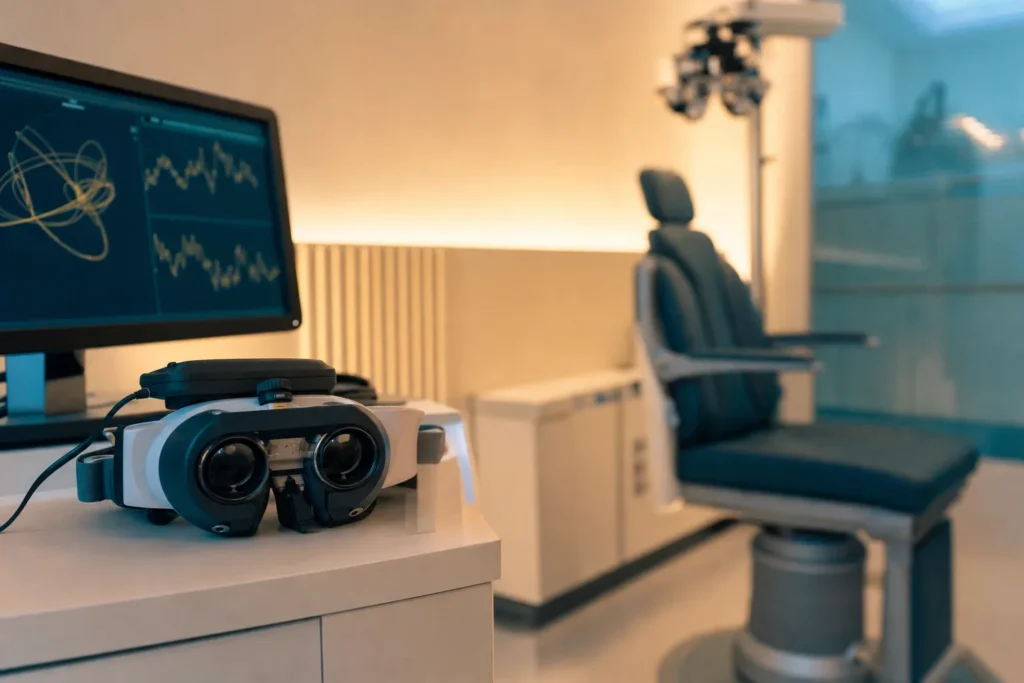
Vertigo (BPPV & Meniere's)
Vertigo is the unsettling feeling that you or the room is spinning, even when you are perfectly still. It is a symptom rather than a disease in itself, and most causes are found in the balance organ of the inner ear. This guide explains the two conditions people ask about most, benign paroxysmal positional vertigo (BPPV) and Meniere's disease, in plain language, and walks you through how vertigo is diagnosed and treated, what to expect, and how to prepare if you are considering care in Turkiye.
What vertigo is
Vertigo is a specific kind of dizziness: the sensation that you, or everything around you, is spinning, tilting or moving when nothing actually is. It is strong enough to throw off your balance. The NHS describes it as the feeling that "you or everything around you is spinning," and notes that an episode can last anywhere from a few seconds to, in severe cases, many days or longer.
It helps to know that vertigo is a symptom, not a diagnosis. It is your brain's response to mixed-up signals about where your body is in space. Your sense of balance relies on three systems working together: your inner ears (which sense head movement and gravity), your eyes (which tell you where you are), and sensors in your muscles and joints. When the inner ear sends faulty signals, your brain receives conflicting information, and the result can feel like spinning, swaying or being pulled to one side.
Vertigo is different from lightheadedness (feeling faint, as if you might pass out) and from general unsteadiness. The spinning quality is the clue that points toward the inner ear or the balance nerve. Most causes of vertigo are not dangerous and many improve on their own or respond well to simple treatment, which is reassuring to keep in mind.
Types and subtypes
Vertigo is usually grouped by where the problem starts. Most cases are peripheral, meaning they come from the inner ear or the balance nerve. A smaller number are central, meaning they involve the brain or its connections. The common peripheral causes include:
- Benign paroxysmal positional vertigo (BPPV) — the single most common cause. "Benign" means not dangerous, "paroxysmal" means it comes in sudden short bursts, and "positional" means it is triggered by changes in head position. Episodes typically last under a minute.
- Meniere's disease — a longer-lasting inner ear disorder that combines vertigo attacks with hearing changes, ringing in the ear and a feeling of fullness.
- Vestibular neuritis — inflammation of the balance nerve, usually after a viral infection, causing sudden severe vertigo that lasts days.
- Labyrinthitis — similar to vestibular neuritis but the inflammation also affects hearing, so vertigo comes with some hearing loss or ringing.
- Vestibular migraine — a migraine-related cause that produces vertigo lasting minutes to hours, sometimes with little or no headache. Vestibular sources describe it as the most common neurological cause of vertigo in adults.
BPPV itself has subtypes depending on which of the inner ear's looped semicircular canals is affected; the posterior canal is involved most often. Meniere's disease is described in stages, with attacks tending to be frequent and dramatic early on, while balance problems and hearing changes become more steady over years.
Causes and risk factors
The cause depends on which condition is behind the vertigo.
BPPV. Inside the inner ear are tiny calcium carbonate crystals (called otoconia or "ear rocks") that normally sit in a sensing chamber and help you feel gravity. In BPPV, some of these crystals come loose and drift into one of the fluid-filled semicircular canals. When you move your head, the crystals shift the fluid and send a false signal of spinning. Cleveland Clinic notes BPPV is most common in people over 50 and can follow a head injury, an inner ear infection, or simply age-related changes; often no specific cause is found.
Meniere's disease. This is linked to a build-up of fluid called endolymph in the inner ear, a state known as endolymphatic hydrops. According to the NIDCD, the exact reason the fluid builds up is not known, but proposed contributors include problems with fluid drainage, viral infections, allergies, autoimmune reactions and genetic factors. Reported risk factors include being aged roughly 40 to 60, a family history, and certain autoimmune conditions.
Other causes. Vestibular neuritis and labyrinthitis usually follow a viral illness such as a cold or flu. Vestibular migraine tends to occur in people who already have a history of migraine. Some medicines can also cause dizziness as a side effect.
Signs and symptoms, and when to see a doctor
The pattern of symptoms is often the biggest clue to the cause.
BPPV brings short, intense spinning that is set off by a change in head position, such as rolling over in bed, lying down, looking up or bending forward. The spinning usually lasts only 10 to 20 seconds and rarely more than a minute, although a wave of nausea may linger for a while afterward. Between movements, people often feel fine.
Meniere's disease classically causes a cluster of four symptoms in one ear: episodes of vertigo lasting from about 20 minutes up to several hours; fluctuating hearing loss; tinnitus (ringing or whooshing); and a feeling of pressure or fullness in the ear. Attacks can come and go unpredictably, and a small number of people experience sudden falls without warning, sometimes called "drop attacks."
See a GP or doctor if vertigo keeps coming back, lasts a long time, or interferes with daily life, so the cause can be identified. The NHS advises seeking urgent care if vertigo comes with a severe headache, repeated vomiting or a high temperature. Call emergency services if dizziness occurs with any of the following warning signs of a possible stroke or other serious problem: sudden weakness or numbness in the face, arm or leg; slurred speech or trouble speaking; sudden vision loss or double vision; a sudden severe headache unlike any before; or new hearing loss with confusion. These features point away from a simple inner ear cause and need immediate assessment.
Screening and early detection
There is no routine population screening for vertigo, BPPV or Meniere's disease. These conditions are not detected through a standard health check the way blood pressure or some cancers are. They are identified when symptoms appear and you describe them to a clinician, who then performs targeted examinations.
What you can do early is pay attention to the pattern of your symptoms and note it down before your appointment. Helpful details include how long each spinning episode lasts, what seems to trigger it, whether your hearing changes or your ears ring, and whether anything else happens at the same time, such as headache or visual changes. This information is genuinely valuable, because for several of these conditions the diagnosis rests heavily on an accurate history rather than on a single definitive scan.
For Meniere's disease in particular, the NIDCD explains there is no one test that confirms it; the diagnosis is based on the typical pattern of two or more spontaneous vertigo episodes together with documented hearing loss and related ear symptoms. Recognising and reporting that pattern early is the closest thing to early detection.
How it is diagnosed
Diagnosis starts with a careful conversation about your symptoms and a physical and neurological examination. From there, specific tests help pinpoint the cause.
For BPPV, the key test is the Dix-Hallpike manoeuvre. You sit on the examination couch, the clinician turns your head about 45 degrees to one side, then gently and quickly lays you back so your head tips slightly over the edge. In someone with BPPV this briefly reproduces the vertigo and causes a characteristic flicker of the eyes called nystagmus, which the clinician watches for. It is uncomfortable for a few seconds but it is a normal, expected part of confirming the diagnosis.
For Meniere's disease, there is no single confirming test, so doctors combine the history with investigations. These commonly include a hearing test (audiometry) to document the pattern and degree of hearing loss, balance (vestibular) tests, and a brain MRI scan. The MRI is mainly used to rule out other causes rather than to prove Meniere's; the diagnosis is ultimately clinical, based on the recognised combination of symptoms.
Because vertigo can occasionally come from the brain rather than the ear, the examination also looks for features that would prompt further neurological investigation. Most people, however, are found to have a peripheral inner ear cause.
Treatment options
Treatment is tailored to the cause, and a multidisciplinary team may be involved: an ear, nose and throat (ENT) specialist, an audiologist for hearing, a physiotherapist trained in balance, and sometimes a neurologist.
BPPV. The mainstay is a series of guided head and body movements called canalith repositioning, the best known being the Epley manoeuvre. These movements use gravity to roll the loose crystals out of the canal to a place where they no longer cause symptoms; each position is held for around 30 to 60 seconds. The NHS notes that some studies report the Epley manoeuvre stops symptoms in about eight in ten cases with a single treatment, and Cleveland Clinic gives a similar figure of roughly 80 to 90 percent. Your clinician may teach you home exercises, such as Brandt-Daroff exercises, and medicines are generally not the main treatment for BPPV.
Meniere's disease. Care aims to reduce how often and how severely attacks occur, since there is no cure. First steps are usually lifestyle and dietary, including a low-salt diet, and limiting caffeine and alcohol. Medicines may include diuretics (which reduce fluid) and betahistine, plus anti-nausea or anti-vertigo medicines to ease acute attacks. If attacks continue, options escalate to intratympanic injections (medicine such as a steroid, or in some cases gentamicin, placed through the eardrum), pressure-pulse devices, and, in a minority of cases, surgery such as an endolymphatic sac procedure or, rarely, procedures on the balance nerve. Hearing aids and vestibular rehabilitation support hearing and balance.
Supportive care. Vestibular rehabilitation is a specialised physiotherapy programme that retrains the brain to compensate for faulty balance signals, useful across many vertigo causes. Rest, hydration and gradually returning to activity also help recovery, especially after viral causes like labyrinthitis.
Outlook and what to expect
The outlook for vertigo is generally encouraging, though it varies by cause.
BPPV often settles on its own over weeks, and responds quickly to repositioning treatment when it does not. Cleveland Clinic notes it usually goes away but can come back after months or years; recurrence is common and simply means the treatment may need to be repeated, not that anything has gone wrong.
Meniere's disease tends to follow an unpredictable, fluctuating course. The NIDCD and Cleveland Clinic describe it as a long-term condition that may quieten for months or years and then return; there is no cure, but treatment can meaningfully reduce the impact of attacks. Over many years, some people develop a degree of permanent hearing loss or steady balance difficulty in the affected ear, which is one reason early and ongoing care matters.
It is worth saying clearly that these figures describe groups of people, not predictions for any one individual. Your own experience depends on the exact cause, how early you are treated and other personal factors, which is exactly why a proper specialist assessment is so valuable. Most people with inner ear vertigo are able to manage their symptoms well and continue with daily life.
Living with it and follow-up
Living well with vertigo is largely about reducing triggers, staying safe and keeping up with follow-up care. During an attack, the NHS suggests sitting or lying down straight away, resting in a quiet darkened room, and moving slowly and deliberately. Getting up gradually from bed, raising your head a little on extra pillows, and avoiding sudden head movements or bending right over can all help.
Safety deserves attention, because vertigo raises the risk of falls. Until your symptoms are controlled, take care on stairs, avoid climbing ladders, and do not drive or operate machinery while you are having attacks or feel impaired. Ask your clinician for specific advice about driving, as rules can depend on your diagnosis and how well it is controlled.
For Meniere's disease, day-to-day management includes sticking to a low-salt diet, moderating caffeine and alcohol, getting enough sleep and managing stress, all of which can influence attacks. Keeping a simple diary of attacks, diet and possible triggers helps you and your team adjust treatment. Follow-up typically involves repeat hearing tests over time, reviewing how well medicines or exercises are working, and stepping treatment up or down as needed. Support for the emotional side, including anxiety that vertigo can understandably cause, is a normal and worthwhile part of care.
Planning treatment abroad: what affects cost and how to prepare your records
If you are considering having vertigo investigated or treated in Turkiye, it helps to understand what shapes the overall cost so you can plan realistically. We do not list prices here because every plan is individual; instead, ask for a personalised estimate through a free consultation once your situation is understood.
The main factors that affect cost include:
- The diagnosis and what it requires. Simple BPPV often needs only a clinical assessment and an in-office repositioning manoeuvre, while Meniere's disease may involve hearing tests, balance testing, MRI and longer-term treatment.
- Which tests and treatments are needed, for example audiometry, imaging, intratympanic injections, vestibular rehabilitation sessions, or, in selected cases, a surgical procedure.
- How many specialists are involved, such as ENT, audiology and physiotherapy.
- Length of stay and follow-up, including any review appointments and whether rehabilitation continues over several sessions.
To prepare, gather your medical records before you travel: a summary from your current doctor, a description of your symptom pattern and triggers, any previous hearing tests or scans (ideally the actual images and reports, not just a summary), and a current list of your medicines and allergies. Having these ready avoids repeating tests, speeds up assessment and makes any remote consultation far more useful.
Why Turkiye, and how to choose a good centre
Turkiye has become a well-known destination for medical care, including ear, nose and throat services, drawing international patients to its larger hospitals in cities such as Istanbul, Ankara and Izmir. Many of these hospitals work routinely with international patients and offer coordinated services under one roof, which can make assessment and treatment of vertigo more convenient for someone travelling from abroad.
Rather than relying on reputation alone, it is sensible to verify a few practical things when choosing a centre:
- Accreditation. Look for recognised hospital accreditation such as Joint Commission International (JCI), an international standard for hospital quality and patient safety.
- The specialist team. Check that an ENT specialist (otolaryngologist) leads your care, with access to audiology and vestibular physiotherapy, since vertigo is best handled by a team.
- Diagnostic facilities on site, including audiometry, balance testing and MRI, so investigations can be done without scattered referrals.
- Clear communication. Confirm that interpreting and patient-coordination services are available in a language you understand, and that you will receive a written treatment plan and reports.
- Follow-up arrangements. Ask how aftercare and any questions will be handled once you return home, and how your records will be shared with your local doctor.
A trustworthy centre will be happy to answer these questions clearly and to explain the reasoning behind its recommendations.
Prevention and self-care
Not all vertigo can be prevented, but several practical steps reduce attacks and keep you safer. For BPPV, gentle care with head position, getting up slowly and avoiding sudden tipping movements can lessen episodes, and prompt repositioning treatment from a clinician usually resolves them. If your clinician teaches you home exercises, doing them as instructed can help.
For Meniere's disease, the most useful self-care measures are dietary and lifestyle: keeping salt intake low, moderating caffeine and alcohol, staying well rested, and managing stress, all of which may reduce the frequency or severity of attacks. Keeping a symptom diary helps you spot personal triggers.
Across all causes of vertigo, sensible general steps include staying hydrated, treating colds and flu with rest, reviewing any medicines that might be contributing with your doctor, and protecting your head from injury. If you smoke or have other cardiovascular risk factors, addressing them supports overall inner ear and brain health. Above all, if vertigo is recurrent, persistent or comes with any of the warning signs described earlier, see a qualified specialist; an accurate diagnosis is the foundation of effective prevention and treatment, and most people find their symptoms can be well managed.
Frequently asked questions
What is the difference between vertigo and ordinary dizziness?
How long does a vertigo attack usually last?
Is BPPV dangerous?
What is the Epley manoeuvre?
Can Meniere's disease be cured?
Will I lose my hearing with Meniere's disease?
When should vertigo be treated as an emergency?
Is there a screening test for vertigo or Meniere's disease?
What causes the crystals in BPPV to come loose?
Can vertigo come back after treatment?
How should I prepare my records before seeking treatment abroad?
This article is for general information only and is not medical advice. Always consult a qualified doctor about your individual case.
Considering this procedure?
Send us your photos and questions. A BergemHealth coordinator and a department-head specialist will review your case and reply with honest, personalised guidance — no obligation.
Free consultation