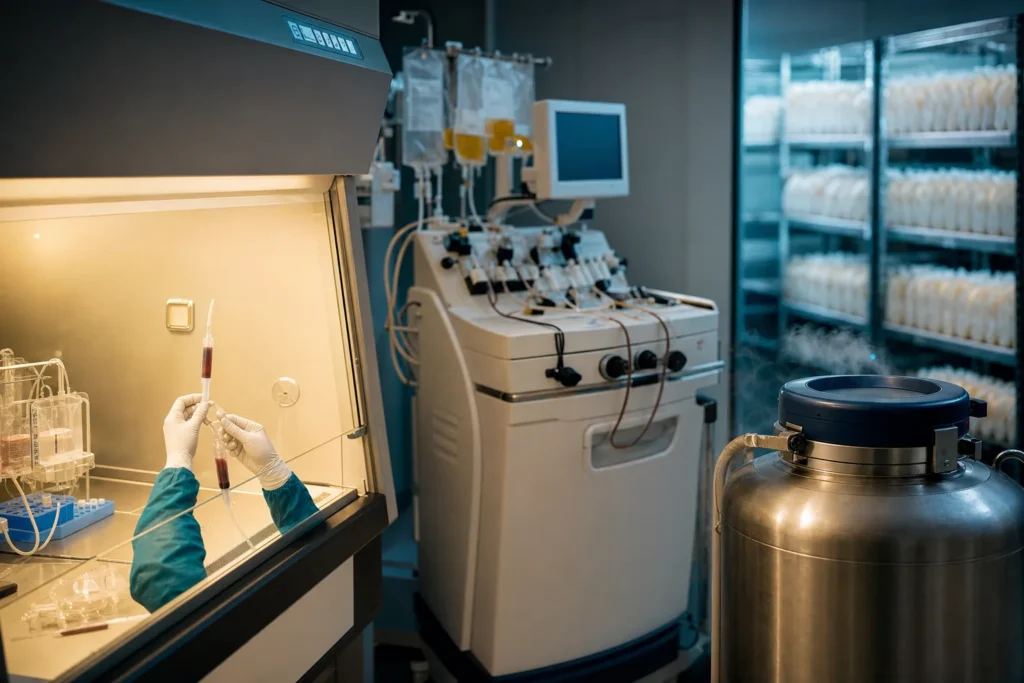
Autologous bone marrow transplant
An autologous bone marrow transplant uses your own blood-forming stem cells to rebuild your bone marrow after very high-dose chemotherapy. This guide explains, in everyday language, who it helps, exactly how it is done step by step, what recovery really feels like, the risks worth knowing, and how to choose a safe, accredited transplant centre if you are considering travelling to Turkiye.
- Anaesthesia
- Usually none for the transplant itself; stem cell collection and infusion are done while you are awake.
- Duration
- Stem cell collection takes about 3-4 hours per session; the infusion on transplant day takes a couple of hours.
- Recovery
- Blood counts recover (engraftment) in roughly 2-3 weeks; full immune recovery takes about 3-12 months.
- Hospital stay
- Often around 2-4 weeks in hospital for conditioning, transplant and early recovery (varies by centre and protocol).
What an autologous bone marrow transplant is
An autologous bone marrow transplant is a treatment that uses your own blood-forming stem cells to rebuild your bone marrow after very strong cancer treatment. The word autologous simply means "from yourself" — the cells that go back in are your own. This is different from a donor (allogeneic) transplant, where the cells come from someone else.
To understand it, it helps to know what bone marrow does. Bone marrow is the soft, spongy tissue inside your bones. It is your body's blood factory: it makes red blood cells (which carry oxygen), white blood cells (which fight infection), and platelets (which help blood clot). The young, unspecialised cells that grow into all of these are called haematopoietic stem cells — "blood-forming" stem cells.
Some cancers, especially blood cancers, respond best to chemotherapy given at very high doses. The problem is that these high doses do not only kill cancer cells; they also wipe out the healthy blood-forming cells in your marrow. As Cleveland Clinic puts it, "the same treatment that gets rid of cancerous cells also kills healthy cells." An autologous transplant solves this. Before the high-dose treatment, doctors collect and freeze a supply of your own healthy stem cells. After the chemotherapy has done its job, those cells are thawed and given back to you through a drip. They travel to your bone marrow and start making new, healthy blood again — a process called engraftment.
So the transplant itself is not really a surgery. It is more like a carefully timed rescue: the high-dose chemotherapy is the treatment, and your stored stem cells are the safety net that lets your marrow recover.
Who is a good candidate — and who should avoid it
Autologous transplants are mainly used for certain blood cancers and a few other conditions where high-dose chemotherapy offers the best chance of long control or cure. The most common reasons include:
- Multiple myeloma — a cancer of plasma cells in the bone marrow. For many people this is the standard early treatment, often used to deepen and prolong remission.
- Hodgkin lymphoma and non-Hodgkin lymphoma — cancers of the lymphatic (infection-fighting) system. An autologous transplant is often considered when the lymphoma comes back after first treatment, or does not respond fully to it, as long as it still responds to further chemotherapy. For large B-cell lymphoma that does not respond to first treatment or returns within about a year, CAR-T cell therapy is now generally preferred.
- Some germ cell tumours that have not responded to standard chemotherapy.
- Selected severe autoimmune diseases (for example, certain cases of multiple sclerosis or systemic sclerosis) in specialist settings, when standard treatments have failed.
Whether a transplant is right for you depends on much more than the diagnosis. Before going ahead, the team does a thorough assessment — heart tracing (ECG), heart scan (echocardiogram), lung function tests, kidney and liver blood tests, and imaging — to check your body can safely handle high-dose treatment.
This procedure may not be suitable if your heart, lungs, kidneys or liver are too weak to tolerate intensive chemotherapy, if you have an active, uncontrolled infection, or if your general fitness is too low. Pregnancy is a barrier because the treatment can harm a baby. Age alone is not an automatic block — fitness matters more than the number — but very frail patients may be offered gentler options instead. Your team weighs the likely benefit against these risks for your individual situation.
Types and techniques
The name "bone marrow transplant" is a little old-fashioned. Today, the blood-forming stem cells are usually collected not from the marrow itself but from the bloodstream. There are two main sources:
- Peripheral blood stem cells (PBSC). This is now the most common method. Stem cells are gently coaxed out of the marrow and into the bloodstream, then collected from a vein. Cancer Research UK notes this is preferred because "it's easier to collect stem cells from the bloodstream than the bone marrow," and blood counts tend to recover faster afterwards.
- Bone marrow harvest. Less commonly, stem cells are taken directly from the marrow (usually the back of the hip bone) using a needle, under general anaesthetic. This is used in specific situations.
Whatever the source, in an autologous transplant the cells are your own, collected in advance and frozen until needed.
The other variable is the conditioning regimen — the high-dose treatment given just before the transplant. This may be high-dose chemotherapy alone, or sometimes chemotherapy combined with radiotherapy. The exact drugs and doses are chosen to match your disease. In some myeloma cases, doctors plan a tandem transplant: two autologous transplants a few months apart to try for deeper, longer-lasting remission.
How it is done — anaesthesia, steps and timing
An autologous transplant is a planned process that unfolds over several weeks, in clear stages.
1. Mobilisation
First, your stem cells need to move from the marrow into the blood so they can be collected. You receive daily injections of a growth factor (a medicine such as G-CSF that stimulates stem cell production), sometimes after a dose of chemotherapy. Cancer Research UK describes injections "for between 5 and 10 days" during this phase.
2. Collection (apheresis)
The cells are gathered using a machine in a process called apheresis. Blood flows out of one vein (or a central line) into the machine, which separates out the stem cells and returns the rest of the blood to you. You stay awake and it is not painful. Each session takes about 3 to 4 hours, and more than one session may be needed. The collected cells are then frozen and stored.
3. Conditioning
This is the main treatment: high-dose chemotherapy (sometimes with radiotherapy) given over one to about six days, depending on the regimen (for example, a single day of high-dose melphalan in myeloma, or about six days of BEAM in lymphoma), to destroy remaining cancer cells. It also temporarily empties your marrow.
4. Transplant day
Your frozen stem cells are thawed and given back through a drip into a central line, much like a blood transfusion. No anaesthetic is needed and it usually takes a couple of hours at most. This day is sometimes called "day zero."
5. Engraftment
Over the following days, the returned cells settle in your marrow and begin making new blood cells. This recovery, called engraftment, typically takes about 2 to 3 weeks, though it can vary. Growth factor injections may be used to help speed it up.
Recovery, step by step
Recovery happens in layers, and it is helpful to know what to expect at each stage.
The first 1-3 weeks (in hospital)
This is usually the hardest stretch. While your blood counts are at their lowest, you have very little protection against infection, so you are cared for in a clean, sometimes protected environment. Common effects in this window include tiredness, nausea, mouth and throat soreness (mucositis), loss of appetite, taste changes and diarrhoea. You may need blood or platelet transfusions, and antibiotics if infection appears. You stay in hospital until your blood counts recover enough — often around 2 to 4 weeks in total.
The first 3 months (at home)
Your immune system is still weak after you go home, so most centres advise infection precautions for around three months: avoid people who are unwell, wash hands carefully, take care with food, and avoid activities like gardening or handling cat litter. Fatigue is normal and often the most stubborn symptom. Gentle activity and short walks help.
3-12 months and beyond
Energy gradually returns, and your immune system slowly rebuilds. Cleveland Clinic notes it "may be three to 12 months before your immune system fully recovers," and around four months before some people feel ready to return to work — though everyone differs. Because high-dose treatment wipes out the protection from past vaccinations (including childhood ones), you will usually need a planned course of re-vaccination, started by your team months after transplant.
Risks and possible complications
An autologous transplant is intensive treatment, and the risks are real. Knowing them helps you make an informed choice and spot problems early.
- Infection. This is the most significant early risk. While your white cell count is very low, even minor infections can become serious quickly, which is why fever after a transplant is always treated urgently.
- Low blood counts. Low red cells (anaemia), low platelets (bruising and bleeding) and low white cells are expected for a time, and transfusions are common.
- Mucositis. Painful sores in the mouth and gut lining from high-dose chemotherapy; common and uncomfortable, but temporary.
- Engraftment syndrome. As counts recover, some people develop fever, rash and fluid in the lungs. Reported rates vary widely between studies, from under 10% to more than a third of patients; it usually settles quickly with steroid treatment.
- Organ effects. The heart, lungs, liver, kidneys, bladder or brain can occasionally be affected by the high-dose drugs.
- Nausea, hair loss, fatigue — common short-term effects.
Longer-term, there can be infertility (discuss fertility preservation before treatment if relevant), early menopause, bone thinning, cataracts, and a small increased risk of a second cancer later on, including problems affecting the marrow. Compared with donor transplants, autologous transplants avoid graft-versus-host disease (where donor cells attack the body), but because your own cells are returned, there is a chance that some cancer cells are collected along with them. Your team will explain how these risks apply to you.
Results and how long they last
An autologous transplant can be very effective, but it is honest to say it is not always a permanent cure. As Cleveland Clinic explains, it "may put cancer into long-term remission" — meaning no symptoms and no signs of cancer on tests — but "this procedure may not cure cancer" in every case. Success depends heavily on the diagnosis, how advanced the disease is, and how it responds.
In multiple myeloma, transplant is used to deepen remission rather than to cure. Many people enjoy a long stretch without the disease progressing — research with modern induction and maintenance treatment describes a median progression-free period of roughly four to five years or longer after a single transplant — and a smaller group does far better. One study found about 15% of patients stay free of progression for eight years or more. Maintenance therapy (ongoing lower-dose medicine after transplant) is now commonly used to extend remission.
In lymphoma, an autologous transplant given after a relapse can offer a genuine second chance at long-term control or cure for suitable patients. Because outcomes vary so much from person to person, be cautious of any clinic that promises a specific result. A trustworthy team will talk in terms of realistic probabilities for your particular situation, not guarantees.
Costs — what shapes the price
An autologous bone marrow transplant is a major, multi-week treatment, so the price reflects far more than the transplant day itself. Rather than focusing on a single headline figure, it is more useful to understand what drives the total cost, so you can compare quotes fairly.
The main factors include:
- The conditioning regimen — which chemotherapy drugs and doses are used, and whether radiotherapy is involved.
- Length of hospital stay — longer admissions and any time in intensive care add cost.
- Stem cell collection and storage — mobilisation medicines, apheresis sessions, and freezing.
- Supportive care — transfusions, antibiotics, anti-fungal medicines, and treatment of any complications.
- Tests and follow-up — pre-transplant work-up, scans, and monitoring afterwards.
- Single vs tandem transplant — two procedures cost more than one.
When you request a quote, ask for a written, itemised estimate and confirm clearly what is included and what is not — for example, whether complications, extra hospital days, medicines, and follow-up are covered. A reputable transplant programme will be transparent about this and will not pressure you to decide quickly.
Why people travel to Turkiye — and how to choose a safe clinic
Turkiye has become a well-known destination for complex treatments, including stem cell transplantation, because it combines experienced hospitals with internationally recognised quality standards and, often, shorter waiting times. Several Turkish transplant centres hold international accreditation. The key is to verify quality yourself rather than relying on marketing.
Two accreditations are especially relevant here:
- JACIE — run by the European Society for Blood and Marrow Transplantation (EBMT) together with the cell-therapy society ISCT, this is Europe's official certification specifically for blood and marrow transplant programmes. It checks the whole pathway: clinical care, stem cell collection, and laboratory processing. A JACIE-accredited unit has been independently reviewed against transplant-specific safety standards.
- JCI (Joint Commission International) — a broader hospital-wide accreditation for general quality and patient safety.
Before committing, it is reasonable to verify:
- That the specific transplant unit (not just the hospital) holds JACIE accreditation, and that the hospital holds JCI.
- The haematologist's qualifications and board certification, and how many autologous transplants the centre performs each year.
- That you will have a clear, named medical contact and written treatment and aftercare plans.
- Whether an interpreter is available and that you receive everything in writing in a language you understand.
Be wary of clinics offering "stem cell" treatments for conditions where transplantation is not an established therapy, or that promise cures. Genuine transplant programmes are highly regulated and cautious by nature.
How to prepare and what to ask at your consultation
Good preparation makes the whole process safer and less stressful. Before treatment, your team will run a full work-up — heart, lung, kidney and liver checks, blood tests and imaging — to confirm you are fit for high-dose treatment. There are also practical steps you can take.
- Discuss fertility early. Because treatment can affect fertility, ask about sperm, egg or embryo storage before conditioning begins if this matters to you.
- Sort out your teeth. A dental check beforehand reduces the risk of mouth infections during the low-immunity period.
- Plan support. You will need a carer or companion, especially in the weeks after discharge.
- Bring your records. Gather your diagnosis details, previous treatments, scans and current medicines, ideally translated.
Helpful questions to ask include:
- Why is an autologous transplant the best option for me, compared with other treatments?
- What conditioning regimen will I have, and what are its specific risks?
- How many transplants like mine does this centre do each year, and what is your unit's accreditation?
- What is the realistic chance of remission, and how long might it last?
- How long will I be in hospital, and what does aftercare involve?
- What complications should prompt me to call you urgently?
- What is included in the price, and what happens — medically and financially — if there are complications?
Aftercare and travelling for treatment — including when it is safe to fly
Aftercare is a crucial part of a transplant, not an afterthought. In the early months you will have frequent clinic visits and blood tests so the team can watch your counts recover and catch any problems quickly. You will get clear guidance on infection precautions, food safety, looking after any central line, and the warning signs — especially fever — that mean you should seek help straight away. Re-vaccination is usually planned for several months after transplant, once your immune system has recovered enough.
If you are travelling for treatment, plan the timing of your return journey carefully. The riskiest period is the first few months, when your immune system is weak and you need to stay close to a specialist centre in case of complications. UK NHS guidance commonly advises against travelling abroad for the first three to six months after a transplant for this reason, and stresses that you should always ask your own doctors before flying. This means planning to stay in or near Turkiye well beyond the transplant itself, and arranging a clear handover to a transplant or haematology team back home so your follow-up continues seamlessly.
When you do fly, do so only with medical clearance. Long flights can carry a higher risk of blood clots, and your team may advise on precautions and confirm your blood counts are high enough to travel safely. A well-organised concierge or hospital team should help coordinate accommodation, the length of your stay, and the documentation your home doctors will need — so that the move from treatment to recovery is smooth and safe.
Frequently asked questions
Is an autologous bone marrow transplant the same as a stem cell transplant?
How is it different from a donor (allogeneic) transplant?
What conditions does it treat?
Does the transplant itself hurt?
How long will I be in hospital?
How long does recovery take?
What are the main risks?
Will it cure my cancer?
Will I be able to have children afterwards?
When is it safe to fly home after treatment?
What should I check before choosing a transplant clinic in Turkiye?
Sources
- Cleveland Clinic — What Is an Autologous Stem Cell Transplant?
- Cleveland Clinic — Stem Cell (Bone Marrow) Transplant
- Cancer Research UK — Stem cell transplants for non-Hodgkin lymphoma
- Cancer Research UK — Recovery after a stem cell transplant for myeloma
- National Cancer Institute (NCI) — Pediatric Autologous HSCT (PDQ)
- EBMT — JACIE accreditation for blood and marrow transplant programmes
- UCLH NHS — A guide to autologous stem cell transplant
- The Clatterbridge Cancer Centre NHS — Going home after your stem cell transplant
This article is for general information only and is not medical advice. Always consult a qualified doctor about your individual case.
Considering this procedure?
Send us your photos and questions. A BergemHealth coordinator and a senior specialist will review your case and reply with honest, personalised guidance — no obligation.
Free consultation