
- The savings are real, but selective: a single dental implant in Türkiye is often 50–75% cheaper than the UK or Germany, using the same global implant brands.
- "Turkey teeth" usually means crowns or veneers, not implants — and the controversy is about aggressive shaving of healthy teeth, which is irreversible.
- Implants replace missing teeth; veneers cover existing ones. They solve different problems and should never be swapped for each other to chase a look.
- The biggest risk is not the country — it is the clinic, the rush, and the lack of aftercare. Choose by surgeon, planning and follow-up, not by the lowest quote.
"Turkey teeth" vs dental implants: not the same thing
The phrase "Turkey teeth" became a social-media shorthand for a row of bright, uniform white teeth done abroad on a short trip. Almost always, that look comes from crowns or veneers placed over natural teeth — not from implants.
That distinction matters enormously. A dental implant is a titanium root placed into the jawbone to replace a tooth that is missing. A veneer is a thin facing bonded to the front of a tooth that is still there. A crown caps a tooth that has been reshaped. When a clinic files down a mouth full of healthy teeth to fit crowns purely for cosmetic whiteness, you are paying for an aggressive procedure dressed up as a quick makeover — and tooth structure, once removed, never grows back.
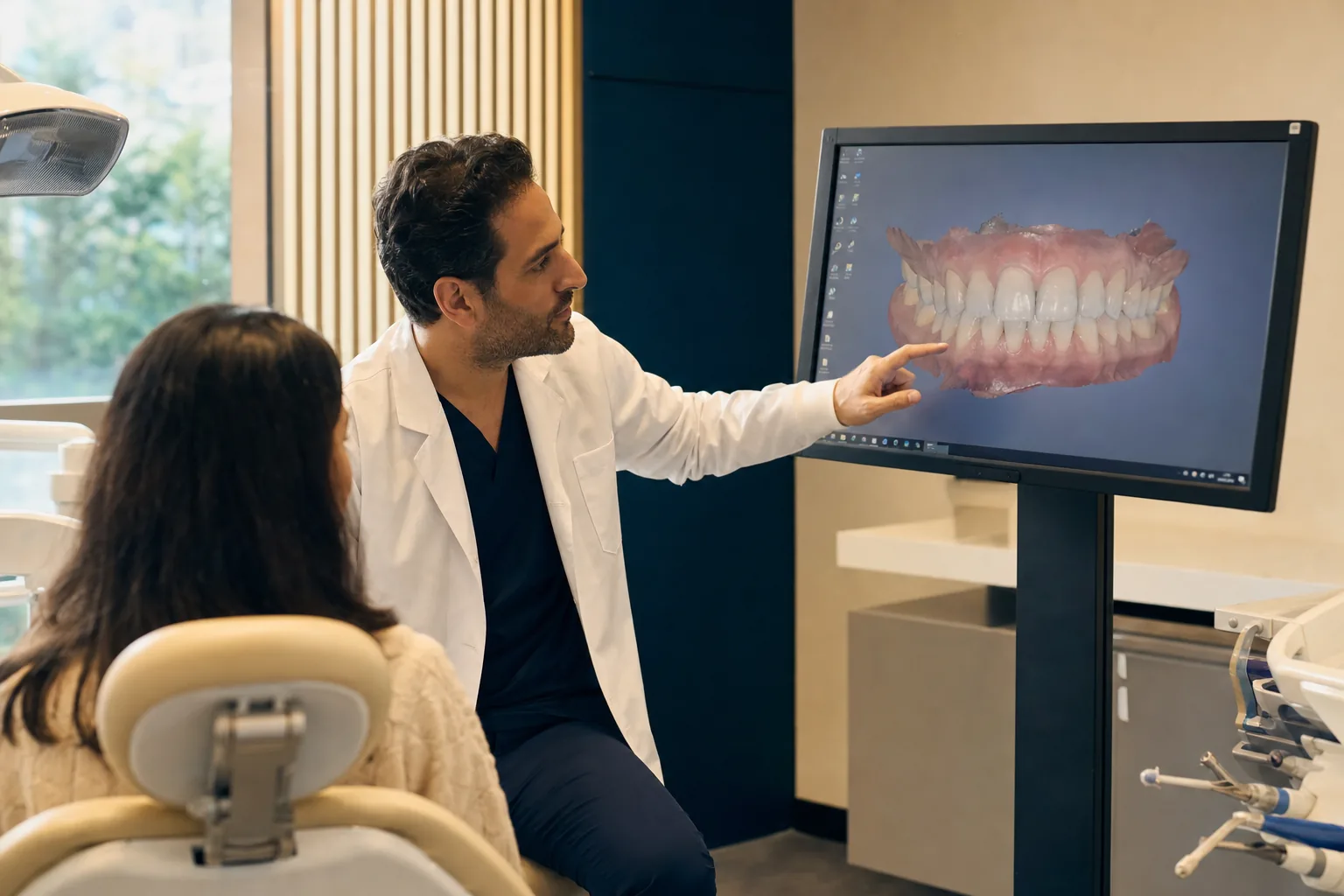
What dental implants and veneers actually cost (indicative ranges)
Prices vary by case, brand and city, so treat the table below as orientation only. The pattern is consistent: Türkiye is materially cheaper than the UK or Germany for the same internationally recognised implant systems, because clinic overheads, lab costs and salaries are lower — not because the titanium is different.
| Treatment | Türkiye (good hospital) | United Kingdom | Germany |
|---|---|---|---|
| Single dental implant (implant + crown) | from €400 | €2,200–3,800 | €1,800–3,500 |
| Full-arch fixed implants (All-on-4/6, per arch) | from €4,000 | €14,000–22,000 | €13,000–20,000 |
| Porcelain/ceramic veneer (per tooth) | from €300 | €700–1,200 | €650–1,100 |
| Zirconia crown (per tooth) | from €120 | €600–1,000 | €550–950 |
Indicative market ranges for orientation only — not a quote. Your real cost depends on bone quality, the number of teeth, the brand of implant, imaging, any bone grafting and follow-up. Türkiye prices are minimums, given for reference only; the final cost is calculated individually.
Why Türkiye is cheaper — and where "cheap" turns dangerous
The genuine reasons for lower prices are structural: a favourable exchange rate, lower clinic rent and staff costs, in-house digital labs, and high patient volume. None of that compromises quality on its own. A JCI-accredited hospital in Türkiye can use the same Straumann, Nobel Biocare or Osstem implants as a London practice.
The danger appears when price becomes the only selling point. That is where you see entire mouths of healthy teeth ground down for crowns, full-mouth work crammed into a three-day trip with no healing time, and "packages" that bundle hotel and transfers but say nothing about the surgeon's credentials. Cheap stops being a saving the moment it costs you your own enamel or a second corrective treatment back home.
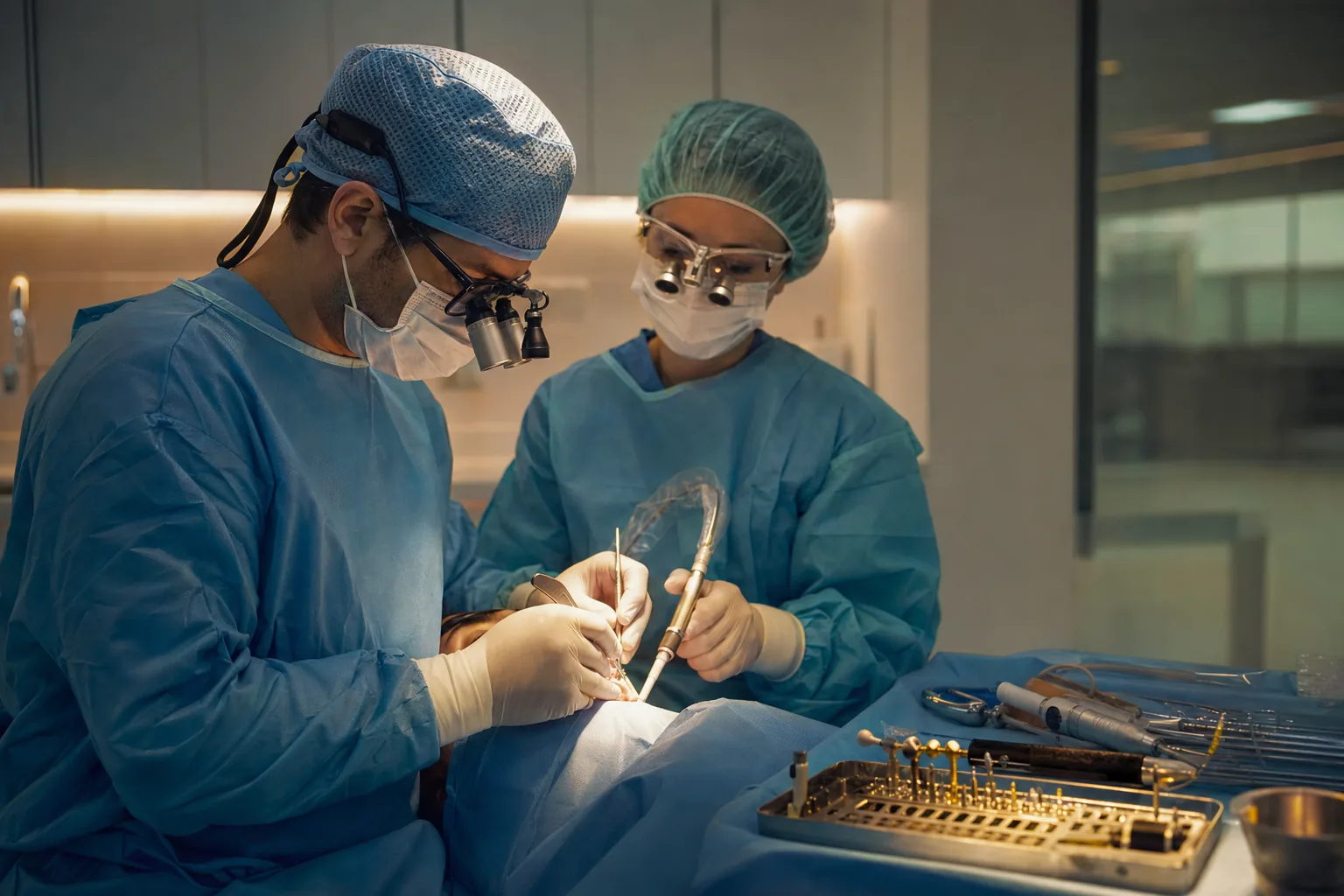
Implants or veneers — which do you actually need?
The honest answer often is: fewer interventions than a hard-sell clinic will suggest. Use this as a rough guide, then let an in-person examination decide.
- Missing teeth or failing roots → implants are the gold standard for replacing the whole tooth.
- Healthy teeth, mainly a colour or small shape concern → whitening or minimal-prep veneers may be enough; full crowns are overkill.
- Chipped, worn or slightly crooked front teeth → conservative veneers, ideally with little or no enamel removal.
- "I want a whole new white smile fast" → this is the highest-risk request; a responsible clinic will slow you down, not speed you up.
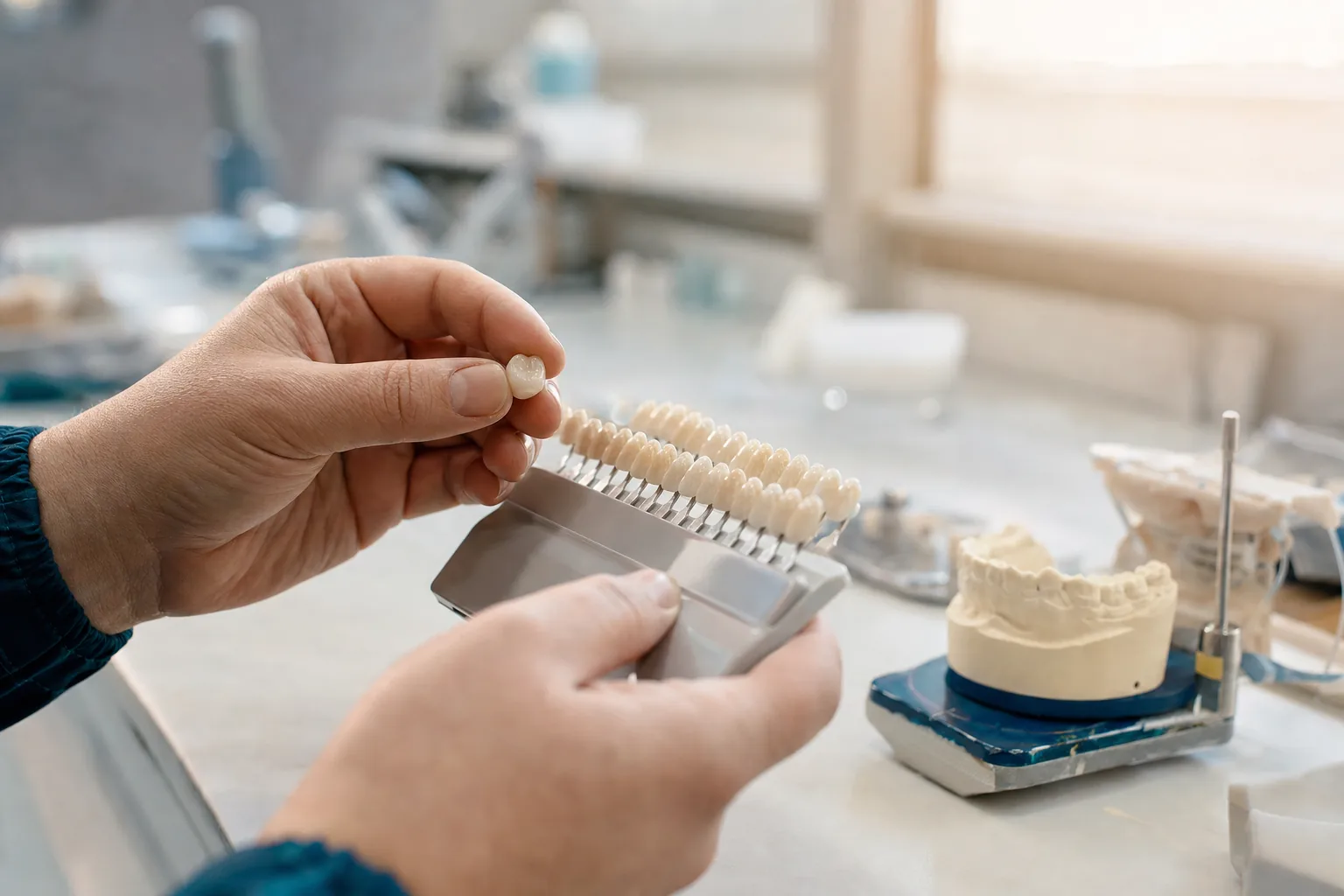
Red and green flags when choosing a dental clinic abroad
Before you commit to anything, weigh the clinic against both lists. A trustworthy provider will welcome every question on the green side.
Red flags
- The headline price is the main pitch, and the surgeon is never named.
- A full-mouth makeover is promised in two or three days with no healing visits.
- You are pushed toward crowns or veneers on clearly healthy teeth.
- No 3D scan, x-rays or written treatment plan before you travel.
- Vague answers about implant brand, materials or warranty.
- No clear aftercare or what happens if a complication appears at home.
- Pressure to pay in full and book flights before any clinical assessment.
Green flags
- Treatment is accredited (e.g. JCI) and the operating surgeon is identified by name and specialty.
- A written, itemised plan with imaging is provided before you fly.
- The most conservative effective option is recommended, not the most expensive.
- Realistic timelines, including healing time and review appointments.
- Named implant or ceramic brands, with materials and warranty in writing.
- A real coordinator who is physically with you at appointments and translates.
- A defined aftercare pathway and a way to reach the clinic once you are home.