
- Surgery in Türkiye can be as safe as anywhere in Europe — at the right hospital, and risky at the wrong one.
- The country has world-class JCI-accredited hospitals with leading professors, alongside high-volume “mills” that compete only on price.
- Your risk is set by your choice of hospital and surgeon, not by the country.
- Below is the checklist to tell them apart.
The honest answer: it depends on who, not where

Türkiye is at once home to some of the best hospitals in the region and to clinics that cut every corner to advertise the lowest price. The Ministry of Health tightened the rules in 2025 — mandatory authorisation for intermediaries and the HealthTürkiye platform — but the gap between the top and the bottom is still wide. The safe move is to evaluate the specific hospital, surgeon and coordinator, exactly as you would at home.
Why Türkiye got a scary reputation (the “mills”)
The viral horror stories — “Turkey teeth”, botched transplants — almost always trace back to high-volume, price-first clinics: junior staff, assembly-line scheduling, no real aftercare, and a surgeon you meet only on the day. They are real, and they are avoidable. They are not representative of JCI-accredited university or Memorial- and Liv-class hospitals.
What “JCI-accredited” actually means

JCI (Joint Commission International) is the global gold standard for hospital quality and patient safety — the international arm of The Joint Commission, which accredits thousands of hospitals in the United States. A JCI hospital is independently audited on infection control, surgical safety, medication safety and patient rights. It is the single most useful filter when choosing care abroad. Of BergemHealth's seven partner hospitals, three currently hold JCI accreditation — Liv Hospital Ulus, Liv Hospital Vadistanbul and Memorial Bahçelievler; you can check any hospital's status yourself in JCI's public registry.
Red flags vs green flags — a checklist you can use
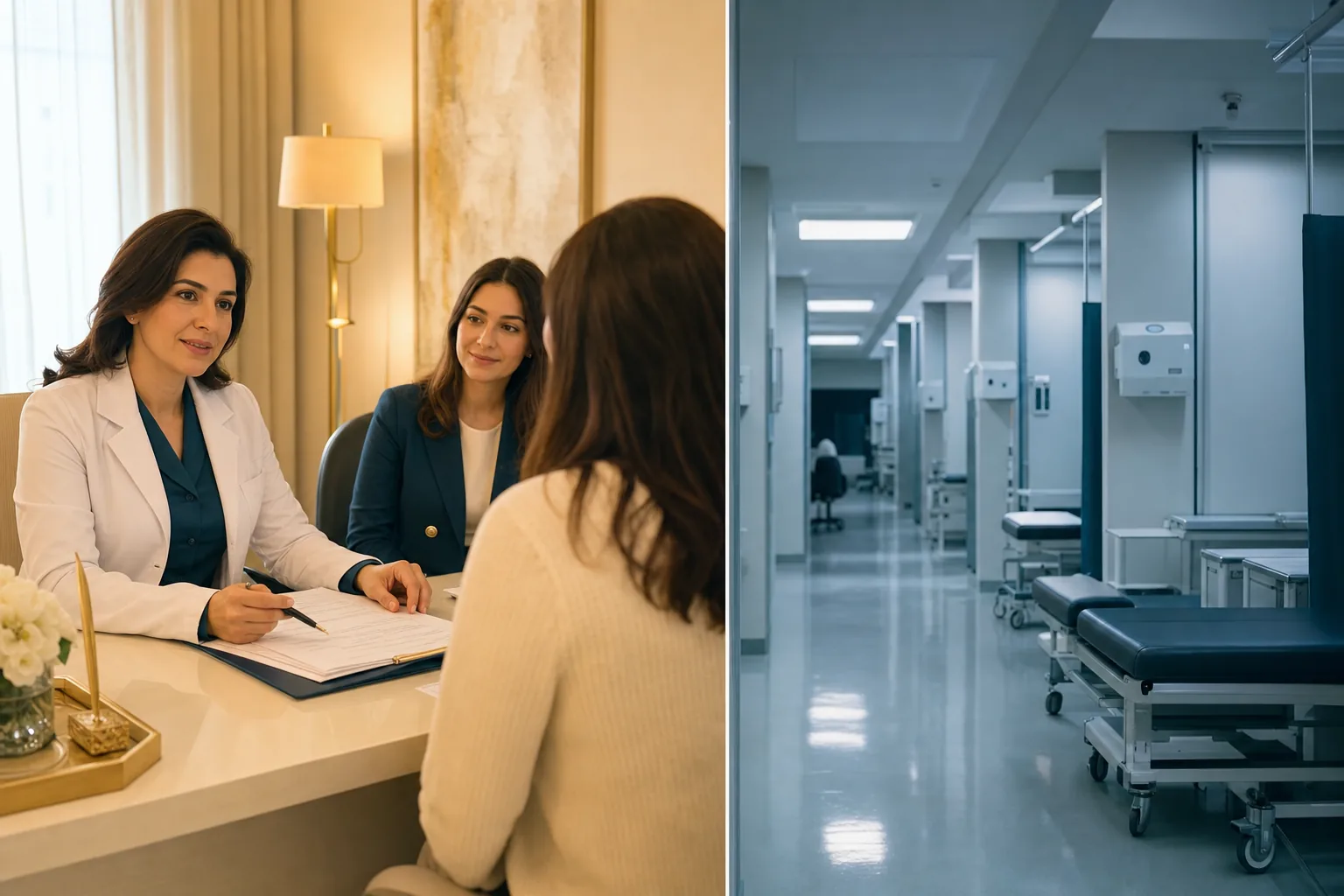
Red flags
- A price quoted before anyone has seen your medical information
- No named surgeon — just “our doctors”
- Pressure to “book today” for a discount
- An all-inclusive package that hides who actually operates
- No JCI accreditation
- Reviews only on the clinic's own website
- Aftercare that is “message us on WhatsApp”
Green flags
- They ask for your records and history first
- A named, sub-specialised surgeon — a professor or senior specialist
- A JCI-accredited hospital
- A written plan and itemised costs
- A coordinator physically with you at appointments
- Independent, verifiable reviews
- A clear aftercare and follow-up protocol
What can go wrong — and how to avoid it
Most serious problems come from three places: the wrong surgeon for your specific case, poor infection control, and no aftercare when something needs attention. Each is preventable. Insist on a named, sub-specialised surgeon; choose a JCI-accredited hospital; and confirm exactly who handles follow-up and any complications before you travel.
The real cost of “cheap”

A €1,800 package that needs a €6,000 correction at home was never cheap. The honest comparison is the total cost — including travel, aftercare and the risk of a revision — and even then, a serious hospital in Türkiye is far below UK, German or Gulf prices, with the safety. Indicative prices:
| Procedure | Türkiye (good hospital) | UK | Germany |
|---|---|---|---|
| Hair transplant | from €1,650 | €6,000–15,000 | €5,000–12,000 |
| Dental implant + crown (1) | from €400 | €2,000–2,800 | €1,800–3,000 |
| Rhinoplasty | from €2,500 | €6,000–9,000 | €5,500–8,500 |
| Full health check-up | from €550 | €1,000–2,500 | €900–2,000 |
Türkiye prices are minimums, for reference only and not a quote; the final cost is calculated individually. UK and Germany figures are indicative ranges. The Türkiye column follows the prices on our treatment and programme pages (USD prices converted to EUR). Ask for an itemised price for your case.
How a medical concierge lowers your risk
This is the exact gap BergemHealth was built for. We hold direct contracts with leading professors at Memorial and Liv hospitals and Akdeniz University Hospital — a real coordinator is physically with you at every appointment, and every request is reviewed by a person, not a bot. You get the Türkiye price without the Türkiye lottery.