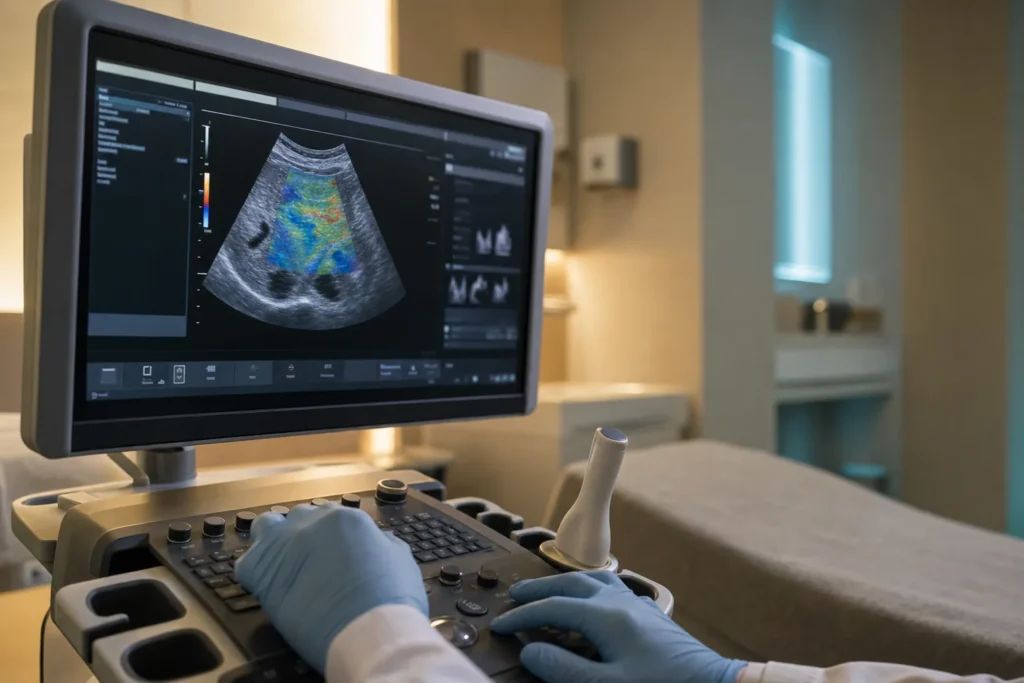
Cirrhosis & portal hypertension
Cirrhosis means the liver has built up scar tissue from long-term injury, and portal hypertension is the raised blood pressure that scarring can cause inside the liver's main vein. Both sound frightening, but they are well understood, and a great deal can be done to slow the damage and manage the complications. This guide explains, in everyday language, what these conditions are, how doctors find and treat them, and how to prepare if you are considering care abroad.
What cirrhosis and portal hypertension are
The liver is a large organ on the right side of your upper abdomen. It does hundreds of jobs: it makes proteins, helps your blood clot, fights infection, cleans waste and old medicines out of your blood, and helps you digest food and store energy. Cirrhosis is the name for severe, long-lasting scarring of the liver. When the liver is injured over many years, it tries to heal itself, and each round of healing leaves behind a little scar tissue. Over time these scars build up and replace healthy liver tissue. Scar tissue cannot do the work that healthy liver tissue does, so the liver gradually struggles to keep up.
Cirrhosis is usually the final stage of many different chronic (long-term) liver diseases. It develops slowly, often over years or decades, which is why many people do not know they have it at first.
Portal hypertension is one of the most important consequences of cirrhosis. The portal vein is the large vein that carries blood from your stomach, intestines and spleen into the liver to be filtered. When the liver is full of scar tissue, blood cannot flow through it easily, so pressure backs up in the portal vein. "Hypertension" simply means high pressure. This raised pressure pushes blood into smaller veins that are not built to carry it, which is what causes several of the well-known complications described later in this guide.
It is worth saying clearly: cirrhosis cannot be reversed back to a perfectly normal liver, but in many people it can be slowed, stopped from getting worse, and its complications managed for years. Many people live well for a long time with the right care.
Types and stages
Rather than separate "types," cirrhosis is usually grouped by how much it is affecting the body. Doctors describe two broad stages.
Compensated cirrhosis. This is the earlier stage. The liver is scarred but is still managing to do enough of its work, and the body has adapted. Many people in this stage feel well and have few or no symptoms. Cirrhosis is often discovered by chance at this stage during tests done for another reason. People can remain compensated for many years.
Decompensated cirrhosis. This is the more advanced stage, when the liver can no longer keep up and complications appear, such as fluid in the abdomen, jaundice (yellow skin), bleeding from enlarged veins, or confusion. Reaching this stage is a signal to assess the liver carefully and consider whether a liver transplant may be needed in the future.
Cirrhosis is also sometimes named after its cause, for example alcohol-related cirrhosis, cirrhosis from hepatitis B or C, or cirrhosis from metabolic dysfunction-associated steatohepatitis (MASH), which is liver damage linked to excess fat in the liver. Knowing the cause matters, because treating the cause is the single most useful thing that can be done.
Causes and risk factors
Cirrhosis is the end result of long-term liver injury. The most common causes are:
- Long-term heavy alcohol use. Drinking large amounts of alcohol over many years is a leading cause of cirrhosis.
- Fatty liver disease linked to metabolism. Excess fat builds up in the liver, which can lead to inflammation and scarring. This is strongly connected with obesity, type 2 diabetes and metabolic syndrome.
- Chronic hepatitis C. A long-term viral infection of the liver. Importantly, hepatitis C can now be cured in most people with antiviral tablets.
- Chronic hepatitis B. Another long-term viral infection. It can be controlled with medication, though not usually cured.
Less common causes include autoimmune conditions where the immune system attacks the liver or bile ducts, inherited disorders such as haemochromatosis (too much iron) and Wilson's disease (too much copper), some long-term medicines or toxins, and certain heart and blood-vessel conditions.
Risk factors that make cirrhosis more likely include heavy drinking, untreated viral hepatitis, obesity and type 2 diabetes, and being older (cirrhosis is more common after age 50). Portal hypertension itself is most often caused by cirrhosis, though it can occasionally come from blood clots in the portal vein or, in some parts of the world, from a parasitic infection called schistosomiasis.
Signs and symptoms (and when to see a doctor)
In the early, compensated stage many people have no symptoms at all. When symptoms do appear, the first ones are often vague and easy to put down to something else:
- Tiredness and weakness
- Loss of appetite, nausea or weight loss
- Discomfort in the upper right side of the abdomen
- Small spider-like blood vessels on the skin, or reddened palms
As cirrhosis advances, more specific signs can develop:
- Jaundice (yellowing of the skin and the whites of the eyes), often with dark urine and pale stools
- Itchy skin
- Swelling of the abdomen (called ascites, a build-up of fluid) and swelling of the legs and ankles
- Easy bruising or bleeding
- Confusion, poor concentration, drowsiness or a fine tremor
- In men, breast enlargement or shrinking of the testicles
See a doctor promptly if you have ongoing tiredness with loss of appetite, yellowing skin or eyes, or abdominal swelling. Seek emergency care straight away if you vomit blood, pass black tarry or bloody stools, or become suddenly very confused or drowsy. These can be signs of bleeding or of toxins building up, and they need urgent treatment.
Screening and early detection
There is no single national screening test offered to everyone to look for cirrhosis. Instead, early detection comes from spotting and managing the conditions that cause it. People at higher risk benefit from being checked even when they feel well.
If you have a known risk, talk with your doctor about checking your liver. This might include people with a history of heavy drinking, anyone who has had hepatitis B or C, and people with obesity or type 2 diabetes. Simple blood tests and, increasingly, a painless scan called elastography (which measures how stiff the liver is) can flag scarring before symptoms appear. Catching liver disease early gives the best chance to slow or stop it.
Once cirrhosis is diagnosed, two specific kinds of monitoring are recommended and act as a form of screening for complications. The first is regular checks for liver cancer: people with cirrhosis are usually offered an ultrasound (sometimes with a blood test) about every six months, because cirrhosis raises the risk of liver cancer and finding it early matters. The second is an endoscopy (a thin camera passed into the gullet and stomach) to look for enlarged veins called varices, so they can be treated before they bleed.
How it is diagnosed
No single test diagnoses cirrhosis on its own. Doctors put together the picture from several:
- Blood tests. These check how well the liver is working (for example clotting, the protein albumin, and bilirubin, the substance that causes jaundice), look for the cause such as viral hepatitis, and give clues about the spleen and blood cells.
- Imaging. An ultrasound, CT or MRI scan shows the size, shape and texture of the liver and can reveal fluid or an enlarged spleen.
- Elastography. A special ultrasound or MRI technique that measures liver stiffness, which reflects the amount of scarring, without any cutting.
- Liver biopsy. A small sample of liver tissue is taken with a needle and examined under a microscope. This is not always needed, but it can confirm the diagnosis and the cause when other tests are unclear.
To describe how advanced the disease is, doctors often use two scoring systems. The Child-Pugh score combines several measurements to grade liver function. The MELD score (Model for End-Stage Liver Disease) is a number based on blood tests that helps estimate severity and is used to decide priority for a liver transplant. These scores guide planning; they are not a personal prediction of what will happen to any one person.
Treatment options
Treatment has three goals: tackle the cause, manage the complications, and consider a transplant if the liver is failing. Care is usually delivered by a multidisciplinary team that may include a liver specialist (hepatologist or gastroenterologist), specialist nurses, a dietitian, an interventional radiologist, and, where relevant, a transplant surgeon.
Treating the cause. This is the most powerful step and can stop the disease getting worse:
- Stopping alcohol completely, with support to do so
- Antiviral tablets that cure most cases of hepatitis C, or control hepatitis B
- Weight loss, healthy eating and managing diabetes for fatty liver disease
- Immune-suppressing medicines for autoimmune liver disease
- Specific treatments for inherited conditions such as removing excess iron or copper
Managing complications (including those from portal hypertension).
- Varices and bleeding: beta-blocker tablets lower portal pressure; during an endoscopy, enlarged veins can be sealed with tiny rubber bands (banding) or an injection (sclerotherapy).
- Ascites (abdominal fluid): a low-salt diet and water tablets (diuretics); if fluid persists, it can be drained with a needle (paracentesis).
- Hepatic encephalopathy (confusion from toxins): medicines such as lactulose help clear the toxins.
- Infection: antibiotics, including for a chest-or-tummy infection of the abdominal fluid called spontaneous bacterial peritonitis.
A procedure called TIPS (transjugular intrahepatic portosystemic shunt) places a small stent inside the liver to create a new channel that lowers portal pressure; it can help when bleeding or fluid is hard to control. When the liver is failing despite treatment, a liver transplant may be considered. Supportive care, vaccinations and good nutrition are part of treatment throughout.
Outlook: what to expect
The outlook for cirrhosis varies widely and depends most on the stage, the cause, and whether the cause can be removed. It is important to understand that population figures describe groups of people, not any single individual, and they are not a prediction for you.
Broadly, people with compensated cirrhosis (the earlier stage, with the liver still coping) can live for many years, sometimes well over a decade, especially if the underlying cause is treated. The Cleveland Clinic notes survival can be upwards of 15 years in compensated disease. Once cirrhosis becomes decompensated (with complications such as fluid build-up, bleeding or confusion), the outlook is more guarded and the average survival is shorter, on the order of several years, though this too varies a great deal from person to person.
The most encouraging point is that the path is not fixed. Removing the cause, for example by stopping alcohol completely or curing hepatitis C, can stabilise the liver and, in some people, allow partial recovery of function. Careful management of complications and, when appropriate, a liver transplant can change the outlook substantially. Your own liver specialist, who knows your test results and overall health, is the right person to discuss what your situation means for you.
Living with cirrhosis and follow-up
Living well with cirrhosis is largely about steady, sensible habits and regular monitoring. Day-to-day, the priorities usually are:
- No alcohol. Avoiding alcohol completely protects the liver, whatever the original cause.
- Good nutrition. Cirrhosis can cause muscle loss and malnutrition, so eating enough protein and calories matters; a dietitian can help. If you retain fluid, your team may advise cutting down on salt.
- Careful with medicines. Some everyday medicines, including certain painkillers (NSAIDs) and high doses of paracetamol, can be hard on the liver or kidneys. Always check with your team before starting anything new, including herbal remedies and supplements.
- Vaccinations and infection care. Staying up to date with recommended vaccines (such as hepatitis A and B, flu and pneumonia) helps avoid infections that the liver copes with poorly.
- Avoid undercooked or raw shellfish, which can carry bacteria that are dangerous in cirrhosis.
Follow-up is ongoing. Expect regular blood tests, an ultrasound roughly every six months to check for liver cancer, and periodic endoscopy to monitor varices. Keeping these appointments is one of the most valuable things you can do, because complications are far easier to manage when caught early.
Planning treatment abroad: what affects cost and how to prepare your records
Some people choose to have part of their liver care, such as detailed assessment, endoscopy and banding, ascites management, a TIPS procedure, or a transplant evaluation, at a specialist centre abroad. Because every liver is different, there is no single price, and good clinics will only quote after reviewing your medical information. Several factors shape the overall cost of care:
- The exact procedures and tests needed, and how advanced the cirrhosis is
- The cause of the disease and whether ongoing treatment (such as antivirals) is required
- How long you stay in hospital and whether intensive monitoring is needed
- The specialists and equipment involved, for example interventional radiology for a TIPS, or a full transplant team
- Medicines, follow-up scans and any complications that need treating
- Travel, accommodation and translation or coordination support
To prepare, gather your records before you ask for an estimate: recent blood tests (liver function, clotting, full blood count), scan reports and images (ultrasound, CT or MRI), any biopsy results, a list of your current medicines and doses, your hepatitis status, and a short summary from your current doctor. Clear records let a specialist understand your situation quickly and give a more accurate, personalised plan. We can help you assemble these and arrange a free consultation to request a tailored estimate, rather than relying on generic price lists.
Why Turkiye, and how to choose a good centre
Turkiye has become a well-known destination for liver care, with large hospitals that handle complex gastroenterology and transplant cases and that are used to caring for international patients, including language support and travel coordination. As with anywhere, the quality of individual centres varies, so it is worth checking a few practical things rather than relying on reputation alone.
When comparing centres, look for:
- Accreditation. Recognised quality marks, such as international hospital accreditation (for example JCI), show the hospital meets defined safety standards.
- A genuine multidisciplinary liver team. Cirrhosis care works best when hepatologists, interventional radiologists, dietitians and, for advanced cases, transplant surgeons work together.
- Procedure experience. Ask how often the centre performs the specific procedure you may need, such as variceal banding, TIPS or transplantation.
- Clear communication. A written plan, a named coordinator, transparent information about what is and is not included, and a realistic discussion of risks and follow-up.
- Continuity of care. How your records and ongoing treatment will be shared with your doctor back home.
Verifying these points helps you choose a centre on the basis of safety and suitability, not marketing. A reputable centre will welcome these questions and answer them clearly.
Prevention and protecting your liver
Much of what causes cirrhosis is preventable, and the same habits protect the liver if you already have early scarring. The main steps are:
- Drink little or no alcohol. Keeping within recommended limits, or avoiding alcohol, is one of the most effective ways to protect the liver.
- Keep a healthy weight and stay active. This lowers the risk of fatty liver disease, which is now a leading cause of liver damage. Managing type 2 diabetes is part of this.
- Prevent and treat viral hepatitis. Get vaccinated against hepatitis B (there is no vaccine for hepatitis C, but it is curable), practise safe sex, never share needles, and get tested if you may have been exposed. Treating hepatitis B or C early can prevent cirrhosis altogether.
- Be careful with medicines and chemicals. Take medicines only as directed, be cautious with supplements, and follow safety advice around household and workplace chemicals.
If you have any risk factors, an early conversation with your doctor and simple liver checks can catch problems while they are easiest to treat. And if cirrhosis is already present, getting a second opinion from a liver specialist before major decisions, such as a TIPS procedure or transplant assessment, is entirely reasonable and often helpful. Asking questions is a normal and sensible part of looking after your health.
Frequently asked questions
Can cirrhosis be cured or reversed?
What is the difference between cirrhosis and portal hypertension?
What are the early warning signs of cirrhosis?
When should I seek emergency care?
What is a TIPS procedure?
How is the severity of cirrhosis measured?
Will I need a liver transplant?
How often will I need check-ups?
Is it safe to drink any alcohol with cirrhosis?
What foods should I avoid with cirrhosis?
Does cirrhosis increase the risk of liver cancer?
Can I plan cirrhosis care or a procedure in Turkey?
This article is for general information only and is not medical advice. Always consult a qualified doctor about your individual case.
Considering this procedure?
Send us your photos and questions. A BergemHealth coordinator and a department-head specialist will review your case and reply with honest, personalised guidance — no obligation.
Free consultation