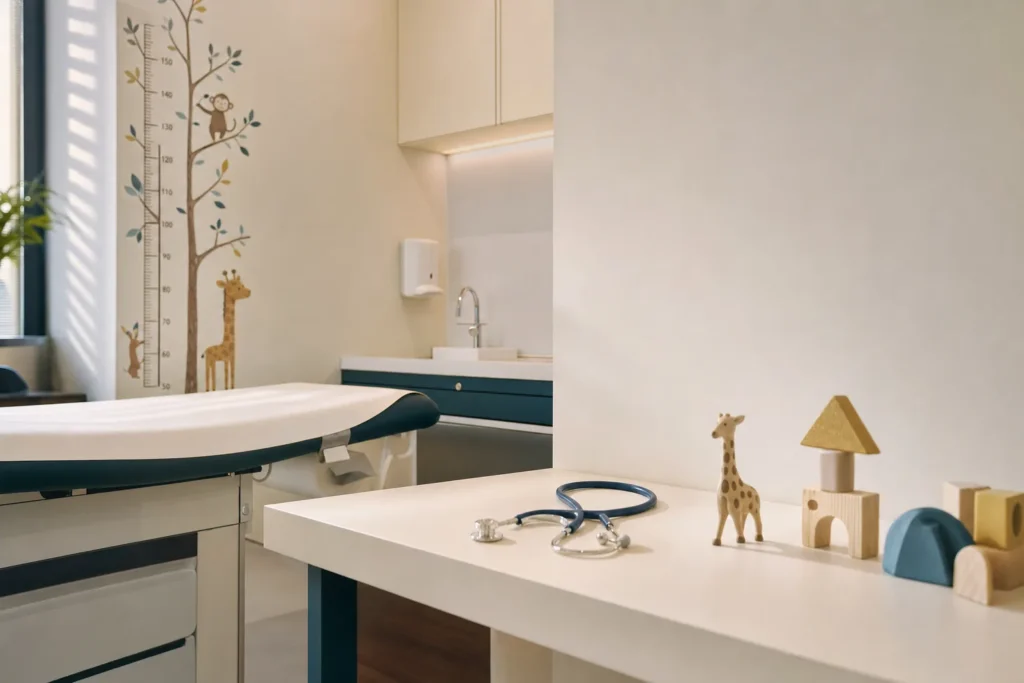
Children's check-up
A children's check-up is a calm, planned visit that lets a paediatric team look at how your child is growing and developing, catch small problems early, and answer the questions every parent carries quietly. This guide walks you through the LIV Kids programme at LIV Hospital in Turkiye, from age 4 upward, and explains, in plain words, what each consultation and test is for, what screening can and cannot do, and how to make the day easy for your child.
- Duration
- Half a day, outpatient
- Hospital stay
- Outpatient - no overnight stay
What this check-up is and who it is for
A children's check-up is a preventive visit. That word, preventive, simply means it is done while your child is well, not because something is already wrong. The aim is to take a careful look at growth, vision, teeth, and a handful of important blood and urine markers, so that anything that needs attention can be found early, while it is easiest to deal with.
The LIV Kids programme at LIV Hospital is designed for children from the age of four. It brings together three doctor consultations, one imaging test, and seventeen laboratory tests into a single half-day visit. This is the same idea behind routine well-child care that paediatric bodies recommend everywhere: regular check-ups track how a child is growing and developing, keep prevention up to date, and build a trusting relationship between the family and the medical team, according to the American Academy of Pediatrics (AAP).
It suits parents who want a thorough, organised snapshot of their child's health, including families who travel and want everything done in one place, children starting school, or simply households that have not had a structured check-up in a while. It is a screening programme for generally healthy children. It does not replace your child's regular doctor, and a child who is currently ill, or who has a known condition that needs ongoing care, should be assessed by their own clinician rather than booked into a routine screening visit.
What is included in the LIV Kids programme
The programme is built from three clear groups: consultations, one imaging test, and a panel of laboratory tests. Here is what each group covers.
Three specialist consultations:
- Paediatrician - the central appointment. The paediatrician reviews your child's history, measures height and weight, examines the heart, lungs, abdomen, and general development, and ties together the results of every other test into one clear picture.
- Dentist - an examination of the teeth and gums to look for early decay and to give practical advice on brushing and diet.
- Ophthalmologist (eye doctor) - a check of how well each eye sees and whether the eyes are working together properly.
One imaging test:
- Chest X-ray - a quick picture of the lungs and heart outline.
Seventeen laboratory tests, grouped by what they look at:
- Complete blood count (CBC) - counts the red cells, white cells, and platelets. It is the standard first test used to look for anaemia (too few healthy red blood cells, often from low iron) and to flag signs of infection.
- Urinalysis - a simple urine test that can pick up hidden urinary infection, sugar, or protein.
- Liver panel - blood tests that show how the liver is working.
- Lipid panel - measures cholesterol and related fats in the blood.
- Vitamin B12 and vitamin D - two nutrients that matter for blood, nerves, and growing bones.
- Hepatitis A and hepatitis B screening - blood tests that check for these liver-affecting viruses and, in the case of hepatitis B, can show whether your child is protected.
Together these add up to a broad but focused look at growth, eyes, teeth, blood, nutrition, the liver, and a couple of common infections.
What it screens for, and why that matters
Each part of the programme is there for a reason grounded in published evidence. Here is the plain-language version of what it looks for.
Vision. The eye check looks for problems such as amblyopia (often called lazy eye), where one eye does not develop full sight because the eye and brain are not working together. The U.S. Preventive Services Task Force recommends vision screening at least once between ages 3 and 5 to detect amblyopia or its risk factors, and the CDC notes amblyopia is the most common cause of vision loss in children. Caught early, it is very treatable; left unnoticed, the lost vision can become permanent.
Teeth. Tooth decay is the most common chronic disease of childhood, and the World Health Organization treats it as a major public health problem even though it is largely preventable. A dental check finds early decay before it causes pain and gives the family simple, practical prevention advice.
Growth and nutrition. Measuring height and weight, alongside the vitamin D, vitamin B12, and blood-count tests, helps make sure your child is growing as expected and is not short of key nutrients. Severe vitamin D shortage can weaken growing bones (a condition called rickets), which the AAP describes as preventable with the right intake. Childhood overweight has also risen sharply worldwide - the WHO reports rates climbing from 8% in 1990 to about 20% in 2022 - so tracking growth over time genuinely matters.
Cholesterol. The lipid panel can reveal an inherited tendency to high cholesterol (familial hypercholesterolaemia), which is silent in childhood but raises heart risk later. U.S. guidelines from the NHLBI, endorsed by the AAP, recommend a one-time cholesterol screen for all children aged 9 to 11, precisely because it cannot be predicted from how a child looks or feels.
Liver and the hepatitis viruses. The liver panel and hepatitis A and B tests look at liver health and at two viral infections. Hepatitis B is important because infection in early childhood is far more likely to become long-lasting than infection in adulthood, which is why the WHO recommends universal infant vaccination; a blood test can also confirm whether a child is already protected. Hepatitis A spreads through contaminated food or water and is often silent in young children, yet they can still pass it on.
Anaemia and the urine. The complete blood count screens for anaemia, and the urinalysis can catch a quiet urinary infection or early signs of kidney or sugar problems.
The benefits and the honest limits of screening
Screening a healthy child has real value, and it has real limits. Being clear about both is part of doing it well.
The benefits. Several childhood problems give no warning signs that a parent could notice at home - high inherited cholesterol, early tooth decay between the teeth, a lazy eye in a child who has never known anything different, or a mild anaemia. A structured check-up is one of the few ways to surface these early, when they are most treatable, and to confirm reassuring news for the many children who are doing well.
The limits, stated plainly:
- Screening reduces risk, it does not remove it. A clear result today means no problem was detected today. It is not a guarantee of future health, and it cannot catch everything.
- False alarms happen. Any screening test sometimes flags something that turns out, on closer testing, to be nothing. This can cause worry and lead to a repeat test. A good team explains this calmly and confirms before acting.
- A normal result is a snapshot. Children grow and change, so check-ups are repeated over time rather than done once.
- Some tests are situational. A few of the included tests, such as routine cholesterol or hepatitis screening, are recommended only at certain ages or for children with particular risk factors in national guidelines. The point of the consultation is to interpret each result in the context of your individual child rather than as a number in isolation.
Used this way - as early detection plus expert interpretation, not as a promise - a check-up is a sensible, reassuring tool.
How to prepare for the visit
A little preparation makes the morning smoother for everyone.
- Fasting. Because the programme includes blood tests such as the lipid panel, your child will usually be asked not to eat for several hours beforehand, so blood is often drawn first thing in the morning. The clinic will confirm the exact fasting time when you book. Plain water is normally allowed, and it helps to bring a snack for straight after the blood draw.
- Documents. Bring your child's vaccination record or health booklet, a list of any medicines or supplements they take, and notes on any allergies or past illnesses. For families travelling from abroad, bring a passport or ID and any previous medical reports.
- Glasses. If your child already wears glasses or contact lenses, bring them for the eye check.
- Comfort items. A favourite toy, book, or tablet helps a child stay relaxed during waiting times and the blood draw.
- Talk to your child. Explain in simple, honest words that the doctors will look at their eyes and teeth, take a small picture of their chest, and take a little blood. Avoid promising it will not pinch; instead reassure them that it is quick and that you will be right there.
- Questions. Write down anything you have been wondering about - sleep, eating, growth, screen time - so you do not forget to ask during the consultations.
What the day looks like
The LIV Kids programme is designed to take about half a day and is fully outpatient, which means there is no overnight stay - you arrive in the morning and go home the same day.
A typical flow looks like this: you check in and the blood and urine samples are collected early, while your child is still fasting. From there the visit moves through the chest X-ray and the three consultations - paediatrician, dentist, and ophthalmologist - with the clinic coordinating the order so there is minimal waiting between stations. The X-ray itself takes only moments, and the eye and dental checks are gentle and non-invasive.
Most of the day is spent moving calmly between rooms rather than waiting in one place, and many of the lab results are ready the same day or shortly after, so the paediatrician can pull everything together before you leave or at a short follow-up.
Understanding your results and follow-up
The single most valuable part of the programme is the conversation at the end, not the list of numbers. The paediatrician's job is to gather every result - the blood count, the vitamins, the liver and lipid panels, the hepatitis tests, the eye and dental findings, and the growth measurements - and explain what they mean for your child specifically.
Results generally fall into three groups. Most will be normal, which is genuinely good news and gives you a baseline to compare against in future. Some may be borderline - for example a vitamin D level on the low side - and are usually handled with simple advice on diet, sunlight, or a supplement, then rechecked later. A smaller number may need further assessment, such as repeating a test or seeing a specialist; the team will explain clearly what the next step is and why.
Ask for a written report, ideally in a language you read comfortably, and keep it with your child's health records. If you live elsewhere, share it with your child's regular doctor so that any follow-up happens close to home. A good check-up should leave you with clear answers and, where needed, a clear plan - not a pile of unexplained figures.
Cost and what is included
The LIV Kids programme has an indicative price of around 950 US dollars (USD). For that single price the programme bundles together the three specialist consultations (paediatrician, dentist, and ophthalmologist), the chest X-ray, and the seventeen laboratory tests described above, all within one half-day outpatient visit.
Treat this figure as a guide rather than a fixed quote. The final amount can vary with the hospital's current pricing, the exchange rate at the time of payment, and whether you add any tests beyond the standard package. Anything found during the check-up that calls for further investigation or treatment would be quoted separately.
Two practical points are worth confirming when you book: exactly which tests are included so there are no surprises, and whether the written report and the closing consultation with the paediatrician are part of the price. Reputable programmes are happy to put the inclusions in writing before you commit.
Why have your child's check-up in Turkiye, and how to choose a centre
Turkiye has become a well-established destination for medical care, including preventive check-ups, combining internationally accredited hospitals with prices that are often lower than in many Western countries and short waiting times. For families already visiting, or for those who want a thorough programme completed in one efficient half-day, it can be a practical choice.
If you are choosing a centre, a few things matter more than the headline price:
- Accreditation. Look for recognised quality accreditation, such as Joint Commission International (JCI), which signals that the hospital meets international safety and quality standards.
- A genuine paediatric team. Children are not small adults. Make sure the consultations are with doctors experienced in caring for children, in child-friendly surroundings.
- Clear, sensible test lists. The package should match your child's age and needs rather than piling on tests for the sake of it. More tests are not automatically better, and some carry small downsides such as false alarms.
- Communication. Confirm that you will receive a written report and an explanation you understand, and ask how results will be shared with your doctor back home.
- Honest expectations. A trustworthy centre will describe both the benefits and the limits of screening, and will never promise that a check-up guarantees health.
With those boxes ticked, a children's check-up abroad can be a calm, well-organised, and genuinely useful step in looking after your child's health.
Who should consider a more, or less, intensive programme
The LIV Kids programme is a sensible, middle-of-the-road screen for a generally healthy child from age four. Whether your family needs more or less depends on your child.
A lighter touch may be enough for a young, thriving child who already sees a paediatrician regularly, is up to date on vaccinations, and has no specific concerns. In that case, the routine well-child visits recommended by paediatric guidelines may cover what is needed without additional testing.
A more detailed assessment may be worthwhile if your child has particular risk factors or symptoms - for example a strong family history of early heart disease or high cholesterol, ongoing tiredness, growth concerns, recurrent infections, or a known chronic condition. These situations call for individually tailored testing guided by a doctor rather than a standard package.
The best way to decide is to discuss your child's history with the paediatrician beforehand. The programme is a strong default; a short conversation ensures it is the right default for your child, and that any extras are added for a clear reason rather than out of habit.
Frequently asked questions
From what age can my child do the LIV Kids check-up?
Does my child need to fast before the tests?
Is the chest X-ray safe for a child?
How long does the whole visit take?
Will a normal result mean my child is completely healthy?
What happens if a test comes back abnormal?
Why is cholesterol checked in a child who seems perfectly healthy?
What do the hepatitis A and B tests actually check?
Does this check-up replace my child's regular doctor or vaccinations?
Can I get the results in my own language?
Is the price of 950 USD fixed?
This article is for general information only and is not medical advice. Always consult a qualified doctor about your individual case.
Considering this procedure?
Send us your photos and questions. A BergemHealth coordinator and a department-head specialist will review your case and reply with honest, personalised guidance — no obligation.
Free consultation