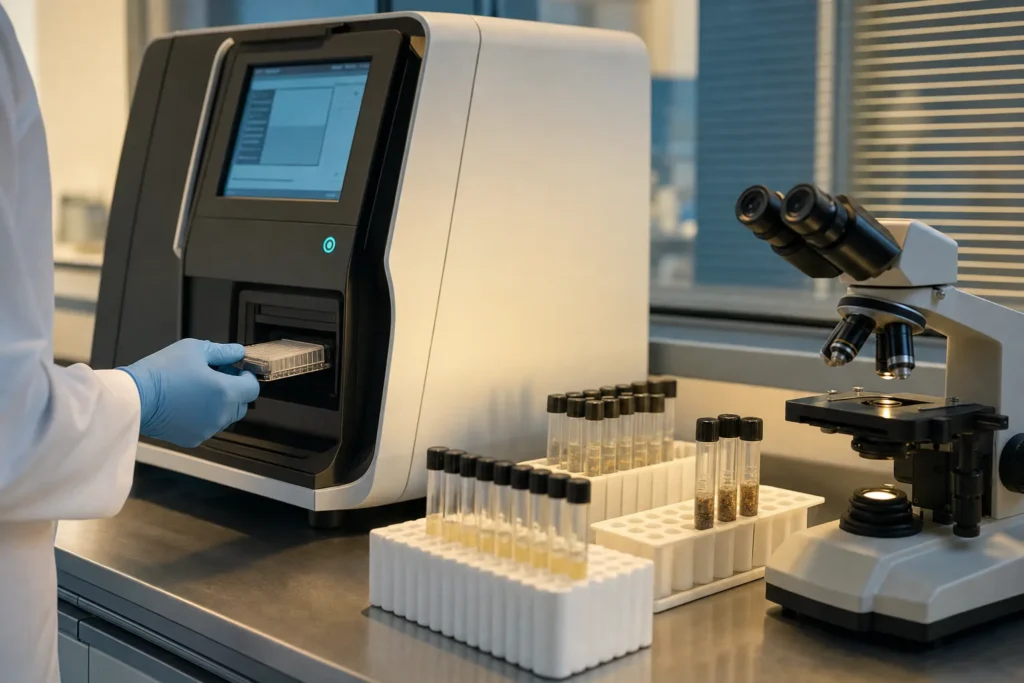
Tuberculosis (incl. MDR-TB)
Tuberculosis (TB) can sound frightening, but it is a treatable infection, and the great majority of people who complete the right course of medicines recover fully. This guide explains, in plain language, what TB is, how it is found, how it is treated (including the harder-to-treat forms), and how to prepare if you are considering care abroad.
What tuberculosis is
Tuberculosis, usually shortened to TB, is an infection caused by a slow-growing bacterium (a type of germ) called Mycobacterium tuberculosis. It most often settles in the lungs, but it can also affect other parts of the body, such as the lymph glands, bones and spine, kidneys, or the membranes around the brain.
It helps to think of TB in two forms, because they are very different. In latent TB infection (sometimes called inactive or dormant TB), the bacteria are present in the body but are kept in check by the immune system. A person with latent TB feels well, has no symptoms, and cannot pass the infection to anyone else. According to health authorities, only a minority of people with latent TB ever go on to develop the illness.
In active TB disease, the bacteria multiply and start to cause symptoms. A person with active TB in the lungs can spread the germs to others through the air. The good news, emphasised by sources such as MedlinePlus and the NHS, is that active TB can almost always be cured with the right combination of antibiotics taken for the full course.
TB spreads through the air. When someone with active lung TB coughs, sneezes, speaks, or sings, tiny droplets carrying the bacteria are released, and these can linger in the air for some time, especially indoors. TB is not spread by sharing food, shaking hands, or touching surfaces, and it usually takes prolonged close contact, such as living in the same household, for the infection to pass to someone else.
Types and subtypes
Doctors describe TB in a few different ways, depending on where it is and how it behaves.
By activity:
- Latent TB infection - bacteria are present but inactive. No symptoms, not contagious. It can be treated to prevent it from becoming active later.
- Active TB disease - the bacteria are multiplying and causing illness. This is what most people mean when they say someone "has TB."
By location in the body:
- Pulmonary TB - TB in the lungs. This is the most common form and the one that can be passed to others.
- Extrapulmonary TB - TB outside the lungs, for example in the lymph nodes (glands), bones and joints, spine, kidneys, or the lining of the brain (a form of meningitis). The Cleveland Clinic notes that swollen neck glands from TB are sometimes called scrofula.
- Miliary TB - a less common form in which the bacteria spread widely through the bloodstream to many organs at once. The name comes from the tiny seed-like spots it can produce on imaging.
By how the bacteria respond to medicines (drug resistance): This is an important distinction that affects which medicines work. Most TB is fully sensitive to the standard drugs. But some strains have become resistant, meaning the usual medicines no longer kill them effectively. The World Health Organization (WHO) and CDC describe these forms:
- RR-TB (rifampicin-resistant TB) - resistant to rifampicin, one of the two most important first-line drugs.
- MDR-TB (multidrug-resistant TB) - resistant to at least the two most powerful first-line drugs, isoniazid and rifampicin.
- Pre-XDR-TB and XDR-TB (extensively drug-resistant TB) - resistant to even more of the medicines, including some of the key drugs used to treat MDR-TB, which leaves fewer treatment choices.
Drug-resistant TB is harder to treat, but, as discussed later, newer all-oral regimens have made treatment shorter and more effective than it used to be.
Causes and risk factors
TB is caused by breathing in Mycobacterium tuberculosis bacteria that an infected person has released into the air. Catching the germ does not automatically mean becoming ill - in most people the immune system contains it, resulting in latent infection.
Two separate questions matter: who is more likely to be exposed, and who is more likely to progress to active disease once infected.
Higher chance of exposure (per the NHS, CDC and Cleveland Clinic):
- Living with, or in close prolonged contact with, someone who has active TB.
- Living in or coming from a region where TB is common, including parts of Africa, Asia, Eastern Europe, Russia, Latin America and the Caribbean.
- Living or working in crowded settings such as shelters, prisons, or some care homes.
- Healthcare and laboratory workers who may encounter TB.
Higher chance of latent TB turning into active disease:
- A weakened immune system, for example due to HIV, organ transplant, cancer treatment, or medicines that suppress immunity.
- Diabetes, chronic kidney disease, or being significantly underweight.
- Very young children (under five) and older adults.
- Smoking and heavy alcohol use.
- Injecting drug use.
None of these factors mean a person will definitely develop TB. They simply raise the risk, which is why doctors pay particular attention to screening and prevention in these groups.
Signs and symptoms (and when to see a doctor)
Latent TB causes no symptoms at all. Active TB usually develops gradually over weeks, which is one reason it can be easy to overlook at first.
The most common symptoms of active TB in the lungs, as described by the NHS, CDC and Cleveland Clinic, are:
- A cough that lasts more than two to three weeks, sometimes bringing up phlegm or, less often, blood.
- Chest pain.
- Feeling tired or weak.
- Losing weight without trying, and losing your appetite.
- A high temperature or fever, often with chills.
- Drenching night sweats.
When TB affects other parts of the body, the symptoms depend on the area involved - for example swollen glands in the neck, persistent back pain with spinal TB, or headaches and a stiff neck if the membranes around the brain are involved.
When to see a doctor: See a healthcare professional if you have a cough lasting more than three weeks, are coughing up blood, or have unexplained fever, night sweats or weight loss - especially if you have been in close contact with someone who has TB or have lived in a country where TB is common. These symptoms can have many causes, most of them not TB, but they always deserve a proper check. If you have a known weakened immune system, it is sensible to seek advice sooner rather than later.
Screening and early detection
There is no whole-population screening programme for TB in the way there is for some cancers. Instead, testing is offered to people thought to be at higher risk - for example close contacts of someone with active TB, new arrivals from countries where TB is common, healthcare workers, and people with a weakened immune system. The aim is to find latent TB so it can be treated before it ever becomes active.
Two tests are used to check for TB infection (not disease):
- TB blood test (interferon-gamma release assay, or IGRA) - a single blood sample is taken and tested in a laboratory. The CDC notes this is the preferred test for people who have had the BCG vaccine, because it is not affected by it. Brand names include QuantiFERON-TB Gold Plus and T-SPOT.TB.
- TB skin test (the Mantoux or tuberculin skin test) - a tiny amount of testing fluid is injected just under the skin of the forearm, and a trained person measures the reaction after 48 to 72 hours.
It is important to understand that a positive infection test means the body has met TB bacteria at some point - it does not by itself mean active disease. If a test is positive, further checks (described below) are done to rule active TB in or out. Finding and treating latent TB in at-risk people is one of the most effective ways to prevent future illness.
How tuberculosis is diagnosed
Diagnosing active TB usually involves piecing together several findings rather than relying on a single test. The CDC describes a thorough assessment that includes your medical history, a physical examination, a TB infection test, a chest image, and laboratory tests on samples from the affected area.
Imaging. A chest X-ray (and sometimes a CT scan) can show changes in the lungs that suggest TB and help judge how extensive it is.
Sputum and other samples. For suspected lung TB, you cough up phlegm (sputum) so it can be examined. Several laboratory tests may be used:
- Smear microscopy - the sample is examined under a microscope for bacteria; a quick first step.
- Molecular (NAAT) tests - rapid tests, such as the widely used GeneXpert, that detect TB DNA and can often tell within hours whether TB is present and whether it is resistant to rifampicin. The WHO recommends rapid molecular tests as an initial step because they are fast and accurate.
- Culture - growing the bacteria in the laboratory. This takes longer (often weeks because TB grows slowly) but is described by the CDC as the gold standard, and it confirms the diagnosis.
- Drug susceptibility testing (DST) - checking which medicines the bacteria respond to, so treatment can be tailored. This is essential for identifying MDR-TB and other resistant forms.
For TB outside the lungs, doctors may take samples of urine, fluid, or a small piece of tissue (a biopsy) from the affected area. Unlike many cancers, TB is not formally "staged"; instead, treatment is guided by where the infection is, how extensive it is, and crucially which drugs the particular strain responds to.
Treatment options
TB is treated with a course of antibiotics, and the key principle is that several medicines are taken together for several months. Using a combination prevents the bacteria from becoming resistant, and completing the full course is what clears the infection and prevents relapse.
Drug-sensitive active TB. The standard treatment, as described by the NHS, CDC and Cleveland Clinic, uses a combination of first-line drugs - typically isoniazid, rifampicin (rifampin), pyrazinamide and ethambutol - usually for at least six months. The first months use the full combination, followed by a continuation phase with fewer drugs. Most people start to feel better within a few weeks, and someone with infectious lung TB usually becomes non-contagious after a few weeks of effective treatment, but it is vital to keep taking the medicines for the whole prescribed period even after feeling well.
Latent TB. Treatment is simpler - usually one or two medicines for three to nine months - and is aimed at preventing the infection from ever becoming active.
Drug-resistant TB (MDR-TB and beyond). Treatment used to mean up to two years of medicines, including painful injections. This has changed significantly. In 2022 the WHO recommended a shorter, all-oral regimen known as BPaLM - bedaquiline, pretomanid, linezolid and moxifloxacin - taken for six months for many people with MDR-TB or rifampicin-resistant TB. Studies summarised in the medical literature have reported high treatment-success rates with these shorter regimens, along with fewer serious side effects than older long courses. The exact combination and length are chosen by a TB specialist based on the resistance pattern from drug susceptibility testing.
Supportive care and the team. TB care is delivered by a multidisciplinary team that may include infectious-diseases doctors, respiratory (lung) physicians, specialist TB nurses, pharmacists, microbiologists, radiologists and, when needed, surgeons. Supportive measures include nutrition support, managing side effects, and treating other conditions such as HIV or diabetes. Some patients are offered directly observed therapy (DOT), where a health worker watches each dose being taken, to support adherence. TB affecting the brain may also need a short course of steroids. Surgery is rare and reserved for specific situations.
Outlook - what to expect
The overall outlook for drug-sensitive TB is good. As MedlinePlus puts it, TB disease can almost always be cured with antibiotics when the full course is completed. Most people make a full recovery and return to their normal lives.
For drug-resistant TB, the picture has improved considerably. The WHO and published trial data describe high treatment-success rates with the newer six-month all-oral regimens compared with the older, longer treatments. Outcomes still depend on factors such as how early the infection is found, the resistance pattern, other health conditions, and how consistently the medicines are taken.
It is worth being clear about what these figures mean. Any success or cure rates reported by health authorities are population-level averages - they describe how groups of patients fared, and they are not a prediction for any one individual. Your own outlook depends on your particular circumstances, which is exactly why an assessment by a qualified TB specialist matters. Two things make the biggest difference within a person's control: starting treatment promptly and completing the entire prescribed course, even after symptoms disappear. Stopping early is the main reason TB returns and the main way resistance develops.
Living with it and follow-up
Living with TB during treatment is mostly about routine, patience, and good support. Taking the medicines exactly as prescribed, every day, for the full course is the single most important thing you can do.
Practical points that commonly come up:
- Reducing spread. In the early weeks of treatment for infectious lung TB, you may be advised to stay home, cover coughs, and ensure good ventilation. Once your doctor confirms you are no longer infectious - which usually happens after a few weeks of effective treatment - normal activities can resume.
- Contact tracing. Public-health teams may contact and test people you live with or have spent a lot of time with, so any infection in them can be caught early. This is a routine, supportive process, not a cause for blame.
- Side effects. TB medicines can cause side effects such as nausea, changes in vision (with certain drugs), tingling, or effects on the liver. Tell your team about anything new - many side effects can be managed, and some require simple monitoring such as periodic blood tests.
- Follow-up. Expect regular check-ups, repeat sputum tests to confirm the infection is clearing, and sometimes follow-up imaging. Keep all appointments, as these confirm the treatment is working.
Emotional support matters too. TB can carry unfair stigma, and a long course of treatment can feel isolating. Talking to your care team, and to family or support groups, helps. Eating well, resting, and avoiding smoking and alcohol all support recovery.
Planning treatment abroad - what affects cost and how to prepare your records
If you are considering having TB diagnosed or treated abroad, it helps to understand what shapes the overall cost so you can plan and ask the right questions. We do not quote prices here because every case is different; instead, a free consultation can give you a personalised estimate.
Factors that typically influence cost and complexity include:
- Whether it is latent or active TB, and whether it is in the lungs or elsewhere.
- The resistance pattern. Drug-sensitive TB uses inexpensive first-line drugs, whereas MDR-TB or XDR-TB requires specialised medicines, more testing, and longer specialist oversight.
- Diagnostic tests needed - rapid molecular tests, cultures, drug susceptibility testing, and imaging.
- Length of treatment and monitoring, including follow-up appointments and blood tests over several months.
- Any hospital stay, if isolation or close monitoring is required at the start.
- Treatment of related conditions such as HIV or diabetes, and supportive care.
- Practical costs like travel, accommodation, interpreting, and coordinating ongoing medication once you return home.
To prepare, gather your records: any previous TB test results, chest X-rays or CT scans (ideally the images themselves, not just the reports), sputum and culture results including any drug susceptibility testing, a list of medicines you have taken and for how long, and a summary of your medical history and current symptoms. Because TB treatment continues for months, it is essential to plan how care and medication will be continued safely after you go home. Bring translations where possible, and ask your consultant how follow-up will be arranged across borders.
Why Turkiye and how to choose a good centre
Turkiye has become a well-established destination for international patients, with modern hospitals, experienced specialists, and infrastructure built around treating people from abroad, including interpreting services and help with logistics. For an infectious condition like TB, what matters most is not the country itself but the quality, safety standards and expertise of the specific centre and team you choose.
When assessing any centre - in Turkiye or anywhere else - it is worth verifying the following:
- Accreditation and standards. Look for recognised hospital accreditation and infection-control standards, and ask how TB patients are managed safely (for example, appropriate isolation and ventilation).
- A specialist, multidisciplinary team. TB, and especially drug-resistant TB, should be managed by clinicians experienced in infectious diseases and respiratory medicine, supported by a reliable microbiology laboratory.
- Proper laboratory testing. Confirm that the centre offers rapid molecular tests, culture, and drug susceptibility testing, which the WHO and CDC consider central to diagnosing and tailoring TB treatment.
- A clear, complete treatment plan. A trustworthy centre will explain the full course, the monitoring schedule, how side effects are handled, and how your care continues after you return home.
- Honest communication. Be cautious of anyone promising guaranteed outcomes. Good clinicians explain options and likelihoods, encourage questions, and welcome a second opinion.
A concierge service can help you compare centres, gather and translate your records, and arrange a consultation so you can make an informed choice. The right centre is one that is transparent, properly equipped, and willing to coordinate your follow-up care.
Prevention and self-care
Several practical steps lower the risk of TB spreading and of latent infection turning into active disease.
- Treat latent TB when advised. If you are found to have latent TB and are in a higher-risk group, completing a preventive course of medicine greatly reduces the chance of becoming ill later.
- The BCG vaccine. In countries where TB is common, the Bacille Calmette-Guerin (BCG) vaccine is given, mainly to protect infants and young children from severe forms of TB. Practice varies between countries; for example, the NHS offers it to specific higher-risk groups, while it is not routinely used in the United States.
- Good ventilation and cough hygiene. TB spreads less in well-ventilated spaces. Covering coughs and sneezes helps protect others if you are unwell.
- Get checked after close contact. If you have spent significant time with someone who has active TB, ask about being tested.
- Look after general health. Not smoking, moderating alcohol, managing conditions such as diabetes or HIV, and eating well all support a strong immune system.
Getting a second opinion. Because TB treatment lasts months and drug-resistant cases need careful specialist choices, you are always entitled to seek a second opinion - especially before starting a long or complex regimen. A good clinician will support this. If anything about your diagnosis or plan is unclear, ask questions until it makes sense to you. Being an informed, active partner in your care is one of the best ways to get the most from treatment.
Frequently asked questions
Is tuberculosis curable?
What is the difference between latent and active TB?
How does TB spread?
What are the first signs of TB?
How is TB diagnosed?
What is MDR-TB?
How long does TB treatment take?
Why is it so important to finish the whole course of medicine?
Is there a vaccine for TB?
Can TB affect parts of the body other than the lungs?
Will I need to be isolated during treatment?
Can I plan TB treatment abroad and continue it at home?
This article is for general information only and is not medical advice. Always consult a qualified doctor about your individual case.
Considering this procedure?
Send us your photos and questions. A BergemHealth coordinator and a department-head specialist will review your case and reply with honest, personalised guidance — no obligation.
Free consultation