Multiple sclerosis (MS)
Multiple sclerosis (MS) is a long-term condition of the brain and spinal cord that can feel overwhelming at first. This guide explains, in plain language, what MS is, how it is diagnosed and treated, what to realistically expect, and how to prepare if you are considering specialist neurology care abroad. There is no cure yet, but today's treatments can do a great deal to reduce attacks, protect the nervous system, and help people live full, active lives.
What multiple sclerosis is
Multiple sclerosis (MS) is a long-term (chronic) condition that affects the brain and spinal cord, which together make up the central nervous system. Your nerves are like electrical wires that carry messages between your brain and the rest of your body. Many of these nerves are wrapped in a protective coating called myelin (say: MY-uh-lin), a bit like the plastic insulation around an electrical cable. Myelin helps messages travel quickly and smoothly.
In MS, the body's own immune system — which normally fights infection — mistakenly attacks this myelin coating. This is why MS is described as an autoimmune condition ("auto" meaning "self"). When myelin is damaged, the signals along the nerve slow down, get scrambled, or stop. Over time the nerve fibre underneath can be damaged too. The damaged patches are called lesions or plaques, and the word "sclerosis" means scarring. "Multiple" refers to the fact that these scars can appear in several different places.
Because the central nervous system controls so much — movement, vision, sensation, balance, thinking and more — the effects of MS vary widely from one person to another. MS is not contagious, it is not directly inherited like some other conditions, and it is not a mental illness. According to the World Health Organization, more than 1.8 million people are estimated to be living with MS worldwide. It is most often diagnosed in younger and middle-aged adults, and it is more common in women than in men.
Types and subtypes of MS
MS does not behave the same way in everyone. Doctors describe it in a few broad patterns, often called disease courses. Knowing the pattern helps your neurologist (a doctor who specialises in the nervous system) choose the right treatment.
- Clinically isolated syndrome (CIS): A first single episode of neurological symptoms lasting at least 24 hours, caused by inflammation and myelin damage. Not everyone with CIS goes on to develop MS, but it can be an early sign, so it is watched carefully.
- Relapsing-remitting MS (RRMS): The most common pattern at diagnosis. People have flare-ups of new or worsening symptoms (called relapses or attacks), followed by periods of partial or full recovery (called remissions) when symptoms ease or disappear. Cleveland Clinic notes that around 85% of people are first diagnosed with this type.
- Secondary progressive MS (SPMS): Over many years, some people who started with relapsing-remitting MS move into a phase where symptoms gradually build up over time, with fewer or no clear remissions.
- Primary progressive MS (PPMS): Symptoms slowly and steadily worsen from the very start, without the clear relapses and remissions seen in RRMS.
There are also some rare variants, such as tumefactive MS and Marburg variant MS. These are uncommon, and a specialist will explain them if they are relevant to you. The important point is that MS is highly individual, and your care plan is built around your particular pattern.
Causes and risk factors
The honest answer is that scientists do not yet know exactly what causes MS. What is widely agreed is that it involves the immune system attacking myelin, and that this most likely happens because of a combination of genetic make-up and environmental factors — not one single cause. Knowing about risk factors can help you understand the condition, but having a risk factor does not mean you will get MS, and many people with MS have none of them.
Factors that research has linked to a higher chance of developing MS include:
- Age: MS is most often diagnosed between the ages of 20 and 40, although it can begin earlier or later.
- Sex: It is more common in women than in men.
- Family history: Having a close relative with MS slightly raises your risk. MS is not passed down in a simple, predictable way, but genes do play a part.
- Epstein-Barr virus (EBV): This is the common virus that causes glandular fever (mononucleosis). The NHS notes that previous infection with EBV is linked to MS, though most people who have had EBV never develop MS.
- Smoking: The NHS reports that smoking roughly doubles the risk of MS.
- Low vitamin D and less sunlight: MS is more common further away from the equator, which may be connected to sunlight exposure and vitamin D levels.
It is worth saying clearly: MS is not caused by anything you did wrong. It is not the result of stress, diet choices, or lifestyle in any simple sense.
Signs and symptoms (and when to see a doctor)
MS symptoms depend on which nerves are affected, so they differ greatly between people and can change over time. Many symptoms come and go. Common ones include:
- Fatigue: An overwhelming tiredness that rest does not fully fix — one of the most common and most disruptive symptoms.
- Vision problems: Blurred or double vision, or pain when moving the eye, often from inflammation of the optic nerve (optic neuritis).
- Numbness or tingling: Often in the face, body, arms or legs — sometimes described as pins and needles.
- Muscle weakness, stiffness or spasms: Sometimes with painful tightening of the muscles (spasticity).
- Balance and coordination problems: Feeling unsteady or dizzy, or finding walking harder.
- Bladder and bowel changes: Such as needing to pass urine urgently or more often.
- Problems with thinking and memory: Sometimes called "brain fog" — trouble concentrating or finding words.
- Mood changes: Including anxiety and low mood.
When to see a doctor: See a doctor if you have any of these symptoms and do not know why — especially new vision loss, numbness, weakness, or balance problems that last more than a day or two. These symptoms have many possible causes, most of them not MS, but a qualified doctor should assess them. Seek urgent medical help for sudden severe weakness, sudden loss of vision, or difficulty speaking, as these can be signs of other serious conditions that need immediate attention.
Screening and early detection
There is currently no routine screening test for MS for the general public — no blood test or scan that healthy people are offered to check for it before symptoms appear. This is different from conditions such as some cancers, where population screening programmes exist. Because MS is not common and its early signs overlap with many other conditions, mass screening is not used.
Instead, "early detection" in MS means recognising symptoms promptly and getting them assessed by a specialist. If you have already had a first episode of symptoms (a clinically isolated syndrome), your neurologist may arrange follow-up MRI scans to watch for any new changes, because catching MS early and starting treatment when appropriate can help protect the nervous system. If you have a family member with MS but no symptoms, there is no recommended test to predict whether you will develop it. The most useful step anyone can take is to report new, unexplained neurological symptoms to a doctor rather than waiting.
How MS is diagnosed
The NHS, Mayo Clinic and MedlinePlus all stress the same key point: there is no single test that diagnoses MS on its own. Instead, a neurologist puts together several pieces of evidence and rules out other conditions. The goal is to show that nerve damage has happened in more than one area of the central nervous system, and at more than one point in time. Specialists use an internationally agreed checklist called the McDonald criteria to make the diagnosis as accurate as possible.
Tests and assessments may include:
- Medical history and neurological examination: The doctor asks about your symptoms and checks your vision, strength, reflexes, coordination, balance and sensation.
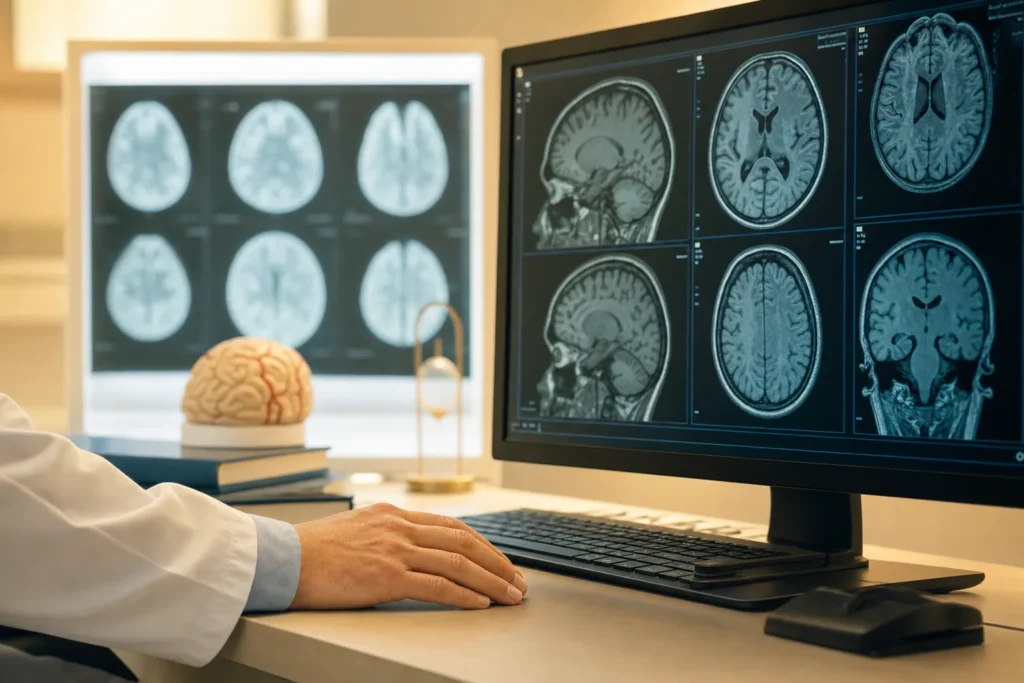
- MRI scan (magnetic resonance imaging): A detailed, radiation-free scan of the brain and spinal cord that can show the lesions caused by MS. This is the single most important test. Sometimes a contrast dye is used to show which lesions are active.
- Lumbar puncture (spinal tap): A small sample of the fluid around the spinal cord is taken with a needle and checked for signs of immune activity, such as oligoclonal bands. This is not always needed, but it can help when the picture is unclear.
- Evoked potential tests: Painless tests that measure how quickly your nerves carry electrical signals, for example in response to a visual pattern.
- Blood tests: Mainly used to rule out other conditions that can mimic MS.
Reaching a confident diagnosis can take time and patience, which can be frustrating. This care is deliberate — doctors want to be sure, because several other conditions can look like MS.
Treatment options
While there is no cure for MS yet, treatment today is genuinely effective at managing the condition, and the options have improved dramatically in recent years. Care usually has three goals: settling relapses, reducing future attacks and protecting the nervous system, and easing day-to-day symptoms. Treatment is tailored to you and your type of MS, and it is normal for the plan to change over time.
Treating relapses: A short course of steroid medicine (such as methylprednisolone) is often used to calm inflammation and help nerves recover more quickly during a significant flare-up. Steroids do not change the long-term course of MS; they shorten the attack.
Disease-modifying therapies (DMTs): These are the cornerstone of long-term treatment, mainly for relapsing forms of MS. They work on the immune system to reduce how often relapses happen, make them less severe, and limit new lesions. They come as injections (such as interferon beta and glatiramer acetate), tablets (such as dimethyl fumarate, teriflunomide and fingolimod), and intravenous infusions given in hospital (such as ocrelizumab, natalizumab and alemtuzumab). Your neurologist will discuss the benefits and possible side effects of each option for your situation.
Treating specific symptoms: A great deal can be done to improve comfort and function — for example, medicines for fatigue, muscle relaxants for spasms and stiffness, treatments for bladder problems, pain relief, and support for mood. Physiotherapy and occupational therapy help with movement, strength and daily activities, and mobility aids can support independence.
The multidisciplinary team: MS care works best as a team effort. This team may include a neurologist, a specialist MS nurse, physiotherapists, occupational therapists, continence and rehabilitation specialists, and psychologists. Together they look after the whole person, not just the scans.
Outlook: what to expect
A diagnosis of MS is understandably frightening, but the outlook is more hopeful than many people fear, and it has improved considerably with modern treatment. The NHS states that most people with MS live a normal or near-normal lifespan. MS is rarely fatal on its own.
It is true that, looking at large groups of people, average life expectancy with MS has historically been a few years shorter than the general population — published studies have suggested figures in the region of several years. These are population-level averages from older data and are not a prediction for any individual. They do not tell you what will happen to you, and they pre-date many of today's treatments. Cleveland Clinic notes that many of the complications that can shorten life are preventable or manageable with good care, and that with modern therapy outcomes have improved significantly.
MS is also very variable in how it affects daily life. The National Multiple Sclerosis Society notes that a large proportion of people with MS do not go on to develop severe disability. Many continue to work, travel, raise families and stay active for decades. Some people do experience progressive difficulty over time, and that is real and deserves support. The most reliable source of information about your personal outlook is your own neurologist, who knows your scans, your symptoms and your response to treatment.
Living with MS and follow-up
Living well with MS is about building a sustainable routine and a supportive team around you. Most people see their neurologist or MS nurse regularly, even when they feel well, so that the condition can be monitored and treatment adjusted. Follow-up usually includes reviewing symptoms, checking how a disease-modifying therapy is working and whether it is well tolerated, and periodic MRI scans to look for any silent changes.
Day-to-day strategies that many people find helpful include:
- Managing fatigue: Pacing activities, planning rest, and prioritising what matters most on any given day.
- Staying active: Regular, gentle exercise suited to your ability can help with strength, balance, mood and fatigue. A physiotherapist can guide you.
- Keeping cool: Heat can temporarily worsen symptoms for some people, so staying cool in hot weather can help.
- Looking after mental health: Anxiety and low mood are common and treatable. Counselling, talking therapies and peer support can make a real difference.
- Not smoking: Stopping smoking is one of the clearest steps shown to help.
It also helps to keep your own records — a simple diary of symptoms, relapses, scans and medicines — and to lean on family, friends and patient organisations. You do not have to manage MS alone.
Planning treatment abroad: what affects cost and how to prepare your records
MS is a long-term condition, so most care is ongoing and based close to home. Some people, however, travel for a specialist neurological assessment, a second opinion, advanced MRI imaging, or to start or review a disease-modifying therapy with an experienced MS team. If you are considering this, it helps to understand what shapes the overall cost — without anyone quoting you a figure before they have seen your case.
Factors that affect the cost of MS-related care include:
- The exact services you need: A consultation and MRI is very different from infusion therapy, inpatient relapse treatment, or a full rehabilitation programme.
- Imaging and tests: The number and type of MRI scans, lumbar puncture, evoked potentials and blood tests.
- Medication: Disease-modifying therapies vary widely in type and how they are given (tablet, injection or infusion), and any medication is an ongoing rather than one-off consideration.
- Length of stay and support: Whether you need only outpatient visits or a hospital stay, plus interpreter services, accommodation and travel.
To prepare your records, gather your previous MRI scans (ideally the actual images on a disc or via a secure link, not just the report), all written reports and letters from your neurologist, a list of your current and past medicines with doses, and a clear timeline of your symptoms and relapses. Having translated, well-organised records helps a specialist give you accurate advice. The most reliable way to understand your options and costs is to request a personalised estimate through a free consultation, where a team can review your records and explain exactly what would be involved.
Why Turkiye, and how to choose a good centre
Turkiye (Turkey) has become a well-known destination for medical travel, with many internationally accredited hospitals and experienced specialist teams, often offering coordinated services for international patients including interpreters and travel support. For a complex, lifelong condition like MS, choosing the right centre matters far more than choosing the right country, so focus on the quality and continuity of care.
Things worth verifying before you commit:
- Accreditation: Look for hospitals with recognised international accreditation such as Joint Commission International (JCI), which assesses patient safety and quality standards. Turkiye has a number of JCI-accredited hospitals.
- A genuine MS specialist team: Check that there is a neurologist with specific experience in MS, ideally supported by MS nurses, radiologists and rehabilitation specialists — the multidisciplinary team that good MS care depends on.
- Modern imaging and diagnostics: Confirm access to high-quality MRI and the ability to follow internationally recognised diagnostic standards.
- Clear communication: You should be able to understand your diagnosis and options in your own language, and receive written reports you can share with doctors back home.
- A plan for continuity: Because MS needs ongoing monitoring, ask how follow-up, repeat prescriptions and future scans will be handled once you return home.
A reputable centre will welcome your questions, give you time, and never pressure you. Be cautious of anyone promising a cure or guaranteed results — that is not how MS care works today.
Self-care, second opinions and clinical trials
While MS cannot yet be prevented, there is a lot you can do to look after yourself and stay in control. Not smoking, staying physically active within your ability, keeping vitamin D at a healthy level if advised by your doctor, sleeping well, managing stress, and keeping up with your follow-up appointments and treatment all support better long-term wellbeing. These steps do not cure MS, but they help you feel and function at your best.
A second opinion is a normal and sensible part of managing a complex, long-term condition. If you are unsure about your diagnosis or your treatment plan, asking another qualified neurologist to review your case can give you confidence and sometimes new options. Good doctors expect and support this.
Research into MS is active and moving quickly. Clinical trials — carefully run studies of new treatments — are one way some people choose to access emerging therapies, always under close medical supervision. If you are interested, ask your neurologist whether any well-regulated trials might be appropriate for you, and make sure you understand the possible benefits and risks before taking part. Reliable, up-to-date information is also available from major health authorities and recognised MS charities, which can be a steadying source of support throughout your journey.
Frequently asked questions
Is multiple sclerosis curable?
Is MS fatal?
What are the first signs of MS?
Is multiple sclerosis hereditary?
How is MS diagnosed?
What is the difference between relapsing-remitting and progressive MS?
Can MS be treated, even though there is no cure?
Does smoking affect MS?
Why do some people consider going to Turkiye for MS care?
What records should I prepare before seeing a specialist abroad?
Should I get a second opinion about my MS?
Is there a screening test for MS?
This article is for general information only and is not medical advice. Always consult a qualified doctor about your individual case.
Considering this procedure?
Send us your photos and questions. A BergemHealth coordinator and a department-head specialist will review your case and reply with honest, personalised guidance — no obligation.
Free consultation