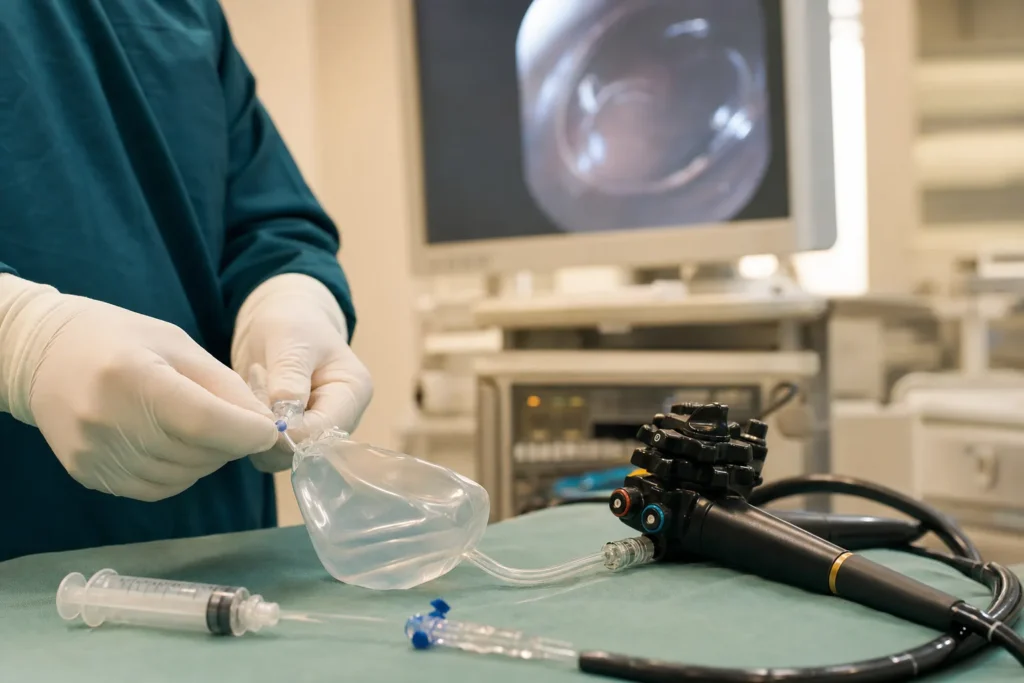
Intragastric balloon
The intragastric balloon (also called a gastric balloon or stomach balloon) is a non-surgical, temporary weight-loss device: a soft balloon placed in your stomach so you feel full sooner and eat less. This guide explains, in plain words, who it suits, how it is placed and removed, what recovery feels like, the risks, realistic results, indicative costs, and what to check if you are thinking about having it done in Turkiye.
- Anaesthesia
- Light sedation (commonly propofol); some clinics use general anaesthesia. Swallowable types may need no sedation.
- Duration
- Placement usually takes around 15-30 minutes.
- Recovery
- Most people return to normal activity within a few days; nausea and cramping are common in the first week.
- Hospital stay
- Day case in most cases; discharge 1-2 hours after placement, sometimes one overnight stay.
Minimum price, for reference only — the final cost is calculated individually after your records are reviewed. You pay the hospital’s price; our service is free for you.
What an intragastric balloon is
An intragastric balloon is a soft, durable balloon that sits inside your stomach for a set period of time, usually a few months. While it is there, it takes up space in the stomach, so you feel full after smaller meals and tend to eat less. The medical term intragastric simply means inside the stomach.
It is important to understand what this device is and is not. It is not surgery: nothing is cut, stapled or permanently changed about your anatomy. Most balloons are placed through the mouth using a thin camera (an endoscope), and the balloon is later removed the same way. It is also temporary. The balloon is a tool to kick-start weight loss and help you learn new eating habits, not a permanent fix on its own.
Doctors describe it as a non-surgical or endoscopic weight-loss treatment. Once in place, the balloon is filled with fluid, usually sterile salt water (saline). It is designed to be a bridge: it gives you a head start while you build the diet and activity changes that keep the weight off after it comes out.
Who is a good candidate (and who should avoid it)
A gastric balloon is generally aimed at people who are overweight or have mild-to-moderate obesity and who have tried to lose weight through diet and exercise without lasting success. Body weight is described using BMI (body mass index), a number that compares your weight to your height. In the United States the balloon is approved for people with a BMI of about 30-40; in Europe it has been used from a BMI of roughly 27 upwards. It can also be considered for people with a higher BMI who have weight-related health problems, or as a temporary step before bariatric (weight-loss) surgery in people with a very high BMI.
Good candidates are usually:
- Willing to follow a medically supervised diet and lifestyle programme, not just rely on the device.
- Free of conditions that make stomach endoscopy unsafe.
- Looking for a reversible, lower-risk option than surgery.
The balloon is not suitable for everyone. Doctors generally advise against it if you:
- Have had previous stomach or weight-loss surgery.
- Are pregnant, breastfeeding, or planning to become pregnant soon.
- Have a large hiatal hernia (where part of the stomach pushes up through the diaphragm), active stomach inflammation, ulcers or bleeding in the upper gut.
- Have a bleeding or clotting disorder, severe liver disease, or take regular anti-inflammatory painkillers (NSAIDs) that irritate the stomach.
- Have alcohol or drug dependence, or an untreated eating or psychiatric disorder.
- Cannot safely have an endoscopy, or have a swallowing or stomach-emptying problem (such as achalasia).
A consultation, often with a diagnostic endoscopy, is used to confirm you are a safe candidate.
Types and techniques
Not all gastric balloons are the same. They differ in how they are placed, what fills them, and how long they stay in. Brand names below are mentioned only as familiar examples, not recommendations.
- Fluid-filled, endoscopically placed balloons (for example Orbera). A deflated silicone balloon is guided into the stomach with an endoscope, then filled with saline, usually around 400-700 mL. These typically stay in for about 6 months and are removed by endoscopy.
- Adjustable balloons (for example Spatz3). Similar to the above, but the volume can be increased or decreased after placement, which can help if side effects are severe or if hunger returns. These can stay in for up to 12 months.
- Swallowable, self-emptying balloons (for example the Elipse/Allurion type). You swallow a capsule, it is filled with fluid through a thin tube, and after a few months (around 4) it opens by itself and passes naturally through the gut. No endoscopy is needed to place or remove it.
Saline-filled balloons often contain a harmless blue dye. If the balloon were to leak, the dye turns the urine blue or green, giving an early warning. Your clinic will recommend the type that best fits your health, your goals and how long you want the device in place.
How it is done (anaesthesia, steps, how long)
For the most common, endoscopically placed balloons, the procedure is short and done as a day case. Here is what typically happens:
- You are given light sedation, most often a medicine called propofol, so you are relaxed and comfortable; some clinics use general anaesthesia. Swallowable balloons may need little or no sedation.
- A thin, flexible camera (endoscope) is passed through your mouth into the stomach so the doctor can see clearly.
- The deflated balloon is guided down and positioned in the stomach.
- It is filled gradually, often in small steps, with saline to the target volume, while the doctor watches on the screen.
- The endoscope and any tube are removed.
The placement itself usually takes about 15-30 minutes. Afterwards you rest in a recovery area, often with fluids through a drip and anti-sickness medicine, and most people go home 1-2 hours later, though some clinics keep you overnight. Because there are no cuts, there is nothing to stitch and no surgical wound to heal.
Recovery, step by step
The first few days are the hardest part. Your stomach is adjusting to a new object inside it, so nausea, vomiting, cramping, bloating and reflux (heartburn) are very common at first. Surveys suggest the large majority of people notice some of these symptoms early on. They usually settle within a few days to a week, helped by anti-sickness and stomach-protecting medicines your team will prescribe.
Your diet is reintroduced in stages so your stomach can cope:
- Clear liquids for the first day or two (water, clear broths, sugar-free drinks).
- Full liquids such as protein shakes and smooth soups for roughly the first week.
- Pureed and then soft foods over the following week or two.
- Regular, balanced meals in small portions after that.
Staying well hydrated is essential, because vomiting can lead to dehydration. Most people feel noticeably better and return to normal daily activity within a few days, with hunger reduced in the first week and a more settled appetite from around week two. Throughout the months the balloon is in place, you work with a dietitian and follow an exercise plan, the part that does the lasting work.
Risks and possible complications
The gastric balloon is considered a relatively low-risk weight-loss option, but no procedure is risk-free. Knowing the possibilities helps you spot problems early.
Common and usually temporary:
- Nausea, vomiting, stomach cramps, bloating and acid reflux in the first days.
- Dehydration if vomiting is severe.
Less common but important:
- Balloon intolerance — ongoing sickness or pain that does not settle, occasionally needing the balloon removed early.
- Stomach ulcers or gastritis (inflammation of the stomach lining).
Rare but serious:
- Deflation and migration — if the balloon leaks and shrinks, it can move into the bowel and cause a blockage, which may need urgent endoscopic or surgical removal. Blue or green urine can be an early sign of a leak in saline balloons.
- Spontaneous over-inflation, gastric or oesophageal perforation (a tear), and acute pancreatitis (inflammation of the pancreas) have been reported.
- Risks linked to sedation or anaesthesia.
Serious complications are uncommon, and deaths are very rare, but they have been reported worldwide, which is why proper patient selection, a trained team and clear emergency instructions matter. Seek urgent medical help for severe or persistent abdominal pain, repeated vomiting, vomiting blood, or discoloured urine.
Results and how long they last
Results vary a lot from person to person and depend heavily on the lifestyle changes you make. On average, studies show people lose somewhere in the region of 8-15% of their total body weight during the months the balloon is in place, which for many is around a quarter of their excess weight. Large reviews of one common balloon found roughly 11-13% total body weight loss at 6 to 12 months. That is typically more than diet and exercise alone achieve, but less than bariatric surgery.
The honest part is what happens afterwards. The balloon is temporary, so the weight can return once it is removed if old habits come back. Long-term data suggest only about half of people keep off 20% of their excess weight one year after removal, and around a quarter maintain that at five years. The people who keep the weight off are those who use the balloon period to build durable habits — smaller portions, better food choices and regular activity. Think of the balloon as a head start and a learning window, not a guarantee.
Costs: indicative ranges and what changes the price
In Turkiye, the intragastric balloon is a private, self-pay procedure. As a broad guide, package prices often fall in the region of 1,800-4,500 EUR. These are indicative ranges only: the actual price varies by case, by the type of balloon, by the surgeon and by the clinic, and is not a quote. Always get a written, itemised quote before you commit.
Things that move the price include:
- Balloon type — adjustable or swallowable balloons can cost more than standard 6-month saline balloons.
- How long it stays in — a 12-month device usually costs more than a 6-month one.
- What the package includes — placement, removal, anaesthesia, dietitian follow-up, medicines and any overnight stay.
- The clinic and surgeon — accreditation, experience and location affect price.
- Extras for travellers — hotel, airport transfers, translation and aftercare support.
When comparing prices, check carefully whether removal and follow-up dietitian support are included, since these are essential and are sometimes priced separately.
Why people travel to Turkiye and how to choose a safe clinic
Turkiye is a well-established destination for weight-loss treatment, with many high-volume clinics, experienced teams and prices that are often lower than in Western Europe or North America. The savings can be real, but the most important thing is choosing a safe, reputable provider — the device is simple, but the care around it (selection, placement, follow-up and emergency cover) is what protects you.
Before you book, verify:
- Hospital accreditation — look for international quality accreditation (for example JCI) and proper Turkish Ministry of Health licensing.
- The doctor's credentials — that the person placing the balloon is a qualified gastroenterologist or bariatric specialist with endoscopy experience, and check their board certification.
- Volume and experience — how many of these procedures the team performs.
- A proper assessment — a reputable clinic confirms you are a suitable candidate, often with an endoscopy, rather than approving everyone.
- Clear aftercare — included dietitian follow-up, written diet plans, and a named contact for problems.
- Emergency arrangements — what happens, and who you call, if you have a complication after you return home.
Be cautious of prices that seem far too low, pressure to decide quickly, or promises of guaranteed results. Honest providers talk openly about risks and about the lifestyle work the balloon requires.
How to prepare and what to ask at your consultation
Good preparation makes the procedure safer and the results better. Your clinic will guide you, but generally you should expect to share your full medical history, list all medicines and supplements (especially blood thinners and anti-inflammatory painkillers), and have any recommended tests or an endoscopy. You will usually be asked not to eat for several hours beforehand, and to arrange someone to accompany you because of the sedation.
Helpful questions to ask:
- Am I a suitable candidate, and which balloon type do you recommend for me, and why?
- How long will the balloon stay in, and how is it removed?
- What sedation or anaesthesia will be used?
- What weight loss is realistic in my case, and what does the diet and exercise plan involve?
- What side effects should I expect, and what medicines will I be given?
- What are the warning signs of a complication, and who do I contact, day or night?
- Exactly what is included in the price — placement, removal, anaesthesia, follow-up, medicines, overnight stay?
- What happens if I need the balloon removed early, or if I have a problem after I fly home?
Plan your trip with recovery in mind: build in enough days for the early nausea to settle before a long flight, and keep your follow-up plan clear before you travel.
Aftercare and travelling for treatment (including when it is safe to fly)
Aftercare is where the balloon earns its keep. For the whole time it is in place you should follow your dietitian's plan, eat small balanced meals, stay well hydrated, and keep up regular activity. Take any stomach-protecting or anti-sickness medicines as prescribed, and avoid lying down straight after eating to reduce reflux. Keep your clinic's emergency contact details to hand.
On flying: there is no fixed universal rule, but two things matter. First, sedation and anaesthesia can leave you drowsy, so you should not fly the same day — plan to travel home only once you have recovered and your team agrees. Second, the early days often bring nausea and vomiting, so most people are far more comfortable allowing a few days before a long flight. A short delay also means any early complication can be dealt with while you are still near the clinic. Always follow the specific advice your treating doctor gives you.
When you return home, keep your follow-up appointments (in person or remotely), report any persistent pain, repeated vomiting or discoloured urine promptly, and make sure removal is arranged at the right time — leaving a balloon in beyond its recommended period raises the risk of complications. Finally, remember that the months around the balloon are your best chance to lock in the habits that keep the weight off for good.
Frequently asked questions
Is an intragastric balloon surgery?
How long does the balloon stay in my stomach?
How much weight can I expect to lose?
Will the weight come back after the balloon is removed?
Does it hurt, and what does recovery feel like?
What are the main risks?
Who should not have a gastric balloon?
How much does an intragastric balloon cost in Turkey?
Is it safe to fly after having the balloon placed?
How is the balloon removed?
Can I get a gastric balloon on the NHS?
Is the balloon better than weight-loss surgery?
Sources
- StatPearls (NCBI Bookshelf) — Intragastric Balloon
- Penn Medicine — Endoscopic Gastric Balloon
- Baylor Medicine — Intragastric Balloons
- Main Line Health — Intragastric Balloon Surgery
- Brigham and Women's Hospital — Intragastric Balloon Weight Loss Procedure
- Six intragastric balloons: which to choose? (PMC review)
- FDA — ORBERA Intragastric Balloon System Patient Information Booklet
- South Tees Hospitals NHS Foundation Trust — Gastric balloon
This article is for general information only and is not medical advice. Always consult a qualified doctor about your individual case.
Specialists in Bariatric Surgery
Doctors of the department we work with directly. Which doctor takes your case is decided after the specialists have reviewed your records — your coordinator confirms it, not this page.



Considering this procedure?
Send us your photos and questions. A BergemHealth coordinator and a senior specialist will review your case and reply with honest, personalised guidance — no obligation.
Free consultation