Severe asthma
If you or someone you love has asthma that just will not settle down, despite using the inhalers exactly as prescribed, you are not alone, and you are not doing something wrong. A small group of people with asthma have a form that needs more specialised care. This guide explains, in plain language, what severe asthma is, how doctors tell it apart from asthma that is simply hard to control, and the modern treatments, including biologic medicines, that can help many people get their lives back. Our aim is to inform you calmly and honestly, not to alarm you, and to help you have a more confident conversation with a specialist.
What severe asthma is
Asthma is a long-term condition in which the airways (the tubes that carry air in and out of your lungs) become inflamed, swollen and narrowed, and can fill with mucus. This makes it harder for air to pass through, which causes coughing, wheezing, breathlessness and a tight feeling in the chest. Asthma is very common: the World Health Organization estimates it affected around 363 million people in 2023, and it is the most common long-term condition among children.
Severe asthma is a specific medical term, not just a way of saying "my asthma feels bad." According to the Global Initiative for Asthma (GINA), severe asthma is asthma that stays uncontrolled even when you are taking high-dose inhaled steroid medicine combined with a second controller (and using it correctly), or asthma that needs that high level of treatment to stop it from flaring up. In plain words: you are doing everything right, taking strong preventer treatment as prescribed, and your asthma is still causing trouble.
This is different from what doctors call difficult-to-treat asthma, where symptoms persist for a reason that can be fixed, such as poor inhaler technique, not taking the medicine regularly, ongoing exposure to a trigger, or another health problem getting in the way. That distinction matters, because the next steps are very different. Severe asthma is uncommon. Asthma + Lung UK notes it affects around 4% of people with asthma, so most people with asthma do not have this form. For those who do, specialist care can make a real difference.
Types and subtypes of severe asthma
Asthma is not a single disease. Doctors increasingly think of it as several patterns of airway inflammation, sometimes called "phenotypes" (the observable type of a condition). Knowing which pattern you have helps match you to the right treatment, because some of the newest medicines only work for certain types.
A key idea is Type 2 (T2) inflammation. This is a particular kind of immune-system activity in the airways. When it is present, doctors can often detect markers such as a raised number of a white blood cell called eosinophils in the blood, a raised level of a breath gas called FeNO (fractional exhaled nitric oxide, a sign of airway inflammation), or evidence of allergy. Common patterns include:
- Allergic asthma: symptoms are driven by allergens such as pollen, dust mites, mould or pet dander. The body produces an antibody called IgE in response.
- Eosinophilic asthma: high numbers of eosinophils are involved, and flare-ups can be frequent. This type often responds well to modern biologic medicines.
- Non-allergic (non-T2) asthma: symptoms are not clearly linked to allergy and these markers are low. This pattern can be harder to treat and may involve a different white cell called a neutrophil.
Other recognised patterns include exercise-induced asthma, occupational asthma (triggered by something at work), and cough-variant asthma (where a persistent cough is the main symptom). Many people have features of more than one type, which is why an expert assessment is so useful.
Causes and risk factors
The exact cause of asthma is not fully known. It develops from a mix of inherited tendencies and things in the environment. You cannot "catch" asthma, and having it is not anyone's fault.
Factors that increase the chance of developing asthma include:
- A family history of asthma or allergies.
- A personal history of allergies, hay fever or eczema.
- Being born prematurely or with a low birth weight.
- Childhood chest infections, such as those caused by certain viruses.
- Exposure to tobacco smoke (including before birth or second-hand) or to air pollution.
- Obesity, which can affect breathing and inflammation.
Once you have asthma, certain things can set off symptoms or a flare-up. Common triggers include respiratory infections like colds and flu, allergens (pollen, dust mites, pets, mould), cold air, exercise, air pollution, tobacco smoke, strong smells or chemical fumes, certain medicines, and emotional stress. Not everyone reacts to the same triggers, and part of living well with asthma is learning your own. Importantly, having a more severe form of asthma is generally about how your airways and immune system behave, not about having done anything to deserve it.
Signs and symptoms, and when to see a doctor
The main symptoms of asthma are wheezing (a whistling sound when breathing out), coughing, shortness of breath, and a tight or heavy feeling in the chest. With asthma these symptoms tend to come and go, often vary in intensity, and may be worse at night or in the early morning, or after exposure to a trigger.
In severe asthma, symptoms tend to be more frequent or persistent and harder to control despite strong treatment. Signs that asthma is not well controlled include needing your reliever (rescue) inhaler more than a couple of times a week, waking at night because of symptoms, your asthma limiting what you can do day to day, and having flare-ups that need steroid tablets. GINA considers asthma uncontrolled when there is poor symptom control, two or more flare-ups a year needing steroid tablets, or a serious flare-up needing hospital care.
See a doctor if you think you may have asthma, if your symptoms are not well controlled on your current treatment, or if you are using your reliever inhaler often. Seek emergency help right away during an asthma attack if your symptoms get rapidly worse, your reliever inhaler is not helping or its effect wears off quickly, you are too breathless to speak, eat or sleep, your breathing is fast and you cannot catch your breath, or your lips or fingertips look blue or grey. An asthma attack can become life-threatening, so it is always better to get help early than to wait.
Screening and early detection
There is no population-wide screening test for asthma in the way there is for some cancers. You cannot, for example, be routinely checked for asthma at a certain age the way you might be screened for breast or bowel cancer. Instead, asthma is found when symptoms appear and a person seeks medical advice.
What does exist, and matters a great deal, is good ongoing monitoring once asthma is diagnosed. Many guidelines recommend a regular asthma review (often once a year, or more often if asthma is not settled) to check how well it is controlled, review inhaler technique, and adjust treatment. For severe asthma in particular, the earlier a person is recognised as needing more than standard treatment and is referred to a specialist, the sooner they can be assessed for advanced options. So while there is no screening programme, paying attention to warning signs, such as needing reliever inhalers often, repeated flare-ups, or frequent courses of steroid tablets, is the practical equivalent of "early detection" for severe asthma. If those signs are present, it is reasonable to ask your doctor whether a specialist referral is appropriate.
How severe asthma is diagnosed
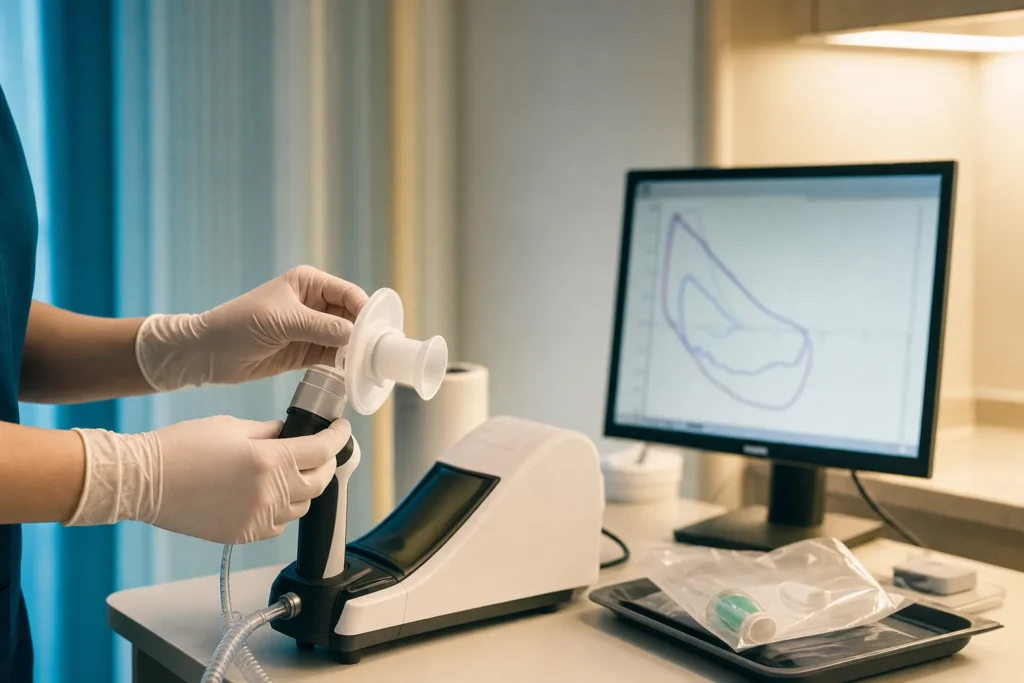
Diagnosing asthma starts with your medical history and a physical examination, followed by breathing tests. The most common is spirometry, where you blow into a machine that measures how much air you can breathe out and how fast; this can show whether your airways are narrowed and whether they open up with medication. A peak flow meter is a simple handheld device you can use at home to track your fastest breath out over days or weeks, which helps reveal patterns. A FeNO test measures inflammation in your airways from a sample of your breath. Doctors may also do blood tests to check your eosinophil count and IgE level, and allergy testing. A chest X-ray or scan may be used to rule out other causes.
Confirming severe asthma is a careful, step-by-step process rather than a single test. A specialist will first make sure the diagnosis of asthma is correct, then systematically check the things that commonly make asthma look severe when it is not: inhaler technique, whether the preventer is being taken regularly, ongoing exposure to triggers, and other conditions such as nasal allergies, acid reflux, obesity or anxiety that can worsen breathing symptoms. Only when asthma remains uncontrolled despite all of this being addressed, on high-dose treatment, is it classed as severe. The specialist will also work out your inflammation type using the markers above (eosinophils, FeNO, allergy/IgE), because this guides which advanced treatments are likely to help. Unlike cancer, asthma is not given a numbered "stage"; instead it is described by how well controlled it is and what type of inflammation is driving it.
Treatment options
The encouraging news is that severe asthma has more treatment options today than ever before. The goals are to control symptoms, prevent flare-ups, protect your lungs over the long term, and reduce side effects from medicines, especially from steroid tablets. Care is usually delivered by a multidisciplinary team, which may include a respiratory (lung) specialist, a specialist asthma nurse, a pharmacist, an allergy doctor and sometimes a physiotherapist and dietitian working together.
Inhaled and standard medicines. The foundation remains inhalers. Preventer (controller) inhalers contain inhaled corticosteroids that reduce airway inflammation and are taken daily, often combined with a long-acting bronchodilator that keeps the airways open. Reliever (rescue) inhalers quickly ease symptoms during a flare-up. Some people use a single combination inhaler for both purposes (a MART approach). Add-on options include a long-acting muscarinic inhaler (such as tiotropium), and tablets such as leukotriene receptor antagonists (for example montelukast).
Biologic medicines. For severe asthma with the right inflammation markers, biologics have transformed care. These are targeted treatments, given by injection under the skin or by a drip into a vein, that block specific molecules driving inflammation. Named examples and their targets include omalizumab (blocks IgE, for allergic asthma), mepolizumab, reslizumab and benralizumab (target the interleukin-5 pathway, for eosinophilic asthma), dupilumab (blocks the interleukin-4 and interleukin-13 pathway), and tezepelumab (blocks an upstream signal called TSLP). They are given anywhere from every two to every eight weeks depending on the medicine. Crucially, biologics are an add-on: you keep taking your usual inhalers. They are not a cure, but for the right person they can reduce flare-ups, improve quality of life, and let many people lower or stop steroid tablets. Specialists usually review whether a biologic is working at around six months.
Other options. Where biologics are not suitable, a specialist may consider long-term low-dose antibiotic therapy (azithromycin) for certain patterns, or bronchial thermoplasty, a procedure that uses gentle heat delivered during a bronchoscopy to reduce the excess muscle in the airway walls. Steroid tablets (oral corticosteroids) can be life-saving during flare-ups and are sometimes needed long term, but because long-term use carries real side effects, modern care aims to use the lowest possible dose and to reduce reliance on them wherever safe.
Outlook: what to expect
It is natural to want to know what severe asthma means for the years ahead. The honest, balanced picture is this: asthma cannot currently be cured, but for most people it can be controlled well, and WHO states clearly that with the right treatment people can live full, active lives. Severe asthma is more challenging, and it can carry a heavier burden, more flare-ups, more medical visits, and a greater impact on daily life if it is not well managed. But the arrival of biologic treatments over the past decade has meaningfully improved the outlook for many people who previously had few options.
What your own future looks like depends on many things: the type of inflammation you have, how your asthma responds to treatment, how consistently triggers and other health conditions are managed, and whether you have access to specialist care. No article can predict how any one person will do, and this guide is not a personal prognosis. What can be said with confidence is that uncontrolled severe asthma is associated with real risks, including life-threatening attacks, while well-controlled asthma is associated with far fewer problems, which is exactly why getting the right specialist assessment and treatment is so worthwhile. If you feel your asthma is not under control, that is a reason to seek expert help, not a reason to despair.
Living with severe asthma and follow-up
Living well with severe asthma is a partnership between you and your care team, built around steady routines. A few habits make a large difference:
- Use your medicines as prescribed, and ask a nurse or pharmacist to check your inhaler technique. Poor technique is one of the most common reasons asthma stays out of control.
- Have a written asthma action plan. This tells you what to do day to day, how to recognise when your asthma is worsening, and exactly what steps to take during a flare-up.
- Carry your reliever inhaler at all times, and know the emergency warning signs.
- Learn and reduce your triggers where you can, and keep up with recommended vaccinations such as flu, since infections are a common cause of flare-ups.
- Look after the whole picture: staying active within your limits, keeping to a healthy weight, not smoking, and treating related conditions like hay fever or reflux all help your breathing.
Regular follow-up is part of severe asthma care. Specialist teams typically review symptoms, lung function, flare-up frequency, medication use and any side effects, and for biologics they assess the response at set points such as six months. Severe asthma can also take an emotional toll, and feeling anxious or low is understandable; mention this to your team, as support is part of good care. Many countries have patient charities and helplines offering practical advice and peer support.
Planning treatment abroad: what affects cost and preparing your records
Some people with severe asthma look into specialist assessment or treatment in another country, whether to access a comprehensive severe-asthma work-up, biologic therapy, or a procedure such as bronchial thermoplasty. If you are considering care abroad, it helps to understand what shapes the overall cost, so you can plan realistically and ask the right questions.
Costs are influenced by factors such as: how extensive the diagnostic work-up is (breathing tests, FeNO, blood tests, allergy testing, imaging); which treatment is planned (an ongoing biologic versus a one-off procedure, and the specific medicine, since biologics differ in price and dosing schedule); how long any biologic will be continued and where the doses will be given; whether hospital admission or day-case care is needed; the seniority of the specialist team; and practical travel matters like flights, length of stay, accommodation, interpreter support and follow-up. Because severe asthma is usually a long-term condition managed over months and years rather than a single operation, continuity of care, how follow-up and repeat doses will be handled after you return home, is just as important as the upfront price.
To prepare, gather a clear summary of your medical records: your asthma history, all current and past medicines and inhalers, recent lung function and FeNO results, blood eosinophil counts and IgE/allergy results, records of flare-ups and any hospital admissions, and a list of other health conditions. Translated copies are helpful. The most reliable way to understand likely costs is to request a personalised estimate after a specialist has reviewed your records, because the plan, and therefore the price, depends entirely on your individual situation. A free consultation is a sensible first step to get tailored information without commitment.
Why Turkiye, and how to choose a good centre
Turkiye has become a well-known destination for international patients seeking specialist medical care, with hospitals that treat patients from many countries and offer services in several languages. For a long-term condition like severe asthma, the priority is not a destination's reputation in general but the quality and continuity of the specific respiratory (pulmonology) care you would receive.
When choosing a centre, it is wise to verify a few things rather than rely on marketing claims:
- Accreditation: look for hospitals with recognised quality accreditation (for example international accreditation such as JCI) and appropriate national licensing.
- A dedicated specialist team: severe asthma is best managed by experienced respiratory physicians working within a multidisciplinary team, ideally a centre that regularly assesses and treats severe asthma, including biologic therapy.
- Proper assessment: a trustworthy centre will insist on confirming the diagnosis and identifying your inflammation type before recommending advanced treatments, rather than promising a particular medicine before seeing your results.
- Clear, written information: on the proposed plan, what it involves, realistic expectations, and how follow-up and any repeat biologic doses will be arranged with you and your doctors at home.
- Honest communication: be cautious of anyone promising a "cure" or guaranteed results; severe asthma is managed, not cured, and responsible specialists will say so.
A reputable medical-travel partner can help you compare suitable centres, arrange a specialist review of your records, and coordinate logistics, while leaving all medical decisions to the qualified specialists who examine you.
Self-care and getting a second opinion
Because asthma cannot be prevented entirely or cured, the most useful steps focus on protecting your lungs and keeping the condition controlled. Day-to-day self-care that genuinely helps includes not smoking and avoiding second-hand smoke, reducing exposure to your known triggers, keeping up with recommended vaccinations, staying physically active within a level that suits you, maintaining a healthy weight, and taking your preventer treatment consistently even when you feel well. These measures do not replace medical treatment, but they make the treatment work better and can reduce flare-ups.
If your severe asthma is not improving, or if you have been told there is nothing more to try, it is entirely reasonable to seek a second opinion from a severe-asthma specialist or centre. Asthma care has changed rapidly, and an option that did not exist or was not suitable a few years ago may be available now, particularly the range of biologic medicines. A second opinion is not a criticism of your current doctors; it is a normal part of taking charge of a long-term condition. Bring your full records, write down your questions in advance, and do not hesitate to ask which inflammation type you have and whether you are a candidate for a biologic or other advanced treatment. The right specialist will welcome those questions.
Frequently asked questions
What is the difference between asthma and severe asthma?
Is severe asthma the same as 'difficult-to-treat' asthma?
Can severe asthma be cured?
What are biologic medicines for asthma, and who can have them?
How is the right biologic chosen?
What is bronchial thermoplasty?
Are steroid tablets safe to take long term for severe asthma?
When should I treat an asthma attack as an emergency?
How is severe asthma diagnosed?
Why might someone consider treatment for severe asthma in Turkiye?
What affects the cost of severe asthma care, and how do I get a price?
Should I get a second opinion if my severe asthma is not improving?
This article is for general information only and is not medical advice. Always consult a qualified doctor about your individual case.
Considering this procedure?
Send us your photos and questions. A BergemHealth coordinator and a department-head specialist will review your case and reply with honest, personalised guidance — no obligation.
Free consultation