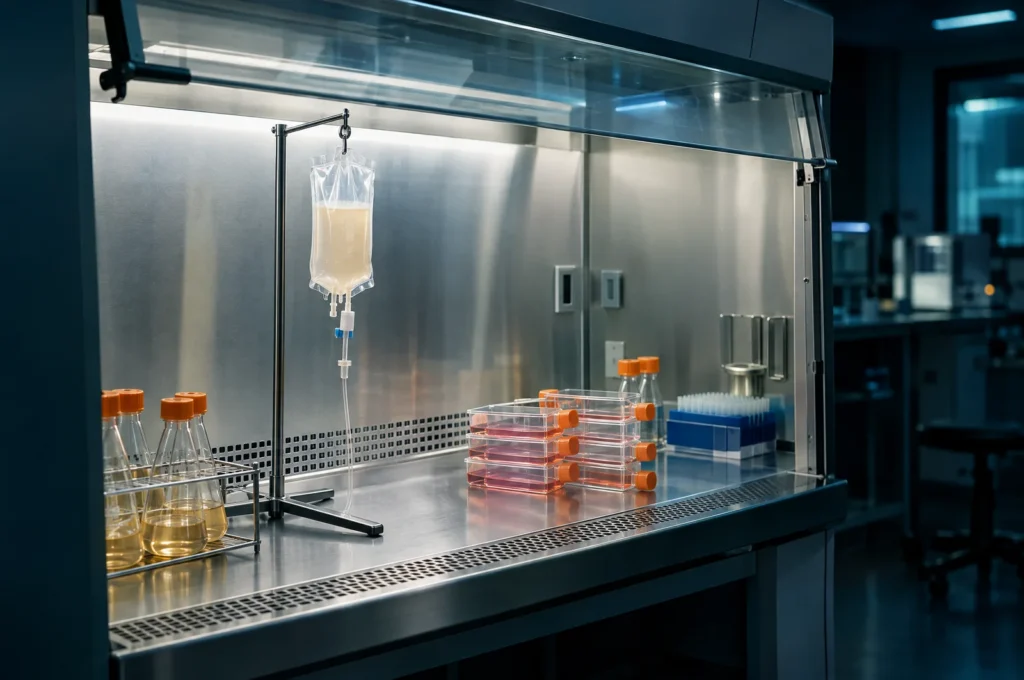
- What it is. CAR T-cell therapy collects your own T-cells, genetically re-programmes them in a lab to recognise a marker on cancer cells, then re-infuses them as a one-time “living drug.”
- Where it works best. Blood cancers — certain leukaemias, lymphomas and multiple myeloma. Seven CAR T products are approved by the FDA, all for blood cancers (FDA, 2025).
- Solid tumours are changing. The world’s first CAR T-cell therapy for a solid tumour (stomach cancer) was approved in China in June 2026 (CARsgen/NMPA, 2026). For bowel and lung cancer, CAR T remains in clinical trials.
- It can be powerful but is not a guaranteed cure. In relapsed paediatric leukaemia, 82% of patients went into remission (ELIANA, JCO, 2023); in heavily pre-treated myeloma, about one-third stayed disease-free for 5+ years (CARTITUDE-1, JCO, 2025). Relapse is still common.
- Real risks. Cytokine release syndrome (CRS) and neurological effects (ICANS) are the main early risks; both are now well understood and managed in specialist centres (ASCO, 2024).
- In Turkey. Turkey developed its own academic CD19 CAR T (ISIKOK-19) and is expanding access. Akdeniz University in Antalya received a Health Ministry licence for its CAR-T production centre in spring 2026 and is preparing its first treatments; as of early October 2026 no treated patient has been publicly reported.
What is CAR T-cell therapy?
CAR T-cell therapy (chimeric antigen receptor T-cell therapy) is a form of immunotherapy that genetically re-engineers a patient’s own T-cells so they can find and destroy cancer cells. T-cells are the immune system’s natural killers, but cancer often hides from them. CAR T-cell therapy removes that blind spot.
The process turns biology into a manufactured medicine in five conceptual steps:
- Collect. T-cells are separated from your blood.
- Engineer. In a laboratory, the cells are given a new gene that builds a chimeric antigen receptor — a synthetic “hook” on the cell surface.
- Target. That receptor is designed to latch onto a specific protein found on cancer cells — most often CD19 (on B-cell leukaemias and lymphomas) or BCMA (on myeloma cells).
- Grow. The re-engineered cells are multiplied into the hundreds of millions.
- Re-infuse. They are returned to your bloodstream, where they multiply further, recognise the cancer and kill it — which is why CAR T is often called a “living drug.”
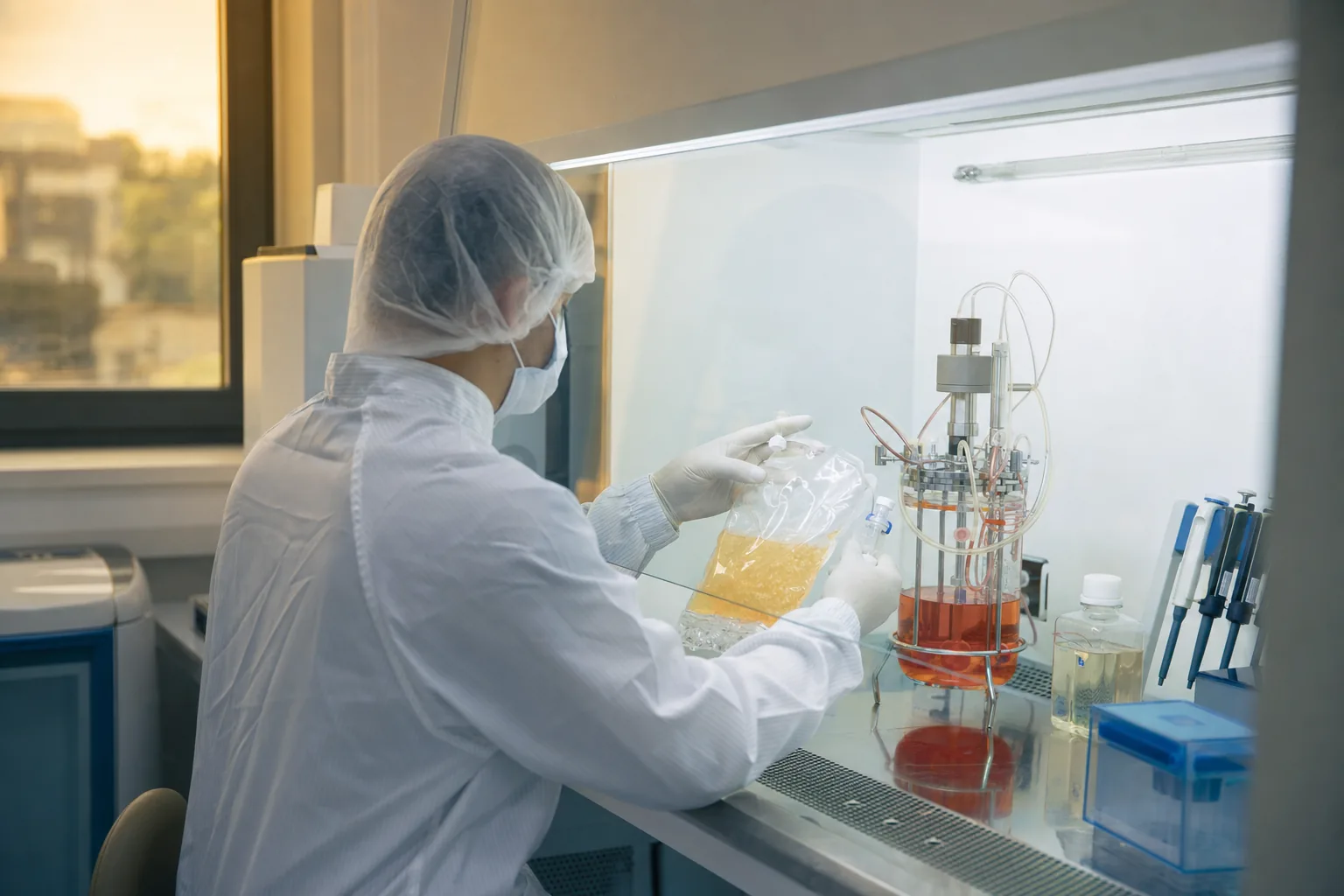
Most approved CAR T products are autologous — made from your own cells. A newer allogeneic (“off-the-shelf”) approach uses cells from a healthy donor; in early studies, cells from a single donor were enough to produce CAR T for roughly one hundred patients, removing the wait for individual manufacturing (Nature Medicine, 2025). Off-the-shelf products are still mostly investigational.
Which cancers can CAR T-cell therapy treat?
Today, CAR T-cell therapy is established for blood (haematological) cancers. Approved indications include:
- B-cell acute lymphoblastic leukaemia (B-ALL) — especially in children and young adults.
- Large B-cell lymphoma (including DLBCL), follicular lymphoma, mantle cell lymphoma, and marginal zone lymphoma — the last added when the FDA approved Breyanzi for marginal zone lymphoma on 4 December 2025 (FDA, 2025).
- Chronic lymphocytic leukaemia (CLL) and small lymphocytic lymphoma (SLL).
- Multiple myeloma — using BCMA-targeted products.
Solid tumours are the next frontier — and 2026 was a turning point. For years, no CAR T-cell therapy was approved for any solid tumour. That changed on 22 June 2026, when China’s regulator (NMPA) approved satri-cel (satricabtagene autoleucel), a Claudin18.2-targeted CAR T, for advanced stomach (gastric/GEJ) cancer — the world’s first approved CAR T-cell therapy for a solid tumour (CARsgen/NMPA, 2026).
For bowel (colorectal) and lung cancer, CAR T-cell therapy is not yet an approved, routine treatment anywhere — it is studied only in clinical trials. We explain exactly where that science stands below.
Approved CAR T-cell therapies in 2026
As of 2026 there are seven FDA-approved CAR T-cell therapies, all for blood cancers (FDA, 2025). Most are also approved in the EU by the EMA.
| Therapy (brand / generic) | Target | Main approved cancers | First approved |
|---|---|---|---|
| Kymriah (tisagenlecleucel) | CD19 | Paediatric/young-adult B-ALL; large B-cell & follicular lymphoma | 2017 |
| Yescarta (axicabtagene ciloleucel) | CD19 | Large B-cell & follicular lymphoma (2nd line since 2022) | 2017 |
| Tecartus (brexucabtagene autoleucel) | CD19 | Mantle cell lymphoma; adult B-ALL | 2020 |
| Breyanzi (lisocabtagene maraleucel) | CD19 | Large B-cell, follicular, mantle cell, CLL/SLL, marginal zone lymphoma | 2021 |
| Abecma (idecabtagene vicleucel) | BCMA | Multiple myeloma (after ≥2 prior lines since 2024) | 2021 |
| Carvykti (ciltacabtagene autoleucel) | BCMA | Multiple myeloma (after ≥1 prior line since 2024) | 2022 |
| Aucatzyl (obecabtagene autoleucel) | CD19 | Adult relapsed/refractory B-ALL | 2024 |
In 2024, several of these moved to earlier lines of treatment — for example Abecma and Carvykti can now be used after fewer prior therapies than before (FDA, 2024). Outside the US, satri-cel (China, 2026) is the first approved CAR T for a solid tumour, and Turkey has its own academic CD19 CAR T, ISIKOK-19 (see CAR T-cell therapy in Turkey below).
CAR T for bowel and lung cancer: where the science stands in 2026
This is one of the most searched — and most misunderstood — questions about CAR T-cell therapy, so we will be precise.
For colorectal (bowel) and lung cancer, CAR T-cell therapy is investigational. It is available only inside clinical trials, not as a standard approved treatment. The June 2026 Chinese approval of satri-cel for stomach cancer proves solid-tumour CAR T is now real — but it does not mean bowel or lung CAR T is approved.
Why solid tumours are harder than blood cancers. Four obstacles (JCO review, 2024):
- Hostile environment. Solid tumours build an immunosuppressive “microenvironment” that switches off incoming T-cells.
- Moving target. Solid-tumour cells vary, so cancer can “escape” by losing the targeted protein (antigen heterogeneity).
- Getting in. Dense tissue and matrix physically block CAR T-cells from reaching the tumour.
- On-target, off-tumour toxicity. If the target protein also appears on healthy organs, the therapy can injure them — an early HER2-targeted trial caused fatal lung toxicity, and mesothelin-targeted cell therapies have caused serious lung complications (peer-reviewed reports).
What the bowel-cancer trials show. Early-phase (Phase I/II) trials are testing CAR T against colorectal targets such as GUCY2C, CEA and CDH17. The best-documented result is GCC19CART (a GUCY2C-directed CAR T) in relapsed/refractory metastatic colorectal cancer: a 40% objective response rate with median overall survival of about 22.8 months in a small dose-finding study (JAMA Oncology, 2024). These are promising early signals — not proof of a durable cure.
What the lung-cancer trials show. CAR T for non-small-cell lung cancer (targets such as ROR1, mesothelin and others) is at an even earlier stage, with mostly disease-stabilisation rather than tumour shrinkage so far. For melanoma and some other solid tumours, the cell therapies that have reached approval are a different type — TIL therapy (lifileucel/Amtagvi, FDA, 2024) — not CAR T.
The honest bottom line. For bowel and lung cancer in 2026, CAR T-cell therapy is a research treatment that may be accessed through a clinical trial at an academic centre, not an off-the-shelf cure. Anyone offering it should make clear whether it is a standard therapy or part of a study — and for these two cancers, today, it is a study.
The CAR T-cell therapy process, step by step
From referral to recovery, CAR T-cell therapy usually unfolds over a few intense weeks. Here is the typical journey.

| Step | What happens | Typical timing |
|---|---|---|
| 1. Evaluation | Confirm diagnosis, cancer type and that prior treatments and organ function fit the criteria. | Days–weeks |
| 2. Leukapheresis | Blood is drawn through a machine that separates out your T-cells and returns the rest — like donating platelets. | A few hours |
| 3. Manufacturing | Your cells are engineered and grown into the final product. Commercial products take roughly 2–5 weeks; academic processes can be faster (the Turkish ISIKOK-19 averaged ~10.5 days). | ~2–5 weeks |
| 4. Bridging therapy | If needed, interim treatment keeps the cancer in check while cells are made. | During manufacturing |
| 5. Lymphodepleting chemotherapy | A short, low-dose chemo (usually fludarabine + cyclophosphamide) clears space so the new cells can expand. | ~3 days |
| 6. Infusion | The CAR T-cells are given back — usually a single infusion, 2–7 days after chemo. | 1 day |
| 7. Monitored recovery | Close monitoring for CRS and neurological effects. Since a 2025 FDA change, patients typically stay near the centre for ~2 weeks (previously 4). | ~2 weeks nearby |
| 8. Follow-up | Blood counts, immune recovery and scans are tracked for months to years; long-term safety follow-up is recommended for up to 15 years. | Months–years |
How well does CAR T-cell therapy work?
For the right blood cancers, results can be striking — but outcomes vary by disease, and relapse is honestly common. Below are landmark results, each with its source.
| Cancer (trial) | Response | Longer-term outcome | Source |
|---|---|---|---|
| Paediatric/young-adult B-ALL (ELIANA, Kymriah) | 82% went into remission | 3-year overall survival 63% | JCO, 2023 |
| Refractory large B-cell lymphoma (ZUMA-1, Yescarta) | 83% response, 58% complete | 5-year overall survival 42.6% | Blood, 2023 |
| 2nd-line large B-cell lymphoma (ZUMA-7, Yescarta) | 83% vs 50% with standard care | 4-year overall survival ~55% vs ~46% | NEJM, 2023 |
| Relapsed/refractory multiple myeloma (CARTITUDE-1, Carvykti) | ~98% response | ~1 in 3 disease-free at 5 years; median survival 60.7 months | JCO, 2025 |
What these numbers really mean. CAR T can deliver deep, durable remissions that older treatments could not — ZUMA-7 was the first trial in nearly 30 years to improve survival in this lymphoma (NEJM, 2023). At the same time, it is not a guaranteed cure: in the myeloma study, 47% of patients relapsed within 5 years (JCO, 2025), and in lymphoma a substantial share progress despite treatment. The realistic goal is a meaningful chance of long, treatment-free remission — sometimes effectively a cure for a subset — not certainty for everyone.
Side effects and risks of CAR T-cell therapy
The same immune activation that fights cancer can cause side effects. In experienced centres these are anticipated and managed with clear protocols (ASCO, 2024).
Cytokine release syndrome (CRS) is the most common early effect — a fever-and-inflammation reaction as the cells switch on. Reported in anywhere from roughly half to more than 90% of patients depending on the product, it ranges from mild flu-like symptoms to, rarely, low blood pressure and breathing problems. The antidote, tocilizumab (an IL-6 blocker), is given for moderate or severe CRS, with steroids added if needed.
Neurological effects (ICANS) — temporary confusion, difficulty speaking or, rarely, seizures — occur in about 20–70% of patients depending on the product and are treated with corticosteroids. Most cases resolve.
Other risks include low blood counts (cytopenias), increased infection risk, and — because CD19/BCMA therapies also remove healthy B-cells — low antibody levels (hypogammaglobulinaemia), sometimes needing immunoglobulin (IVIG) replacement (EBMT/EHA, 2022). In January 2024 the FDA added a boxed warning about a rare risk of secondary T-cell cancers after CAR T; patients are advised to be monitored life-long, with safety follow-up recommended for up to 15 years (FDA, 2024).
Signs CAR T-cell therapy may be a strong option
- A B-cell leukaemia, lymphoma or myeloma that has relapsed or resisted standard therapy
- Adequate organ function and fitness for the process
- Treatment at a centre experienced in managing CRS and ICANS
- Realistic goals discussed: durable remission is possible, not guaranteed
Reasons CAR T needs caution or a careful conversation
- Active, uncontrolled infection or very poor general fitness
- Significant heart, lung, kidney or liver problems that raise CRS/ICANS risk
- A cancer type with no approved or trial CAR T option
- Inability to stay near a specialist centre for the monitoring period
Who is eligible for CAR T-cell therapy?
Eligibility is decided by a haematologist/oncologist and depends on several factors:
- Cancer type. The cancer must match an approved (or trial) CAR T target — chiefly B-cell leukaemias, lymphomas and multiple myeloma.
- Line of treatment. CAR T is typically used when standard treatments have failed or relapsed; for some lymphomas and myeloma it is now approved at earlier lines (FDA, 2024).
- Fitness and organ function. Heart, lung, kidney and liver function must be good enough to tolerate the process and any side effects.
- Age. CD19 CAR T (Kymriah) is specifically approved for children and young adults with B-ALL; other products are for adults.
- Disease control. The cancer should be controllable enough to allow the weeks needed for manufacturing, sometimes with bridging therapy.
Because criteria are detailed and product-specific, the practical first step is a specialist review of your pathology and treatment history to confirm whether you qualify — and for which product or trial.
How much does CAR T-cell therapy cost?
CAR T-cell therapy is one of the most expensive medicines ever made, because each dose is manufactured individually. Published list prices for the cell product alone are in the order of US$370,000–500,000+ (for example, Yescarta launched at about $373,000; the melanoma TIL therapy lifileucel was priced at $515,000). The total cost is higher once hospital stay, chemotherapy and management of side effects are included.
The medical-tourism angle — honestly. Countries with strong academic centres are working to make cell therapy more affordable. Turkey’s own academic CAR T (ISIKOK-19) was reported to be safe, economical and effective in a small pilot study of seven treated patients (Turkish Journal of Hematology, 2022). However, reliable, published prices for CAR T-cell therapy in Turkey are not yet established, and any figure should come directly from the treating hospital in writing, for your specific case and product. Any indicative range shown on our site (for example on our oncology page) is for orientation only, not a quote; we help you obtain a verified quote from the centre itself.
CAR T-cell therapy in Turkey
Turkey has a strong record in haematology and bone-marrow transplantation — the clinical foundation CAR T-cell therapy is built on — and it has been developing domestic capability in cell therapy. An early milestone was ISIKOK-19, Turkey’s first academic CD19 CAR T, manufactured under GMP conditions and trialled in relapsed leukaemia and lymphoma with national-research (TÜBİTAK) funding (registered trial NCT04206943); 72% of treated patients responded in its pilot, proving domestic capability even though durability in heavily pre-treated patients was limited.
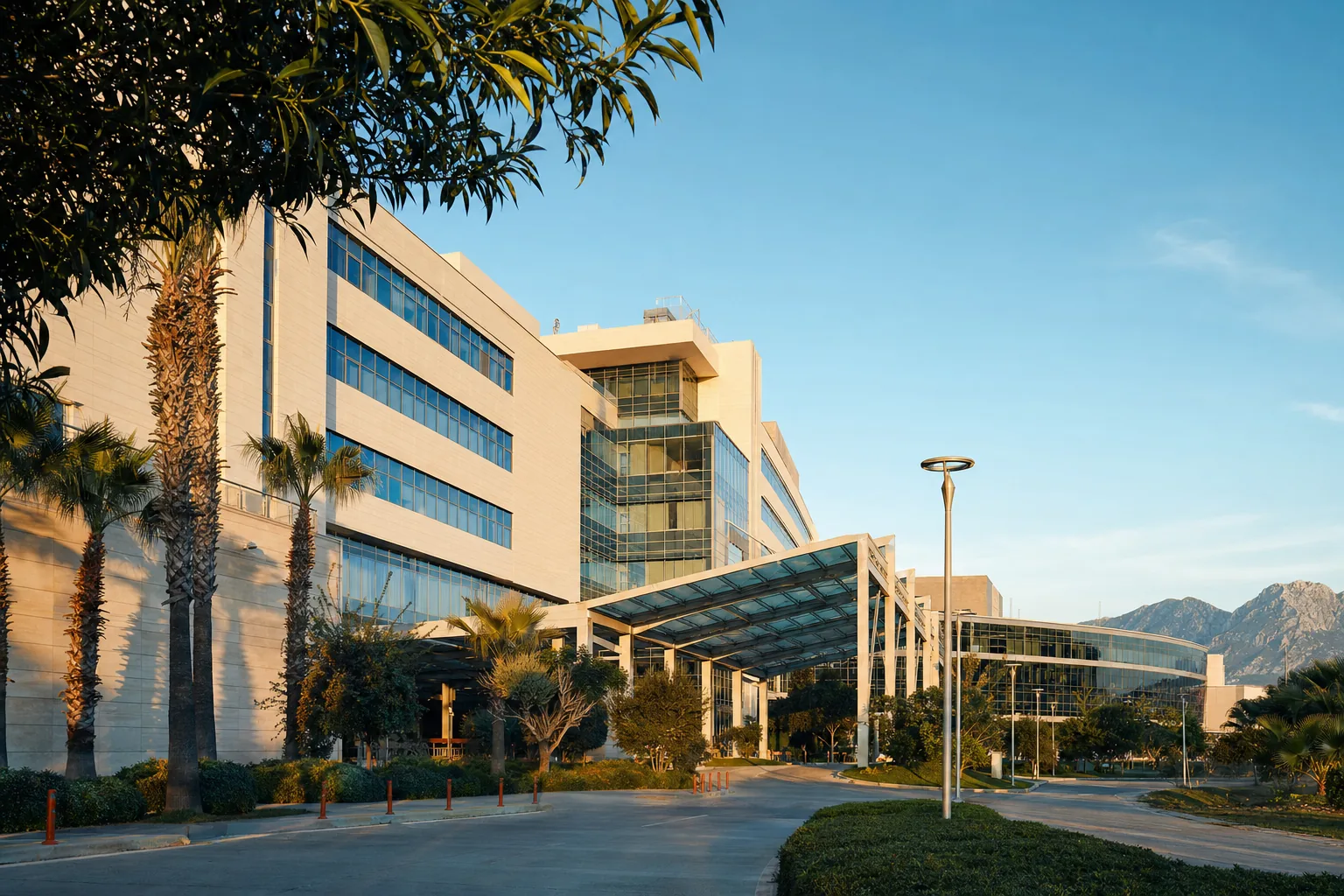
The most significant recent step is at Akdeniz University in Antalya, a BergemHealth partner centre. In 2026, Akdeniz established what Turkish national media (Hürriyet, June 2026) described as Turkey’s first university-based CAR-T and cellular-therapies production centre — and received its Health Ministry licence in spring 2026. The centre is preparing its first treatments: in May 2026 nine patients were selected and samples taken for initial test runs, and as of early October 2026 no treated patient has been publicly reported. Its significance is concrete: until recently, Turkish patients’ cells were typically shipped abroad (to centres in Israel, Germany, the UK or the USA) to be engineered and flown back; this centre is built to manufacture the CAR T-cells inside Turkey, cutting time and cost.
The programme carries unusual institutional weight. It is led by Akdeniz’s transplantation team — including Prof. Dr. Ömer Özkan, who performed Türkiye’s first full face transplant and the world’s first uterus transplant from a deceased donor — and the university’s Rector, Prof. Dr. Özlenen Özkan. The launch was covered on the front page of Hürriyet and presented to Turkey’s President at the Antalya Diplomacy Forum. Read our full announcement of the Akdeniz CAR-T centre →
For patients, the two parts of the programme must be described precisely:
- Blood (haematological) cancers — established CAR T. CAR T-cell therapy for blood leukaemia and related B-cell cancers is the proven, standard indication.
- Bowel and lung cancer — emerging from clinical trials. For colorectal and lung cancer, CAR T work has been conducted within clinical trials now reaching completion. These remain investigational — eligibility and whether treatment is part of a study are confirmed case by case with the clinical team.
This is exactly where the difference between a standard approved therapy and a clinical-trial programme matters. BergemHealth’s role is to make that distinction clear for your specific diagnosis — never to overpromise. See also our oncology programmes in Turkey.
What’s next for CAR T-cell therapy (2025–2026 and beyond)
CAR T-cell therapy is moving quickly. The developments most likely to matter to patients:
- Solid-tumour breakthrough. Satri-cel’s approval in China (2026) for stomach cancer is the first proof that CAR T can be approved for a solid tumour — opening the door for bowel, lung and other solid cancers over time.
- “Off-the-shelf” (allogeneic) CAR T. Donor-derived products could remove the multi-week manufacturing wait; one donor’s cells can supply roughly a hundred patients (Nature Medicine, 2025).
- In-body (in vivo) CAR T. Instead of making cells in a lab, experimental approaches re-programme T-cells inside the patient — in a first-in-human lupus study, five patients improved markedly with no severe CRS or neurotoxicity and no lymphodepletion (NEJM, 2025). Still investigational.
- CAR-NK cells. Natural-killer-cell versions may carry a lower risk of CRS and graft-versus-host disease; early myeloma data are encouraging but unapproved.
- Beyond cancer. CD19 CAR T is showing dramatic results in severe autoimmune diseases such as lupus and systemic sclerosis — a major expansion of the technology.
- Simpler, safer logistics. In 2025 the FDA relaxed post-treatment monitoring (about 2 weeks instead of 4), reflecting how routinely centres now manage the risks.
Considering CAR T-cell therapy abroad? How BergemHealth helps
CAR T-cell therapy is a high-stakes decision, and the biggest risk for an international patient is being told what they want to hear. We work differently:
- A free, honest case review first. Send your pathology and treatment summary; the treating haematologist assesses whether CAR T (or a trial) genuinely fits — before you travel or pay anything.
- Direct contact with the treating doctor. You speak with the specialist who would actually treat you, not only a call-centre coordinator.
- One named coordinator who stays. The same person is with you from first enquiry through treatment and home again — in your language, in the room at appointments.
- Clear paperwork and a verified quote. A written plan and a price from the hospital itself — no speculative figures, no surprise mark-ups.
- Aftercare that doesn’t end at the airport. CAR T needs months of follow-up; we help coordinate monitoring and questions after you return home.
BergemHealth is a partner of Akdeniz University — one of the centres at the forefront of cell therapy in Türkiye, home to its first university-based CAR-T production centre. That partnership gives our patients direct, fast-tracked access to advanced CAR T-cell therapy and the latest treatment technologies, with the treating professors — without the delays and mark-ups of an aggregator.