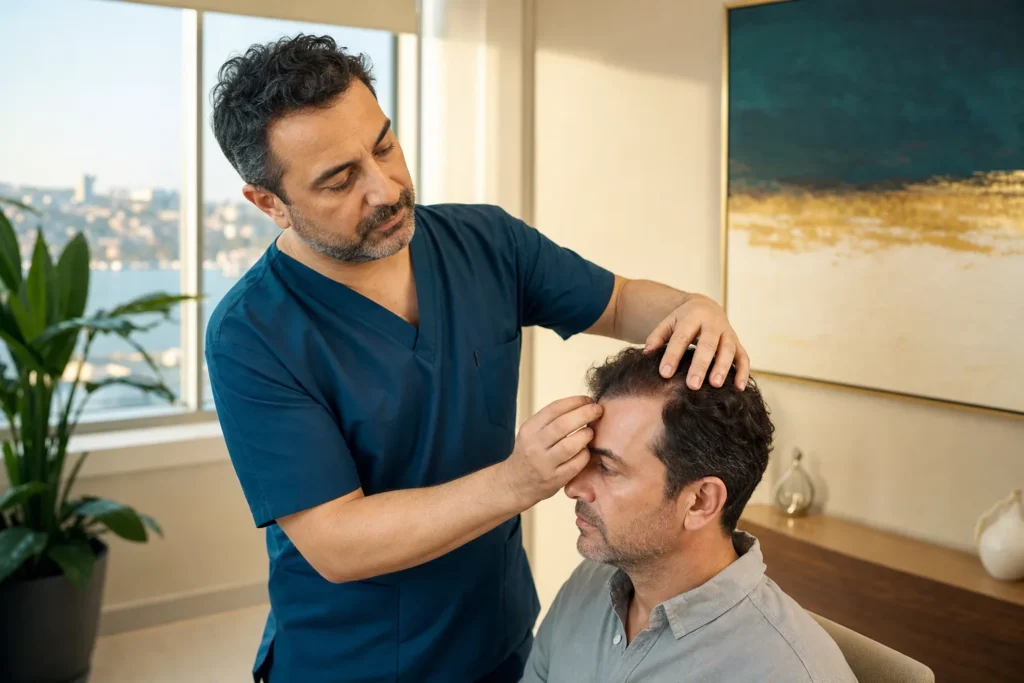
- A real all-in price in Türkiye usually lands well above the cheapest banner offers — once you include the surgeon, technique, graft count and proper aftercare, not a stripped-down package.
- Türkiye is genuinely more affordable than the UK, Germany or the Gulf, but the saving comes from lower operating costs, not from cutting corners on safety.
- The biggest cost driver is who actually does the surgery — a doctor planning and performing the critical steps, versus technicians working unsupervised at high volume.
- A trustworthy quote is itemised and graft-based; an unrealistically low flat fee is a red flag, not a bargain.
Why Türkiye became the hair transplant capital
Türkiye performs an enormous share of the world's hair transplants, and that volume is not an accident. Decades of demand have produced a deep pool of experienced surgeons and technicians, hospital infrastructure built specifically for medical travel, and operating costs far lower than in Western Europe or the Gulf. The result is real expertise at a real saving.
The catch is that the same popularity created a crowded market where serious, surgeon-led clinics sit right next to high-volume operations competing only on price. The country itself is not the risk; the wide quality gap inside it is. Understanding that gap is the whole point of this guide.
What actually drives the price
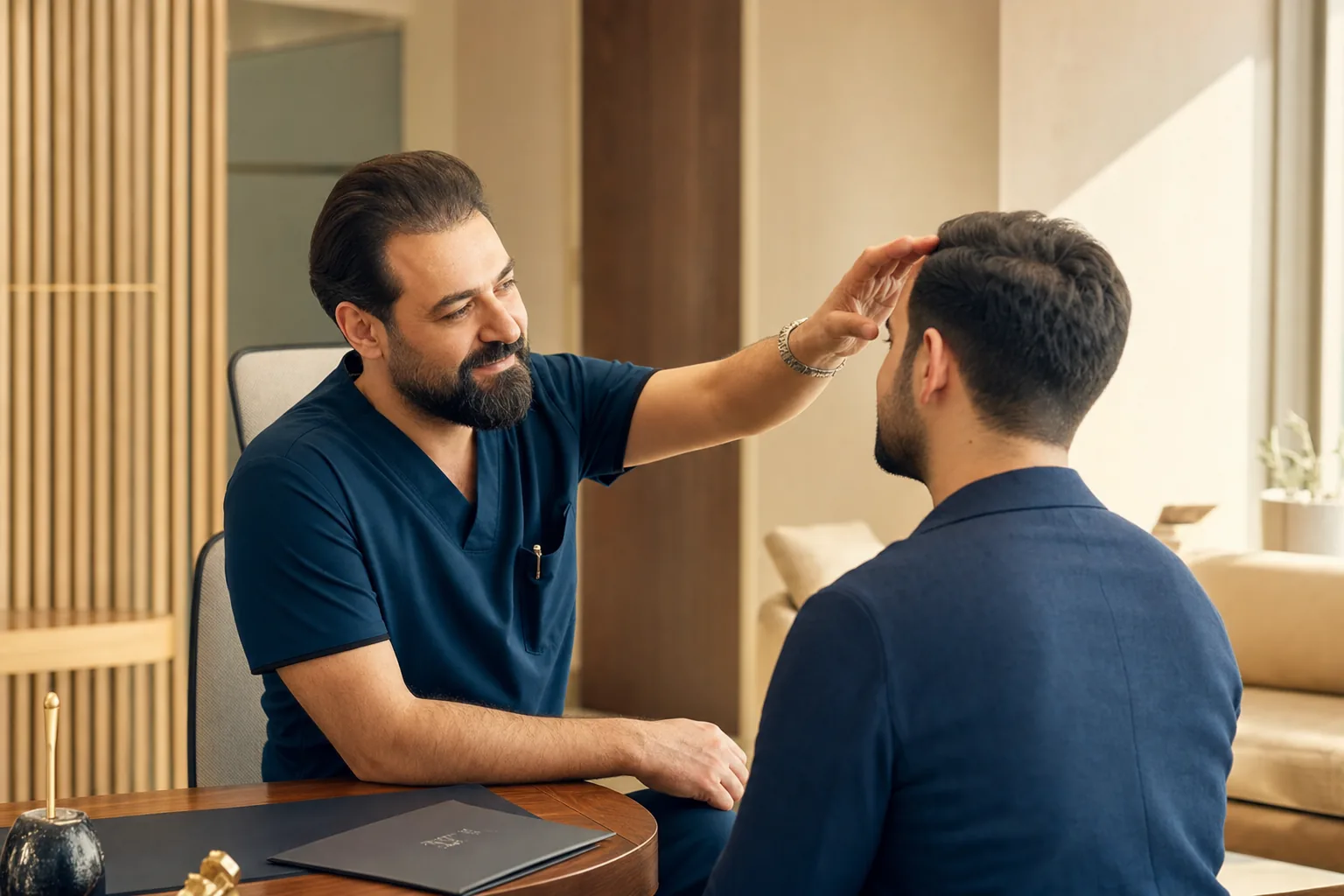
Two quotes can differ by thousands of euros for reasons that have nothing to do with anyone overcharging. Price is mostly a function of a few honest variables:
- Who performs the surgery. A qualified surgeon planning the hairline and performing or directly supervising the critical steps costs more than a technician-only model — and it is the single biggest factor in your result.
- Technique. Modern follicular unit extraction methods, and refinements like DHI implantation, differ in time, skill and tooling required.
- Number of grafts. Most fair clinics price around graft count, because a small frontal touch-up and a full-scale restoration are not the same operation.
- Time and team size. Careful work takes longer; rushing more cases per day per room is how some places keep prices artificially low.
- Aftercare and follow-up. Medication, washes, instructions and genuine post-op support all belong in the price.
When a price looks dramatically lower than everything around it, one of these is usually missing.
What an honest quote should include
A quote you can trust reads like a plan, not a coupon. Before you pay a deposit, you should be able to see — in writing — exactly what you are getting:
- The technique and why it suits your specific hair loss pattern.
- An estimated graft count based on your photos or an in-person assessment.
- Who will perform the surgery, and the role of the surgeon versus technicians.
- Anaesthesia, the facility (an accredited hospital or a proper clinic), and what happens if something is unexpected.
- Aftercare: medication, the first wash, written instructions and follow-up checks.
- Whether translation, transfers and accommodation are included or extra.
If you have to ask three times who is holding the implanter pen, that answer is already telling you something.

Türkiye vs the UK, Germany and the Gulf: indicative costs
The table below gives indicative all-in ranges for a typical mid-size hair transplant at a reputable provider. These are orientation figures, not quotes — your real number depends on graft count, technique and your individual case.
| Destination | Indicative all-in range (€) | What you're typically paying for |
|---|---|---|
| Türkiye (good hospital, surgeon-led) | €2,500–6,000 | Experienced team, accredited facility, lower operating costs |
| United Kingdom | €7,000–15,000 | High labour and clinic costs, local follow-up convenience |
| Germany | €6,000–13,000 | Strong regulation, high overheads, surgeon-led standard |
| Gulf (UAE / Saudi Arabia) | €6,000–14,000 | Premium private clinics, high facility and staffing costs |
Indicative market ranges for orientation only — not a quote. Actual prices vary widely by clinic, surgeon, technique and the number of grafts your case requires.
The honest takeaway: Türkiye's saving is real and comes mainly from lower costs of operating, not from a cheaper version of the surgery. That is exactly why the very lowest "mill" prices — far below even the Türkiye range above — deserve scrutiny rather than excitement.
Why the cheapest "mills" are risky
The headline prices that make Türkiye look almost free usually belong to high-volume operations optimised for throughput. The economics only work if something gives, and what tends to give is the part you can't see on the day: the surgeon's involvement, the time spent per patient, and the follow-up after you fly home.
In practice that can mean a doctor you meet only briefly, technicians working largely unsupervised, too many cases packed into one day, and little real support once the deposit is paid. Hair transplant surgery is still surgery — it involves anaesthesia, incisions and a result that is essentially permanent. A poorly planned hairline or overharvested donor area is difficult and expensive to fix later, which is why "cheapest" and "safest" are rarely the same booking.
This is not fear-mongering about Türkiye. It is a reminder that the country offers both the best and the most cut-rate options in the world, and the price tag is one of your clearest early signals of which one you are looking at.
Red and green flags when choosing a clinic
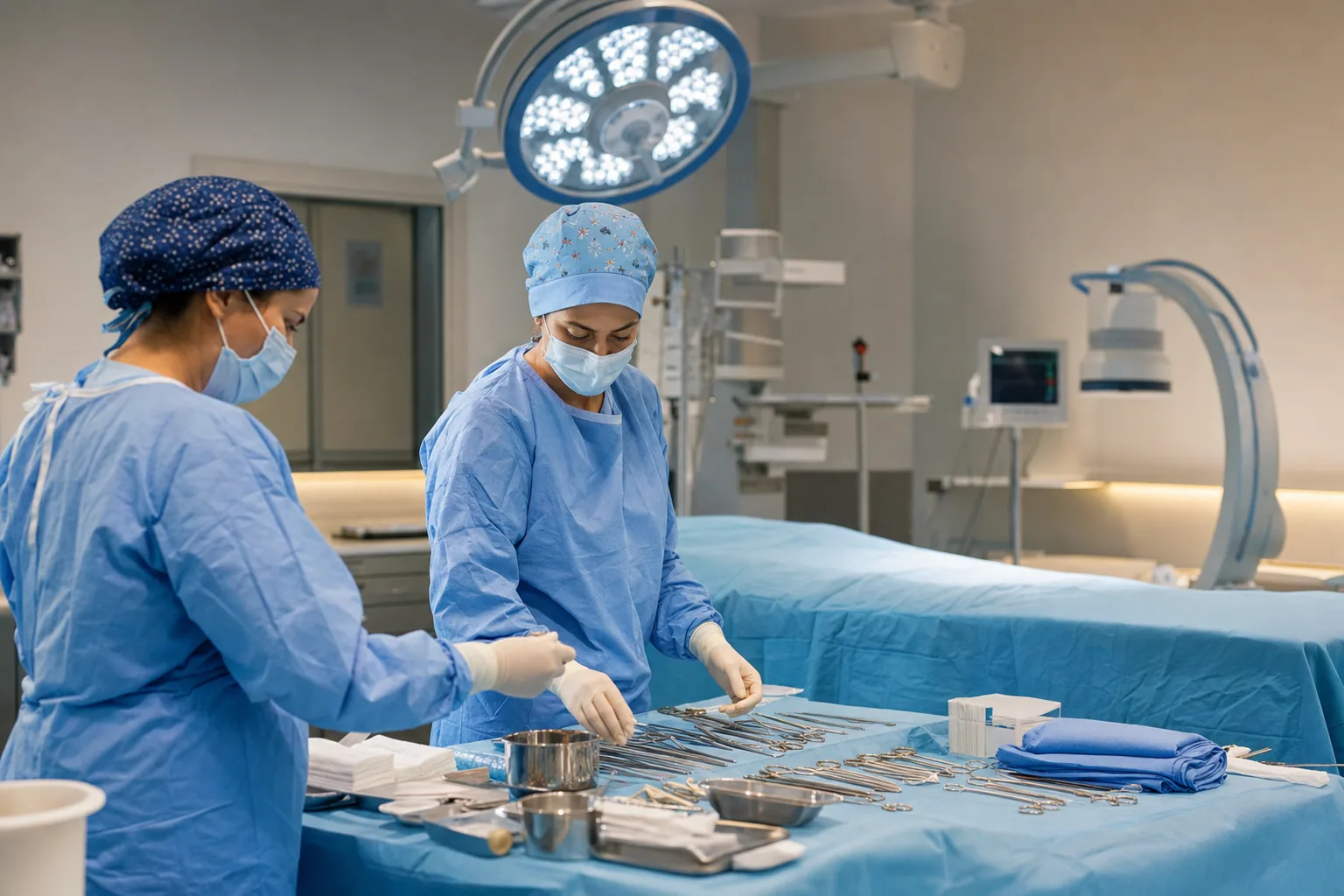
You don't need to be a doctor to screen a clinic. A handful of signals separate a serious, surgeon-led provider from a high-volume mill.
Red flags
- A flat price far below everything else, with no link to your graft count.
- Vague or evasive answers about who actually performs the surgery.
- Pressure to pay a deposit immediately or "book today for this rate".
- No mention of the facility, accreditation or anaesthesia arrangements.
- Before-and-after results that look too uniform or can't be tied to real cases.
- No clear written aftercare plan or follow-up after you return home.
- Communication only through a salesperson you can never get past.
Green flags
- An itemised, graft-based quote you receive in writing before paying.
- A clearly named surgeon who plans and performs or directly supervises the work.
- Treatment in an accredited hospital or properly equipped clinic.
- An honest assessment — including being told if you're not a good candidate.
- A written aftercare plan with medication, washing and follow-up checks.
- A real human coordinator you can reach before, during and after the trip.
- No rush: time to ask questions and compare without pressure.
How BergemHealth approaches it
BergemHealth is a medical concierge, not a clinic and not a travel agency. We don't run a hair transplant factory and we don't chase the lowest banner price. We work with department-head professors at JCI-accredited hospitals in Türkiye, and a real coordinator is physically with you at every appointment — including the ones where the hard questions get asked.
Every request is reviewed by a person, not a bot, and your information stays strictly confidential. The initial consultation through our website, Telegram or WhatsApp is free, and an honest part of that conversation may be telling you what a realistic budget looks like — or whether a given clinic's pricing makes sense at all. We serve patients in English, Turkish, Russian and Ukrainian.