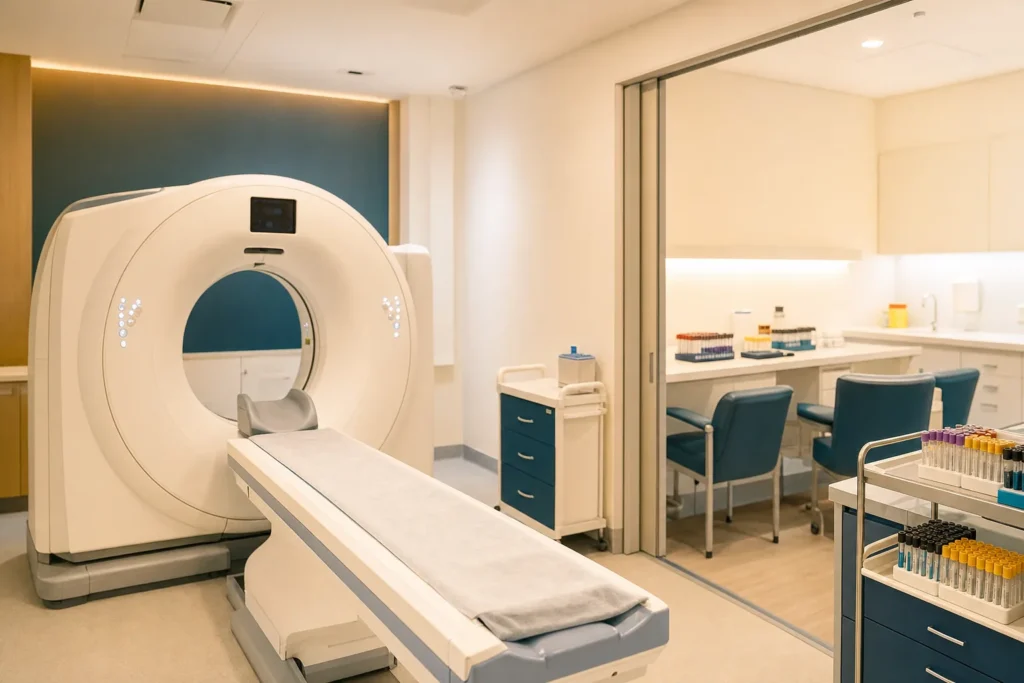
Silver oncology screening
A one-day preventive check-up is one of the simplest ways to take stock of your health while you still feel well. The LIV Silver oncology screening programme in Turkiye gathers specialist consultations, imaging, and laboratory tests into a single, organised day. This guide explains, in plain language, what the programme includes, what it can and cannot tell you, and how to decide whether it is right for you.
- Duration
- 1 day, outpatient
- Hospital stay
- Outpatient - no overnight stay
Minimum price, for reference only — the final cost is calculated individually after your records are reviewed. You pay the hospital’s price; our service is free for you.
What the Silver oncology screening is and who it is for
The LIV Silver oncology screening is a comprehensive preventive check-up built around early detection. The idea behind any screening programme is simple: to look for early signs of disease in people who feel healthy and have no symptoms, so that anything found can be looked at sooner rather than later. This is different from a diagnostic work-up, which is done when you already have a symptom or a problem to investigate.
The programme comes in two versions tailored to biological differences in the body:
- Silver for men - 5 consultations, 9 imaging tests, and 50 laboratory tests, completed in a single day.
- Silver for women - 6 consultations, 12 imaging tests, and 51 laboratory tests, also completed in a single day, with the addition of breast and gynaecological screening.
It is designed for health-conscious adults, typically from around the age of 40 onward, who want a thorough, organised snapshot of their health. It can be a sensible choice if you have not had a check-up in years, if you have a family history that worries you, or if you simply want the reassurance of a structured review by specialists. It is not a substitute for ongoing care with your own doctor, and it is not designed to diagnose or treat a known illness.
One honest note up front: a check-up like this is a moment in time. It tells you a great deal about your health on the day, but health changes, so the real value comes from acting on what is found and repeating sensible screening on a regular schedule.
What is included: consultations, imaging, and laboratory tests
The Silver programme groups its tests into three kinds of assessment. Here is what each version contains, summarised in plain terms.
Specialist consultations
Consultations are face-to-face appointments with doctors who interpret your results and examine you. The men's programme includes 5 consultations and the women's programme includes 6 consultations. These typically cover internal medicine, cardiology, and the relevant organ-specific specialists, with the women's version adding gynaecology and a breast assessment. The consultations are the part that turns a pile of numbers and scans into advice you can actually use.
Imaging tests
Imaging means pictures of the inside of your body. The men's programme includes 9 imaging studies and the women's 12. Highlights include:
- Brain and abdominal MRI (non-contrast) - magnetic resonance imaging, which uses a strong magnet and radio waves rather than X-rays.
- Chest CT - a detailed cross-sectional X-ray of the lungs and chest.
- Cardiac stress test and echocardiography - to look at how the heart works under exertion and at rest.
- Carotid Doppler ultrasound - an ultrasound of the neck arteries that supply the brain.
- Bone densitometry (DEXA) - a low-dose scan that measures bone strength.
- Thyroid ultrasound, and for women, digital mammography plus breast ultrasound.
Laboratory tests
The blood and sample tests are the largest group: around 50 tests for men and 51 for women. These cover the everyday foundations of health - full blood count, blood sugar, cholesterol and other fats, liver and kidney function, thyroid hormones, vitamin and mineral levels, and a urine analysis. Both programmes also include tumour markers: PSA, CEA, AFP, and CA 19-9 for men; CA 125, CA 15-3, CA 19-9, and CEA for women. The women's programme additionally includes a Pap smear with liquid-based cervical cytology to screen for early cervical changes.
What it screens for and why that matters
The programme is oriented toward the conditions that most affect adults in midlife and beyond: certain cancers, heart and blood-vessel disease, and metabolic problems such as diabetes. Here is why the main screening elements matter, alongside what the evidence actually says.
Breast cancer (women). Mammography is the most studied cancer screening test there is. The American Cancer Society recommends that women aged 45 to 54 have a mammogram every year, with the option to start at 40, and that women 55 and older continue yearly or move to every two years. Regular mammography reduces the risk of dying from breast cancer, which is why it is a centrepiece of the women's programme. Breast ultrasound can add information, especially in dense breast tissue.
Cervical cancer (women). The Pap smear looks for early cell changes in the cervix before they could become cancer. Guidelines from the US Preventive Services Task Force support cervical screening for women aged 21 to 65, with the testing interval depending on the method used. It is one of the clearest success stories in cancer prevention.
Prostate health (men). The PSA blood test can signal prostate problems. Major guidelines stress that PSA screening is a shared decision for men aged roughly 55 to 69, made after weighing benefits and harms with a doctor, because a raised PSA is often caused by harmless conditions and can lead to further tests that are not always needed. The consultation built into this programme is exactly the right place for that conversation.
Lung and chest (chest CT). Low-dose CT screening for lung cancer has proven benefit, but specifically in people at high risk - generally those aged 50 to 80 with a substantial smoking history. If that describes you, the chest CT is valuable; if you have never smoked, it is more of a general look at the chest and should be interpreted in that light.
Heart and blood vessels. The cardiac stress test, echocardiography, and blood lipid panel together assess your cardiovascular risk - the leading cause of death worldwide - so that issues can be managed early with lifestyle changes or medication.
Bone strength. DEXA bone densitometry measures osteoporosis risk. It is firmly recommended for women 65 and older (and younger postmenopausal women with risk factors), helping prevent fractures down the line.
Benefits and honest limitations of screening
Screening can genuinely help, and it is fair to be honest about where it falls short. We think you should know both sides.
The real benefits
- Some screening tests find disease earlier, when treatment is often simpler and more effective. This is well established for breast, cervical, colorectal, and (in high-risk people) lung cancer.
- A check-up can pick up quiet, treatable problems such as high blood pressure, high cholesterol, or early diabetes, giving you time to act.
- It is a structured prompt to discuss your personal risks and habits with specialists in one place.
The honest limitations
- No screening catches everything. Screening reduces risk; it does not eliminate it. A normal result lowers the odds of disease but cannot guarantee you are disease-free, and cancers can appear between check-ups.
- False positives happen. A test can flag something that turns out to be harmless. This can mean extra scans, biopsies, and understandable anxiety. Tumour markers in particular - PSA, CEA, CA 125 and others - frequently rise for non-cancer reasons, which is why authorities do not recommend them as stand-alone screening tests for the general population. In this programme they are one input among many, read in context by a doctor.
- Incidental findings. Broad imaging such as whole-body or abdominal MRI often turns up minor, harmless spots. Studies of whole-body MRI in healthy people find that the great majority of "abnormalities" are not significant, yet some lead to follow-up tests that carry their own small risks.
- Overdiagnosis. Occasionally screening finds a slow, harmless condition that would never have caused trouble, but still gets investigated or treated.
- The evidence on "general" check-ups is mixed. Large reviews have found that broad, routine health checks in the general adult population do not clearly reduce overall or cancer deaths, though targeted, evidence-based screening for specific conditions does help. The value of a programme like this depends heavily on tailoring it to your age, sex, and risk factors - and on acting sensibly on the results.
None of this means screening is not worthwhile. It means a good programme is one where doctors interpret results in the context of your whole picture, rather than treating every number in isolation.
How to prepare for your check-up day
A little preparation makes the day smoother and the results more reliable. Your coordinator will send you exact instructions, but in general:
- Fasting. Several blood tests (blood sugar, cholesterol) need you to fast, usually for 8 to 12 hours beforehand. Plain water is normally fine, and it actually helps to be well hydrated for blood draws and ultrasound. Confirm the exact fasting window in advance.
- Medications. Keep taking essential daily medicines unless told otherwise, but ask specifically about diabetes medication and blood thinners, as the timing may need adjusting on a fasting day.
- Bring your records. Any previous test results, scans, or a list of your medications and known allergies help the doctors interpret findings and avoid repeating tests.
- For women. It is usually best to schedule the Pap smear and gynaecological assessment when you are not menstruating. Mention if there is any chance you are pregnant, as some imaging would be adjusted.
- Clothing and comfort. Wear something comfortable and easy to change in and out of. Avoid jewellery and metal accessories on an MRI day, and tell staff about any metal implants, pacemakers, or claustrophobia before the scan.
- Plan your day. Allow the whole day and bring a snack for after your fasting tests are done.
What the day looks like
The Silver programme is designed to be completed in a single day on an outpatient basis, which means there is no overnight hospital stay. You arrive in the morning, and a coordinator guides you between appointments so the tests flow in a sensible order.
A typical day starts with the fasting blood draws and any urine sample, so that you can eat soon afterward. From there you move through the imaging studies - MRI, CT, ultrasound scans, bone densitometry, and the heart tests - and meet with the specialists. Because everything is arranged in advance and run within one hospital, what might take weeks of separate appointments at home is condensed into hours.
Most of the tests are painless or cause only minor, brief discomfort, such as the pinch of a blood draw or lying still inside the MRI scanner. The cardiac stress test will ask you to exert yourself (often on a treadmill) under supervision. You can drive and return to normal activities the same day. By the end, the data-gathering is complete and the focus shifts to making sense of it.
Understanding your results and follow-up
Collecting the tests is only half the value; understanding them is the other half. During the consultations, and in a written report afterward, the doctors pull your laboratory numbers, imaging, and examination findings together into a clear picture.
It helps to expect three broad kinds of outcome:
- Reassuringly normal. Most results in most people are normal. This is good news, though remember it reflects your health on the day and does not replace ongoing, age-appropriate screening.
- Minor or borderline findings. Many people have small things - a slightly raised cholesterol, a harmless cyst, a borderline lab value. These usually call for lifestyle advice, a repeat test later, or simple monitoring rather than alarm.
- Findings that need follow-up. Occasionally something needs further investigation or referral. The advantage of a large multi-specialty hospital is that specialist follow-up can often be arranged quickly and in one place.
Ask the doctors to explain not just what was found but what it means for you and what to do next. Take the written report home, share it with your own GP, and treat it as a baseline you can compare against in future years. Honest interpretation is essential here: a single abnormal number is rarely a diagnosis on its own.
Cost and what is included
The indicative price for the Silver oncology screening is USD 2,300 for both the men's and women's programmes. For that single fee you receive the full package described above - the consultations, all the imaging studies, and the complete panel of laboratory tests, completed within one day at LIV Hospital.
A few practical points to keep in mind:
- Prices are indicative and can change. Always confirm the current, exact price and what it covers before you travel. Treat the figure here as a guide rather than a final quote.
- The fee covers the screening package itself. If a result calls for additional tests, a biopsy, or treatment, those would be separate and quoted individually.
- Travel and accommodation are usually extra unless bundled into a concierge package - worth clarifying when you plan your trip.
Compared with arranging this many tests piecemeal in many countries, an organised one-day programme at this price point is often good value, particularly given the convenience of doing it all in one visit.
Why do your check-up in Turkiye, and how to choose a centre
Turkiye has become a leading destination for medical travel, combining modern hospitals, internationally trained specialists, and competitive pricing. The practical appeal of a programme like Silver is the combination of quality, speed, and value: a thorough check-up condensed into a single day, at a hospital equipped with advanced imaging.
When choosing where to have a check-up abroad, look for:
- International accreditation. Joint Commission International (JCI) accreditation signals that a hospital has met rigorous global standards for quality and patient safety, re-assessed every three years. Liv Hospital Ulus and Liv Hospital Vadistanbul are JCI-accredited.
- Qualified specialists. The doctors interpreting your results matter as much as the equipment. Ask about the specialties involved and the language support available.
- A tailored, evidence-based programme. The best check-ups are matched to your age, sex, and risk profile rather than offering every test to everyone. Use your consultations to ask which tests are most relevant for you.
- Clear reporting and follow-up. A written report you can take to your own doctor, and a clear path for any follow-up, are signs of a well-run programme.
- Honest expectations. A trustworthy centre will explain the limits of screening, not promise that it catches everything.
Who should consider a more or less intensive programme
The Silver level is a solid middle ground, but the right intensity of screening depends on your personal situation, and more is not automatically better.
A lighter programme may be enough if you are younger, have no symptoms, have no significant family history, and already see your own doctor for routine, age-appropriate checks. In that case, focusing on the specific evidence-based screens for your age and sex - rather than a broad imaging package - can deliver most of the benefit with fewer incidental findings.
A more intensive programme may be worth discussing if you have a strong family history of cancer or heart disease, known risk factors (such as a substantial smoking history, which strengthens the case for lung CT), or specific concerns you want examined in depth. People with a meaningful smoking history in particular fall squarely into the group for whom low-dose chest CT has proven benefit.
The best way to decide is to talk it through. Share your age, history, and worries with the medical team beforehand, and let them help you choose a programme that fits - one that screens for what is genuinely relevant to you, while sparing you tests that would add anxiety more than information.
Frequently asked questions
Is the Silver oncology screening really completed in one day?
Does a normal result mean I definitely do not have cancer?
What are tumour markers, and how reliable are they?
Do I need to fast before the check-up?
Is the chest CT worthwhile if I have never smoked?
What is a false positive, and how common is it?
What happens if the check-up finds something?
How much does the Silver oncology screening cost?
What is the difference between the men's and women's programmes?
Is a JCI-accredited hospital important for a check-up abroad?
How often should I repeat a check-up like this?
Sources
- USPSTF - Prostate Cancer: Screening (shared decision making, ages 55-69)
- American Cancer Society - Breast Cancer Screening Guidelines
- USPSTF - Cervical Cancer: Screening
- USPSTF - Lung Cancer: Screening with low-dose CT (ages 50-80, 20 pack-years)
- USPSTF - Colorectal Cancer: Screening (ages 45-75)
- USPSTF - Osteoporosis to Prevent Fractures: Screening (DEXA)
- USPSTF - Asymptomatic Carotid Artery Stenosis: Screening (recommends against in general population)
- WHO Europe - Cancer screening and early detection (benefits and harms)
- Cochrane - General health checks in adults for reducing morbidity and mortality
- AAFP - Serum Tumor Markers (limitations as screening tests)
- Michigan Medicine - Whole-body MRIs and incidental findings in healthy people
- Joint Commission International - Hospital Accreditation Program
This article is for general information only and is not medical advice. Always consult a qualified doctor about your individual case.
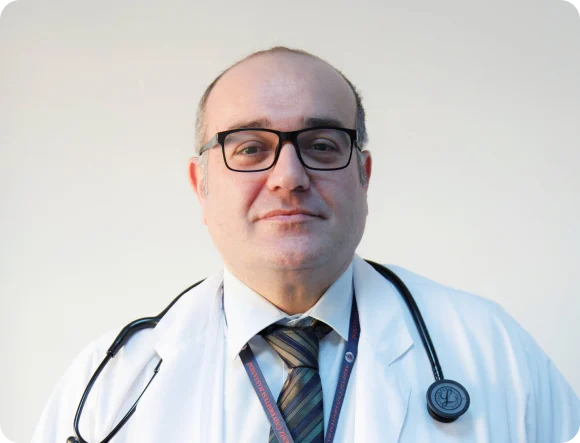
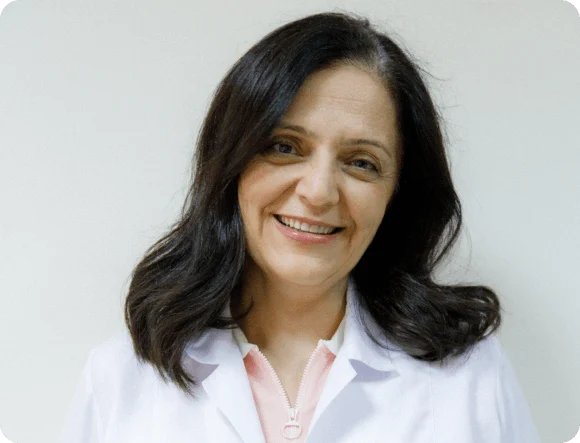
Specialists in Health Check-up
Doctors of the department we work with directly. Which doctor takes your case is decided after the specialists have reviewed your records — your coordinator confirms it, not this page.


Considering this procedure?
Send us your photos and questions. A BergemHealth coordinator and a senior specialist will review your case and reply with honest, personalised guidance — no obligation.
Free consultation