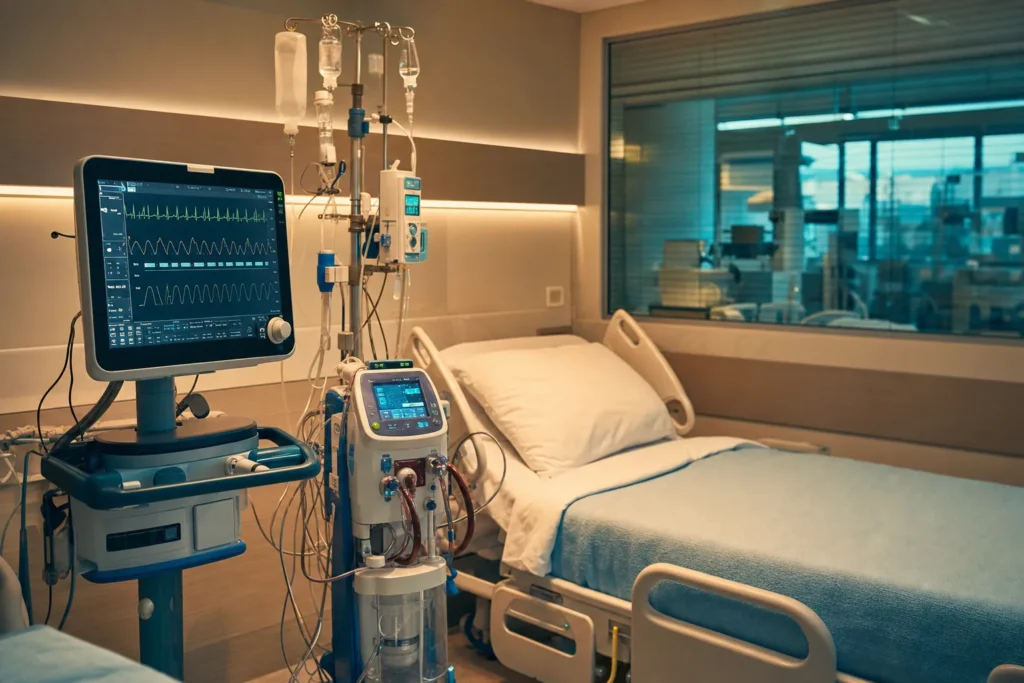
Cardiogenic shock
Cardiogenic shock is a serious emergency in which the heart suddenly cannot pump enough blood to keep the body's organs supplied. It can be frightening to read about, but it is a recognised, treatable condition, and modern intensive care has steadily improved outcomes. This guide explains in plain language what cardiogenic shock is, why it happens, how it is diagnosed and treated, and what to think about if you or a family member may need specialist intensive care, including abroad.
What cardiogenic shock is
Your heart is a muscular pump. With every beat, it pushes oxygen-rich blood out to your brain, kidneys, liver and the rest of your body. Cardiogenic shock happens when the heart suddenly becomes too weak to push out enough blood to meet the body's needs. The word "shock" here does not mean an emotional shock or an electric shock. In medicine, shock means that the body's organs are not getting enough blood flow (doctors call this hypoperfusion, which simply means "too little blood reaching the tissues"). "Cardiogenic" means the problem starts in the heart itself.
When organs do not receive enough blood, they cannot get enough oxygen to work properly. Blood pressure falls, the skin may turn cool and pale, the kidneys make less urine, and a person may become confused or drowsy. Without enough blood flow, a damaged heart can become even weaker, which reduces blood flow further. Doctors call this a "vicious spiral," and it is why cardiogenic shock is treated as a medical emergency that needs care in a hospital intensive care unit (ICU) or coronary care unit (CCU).
Cardiogenic shock is uncommon. The U.S. National Heart, Lung, and Blood Institute and Cleveland Clinic estimate roughly 40,000 to 50,000 cases a year in the United States. It is most often a complication of a severe heart attack, but importantly, the great majority of people who have a heart attack do not develop cardiogenic shock. When it does occur, recognising it early and starting treatment quickly genuinely matters.
Causes and risk factors
By far the most common cause of cardiogenic shock is a severe heart attack (myocardial infarction). A heart attack happens when a blocked artery starves part of the heart muscle of oxygen. If a large area of muscle is damaged, the heart can become too weak to pump effectively.
Other heart problems can also lead to cardiogenic shock, including:
- Heart failure that suddenly worsens (when a chronically weak heart can no longer keep up).
- Myocarditis (inflammation of the heart muscle, often from a viral infection).
- Endocarditis (infection of the heart's inner lining and valves).
- Serious heart rhythm problems (arrhythmias), where the heart beats far too fast, too slowly or chaotically.
- Heart valve problems, including sudden rupture of the small muscles or tendons that support a valve.
- A tear in the heart wall or in the wall between the chambers, which can occur as a complication of a heart attack.
- Cardiac tamponade (fluid building up around the heart and squeezing it).
- A large blood clot in the lungs (pulmonary embolism), a chest injury, or a drug overdose that weakens the heart.
According to NCBI StatPearls, roughly 5 to 8 percent of the most serious type of heart attack (STEMI) and 2 to 3 percent of other heart attacks (NSTEMI) lead to cardiogenic shock. Risk factors that make it more likely, as listed by Mayo Clinic and Cleveland Clinic, include older age, a previous heart attack or heart failure, coronary artery disease, high blood pressure, high cholesterol, diabetes, smoking and obesity. Data also suggest women may be at somewhat higher risk after a heart attack. Having risk factors does not mean shock will happen; it means heart health is worth looking after closely.
Signs, symptoms, and when to get help
Cardiogenic shock comes on suddenly and is a medical emergency. The signs reflect both the struggling heart and the organs that are not getting enough blood. According to Mayo Clinic, the National Heart, Lung, and Blood Institute and MedlinePlus, they include:
- Very fast or laboured breathing and severe shortness of breath.
- A very fast, weak or irregular pulse.
- Low blood pressure (which may cause lightheadedness or fainting).
- Cold, clammy, pale or blotchy skin, and cold hands or feet.
- Heavy sweating.
- Passing much less urine than usual, or none at all.
- Confusion, restlessness, reduced alertness, or loss of consciousness.
Because cardiogenic shock usually follows a heart attack, it often appears alongside heart attack symptoms: chest pain or pressure that may spread to the arm, shoulder, neck, jaw or back; cold sweats; nausea; and shortness of breath. Symptoms can be less obvious in some people, particularly women, and may include nausea or a sharp pain in the neck, arm or back rather than classic chest pain.
When to get help: call your local emergency number immediately (such as 112 in Turkiye and across the EU, 999 in the UK, or 911 in the US) for anyone with signs of a heart attack or cardiogenic shock. Mayo Clinic advises not to drive yourself; have someone take you, or wait for the ambulance. Getting help quickly can improve the chance of survival and reduce damage to the heart.
Screening and early detection
There is no routine screening test for cardiogenic shock itself. It is not a condition you can check for in advance with a single test, because it develops suddenly as a complication of another acute heart problem. Instead, "early detection" means two things.
First, it means managing the conditions that lead to it. People with known coronary artery disease, prior heart attack or heart failure are monitored by their cardiology team, and controlling blood pressure, cholesterol and diabetes lowers the risk of the heart attacks that most often trigger shock.
Second, in the hospital setting, early detection means recognising warning signs in someone who is already being treated for a heart attack or worsening heart failure. The SCAI staging system described earlier exists precisely to help medical teams spot patients who are "at risk" (Stage A) or "beginning" to show signs (Stage B) before full shock develops, so that support can start sooner. If you or a relative is in hospital with a heart attack, the staff will be watching blood pressure, heart rate, urine output and alertness closely for exactly this reason.
How cardiogenic shock is diagnosed
Doctors usually suspect cardiogenic shock from the bedside picture: low blood pressure, a weak rapid pulse, cool clammy skin, reduced urine output and confusion, in someone with a known heart problem. They then confirm the diagnosis and find its cause with several tests, often done at the same time as treatment is starting. According to Cleveland Clinic, NCBI StatPearls and MedlinePlus, these commonly include:
- Blood pressure monitoring. A persistently low blood pressure (often a top number, the systolic, at or below about 90 mmHg) despite efforts to correct simpler causes is a key sign.
- Electrocardiogram (ECG or EKG). A quick, painless recording of the heart's electrical activity that can show a heart attack or a dangerous rhythm.
- Echocardiogram. An ultrasound scan of the heart that shows how strongly the chambers are pumping, whether the valves are working and whether there is fluid around the heart.
- Blood tests. These check oxygen levels, kidney and liver function, cardiac enzymes such as troponin (which rise after heart muscle damage), and lactate (a chemical that rises when tissues are short of oxygen and which helps gauge how severe the shock is).
- Chest X-ray. To look for fluid backing up in the lungs and to check the heart's size.
- Coronary angiography (cardiac catheterisation). A thin tube is guided to the heart's arteries and dye is used to find blockages. This both diagnoses the cause and allows treatment in the same session.
- Right heart catheterisation (a Swan-Ganz catheter). A tube placed in the artery to the lungs measures pressures inside the heart and how much blood it is pumping, helping confirm the diagnosis and guide treatment.
Together these tests answer two questions: is this cardiogenic shock, and what is causing it? The answers shape the treatment plan.
Treatment options
Cardiogenic shock is treated in an intensive care or coronary care unit by a coordinated team, often called a shock team: intensive care doctors, cardiologists, interventional cardiologists (who do catheter-based procedures), cardiac surgeons, specialist nurses and others. Treatment has two aims at once: support the body while the heart is failing, and fix the underlying cause.
Immediate support. The team makes sure breathing and oxygen are adequate, sometimes with a breathing machine (ventilator). Medicines may be given through a vein to support blood pressure and help the heart pump. According to MedlinePlus and NCBI StatPearls, these include vasopressors such as norepinephrine (which tighten blood vessels to raise blood pressure) and inotropes such as dobutamine or milrinone (which strengthen the heart's squeeze). These are used carefully and usually only for the short term.
Fixing the cause. Because most cases follow a heart attack, the single most important treatment is restoring blood flow to the blocked artery as quickly as possible. This is usually done with angioplasty, where a balloon opens the artery and a small mesh tube (a stent) holds it open. If the blockages are unsuitable for this, coronary artery bypass surgery may be needed. The landmark SHOCK trial established early restoration of blood flow as standard care. Other causes have their own treatments: a dangerous rhythm may need an electric shock (defibrillation or cardioversion) or a pacemaker; fluid around the heart is drained (pericardiocentesis); a damaged valve may be repaired or replaced.
Mechanical circulatory support. When medicines are not enough, devices can take over some of the heart's pumping work temporarily. These include the intra-aortic balloon pump (IABP); small pumps placed through a blood vessel such as the Impella microaxial flow pump; ECMO (extracorporeal membrane oxygenation), a machine that adds oxygen to the blood and pumps it when both the heart and lungs are failing; and, for some, a longer-term ventricular assist device (LVAD). In severe, lasting heart failure, a heart transplant may eventually be considered. Evidence on these devices continues to evolve; for example, the 2024 DanGer Shock trial reported in the New England Journal of Medicine found that a microaxial flow pump reduced deaths at 180 days in selected patients with shock after a severe (STEMI) heart attack, though it also caused more complications, so the team weighs benefits and risks for each person.
Outlook and what to expect
It is important to be honest here without being frightening. Cardiogenic shock is a serious condition, and even with the best care it can be life-threatening. At the same time, outcomes have improved markedly over the decades, and recovery is possible.
According to MedlinePlus, the death rate from cardiogenic shock was once in the range of 80 to 90 percent; in more recent studies it has fallen to roughly 50 to 75 percent. NCBI StatPearls describes an in-hospital death rate "in excess of 30 percent" with modern treatment. These figures are population-level averages, not a prediction for any individual. A person's actual outlook depends on many factors: the underlying cause, how quickly blood flow is restored, age, other health conditions, and how many organs are affected. Survival is more likely with prompt resuscitation and early restoration of blood flow to the heart, which is exactly why fast emergency care matters so much.
For those who recover, the heart and other organs need time to heal. Cleveland Clinic notes that a hospital stay of about a week or longer is common, and recovery at home or in a rehabilitation setting can take weeks to months. Your medical team is the right source for understanding your own situation; please ask them directly, as they know the full clinical picture.
Living with it and follow-up
Surviving cardiogenic shock is a major event, both physically and emotionally. Recovery is usually gradual. Many people feel tired and weak for some time as the heart and body rebuild strength, and it is normal to feel anxious or low after a brush with a serious illness. Support from family, and sometimes from a counsellor or psychologist, is a valid part of recovery.
A central part of follow-up is cardiac rehabilitation, a structured, medically supervised programme of gradually increasing exercise, education and lifestyle support. It is widely recommended after heart attack and heart failure because it helps people rebuild fitness safely and lowers the risk of further heart problems.
Follow-up care typically includes:
- Regular appointments with a cardiologist to check heart function, often with repeat echocardiograms.
- Medicines to support a weakened heart, manage blood pressure and cholesterol, and reduce the risk of clots; these should be taken as prescribed and reviewed regularly.
- If the heart remains weak, your team may discuss devices such as an implantable defibrillator or, in some cases, longer-term mechanical support.
- Lifestyle steps such as stopping smoking, eating well, gentle activity as advised, and good sleep.
Knowing the warning signs of a heart attack and acting on them quickly is also part of living well afterwards, both for the person who has recovered and for their family.
Planning intensive care abroad: what affects cost and how to prepare
Cardiogenic shock itself is a sudden emergency that is treated wherever a person happens to be; it is not something you plan a trip for. Planning abroad is more relevant for related and follow-on care: a thorough cardiology assessment after recovery, treatment of the underlying heart disease (such as planned coronary stenting, bypass surgery or valve repair), advanced heart-failure care, or a second opinion. For these, it helps to understand what drives cost, while remembering that no honest provider can quote a meaningful price without seeing your records.
Factors that affect the cost of cardiac and intensive-care treatment include:
- The specific diagnosis and procedure needed, and its complexity.
- Length and level of care: time in intensive care, use of ventilators, dialysis or mechanical support devices all add significantly to cost.
- Devices and implants used, such as stents, valves, pacemakers or assist devices.
- Diagnostic tests and imaging before and after treatment.
- Medicines, the surgical and anaesthesia team, and the hospital chosen.
- Rehabilitation and follow-up, and any need for an accompanying family member or interpreter.
To prepare your records, gather your discharge summaries, ECG and echocardiogram reports, any angiography (catheterisation) results and images, blood test results, a current list of medicines and allergies, and a short written history of what happened. Sharing these allows a specialist team to review your case and provide a personalised estimate. The most reliable way to get accurate figures and a clear plan is to request a free consultation and send your documents for review, rather than relying on advertised prices.
Why Turkiye, and how to choose a good centre
Turkiye has become a well-known destination for cardiac care, with a number of large hospitals that have experienced cardiology and cardiac-surgery teams, modern intensive care units and internationally recognised quality accreditation. Many international patients are drawn by the combination of established cardiac programmes and coordinated services for travellers. The right choice, however, should always be based on suitability and safety for your specific situation rather than on marketing claims.
When choosing a centre for cardiac or intensive care abroad, it is sensible to verify:
- Accreditation. Look for recognised quality accreditation such as Joint Commission International (JCI). Confirm the exact hospital name and address in the official accreditation directory, and check that it is the same facility where your care will actually take place, not simply a "partner" hospital.
- Government licensing. In Turkiye, hospitals must hold a Ministry of Health licence, and centres serving international patients should hold the relevant health-tourism authorisation.
- The specialist team. Ask about the qualifications and experience of the cardiologists, interventional cardiologists and cardiac surgeons who will treat you, and whether the hospital has a 24/7 intensive care unit and a structured approach to emergencies.
- Clear, written information. A reputable centre will provide a written treatment plan, explain risks and alternatives, confirm what is and is not included, and be transparent. Get key details in writing.
- Language and continuity. Check that you can communicate in a language you understand and that arrangements exist for follow-up after you return home.
A trustworthy medical concierge or hospital will encourage these questions and never pressure you. Avoid any provider that promises a cure, guarantees an outcome or claims to be "the best"; responsible medicine does not work that way.
Prevention and protecting your heart
Because cardiogenic shock most often follows a heart attack, the best way to lower your risk is to look after your heart and to act fast if a heart attack ever happens. None of this guarantees protection, but each step genuinely lowers risk, according to Mayo Clinic and MedlinePlus.
- Do not smoke, and avoid secondhand smoke. Stopping smoking is one of the most powerful things you can do for your heart.
- Manage blood pressure, cholesterol and diabetes with the help of your healthcare team, and take prescribed medicines as directed.
- Eat well: plenty of fruit, vegetables and whole grains, with less salt, sugar and saturated and trans fats.
- Stay active. Aim for regular activity as advised by your doctor, often around 30 minutes most days.
- Keep a healthy weight, limit alcohol, sleep well (most adults need 7 to 9 hours), and find healthy ways to manage stress.
- Know the warning signs of a heart attack and act immediately. Quick emergency treatment of a heart attack is itself one of the best ways to prevent cardiogenic shock.
If you have an existing heart condition, keep your follow-up appointments and talk to your cardiologist about your personal risk and how to reduce it. Asking questions and seeking a second opinion when you are unsure is always reasonable.
Frequently asked questions
Is cardiogenic shock the same as a heart attack?
Is cardiogenic shock an emergency?
What are the first signs of cardiogenic shock?
Can you survive cardiogenic shock?
How is cardiogenic shock diagnosed?
What is the main treatment?
What is the SCAI shock classification (stages A to E)?
What causes cardiogenic shock besides a heart attack?
Can cardiogenic shock be prevented?
How long is recovery after cardiogenic shock?
Should I travel abroad for treatment of cardiogenic shock?
What should I prepare before a consultation about cardiac care abroad?
Why does cardiogenic shock affect other organs like the kidneys and brain?
This article is for general information only and is not medical advice. Always consult a qualified doctor about your individual case.
Considering this procedure?
Send us your photos and questions. A BergemHealth coordinator and a department-head specialist will review your case and reply with honest, personalised guidance — no obligation.
Free consultation