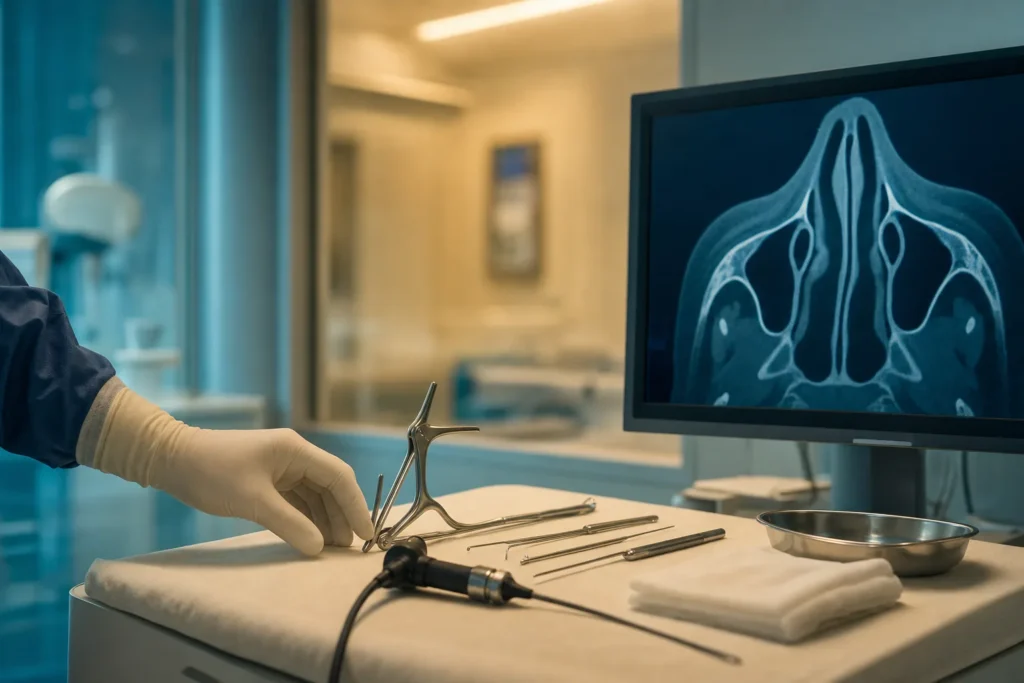
Deviated septum & turbinate hypertrophy
If one side of your nose always feels blocked, you snore, or you breathe through your mouth at night, the cause is often inside the nose itself: a slightly crooked dividing wall (a deviated septum) or swollen shelves of tissue called turbinates. This guide explains both conditions in plain language, what the symptoms mean, how doctors diagnose them, and the treatments available, so you can have a calm, informed conversation with an ear, nose and throat (ENT) specialist.
What a deviated septum and turbinate hypertrophy are
The inside of your nose is divided down the middle by a thin wall made of cartilage (firm, flexible tissue) and bone. This wall is called the nasal septum. In a perfectly symmetrical nose, the septum would sit exactly in the centre, giving you two equal-sized air passages. In reality, almost nobody has a perfectly straight septum. The Cleveland Clinic notes that about 8 out of 10 people have a septum that is at least slightly off-centre, and most never notice it.
A deviated septum simply means this wall is shifted or bent to one side, so one nasal passage is narrower than the other. When the bend is significant, it can make one side of the nose feel persistently blocked.
Sitting along the side walls of each nasal passage are small, scroll-shaped structures called turbinates (sometimes called conchae). According to ENT Health, published by the American Academy of Otolaryngology, these bony structures are covered with a moist lining and act like the nose's air-conditioning system: they warm, humidify and filter the air you breathe. When the lining over the turbinates becomes swollen and enlarged, this is called turbinate hypertrophy ("hypertrophy" just means overgrowth or enlargement).
These two problems often travel together. When the septum bends toward one side, the turbinates on the wider, opposite side frequently enlarge to fill the extra space, which is why an ENT surgeon may address both at the same time.
Causes and risk factors
A deviated septum can arise in a few ways. The Cleveland Clinic and Mayo Clinic describe these main causes:
- Present from birth or growth-related: the septum can develop off-centre as the nose grows, and this is actually the most common cause. It can also be linked to a difficult delivery at birth.
- Injury: a knock to the nose from sports, a fall, a car accident or a fight can shift the septum. Sometimes an injury in childhood only causes noticeable problems years later.
Turbinate hypertrophy usually develops from ongoing irritation or inflammation of the nasal lining. ENT Health lists common triggers including:
- Allergic rhinitis (hay fever and other allergies) and non-allergic rhinitis;
- Repeated upper respiratory infections (colds) and chronic sinus inflammation (rhinosinusitis);
- Exposure to irritants such as cigarette smoke, dust or pollution;
- Hormonal changes, including during pregnancy;
- Certain medications, including overuse of over-the-counter decongestant nasal sprays.
Importantly, ENT Health warns that using a decongestant nasal spray for longer than about three days can backfire and cause more swelling, a rebound effect sometimes called rhinitis medicamentosa. This is a common, avoidable cause of a permanently stuffy nose.
Signs and symptoms, and when to see a doctor
Both conditions share a main symptom: a stuffy, blocked nose that makes breathing through the nose harder. Other common signs, drawn from Cleveland Clinic and ENT Health, include:
- Congestion that is often worse on one side, or that seems to switch from side to side;
- Difficulty breathing through the nose, especially when lying down;
- Mouth-breathing, particularly during sleep, sometimes leading to a dry mouth or sore throat in the morning;
- Snoring and noisy breathing;
- Frequent or recurring sinus infections;
- Nosebleeds, because airflow over a crooked septum can dry out the lining;
- Reduced sense of smell;
- Disturbed sleep and feeling unrested.
It is worth seeing a doctor or ENT specialist if nasal blockage lasts more than a couple of weeks, keeps coming back, disturbs your sleep, or does not improve with simple measures. You should seek prompt medical care for nosebleeds that are heavy or hard to stop, or for any nasal blockage that follows a significant injury to the nose or face.
This is reassuring rather than alarming: a blocked nose is very common and is rarely a sign of anything dangerous. The goal of seeing a specialist is simply to find the cause and the most comfortable way to improve your breathing.
Screening and early detection
There is no routine population screening test for a deviated septum or turbinate hypertrophy, and none is recommended. These are not conditions that are silently checked for during general health checks, because they cause symptoms you can feel, and a slightly crooked septum on its own is not a disease that needs finding early.
"Early detection" here really means paying attention to your own breathing. If you notice persistent one-sided blockage, mouth-breathing, snoring or repeated sinus infections, that is the signal to arrange an ENT assessment. Children who breathe mainly through the mouth, snore heavily or have frequent ear infections may also benefit from an ENT review, since nasal blockage can play a role.
If allergies are part of the picture, identifying and managing those triggers early, sometimes with the help of allergy testing arranged by your doctor, can reduce turbinate swelling before it becomes a long-standing problem.
How it is diagnosed
Diagnosis is straightforward and does not usually involve anything uncomfortable. A specialist will start by asking about your symptoms, how long they have lasted, whether one side is worse, and how they affect your sleep and daily life.
The core of the examination, as described by Cleveland Clinic and Healthline, includes:
- Nasal speculum examination: the doctor gently opens the nostril with a small instrument and uses a light to look at the septum and turbinates.
- Nasal endoscopy: a thin, flexible tube with a tiny camera may be passed a short way into the nose to see deeper structures clearly. The nose is usually numbed first with a spray.
- Imaging: a CT scan (a detailed X-ray) is sometimes used to map the septum, turbinates and sinuses, especially if surgery is being considered or sinus disease is suspected.
Because deviated septum and turbinate hypertrophy are not cancers or progressive diseases, there is no staging system involved. The aim of diagnosis is to confirm what is causing the blockage, rule out other causes such as nasal polyps (soft growths in the lining), and decide whether the problem is mainly structural (the bone and cartilage), mainly soft-tissue swelling, or a mix of both. That answer guides treatment.
Treatment options
Treatment is matched to how much the blockage bothers you and what is causing it. Many people never need anything more than simple measures. Care is often delivered by a multidisciplinary team, which may include an ENT (otolaryngology) surgeon, an allergy specialist, and nursing and anaesthesia staff if surgery is planned.
Non-surgical (medical) options are usually tried first, particularly for turbinate hypertrophy and milder symptoms:
- Saline (saltwater) sprays or rinses to keep the lining moist and clear;
- Steroid nasal sprays, which reduce swelling in the lining over time;
- Antihistamines for allergy-driven swelling;
- Treating underlying allergies or infections.
It is important to know that medication can shrink swollen turbinate lining and ease allergy symptoms, but it cannot straighten a structurally deviated septum. For a significant structural deviation, surgery is the only way to correct the shape.
Surgical options are considered when symptoms are bothersome and do not improve with medical treatment:
- Septoplasty: surgery to straighten the septum. The Cleveland Clinic describes it as a minor, usually outpatient operation in which the surgeon works through the inside of the nose, lifts the lining, and reshapes or trims the bent cartilage and bone before laying the lining back down. It usually does not change how the nose looks from the outside.
- Turbinate reduction: a procedure to shrink enlarged turbinates and open the airway. ENT Health notes the goal is to improve airflow while preserving the turbinate's function, using techniques such as radiofrequency, coblation or careful trimming, generally through the nostrils with no external scars.
- Combined surgery: septoplasty and turbinate reduction are often done together, since correcting one problem without the other may leave the airway only partly improved. When the outside shape of the nose is also being changed, the combined operation is called septorhinoplasty.
Supportive care after any surgery includes saline rinses, avoiding nose-blowing for a period, and follow-up visits so the surgeon can clean the nose and check healing.
Outlook and what to expect
The outlook for both conditions is generally very good, and neither is life-threatening. Many people manage well with simple measures and never need surgery at all. As the Cleveland Clinic puts it, for most people a deviated septum does not seriously affect quality of life.
When surgery is needed, it is usually effective at improving nasal breathing. A large NHS-led study reported by Newcastle Hospitals NHS Foundation Trust found that, for nasal obstruction caused by a deviated septum, septoplasty improved symptoms more than a defined regimen of steroid and saline sprays alone. That said, results vary from person to person, and no honest surgeon can promise a perfect or permanent outcome for any individual; some people notice a partial improvement, and a small number may need further treatment.
Recovery generally follows a predictable pattern: the nose feels congested and tender for a week or two as it heals, and the deeper bone and cartilage continue to settle over several months. Most people return to light daily activities within a week or so and avoid strenuous exercise for several weeks, following their surgeon's specific advice.
Living with it and follow-up
Whether or not you have surgery, a few everyday habits can keep your nose comfortable:
- Use saline rinses or sprays regularly, especially in dry or dusty environments, to keep the lining moist;
- Manage allergies with the guidance of your doctor, since reducing allergic swelling helps turbinates stay smaller;
- Avoid overusing over-the-counter decongestant sprays beyond a few days, to prevent rebound congestion;
- Keep indoor air from getting too dry, for example with a humidifier;
- Avoid smoke and known irritants where you can.
After surgery, follow-up matters. Your surgeon will usually see you one or more times to clean the nose, remove any internal splints or dissolvable packing, and check that healing is on track. It is normal to feel more blocked at first because of swelling and crusting, before breathing steadily improves over the following weeks. Attending follow-up appointments and following aftercare instructions, such as gentle saline care and avoiding heavy lifting, gives the best chance of a smooth recovery.
If you travel abroad for treatment, plan your follow-up carefully so that someone, either your treating team remotely or a local doctor at home, can review your healing.
Planning treatment abroad: what affects cost and how to prepare your records
If you are considering having septoplasty or turbinate reduction in another country, it helps to understand what shapes the overall cost. We do not list prices here, because every case is different and an accurate figure can only be given after a specialist reviews your situation. The main factors include:
- The exact procedure or combination: septoplasty alone, turbinate reduction alone, or both together, and whether any reshaping of the nose's appearance (septorhinoplasty) is involved;
- The complexity of your anatomy and whether sinus surgery is also needed;
- The type of anaesthesia and the length of any hospital stay;
- Pre-operative tests, such as imaging or blood tests, and post-operative follow-up visits;
- The hospital and the surgical team's experience;
- Practical travel costs such as flights, accommodation and an interpreter if needed.
To prepare, gather your medical records before you travel: a summary of your symptoms and how long you have had them, any previous nose injuries or surgeries, a list of your current medications and allergies, and copies of any scans (CT) or endoscopy reports. Photographs and a written note of which side feels more blocked can also help. Having these ready allows a specialist to give you a clear, personalised estimate and plan, which you can request through a free consultation rather than relying on generic price lists.
Why Turkiye, and how to choose a good centre
Turkiye (Turkey) has become a well-known destination for ear, nose and throat surgery, including septoplasty and turbinate reduction, thanks to a large number of experienced ENT surgeons, modern hospitals, and integrated services for international patients such as airport transfers, interpreters and coordinated follow-up.
Rather than focusing on reputation or marketing, it is wise to verify a few concrete things before choosing where to be treated:
- Accreditation: look for hospitals with recognised quality accreditation (for example, international accreditation such as JCI, or national health-ministry accreditation), which signals consistent safety standards.
- Surgeon qualifications: confirm that your surgeon is a qualified, registered ENT (otolaryngology) specialist with specific experience in nasal and septal surgery.
- A clear plan in writing: a reputable centre will examine you (in person or via your records and scans), explain exactly which procedures are recommended and why, and set realistic expectations rather than guarantees.
- Anaesthesia and aftercare: ask how anaesthesia is managed, what the hospital stay involves, and how follow-up will work once you return home.
- Clear information and consent: you should receive understandable information about risks, recovery and costs, and have your questions answered before agreeing to anything.
A trustworthy centre will encourage questions, avoid pressure, and never promise a perfect result. If a provider makes sweeping guarantees or rushes you, treat that as a reason to seek another opinion.
Prevention and self-care
You cannot always prevent a deviated septum, especially when it is present from birth or develops as the nose grows. However, you can lower the risk of injury-related deviation and keep turbinate swelling under control:
- Protect your nose during contact sports by wearing a helmet, face guard or other appropriate protective gear;
- Wear a seatbelt, which reduces facial injury in car accidents;
- Manage allergies proactively, since untreated allergic inflammation is a leading cause of turbinate swelling;
- Avoid tobacco smoke and reduce exposure to dust and strong irritants;
- Use saline sprays or rinses to keep the nasal lining healthy, and keep indoor air adequately humidified;
- Avoid relying on over-the-counter decongestant sprays for more than a few days at a time.
If self-care and medication are not enough and your blocked nose is affecting your sleep, exercise or daily comfort, consider getting a second opinion from an ENT specialist. A calm, expert assessment is the best next step, and it costs you nothing to ask. The aim is always the same: comfortable, easy breathing through your nose, achieved with the least intervention necessary.
Frequently asked questions
Is a deviated septum dangerous?
What is the difference between a deviated septum and turbinate hypertrophy?
Can a deviated septum be fixed without surgery?
What is septoplasty?
What is turbinate reduction?
Will surgery change the shape of my nose?
How long does recovery take after septoplasty?
Does surgery work better than nasal sprays?
Why does my blocked nose switch from one side to the other?
Can children have these problems?
How do I get a personalised cost estimate for treatment in Turkiye?
This article is for general information only and is not medical advice. Always consult a qualified doctor about your individual case.
Considering this procedure?
Send us your photos and questions. A BergemHealth coordinator and a department-head specialist will review your case and reply with honest, personalised guidance — no obligation.
Free consultation