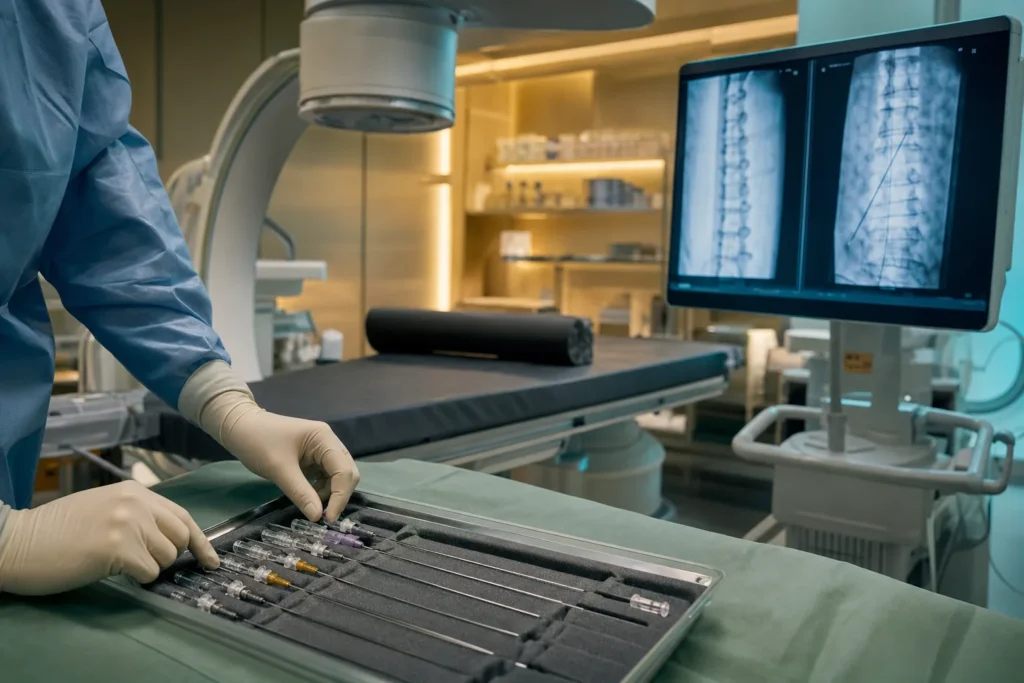
Chronic back pain
If your back has hurt for months, you are far from alone, and there is genuine reason for hope. Long-lasting back pain is one of the most common health problems in the world, and for most people it does not point to anything dangerous. This guide explains, in plain words, what chronic back pain is, why it happens, how doctors look into it, and the many ways it can be eased so you can move and live more comfortably.
What chronic back pain is
Back pain is discomfort anywhere along your spine, the column of bones that runs from the base of your skull to your tailbone. Most often it is felt in the lower back (the area around your waist and hips), because this part of the spine carries much of your body's weight.
Pain is called chronic when it lasts longer than about three months, or longer than the time the body would normally need to heal. Doctors usually group back pain by how long it has lasted: acute pain comes on suddenly and tends to settle within a few weeks; subacute pain lasts roughly 4 to 12 weeks; and chronic pain continues beyond 12 weeks. Sometimes chronic pain lingers even after an injury or operation has healed, and the exact source can be hard to pin down.
This is an extremely common experience. About 8 in 10 people have back pain at some point in their lives, and the World Health Organization estimates that around 619 million people worldwide were living with low back pain in 2020, making it the single leading cause of disability across the globe. Living with daily back pain can be wearing, both physically and emotionally, but it is important to know that in the great majority of cases it is not a sign of serious disease.
Types and subtypes of chronic back pain
Doctors often sort back pain into a few broad groups, because the type guides what (if anything) needs investigating and which treatments are likely to help.
- Non-specific back pain. This is by far the most common kind. Around 90% of cases have no single identifiable disease or structural problem behind them. The pain is real, but no specific injury or condition fully explains it, and it usually involves a mix of muscles, joints, ligaments, nerves, and how the body and mind respond to pain.
- Mechanical or structural pain. Here a part of the spine is involved, such as a worn disc (the soft cushion between the spine's bones), arthritis of the small spinal joints, or a narrowing of the spinal canal.
- Nerve-related (radicular) pain. When a nerve leaving the spine is irritated or pressed, pain, tingling, or weakness can spread into a leg. The best-known example is sciatica, where symptoms travel down the back of one leg.
- Inflammatory back pain. A smaller group of people have pain driven by inflammation, such as ankylosing spondylitis, a condition that tends to cause stiffness that is worse in the morning and improves with movement.
- Referred pain. Occasionally, the back is not the true source at all, and the pain is sent there from another organ, such as the kidneys.
Back pain is also described by where it is felt: lower back (lumbar), mid-back (thoracic), or neck and upper back (cervical). Lower back pain is the most common because that region bears the most load.
Causes and risk factors
For most people, no single cause can be named, and that is normal rather than a failure of investigation. When a cause can be identified, common ones include:
- Muscle or tendon strain from heavy lifting, an awkward twist, or simple overuse, which is the most frequent identifiable cause.
- A herniated (slipped) disc, where the soft inner part of a spinal cushion pushes out and may press on a nearby nerve.
- Degenerative disc disease and osteoarthritis, the ordinary wear and tear that affects most spines with age.
- Spinal stenosis, a narrowing of the space around the spinal cord and nerves.
- Spondylolisthesis, where one spinal bone slips slightly forward over the one below it.
Pain is best understood as biopsychosocial, meaning biological factors (the body), psychological factors (stress, mood, fear of movement), and social factors (work, sleep, support) all interact. This is not the same as saying the pain is imaginary; it is very real, and these factors simply help explain why pain persists and how to ease it.
Things that raise the risk of long-lasting back pain include low levels of physical activity, smoking (which reduces blood flow to the spine), being overweight, physically demanding or stressful work, older age, and poor sleep. Some spinal conditions also run in families.
Signs, symptoms, and when to see a doctor
Back pain can feel like a dull, constant ache or a sudden sharp or burning sensation. It may stay in one spot or spread, and it can be made worse by certain movements such as bending, lifting, sneezing, or coughing. When a nerve is involved, you may notice tingling, numbness, or weakness travelling into a buttock or leg.
It is sensible to see a doctor (such as a GP or family doctor) if your pain does not improve after a few weeks of self-care, keeps coming back, is stopping you doing everyday things, or is simply worrying you. You should also seek advice if the pain is worse at night or when resting, or comes alongside unexplained weight loss, a high temperature, or a lump or visible change in the shape of your spine.
Certain symptoms are treated as an emergency because they can point to a rare but serious problem affecting the nerves at the base of the spine (a condition called cauda equina syndrome) or another urgent cause. Seek emergency medical care straight away if you have:
- Numbness or tingling around your genitals, buttocks, or back passage (sometimes called "saddle" numbness).
- Loss of control of your bladder or bowels, or difficulty passing urine.
- Weakness or numbness in both legs that is severe or getting worse.
- Back pain after a serious accident, such as a car crash or a fall from a height.
- Back pain with a fever, or with chest pain.
These warning signs are uncommon, but they are worth knowing so you can act quickly if they ever appear.
Screening and early detection
There is no routine population screening test for back pain, in the way there is for some cancers. Because back pain is so common and usually not serious, health systems do not recommend scans or X-rays for everyone with a sore back.
In fact, leading guidelines such as the UK's National Institute for Health and Care Excellence (NICE) advise against routine imaging for ordinary low back pain in general (non-specialist) settings. This is not about saving money at your expense; scans often show normal age-related changes, such as worn discs, that are present in many pain-free people too. Imaging those changes can lead to unnecessary worry and treatments without making the pain better.
The most useful "early detection" you can do is to pay attention to the warning signs listed above and to seek help if pain is persistent, severe, or changing. Catching an inflammatory condition or nerve problem early can make a real difference, which is why a proper assessment by a clinician matters more than any single test.
How chronic back pain is diagnosed
Diagnosis usually begins with a conversation and a physical examination, not a machine. Your clinician will ask how and when the pain started, where it is, what makes it better or worse, and how it affects your sleep, mood, work, and daily life. They will check your movement, strength, reflexes, and sensation, and look for any of the warning signs described earlier. A central aim of this assessment is to sort out whether the pain is likely to be ordinary non-specific pain or whether something more specific needs investigating.
If a specific cause is suspected, or if the result would genuinely change your treatment, tests may be arranged. These can include:
- X-rays, which show the bones of the spine.
- MRI scans, which give detailed pictures of discs, nerves, and soft tissues.
- CT scans, which can show bone detail in cross-section.
- Electromyography (EMG) and nerve studies, which measure how well nerves and muscles are working when nerve involvement is suspected.
- Blood tests, which can help if inflammation or infection is a concern.
Unlike many conditions, back pain is not usually "staged." The focus is on identifying any treatable cause and on understanding how the pain is affecting your life, so that care can be tailored to you.
Treatment options
The good news is that there are many ways to ease chronic back pain, and the most effective care is usually active rather than passive. Modern guidelines put movement, education, and support first, and reserve injections and surgery for selected situations. Care is often delivered by a multidisciplinary team, which may include a family doctor, a physiotherapist, a pain specialist, a spine surgeon, and sometimes a psychologist who helps with the mental side of living with pain.
Staying active and physical therapy. Resting in bed for long periods tends to make things worse. Keeping gently active, and following a structured exercise programme guided by a physiotherapist, is one of the best-evidenced approaches. Programmes may combine stretching, strengthening of the core and back muscles, aerobic exercise, and movement-based therapies.
Psychological and educational support. Because pain has a mental and emotional side, cognitive behavioural approaches can help reduce the fear of movement and the distress that pain causes, often delivered together with exercise as a combined programme.
Medicines. Anti-inflammatory tablets such as ibuprofen may be used at the lowest effective dose for the shortest time. Painkillers are not recommended as the first or main treatment, and strong opioids are generally avoided for long-term back pain because of limited benefit and real risks. Paracetamol alone is not recommended for back pain.
Procedures. For carefully selected people, a pain specialist may offer injections or a procedure called radiofrequency denervation, which calms specific pain-carrying nerves of the spinal joints. Epidural injections are mainly considered for severe nerve pain such as acute sciatica.
Surgery. Most people never need an operation. Surgery, such as decompression to relieve a trapped nerve, is considered only when non-surgical care has not helped and the scan findings clearly match the symptoms. Many spine operations today can be done with minimally invasive techniques. Decisions about surgery should always be made together with a specialist who explains the likely benefits and risks for your particular situation.
Outlook: what to expect
For most people, the outlook is reassuring. The majority of back pain episodes ease over weeks, and even long-lasting pain can usually be improved with the right combination of activity, support, and treatment. Many people learn to manage flare-ups so that pain interferes less and less with the things they enjoy.
That said, chronic pain can be unpredictable. It may come and go, and good days and bad days are normal. Recovery is often gradual rather than a single "cure," and the goal is frequently to reduce pain and restore function rather than to remove every twinge. The biopsychosocial nature of pain means progress can be helped by tackling sleep, stress, and confidence in movement alongside the physical side.
It is worth saying clearly that no honest source can predict exactly how any one person's back pain will unfold, and no treatment can promise a complete cure. What guidelines and large studies do show is that staying active, avoiding unnecessary scans and strong painkillers, and following an individualised plan give most people the best chance of feeling and functioning better over time.
Living with chronic back pain and follow-up
Living well with chronic back pain is often about steady habits rather than a single fix. Many people find these help:
- Keep moving. Regular, gentle activity such as walking, swimming, or guided exercises keeps muscles strong and joints supple, and tends to reduce pain over time.
- Pace yourself. Break up long periods of sitting, and balance activity with rest so you do not swing between overdoing it and avoiding everything.
- Mind your sleep and stress. Poor sleep and high stress can amplify pain, so looking after them is part of looking after your back.
- Use heat or cold and simple over-the-counter measures for flare-ups, as advised by your clinician.
- Stay connected to work and life. Staying engaged in work and social activities, with adjustments where needed, supports recovery rather than hindering it.
Follow-up usually means reviewing how you are doing, adjusting your exercise plan, and checking that any new symptoms are not warning signs. If your pain changes character, suddenly worsens, or you develop any of the emergency symptoms described earlier, contact a healthcare professional rather than waiting for a routine appointment.
Planning treatment abroad: what affects cost and how to prepare your records
If you are considering travelling for assessment or treatment of chronic back pain, it helps to understand what shapes the overall cost so you can plan realistically. We do not quote fixed prices here, because the right plan, and therefore the cost, depends entirely on your individual situation.
Factors that influence cost typically include:
- What you actually need. A conservative plan built around physiotherapy and education differs greatly from a pain-specialist procedure such as radiofrequency denervation or, rarely, spinal surgery.
- The diagnostics involved, such as MRI or nerve studies, and whether you already have recent scans.
- The type of procedure and anaesthesia, if any procedure is recommended.
- Length of hospital or clinic stay and any rehabilitation afterwards.
- Follow-up and travel logistics, including how long you may need to stay before flying home.
To get a clear, personalised estimate, the single most useful thing you can do is prepare your medical records. Gather a summary from your doctor describing your symptoms and how long they have lasted, copies of any imaging (X-ray, MRI, or CT) on disc or in digital form along with the written reports, a list of treatments you have already tried, and a current list of your medicines and allergies. With these in hand, our team can arrange a free consultation and a tailored estimate rather than a one-size-fits-all figure.
Why Turkiye, and how to choose a good centre
Turkiye (Turkey) has become a well-known destination for international patients seeking spine and pain care, with experienced multidisciplinary teams and modern facilities. Whether you treat at home or abroad, the way you choose a centre matters more than the location itself. Here is what is worth verifying for any clinic, anywhere:
- Accreditation and quality standards. Look for hospitals with recognised national or international accreditation and clear quality and safety processes.
- A genuine multidisciplinary team. Good back-pain care involves more than one surgeon; ask whether physiotherapists, pain specialists, and where relevant psychologists are part of the pathway.
- Specialist credentials and experience. Check that the clinicians who would treat you are appropriately qualified and experienced in your specific problem.
- A conservative-first philosophy. Be cautious of any centre that proposes surgery quickly without first exploring non-surgical options, since guidelines reserve surgery for selected cases.
- Clear, written information. A trustworthy centre explains the likely benefits, risks, alternatives, and aftercare in plain language, and is happy to support a second opinion.
- Communication and follow-up. Confirm what language support is available and how follow-up will work once you are back home.
A medical-tourism concierge can help coordinate records, appointments, and logistics, but the medical decision should always rest on a careful assessment by a qualified specialist who has reviewed your individual case.
Prevention and self-care
While not every episode of back pain can be prevented, several habits genuinely lower the risk of long-lasting pain and help keep flare-ups manageable:
- Stay physically active. Regular exercise that builds strength and flexibility protects the spine; long periods of inactivity do the opposite.
- Move and lift wisely. Bend at the hips and knees rather than the back, keep loads close to your body, and avoid twisting while lifting.
- Look after your workspace. Set up your chair, desk, and screen so you can sit comfortably, and take regular breaks to move.
- Keep a healthy weight, which reduces the load on your lower back.
- Do not smoke. Smoking reduces blood flow to the spine and is linked with more back pain.
- Prioritise good sleep and find healthy ways to manage stress, since both affect how the body experiences pain.
If pain does appear, the modern advice is to stay as active as you reasonably can rather than retreating to bed, and to seek a proper assessment if it persists. Small, consistent steps usually do more for a back than any single dramatic intervention.
Frequently asked questions
When is back pain considered chronic?
Is chronic back pain a sign of something serious?
Do I need an MRI or X-ray for my back pain?
What is the best treatment for chronic back pain?
Should I rest in bed when my back hurts?
Are strong painkillers like opioids recommended for long-term back pain?
What is sciatica, and how is it related to back pain?
Will I definitely need surgery for chronic back pain?
Can chronic back pain be cured?
How can I prevent back pain from coming back?
What should I prepare before a consultation about treatment abroad?
This article is for general information only and is not medical advice. Always consult a qualified doctor about your individual case.
Considering this procedure?
Send us your photos and questions. A BergemHealth coordinator and a department-head specialist will review your case and reply with honest, personalised guidance — no obligation.
Free consultation