Failed back surgery syndrome (FBSS)
If your back or leg pain has continued, returned, or changed after spine surgery, you are not imagining it, and you are not alone. This is often called failed back surgery syndrome (FBSS). Despite the harsh-sounding name, it does not mean your surgeon did anything wrong or that nothing more can be done. This guide explains, in plain language, what FBSS is, why it happens, how doctors find the cause, and the many treatment options available, so you can have a calmer, better-informed conversation with a specialist.
What failed back surgery syndrome is
Failed back surgery syndrome (FBSS) is a general term doctors use when back pain, leg pain, or both continue, return, or appear after spine surgery. It is sometimes called post-laminectomy syndrome (a laminectomy is a common operation that removes a small piece of bone to take pressure off nerves). Many specialists now prefer the term chronic pain after spinal surgery, because the older name can sound like blame.
It helps to know what FBSS is not. It is not a single disease, and it does not mean the operation was done incorrectly. The word "failed" simply describes the outcome, that the hoped-for relief did not happen or did not last, rather than the quality of the care. Spine surgery usually aims to fix a clear mechanical problem (such as a nerve being pinched) and to ease the pain that problem causes. Sometimes the structural goal is met, the scan looks good, but pain remains. This is why FBSS can feel so confusing.
According to clinical reviews collected by the U.S. National Library of Medicine (StatPearls), pain that lingers after spine surgery is genuinely common, affecting an estimated 10% to 40% of people who have lower-back operations, depending on the procedure and how it is measured. Understanding that this is a recognised, well-studied situation, not a rare mystery, is often the first reassuring step.
Types and subtypes
FBSS is best thought of as an umbrella term covering several different underlying problems. Identifying which one (or which combination) applies to you is the key to choosing the right treatment. Common patterns include:
- Ongoing nerve compression. A nerve may still be pinched, for example by narrowing of the bony channel a nerve passes through (called foraminal stenosis), which reviews describe as one of the most frequent structural findings in FBSS.
- Recurrent disc herniation. The soft cushion between two vertebrae can bulge again, sometimes at the same level that was operated on.
- Scar tissue (epidural fibrosis). As the body heals, it naturally forms scar tissue. In some people this tissue tethers or irritates a spinal nerve.
- Adjacent segment problems. When one part of the spine is fused (stiffened), the neighbouring levels carry more load and may wear out faster, sometimes called transition syndrome.
- Failed or incomplete fusion (pseudarthrosis). Bone that was meant to knit together does not fully fuse, leaving movement that causes pain.
- Facet or sacroiliac joint pain. Small joints in the spine or pelvis can become a source of pain in their own right.
- Neuropathic pain. Nerves that were irritated for a long time, or affected during surgery, can keep sending pain signals even after the original pressure is gone. This is pain coming from the nervous system itself.
Some people have one clear cause; others have a mix, which is why careful, individual assessment matters so much.
Causes and risk factors
Pain after spine surgery usually comes down to one of three timing groups, sometimes overlapping.
Things present before surgery. The strongest predictors of a less successful outcome are often not in the bones at all. Reviews consistently highlight psychological factors such as depression and anxiety, alongside smoking, obesity, and having had several previous spine operations. None of these mean surgery cannot help, but they can lower the chance of complete relief, which is why good teams assess the whole person beforehand.
Things related to the operation itself. Examples include treating one level of the spine when pain actually comes from several, or a mismatch between the imaging findings and the real source of symptoms. Choosing exactly the right procedure for the right problem is part of why a careful pre-operative diagnosis is emphasised.
Things that develop after surgery. These include scar tissue forming around nerves, the spine continuing its natural ageing process, hardware (screws or cages) loosening, fusion not fully taking, and the extra strain on neighbouring levels described above.
One important and reassuring point: many of these factors are modifiable. Stopping smoking, managing weight, following activity guidance during recovery, and treating low mood are all within reach and can genuinely improve how the spine heals and how pain is experienced.
Signs and symptoms, and when to see a doctor
FBSS does not look the same in everyone. The pain may feel exactly like it did before surgery, or it may be entirely different, sharper, more spread out, or in a new location. It can be confined to the lower back, or it can travel down into the buttock and leg (often called sciatica or radicular pain). Other common experiences include:
- Numbness, pins and needles, or a feeling of heaviness in a leg
- Muscle weakness or stiffness
- Muscle spasms
- Pain that began immediately after the operation, or that appeared weeks, months, or even years later
Most back pain after surgery, even when distressing, is not an emergency. However, certain warning signs mean you should seek medical care promptly. Contact a doctor without delay, or go to urgent or emergency care, if you develop:
- New or worsening weakness in a leg or foot (for example, your foot dropping or dragging)
- Numbness around the groin, genitals, or back passage (sometimes called saddle numbness)
- Loss of control of your bladder or bowels, or new difficulty passing urine
- Fever, chills, or redness, swelling, or discharge from the surgical wound, which could suggest infection
These symptoms can point to nerve or spinal cord pressure or infection that needs quick attention. Outside of these red flags, persistent pain is best assessed in an unhurried, planned way.
Screening and early detection
There is no routine screening test for failed back surgery syndrome, and there is no scan you can take in advance to predict who will develop it. FBSS is recognised by what a person experiences over time, ongoing or returning pain after spine surgery, rather than detected by a screening programme.
What does help is early, honest attention to symptoms. If pain is not improving on the timeline your surgical team expected, telling them sooner rather than later allows the cause to be investigated while options are widest. Keeping a simple record can be very useful: where the pain is, what it feels like, what makes it better or worse, how it compares to before surgery, and how it affects sleep, mood, and daily activities. This information helps a specialist work out whether the pain is mechanical (from a structure that can be treated) or more nerve-driven, which shapes the whole plan.
How it is diagnosed
Diagnosing FBSS is really about finding the specific reason for the pain, because the term itself only describes the situation, not the cause. A thorough assessment usually combines several steps.
History and physical examination. The specialist will ask in detail about your original problem, the surgery, and exactly how your current pain compares. New pain that started right after surgery raises different questions than pain that returned much later. Leg pain often points to nerve compression, while central low-back pain may suggest the facet or sacroiliac joints.
Imaging. An MRI scan is considered the most useful test because it shows soft tissues such as nerves, discs, and scar tissue. For people who have had a previous disc operation, a contrast dye (gadolinium) is often added, because it helps tell the difference between scar tissue and a fresh disc herniation, two problems that look similar but are treated differently. If you have metal implants that make MRI difficult, a CT scan, sometimes with dye injected around the spinal nerves (a CT myelogram), is used instead. Plain X-rays can show alignment problems or whether a fusion has taken.
Targeted diagnostic injections. Sometimes the most reliable way to find the source is a carefully placed numbing injection (a nerve block). If the pain temporarily disappears after numbing a specific joint or nerve, that structure is likely the culprit, which both confirms the diagnosis and points to treatment.
Blood tests. If infection is a concern, simple blood markers of inflammation may be checked.
Treatment options
The encouraging reality is that FBSS has a wide range of treatments, and care is usually delivered by a multidisciplinary team, a group that may include a pain medicine doctor, a spine surgeon, a physiotherapist, a psychologist, and a pharmacist, working together on what is called a biopsychosocial approach (treating body, mind, and daily life together). Treatment almost always starts with the least invasive options.
Medical and physical (first-line).
- Physical therapy to rebuild strength, flexibility, and confidence in movement, and to help the nervous system gradually re-learn that movement is safe.
- Medicines such as anti-inflammatory drugs (NSAIDs) for some types of pain, and medicines that calm overactive nerves, certain antidepressants and anticonvulsants, for nerve-type pain. Opioids are generally avoided for long-term use because evidence of lasting benefit is weak and the risks are significant; long-term opioid use can sometimes even increase sensitivity to pain.
- Psychological support such as cognitive behavioural therapy, which research suggests can meaningfully improve how people cope with and reduce chronic pain. Seeking this kind of help is a sign of good care, not of pain being imaginary.
Procedural (minimally invasive).
- Epidural steroid injections to calm inflammation around irritated nerves.
- Radiofrequency ablation, which uses heat to quiet specific small nerves carrying pain from arthritic facet joints.
- Adhesiolysis, a procedure aimed at gently freeing nerves caught in scar tissue.
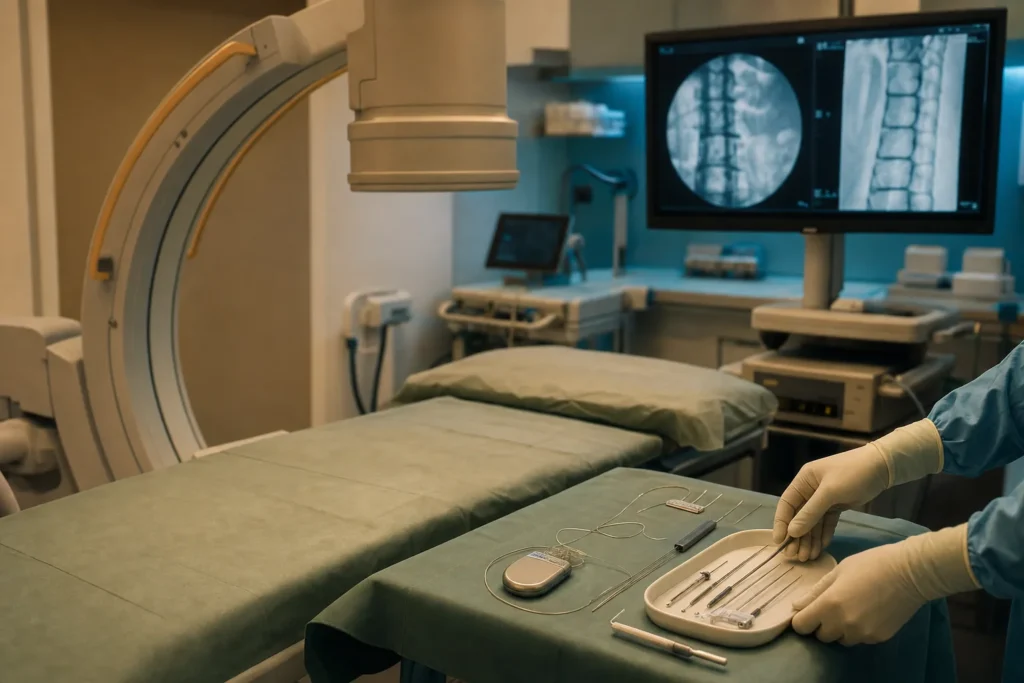
- Spinal cord stimulation (SCS). A small device places thin wires near the spinal cord and delivers gentle electrical pulses that change how pain signals are felt. It is one of the more strongly supported options for persistent nerve-type leg pain after surgery. Importantly, a temporary trial is done first: only if the trial clearly helps is a permanent device implanted. SCS aims to reduce pain and improve function; as MedlinePlus explains, it is not a cure and rarely removes pain completely.
Surgical (revision). A further operation may be the right choice when imaging shows a clear, correctable problem, such as a re-herniated disc or hardware that has loosened. Repeat surgery is considered carefully, because reviews note that the chance of good relief tends to fall with each additional operation. Surgery is, however, urgently considered if there is new significant weakness, or loss of bladder or bowel control.
Outlook and what to expect
It is important to be both honest and hopeful here. FBSS is a chronic condition, and studies show that, as a group, people living with it report a lower quality of life than people with several other long-term pain conditions, with higher rates of low mood and reduced ability to work. We share this not to alarm you, but because naming the challenge openly is part of taking it seriously, and because it explains why a broad, supportive approach works better than searching for a single quick fix.
At the same time, the realistic goal of modern care is meaningful improvement, more comfortable movement, better sleep, lower pain levels, and a fuller daily life, rather than necessarily reaching zero pain. Many people achieve real gains with the right combination of treatments. These are population-level observations from medical literature; they describe groups of people, not a prediction for you as an individual. Your own outlook depends on the specific cause of your pain, your overall health, and the treatment plan you and your team choose. A qualified specialist who has reviewed your scans and history is the only person who can give you tailored guidance.
Living with it and follow-up
Living well with FBSS is usually about steady, layered management rather than one decisive cure. A few principles tend to help.
- Stay as active as you safely can. Gentle, regular movement guided by a physiotherapist generally helps more than prolonged rest, which can stiffen the back and weaken supporting muscles.
- Pace yourself. Breaking activities into manageable pieces, rather than overdoing things on good days and crashing afterwards, helps keep pain steadier.
- Look after sleep and mood. Pain, poor sleep, and low mood feed one another. Treating any one of them often eases the others, which is why psychological support is a core part of care, not an afterthought.
- Keep regular follow-up. Chronic pain can change over time. Scheduled reviews let your team adjust medicines, top up injections, fine-tune a spinal cord stimulator, or re-examine the cause if symptoms shift.
- Build support. Family, friends, patient groups, and your care team all matter. You do not have to manage this alone.
Planning treatment abroad: what affects cost and how to prepare your records
Some people explore having FBSS assessment or treatment in another country, such as Turkiye, often combining specialist care with shorter waits. If you are considering this, it helps to understand what shapes the overall cost, so you can ask for a clear, personalised estimate rather than relying on guesswork. We do not list prices here, because the right plan, and therefore the cost, depends entirely on your individual diagnosis.
Factors that typically influence the cost of FBSS care include:
- The type of treatment chosen, from a consultation and physiotherapy programme, to injections or radiofrequency procedures, to a spinal cord stimulator (which involves both a trial and, if successful, an implant and the device itself), to revision surgery.
- The diagnostic work-up needed, such as MRI with contrast, CT myelogram, or diagnostic nerve blocks.
- Any hospital stay and the level of nursing and rehabilitation support required.
- The specialist team involved and the complexity of your case.
- Practical extras such as interpreter services, accommodation, transfers, and follow-up arrangements.
Preparing your records makes everything smoother and safer. Before any consultation, gather your previous operation notes (which procedure was done and at which level), all imaging on disc or via a sharing link (ideally including the scans done before your first surgery as well as recent ones), a list of current and past medicines, and a short written summary of how your pain has changed over time. Good remote assessment depends on these documents, and they help a specialist tell you honestly whether they can help before you travel. The best way to understand likely costs for your situation is to request a personalised estimate through a free consultation.
Why Turkiye, and how to choose a good centre
Turkiye has become a well-known destination for medical care, including spine and pain management, partly because of internationally accredited hospitals, experienced specialists, and coordinated services for international patients. As a concierge service, our role is to help you reach appropriate, quality care, not to promise any particular outcome. The most valuable thing we can offer here is a checklist of what to verify, wherever you choose to go.
- Accreditation. Look for hospitals with recognised international accreditation, such as Joint Commission International (JCI), which sets standards for patient safety and quality of care.
- A true multidisciplinary pain team. Persistent pain after surgery is best handled by a group, pain medicine, spine surgery, physiotherapy, and psychology, rather than a single practitioner. Ask who will be involved in your care.
- Specialist experience with FBSS specifically. Ask how often the centre manages post-surgical pain, and whether they offer the full range of options (conservative care, injections, radiofrequency, spinal cord stimulation, and revision surgery) so the recommendation fits your problem rather than the service they happen to sell.
- A trial-before-implant approach for spinal cord stimulation. Reputable centres follow the same principle reflected in guidance from bodies like NICE: a temporary trial first, with a permanent device only if it clearly helps.
- Clear, written information. You should receive a plain explanation of the diagnosis, the proposed plan, realistic expectations, risks, and follow-up, in a language you understand, before agreeing to anything.
- An honest second opinion. A trustworthy team will tell you if a treatment is unlikely to help, or if you should not travel at all.
Self-care, prevention, and getting a second opinion
While not all causes of FBSS can be prevented, several steps genuinely lower risk and support recovery, both before any future surgery and in daily life now.
- Before any planned spine surgery, make sure the source of pain is clearly identified and matches the imaging, ask about non-surgical alternatives, and address modifiable factors such as smoking and weight, which influence healing.
- Stop smoking. Smoking impairs bone healing and fusion and is linked to poorer outcomes.
- Stay active and maintain a healthy weight to reduce ongoing strain on the spine.
- Follow post-operative activity guidance carefully if you do have surgery; protecting the healing area matters.
- Look after mental health, since untreated depression and anxiety are among the strongest predictors of poorer pain outcomes.
Finally, a second opinion is not disloyal, it is wise, especially before agreeing to repeat surgery. Because the chance of relief can fall with each additional operation, an independent specialist review of your scans and history can confirm whether more surgery is truly the best path, or whether a less invasive option fits better. A good clinician will welcome that scrutiny. If anyone promises a guaranteed cure or pressures you to decide quickly, treat that as a reason to pause and seek further advice.
Frequently asked questions
Does "failed back surgery syndrome" mean my surgeon made a mistake?
How common is it to still have pain after spine surgery?
Why does scar tissue cause pain?
Will I need another operation?
What is spinal cord stimulation, and is it a cure?
When should I seek urgent medical help?
Can FBSS be cured completely?
Why does my doctor want me to see a psychologist? My pain is real.
How do doctors find the exact cause of my pain?
What should I prepare before a consultation, especially abroad?
What affects the cost of FBSS treatment?
This article is for general information only and is not medical advice. Always consult a qualified doctor about your individual case.
Considering this procedure?
Send us your photos and questions. A BergemHealth coordinator and a department-head specialist will review your case and reply with honest, personalised guidance — no obligation.
Free consultation