Trigeminal neuralgia
Trigeminal neuralgia is a nerve condition that causes sudden, sharp, electric-shock-like pain in the face. It can be frightening and exhausting, but it is well understood by doctors, and most people are helped by today's treatments. This guide explains, in plain language, what the condition is, why it happens, how it is diagnosed, and the full range of options for getting the pain under control.
What trigeminal neuralgia is
Trigeminal neuralgia (sometimes shortened to TN, and historically called tic douloureux) is a long-term pain condition that affects the trigeminal nerve. This is the fifth of the twelve cranial nerves, the nerves that come directly from the brain, and it is the main nerve that carries feeling from your face to your brain. When it misfires, it can produce sudden bursts of intense facial pain.
People usually describe the pain as a sharp, stabbing, or shooting sensation, often likened to an electric shock in the jaw, teeth, gums, or cheek. The attacks are typically very brief, lasting from a few seconds to about two minutes, and they tend to stop as suddenly as they begin. The pain is almost always on one side of the face at a time.
It is important to know two reassuring things from the outset. First, trigeminal neuralgia is not life-threatening in itself. Second, although it is one of the more painful conditions in medicine, doctors have a clear, step-by-step set of treatments that help most people, starting with simple medication and moving on to procedures only if needed. The condition is uncommon, which is partly why it can take time to recognise, but specialists who manage facial pain see it regularly.
Types and subtypes
Doctors describe trigeminal neuralgia in two useful ways: by what the pain feels like, and by what is causing it.
By the pattern of pain:
- Typical (sometimes called type 1, TN1, or paroxysmal): sudden, sharp, shock-like bursts of pain with completely pain-free gaps in between. Paroxysmal simply means the pain comes in distinct, separate attacks.
- Atypical (sometimes called type 2, TN2, or TN with continuous pain): a more constant aching, throbbing, or burning background pain, sometimes on top of the sharp attacks. This form can be harder to diagnose and treat.
By the underlying cause:
- Classic trigeminal neuralgia is the most common form. Here a blood vessel is pressing on the trigeminal nerve where it leaves the brainstem.
- Secondary trigeminal neuralgia accounts for roughly 15% of cases and is caused by another identifiable condition, such as multiple sclerosis or a tumour pressing on the nerve. People with this form tend to be younger and may have pain on both sides.
- Idiopathic trigeminal neuralgia is the term used when no clear cause is found even after careful testing. Idiopathic simply means the cause is unknown.
The trigeminal nerve itself splits into three branches, which helps explain where the pain is felt: the ophthalmic branch (forehead and around the eye), the maxillary branch (cheek, upper jaw, upper lip and teeth), and the mandibular branch (lower jaw, lower lip and teeth). The cheek and jaw branches are the ones most often affected.
Causes and risk factors
In most cases of classic trigeminal neuralgia, the trouble starts where a blood vessel sits against the trigeminal nerve close to the brainstem. Over time this contact can wear away the nerve's protective outer coating, called the myelin sheath. Without that insulation, the nerve sends pain signals when it should not, a bit like a frayed electrical wire short-circuiting. The artery most often involved is the superior cerebellar artery.
Other recognised causes include:
- Multiple sclerosis (MS), a condition in which the body's own immune system damages the protective coating of nerves. TN can occasionally be the first sign of MS, which is one reason younger people with facial pain are investigated carefully.
- A tumour or other growth pressing on the nerve, which is uncommon but important to rule out.
- Injury to the nerve from facial trauma, a stroke, or surgery, including some dental procedures.
Several factors are linked with a higher chance of developing the condition, though having them does not mean you will:
- Age: it most often begins between the ages of 50 and 60 and is uncommon before 40.
- Sex: it affects more women than men.
- High blood pressure and a history of multiple sclerosis are also associated with a higher risk.
Trigeminal neuralgia is not contagious, it is not caused by anything you did, and in most people there is no single lifestyle factor to blame.
Signs and symptoms, and when to see a doctor
The hallmark of trigeminal neuralgia is sudden, severe, one-sided facial pain that feels sharp, stabbing, or like an electric shock. Common features include:
- Brief attacks lasting from a few seconds to about two minutes, sometimes coming in clusters one after another.
- Pain on one side of the face, most often in the cheek, jaw, teeth, or gums.
- Pain set off by very light, everyday touch or movement, known as a trigger.
- In the atypical form, a more constant aching or burning between the sharp attacks.
Triggers are often surprisingly gentle, which can make the condition very disruptive. They commonly include washing the face, shaving, putting on make-up, brushing the teeth, eating, talking, smiling, or a light breeze or cold air on the face. Attacks rarely happen during sleep.
The pain in the teeth and gums can closely mimic a dental problem, and some people have dental treatment before the true cause is recognised. If facial or tooth pain does not match dental findings, trigeminal neuralgia is worth considering.
When to see a doctor. See a doctor if you have frequent or persistent facial pain, particularly if ordinary painkillers do not help. Seek urgent medical attention if facial pain comes with weakness, numbness, drooping, a sudden severe headache, vision changes, or difficulty speaking, as these can point to a different and more urgent problem that needs assessment straight away.
Screening and early detection
There is no routine screening test for trigeminal neuralgia, and no scan or blood test that everyone should have to look for it before symptoms appear. Because the condition is uncommon and there is no simple population test, it cannot be screened for in the way that, say, breast or bowel cancer can.
Early detection therefore depends on recognising the pattern of the pain and seeing a doctor about it. Honest, detailed reporting of your symptoms is the single most valuable thing you can do: when the attacks happen, how long they last, exactly where you feel them, and what sets them off. Keeping a short pain diary for a week or two, including the triggers and the timing, can genuinely speed up reaching the right diagnosis.
Diagnosis can take time. Because the pain can imitate a toothache or other facial pain, it sometimes takes a while, occasionally a few years, for the condition to be confirmed. Knowing this in advance can help you advocate for a specialist referral if early treatments are not working.
How it is diagnosed
There is no single test that confirms trigeminal neuralgia. The diagnosis is made mainly from your description of the pain, supported by examination and imaging to look for an underlying cause.
History and examination. The doctor will ask detailed questions about the type, location, timing, and triggers of your pain. A neurological examination, which checks the nerves, sensation, and muscle function in the face, is often completely normal in classic trigeminal neuralgia, and a normal exam does not rule the condition out.
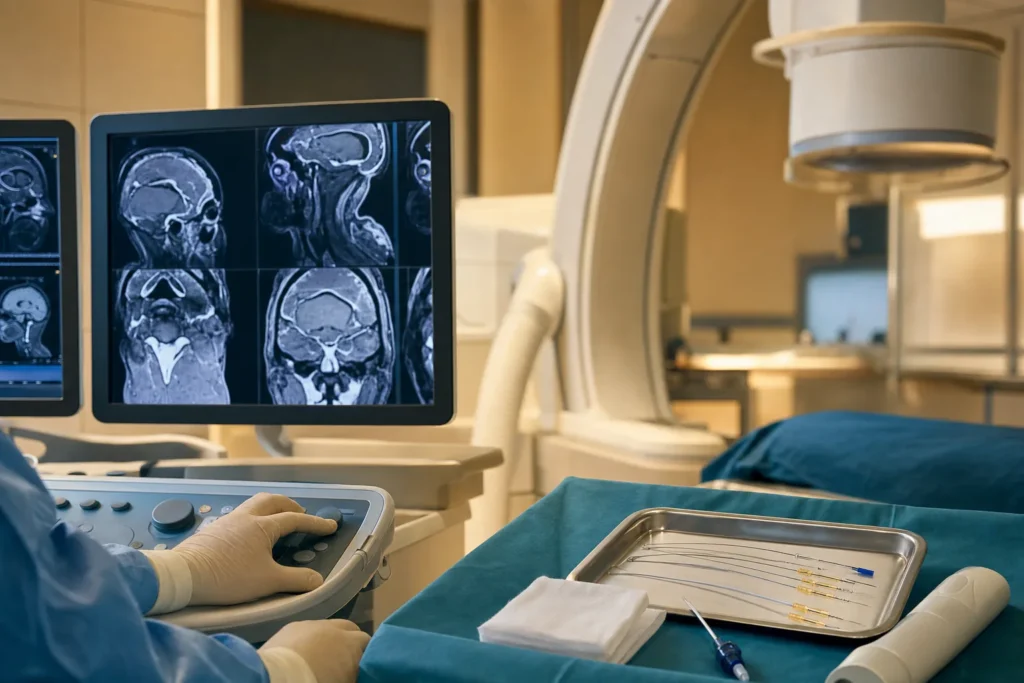
MRI scan. Magnetic resonance imaging (MRI) uses a strong magnet and radio waves, with no radiation, to produce detailed pictures of the brain and nerves. It is the key test, used to look for a blood vessel pressing on the nerve and, importantly, to check for secondary causes such as multiple sclerosis or a tumour. A specialised version called MRA (magnetic resonance angiography) can show the blood vessels more clearly.
Other tests. Depending on the picture, your doctor may arrange blood tests, a CT angiogram, an eye examination, or specialised electrical tests of the trigeminal nerve's reflexes to help distinguish trigeminal neuralgia from other causes of facial pain.
Unlike cancers, trigeminal neuralgia is not given a numerical stage. Instead, the practical questions are which branch or branches of the nerve are affected, whether a cause can be identified on the scan, and how well the pain responds to first treatments. Those answers guide what comes next.
Treatment options
Treatment usually follows a clear ladder, starting with medication and moving to procedures only if medication stops working or causes too many side effects. Ordinary painkillers such as paracetamol or ibuprofen generally do not help this nerve pain. Care is often coordinated by a multidisciplinary team that may include a neurologist, a neurosurgeon, a pain specialist, a radiologist, and sometimes a dentist or oral surgeon to be sure the pain is not coming from the teeth.
Medication (the usual first step).
- Carbamazepine, an anticonvulsant (a medicine first developed for epilepsy), is the standard first-line treatment. It works by calming the over-active electrical signals in the nerve so it is less able to send pain messages. It is usually started at a low dose and increased gradually. Possible side effects include drowsiness, dizziness, difficulty concentrating, unsteadiness, nausea and, rarely, serious skin or blood reactions, so people taking it are monitored.
- Other medicines used if carbamazepine is not tolerated or stops working include oxcarbazepine, lamotrigine, gabapentin, pregabalin, baclofen (a muscle relaxant), and others. These are chosen and adjusted by a specialist.
Procedures and surgery (if medication is not enough).
- Percutaneous procedures. Percutaneous means through the skin. Using a fine needle passed through the cheek, the nerve is partly disrupted to block pain signals, by heat (radiofrequency lesioning), a chemical (glycerol injection), or pressure from a tiny balloon (balloon compression). These give relief that may last from months to a few years and can be repeated, but they commonly cause some lasting facial numbness.
- Stereotactic radiosurgery (for example, Gamma Knife). This focuses precise beams of radiation on the nerve, with no cut. There is no immediate effect; pain relief usually develops over several weeks to months. Numbness or pins-and-needles can occur.
- Microvascular decompression (MVD), also called the Jannetta procedure. This is the most involved operation, performed through a small opening in the skull behind the ear, where the surgeon moves the offending blood vessel away from the nerve and cushions it. It treats the underlying cause rather than damaging the nerve, and it offers the best chance of long-lasting relief. As major surgery, it carries small but real risks, including facial numbness, hearing changes, and, rarely, stroke. Your surgeon will discuss the specific risks for you.
Supportive care matters too. Because the pain can interfere with eating, sleeping, and daily life, support for mood, nutrition, and sleep is part of good treatment.
Outlook and what to expect
Trigeminal neuralgia is generally a long-term condition that can come and go. Many people have periods of remission, where the pain disappears for weeks, months, or even longer, followed by flare-ups. Over time, these pain-free periods can become shorter and the attacks more frequent for some people, though this varies a great deal from person to person.
The encouraging news is that treatment helps the great majority of people to some degree. Medication controls the pain well for many, especially in the early years. When medication is no longer enough, procedures, and microvascular decompression in particular, can provide substantial and often long-lasting relief, although pain can sometimes return years later and some procedures leave a degree of facial numbness.
It is not possible to predict exactly how any one person's condition will behave, and the figures above describe groups of patients rather than individuals. What can be said with confidence is that there is a recognised, stepwise plan, and that a specialist can usually find an option that meaningfully reduces the pain. If one treatment loses its effect, others remain available.
Living with it and follow-up
Living well with trigeminal neuralgia is partly about controlling the pain and partly about reducing the things that set it off and supporting your overall wellbeing.
Managing triggers. Many people learn their personal triggers and adapt gently around them, for example by using lukewarm rather than cold water to wash the face, protecting the face from wind and cold air, eating softer foods during flare-ups, and using a small or soft toothbrush. The aim is to reduce attacks, not to live in fear of every touch.
Follow-up. Regular review with your specialist team is important. If you take carbamazepine or similar medicines, you may need periodic blood tests, and doses are adjusted over time as your symptoms change. Tell your doctor promptly if the pain pattern changes, if side effects appear, or if a medicine that was working stops helping, as this often signals it is time to review the plan.
Emotional and practical support. Severe, unpredictable facial pain can affect mood, sleep, appetite, and relationships, and feelings of anxiety or low mood are common and understandable. These are part of the condition, not a weakness, and they deserve attention. Talking to your doctor, leaning on family and friends, and connecting with a reputable patient support organisation can make a real difference. Because eating can be difficult during flare-ups, watching your weight and nutrition is also worthwhile.
Planning treatment abroad: what affects cost and how to prepare your records
If you are considering having a procedure for trigeminal neuralgia abroad, it helps to understand what drives the overall cost so you can compare options sensibly and avoid surprises. We do not quote prices on this page because every case is different; instead, we arrange a personalised estimate after a free consultation.
Factors that affect the cost of treatment include:
- Which procedure is appropriate for you, for example a percutaneous procedure, stereotactic radiosurgery, or microvascular decompression. These differ greatly in complexity, equipment, and hospital time.
- The diagnostic work-up needed, such as a fresh MRI or MRA and specialist consultations.
- Length of hospital stay and level of care, including any time in intensive care after major surgery.
- The specialist team involved, including the neurosurgeon, anaesthetist, and supporting staff.
- Follow-up, medication, and any rehabilitation after the procedure.
- Travel and accommodation for you and anyone travelling with you, and interpreter or coordination services.
How to prepare your records. Gathering your medical information before you travel makes assessment faster, safer, and usually cheaper. Useful items include: a written summary of your symptoms and how they started, any pain diary you have kept, a list of all medicines you have tried and their effect, your most recent brain MRI or MRA images and reports (on a disc or in digital form), recent blood test results, and details of any other health conditions. Having these ready allows the specialist team to advise you accurately and to give a meaningful, personalised estimate via a free consultation.
Why Turkiye, and how to choose a good centre
Turkiye has become a well-established destination for medical travel, with many large hospitals that treat international patients and offer the full range of treatments for trigeminal neuralgia, from medication management to advanced neurosurgery. For many people, the appeal is the combination of experienced specialist teams, modern equipment, and coordinated support for travel and language.
Choosing a centre carefully matters more than choosing a country. Things worth verifying before you commit:
- Accreditation. Look for hospitals with recognised international accreditation, such as Joint Commission International (JCI), which assesses patient safety and quality of care. You can check a hospital's status directly on the official JCI directory.
- The specialist team. For procedures, confirm that a qualified neurosurgeon or interventional pain specialist with specific experience in trigeminal neuralgia will be treating you, and ask how many such cases the centre handles.
- A clear, individual plan. A trustworthy centre will review your scans and history, confirm the diagnosis, and recommend the least invasive option that is appropriate, rather than pushing straight to surgery.
- Honest information about risks and outcomes, including the possibility of recurrence and side effects such as numbness. Be cautious of anyone promising a guaranteed cure.
- Aftercare and communication, including how follow-up will work once you return home and who to contact if you have problems.
A reputable medical-travel coordinator should help you gather and share your records, arrange the consultation, and answer your questions, without pressure. Take the time you need to make an informed choice.
Self-care, second opinions, and where to get help
While there is no proven way to prevent trigeminal neuralgia, there is a lot you can do to live with it well and to make good decisions about your care.
Day-to-day self-care centres on gently managing triggers, taking medication exactly as prescribed, protecting your face from cold and wind, and looking after your sleep, nutrition, and mood. Some people find that stress-reduction approaches such as relaxation techniques, mindfulness, or gentle exercise help them cope, used alongside, not instead of, medical treatment. Always discuss any complementary approaches with your doctor first.
Getting a second opinion is reasonable and often wise, especially before any procedure or surgery, or if your diagnosis is uncertain. A second specialist can confirm the diagnosis, review your scans, and make sure the recommended treatment is the most suitable and the least invasive option for you. Good doctors welcome this.
Where to turn. Start with your GP or family doctor, who can refer you to a neurologist or a facial-pain or neurosurgery service. Reputable patient organisations and the trusted health sources listed below offer reliable, plain-language information you can read at your own pace. Above all, you do not have to manage this alone: trigeminal neuralgia is treatable, and the right team can help you regain control of your daily life.
Frequently asked questions
What does trigeminal neuralgia feel like?
What triggers an attack?
What causes trigeminal neuralgia?
Could my facial pain be a toothache instead?
How is it diagnosed?
Is there a cure, or will I have it for life?
What is the first treatment usually tried?
When is surgery considered?
What are the risks of the procedures?
Is trigeminal neuralgia dangerous?
Who tends to get it?
What should I prepare before a consultation abroad?
Sources
- NHS: Trigeminal neuralgia (overview)
- NHS: Trigeminal neuralgia, treatment
- NINDS (NIH): Trigeminal Neuralgia
- Cleveland Clinic: Trigeminal Neuralgia
- Cleveland Clinic: Trigeminal Nerve (anatomy)
- MedlinePlus: Trigeminal neuralgia
- Cleveland Clinic Journal of Medicine: Guidelines for the management of trigeminal neuralgia
- Joint Commission International: Accredited organizations directory
This article is for general information only and is not medical advice. Always consult a qualified doctor about your individual case.
Specialists in Pain Management
Doctors of the department we work with directly. Which doctor takes your case is decided after the specialists have reviewed your records — your coordinator confirms it, not this page.


Considering this procedure?
Send us your photos and questions. A BergemHealth coordinator and a senior specialist will review your case and reply with honest, personalised guidance — no obligation.
Free consultation