Gastric bypass (RYGB)
Gastric bypass (Roux-en-Y) is one of the most established weight-loss operations in the world. This friendly, plain-language guide explains what it does, who it suits, how it feels to recover, what results to expect, and what to check before travelling to Turkiye for treatment.
- Anaesthesia
- General anaesthesia (you are fully asleep).
- Duration
- Around 2 to 4 hours of surgery.
- Recovery
- Light activity in 1-2 weeks; most people back to normal in 3-6 weeks; full healing over months.
- Hospital stay
- Usually 1 to 4 nights in hospital.
Minimum price, for reference only — the final cost is calculated individually after your records are reviewed. You pay the hospital’s price; our service is free for you.
What gastric bypass actually is
Gastric bypass is a weight-loss operation that changes how your stomach and intestines handle food. Its full name is Roux-en-Y gastric bypass, usually shortened to RYGB. ("Roux-en-Y" is just the name of the Y-shaped way the intestine is reconnected, after the Swiss surgeon who described it.)
The surgeon does two things. First, they use surgical staples to divide off a small pouch at the top of your stomach, about the size of a walnut, holding roughly one tablespoon to one ounce of food. Second, they re-route your small intestine (the long tube where food is digested and absorbed) so that food from the new pouch flows straight into a lower part of the intestine, bypassing most of the stomach and the first section of the gut.
This works in three ways at once. It is restrictive (the tiny pouch fills quickly, so you feel full on much less food), it is mildly malabsorptive (because food skips part of the gut, your body takes in fewer calories and nutrients), and it changes your gut hormones in ways that reduce hunger and improve how your body handles blood sugar. Doctors increasingly call this group of operations metabolic and bariatric surgery, because the benefits go beyond weight alone.
It is a serious, life-changing procedure, not a shortcut. It works best as one part of a long-term plan that also includes new eating habits, activity and follow-up care.
Who is a good candidate (and who should wait or avoid it)
Gastric bypass is generally considered for people with obesity who have not reached a healthy weight through diet, exercise and medication. Bodyweight is often measured with BMI (body mass index), a number based on your height and weight.
Commonly used guidelines suggest surgery may be appropriate when:
- Your BMI is 40 or higher, or
- Your BMI is 35-39.9 together with a weight-related health problem such as type 2 diabetes, high blood pressure or obstructive sleep apnoea.
Some recent guidance considers surgery from a BMI of 30-34.9 when serious conditions like diabetes are present, and uses slightly lower thresholds for people of Asian background. The exact rules vary by country and clinic, and a specialist team should assess you individually.
Good candidates are usually adults who understand the operation is permanent and demanding, are willing to take vitamin supplements for life, and can commit to lifelong follow-up. Gastric bypass may not be suitable, or may need careful review, if you have certain stomach or bowel diseases, untreated mental-health or eating disorders, active alcohol or drug dependence, or medical conditions that make anaesthesia unsafe. Pregnancy is usually avoided for 12-18 months after surgery because of rapid weight loss. Your team will weigh up the benefits and risks with you.
Types and techniques
"Bariatric surgery" is a family of operations. It helps to know where gastric bypass sits among them.
- Roux-en-Y gastric bypass (RYGB) - the classic bypass described in this guide: a small pouch plus a re-routed intestine. It produces reliable, long-lasting weight loss and is often very effective for type 2 diabetes.
- Sleeve gastrectomy - about 80% of the stomach is removed to leave a narrow tube. It is restrictive but does not re-route the gut.
- Adjustable gastric band - a silicone band placed around the upper stomach. Less common today.
- One-anastomosis ("mini") gastric bypass - a simpler bypass with a single new connection. Your surgeon can explain how it differs from standard RYGB.
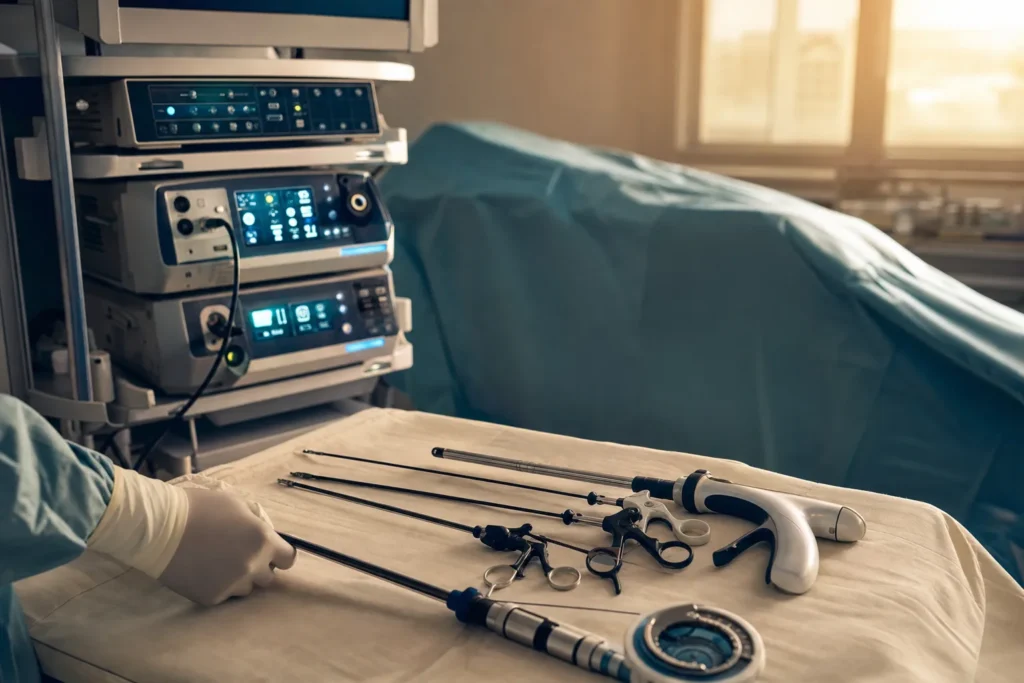
Nearly all bypass operations today are done by laparoscopic (keyhole) surgery: the surgeon works through several small cuts using a camera and long instruments, which usually means less pain, smaller scars and faster recovery than traditional "open" surgery. Open surgery (one larger cut) is occasionally needed, for example after previous abdominal operations. Which technique suits you depends on your anatomy, weight, health and the surgeon's judgement.
How it is done: anaesthesia, steps and timing
Gastric bypass is performed under general anaesthesia, meaning you are completely asleep and feel nothing during the operation. An anaesthetist looks after you throughout and monitors your breathing, heart rate and blood pressure.
In a typical keyhole procedure the surgeon will:
- Make a few small incisions in your abdomen and gently inflate the area with gas to create working space.
- Use staples to create the small stomach pouch at the top, separating it from the rest of the stomach.
- Divide the small intestine and bring the lower part up to join the new pouch, so food flows directly into it.
- Reconnect the bypassed section of intestine further down (this is the "Y"), so digestive juices from the old stomach and upper gut can still mix with food and complete digestion.
- Check the joins, then close the small cuts.
The surgery itself usually takes around 2 to 4 hours. You then wake up in a recovery area before going to your room. Most people stay in hospital for 1 to 4 nights, depending on how they recover and the clinic's protocol.
Recovery, step by step
Recovery happens in stages. Here is a realistic picture of the weeks that follow.
In hospital (days 0-3). The team will get you up and walking soon after surgery to keep your circulation moving and lower the risk of blood clots. You will start on sips of water and clear liquids. You are usually discharged once you can keep fluids down, manage pain with tablets rather than a drip, and pass urine normally.
First weeks at home. You follow a staged diet that protects the healing joins: liquids first, then pureed and soft foods, then gradually normal textures over roughly eight weeks or more, as your team advises. Eat small portions, very slowly, and chew thoroughly. You will feel tired and should avoid heavy lifting and strenuous exercise at first, but gentle walking is encouraged from day one.
Returning to normal. Many people feel ready for desk-based work and light routines in about 2 to 4 weeks, and most return to fuller activity by 3 to 6 weeks, though this varies. Full internal healing continues for months.
Ongoing. You begin lifelong vitamin and mineral supplements and attend regular follow-up appointments and blood tests. Building habits of small, protein-first meals, good hydration and activity is what makes the results last.
Risks and possible complications
Gastric bypass is generally considered safe in experienced hands, but like any major operation it carries risks. Knowing them helps you make an informed choice and spot problems early.
Around the time of surgery:
- Reactions to the general anaesthetic.
- Bleeding or infection.
- Leaks at the new joins between stomach and intestine, which can be serious and may need further treatment.
- Blood clots in the legs (deep vein thrombosis) that can travel to the lungs - one reason early walking and, sometimes, blood-thinning injections are used.
Later on:
- Dumping syndrome - when sugary or fatty food moves too fast into the intestine, causing nausea, cramping, sweating, a racing heart, dizziness or diarrhoea. It is common after bypass and is usually managed by adjusting what and how you eat.
- Nutritional deficiencies (such as iron, calcium, vitamin B12 and vitamin D), which can lead to anaemia or weaker bones if supplements are skipped.
- Gallstones from rapid weight loss, ulcers, narrowing of a join (a stricture), hernias, and occasionally bowel obstruction.
- A higher sensitivity to alcohol and, for some people, a raised risk of alcohol problems.
Research suggests further procedures or hospital visits affect roughly one in three patients within five years, which is why ongoing follow-up matters so much. Serious complications, including death, are rare but possible.
Results and how long they last
Gastric bypass produces some of the most reliable, durable weight loss of all the common bariatric operations. In the first year many people lose around 10 to 20 lb (about 4.5 to 9 kg) a month, and it is common to lose roughly half or more of your excess weight within about two years. Individual results vary widely.
The benefits often go well beyond the scales. Many people see major improvement, and sometimes remission, of type 2 diabetes, high blood pressure, sleep apnoea and high cholesterol, along with better mobility and quality of life. Some of the diabetes benefit appears quickly, even before much weight is lost, because of the hormonal changes.
Results can last for many years, but they are not automatic. The operation makes healthy habits easier, not optional. Without ongoing attention to portion sizes, food quality, activity and follow-up, some weight can return over time. Think of bypass as a powerful tool that works alongside your daily choices, not in place of them.
Costs: indicative ranges and what changes the price
Prices vary a great deal between countries and clinics. As a rough guide, private gastric bypass can cost in the region of £9,500-£15,000 in the UK and $18,000-$25,000 in the United States. All-inclusive packages in Turkiye are widely advertised in the region of €3,200-€6,000 (roughly $4,000-$6,500), which is part of why many people travel for treatment.
What moves the price within that range includes:
- The surgeon's experience and the hospital's facilities and accreditation.
- The exact technique and any complexity in your case.
- What the package covers - surgery, anaesthesia, hospital nights, tests, medications, hotel, transfers and translator services.
- Length of stay and the level of aftercare and follow-up included.
- Whether you need extra treatment for any complications.
These figures are indicative ranges only. They vary by case, surgeon and clinic and are not a quote. Always ask for a clear, written, itemised price that states exactly what is and is not included, and what would happen, and cost, if complications arose.
Why people travel to Turkiye, and how to choose a safe clinic
Turkiye has become a major destination for bariatric surgery because of competitive prices, modern hospitals, experienced high-volume teams and convenient all-inclusive packages. Lower costs come largely from favourable exchange rates and lower running costs, not from cutting clinical corners at reputable centres. The key is choosing carefully.
Before you book, try to verify:
- Hospital accreditation. Look for international accreditation such as JCI (Joint Commission International), which signals recognised standards for patient safety, infection control and surgical quality. You can check accredited organisations on the official JCI directory.
- The surgeon's credentials. Confirm they are a qualified, board-certified or specialist-registered bariatric surgeon, and ask how many gastric bypass operations they perform each year.
- Transparent information. A trustworthy clinic will discuss complication rates, realistic results and the full written price honestly, without pressure or guarantees.
- Aftercare and continuity. Ask who looks after you if a problem appears after you fly home, and how follow-up and blood tests will be arranged in your own country.
Be wary of prices that seem too good to be true, vague packages, or anyone promising specific outcomes. Read independent, verified patient reviews, and where possible have your home doctor involved before and after.
How to prepare and what to ask at your consultation
Good preparation makes surgery safer and recovery smoother. In the weeks before, your team may ask you to stop smoking (this matters a lot for healing), follow a special pre-surgery diet to shrink the liver, pause certain medicines such as blood thinners, and complete blood tests, scans and nutritional and sometimes psychological assessment.
It helps to arrive with questions written down. Useful ones include:
- Am I a suitable candidate, and is gastric bypass the best option for me compared with a sleeve?
- What are your personal complication and re-operation rates for this procedure?
- What type of anaesthesia is used, and who provides anaesthetic and intensive-care cover if needed?
- Exactly what does the price include, and what would extra care cost?
- What diet stages, supplements and follow-up will I need, and for how long?
- How do you handle complications after I return home, and who do I contact?
- How long should I plan to stay in Turkiye before flying back?
Bring a full list of your medications and medical history, arrange any support you will need at home, and make sure you understand the lifelong commitment to supplements and follow-up before you say yes.
Aftercare and travelling for treatment (including when it is safe to fly)
If you travel abroad for gastric bypass, plan the whole journey, not just the operation. Most clinics ask you to stay in the country for a number of days after surgery so the team can monitor you, check the wounds and confirm you are eating and drinking safely before you head home.
Flying after surgery deserves special care because long flights and reduced movement raise the risk of blood clots, and cabin pressure can make any trapped gas expand. There is no single rule, and you must follow your own surgeon's advice, but many bariatric teams suggest waiting at least one to two weeks after keyhole surgery, and longer after open surgery, before a long flight. To lower clot risk on the journey, stay well hydrated, walk and stretch your legs regularly, and consider graduated compression stockings if your doctor recommends them.
Long-term aftercare is lifelong. You will need regular check-ups, blood tests to catch any vitamin or mineral shortfalls early, and consistent supplements. Arrange before you travel how this follow-up will continue with a doctor at home. Keep copies of your operation notes and discharge summary, know the warning signs that need urgent care (severe pain, fever, persistent vomiting, breathlessness or chest pain), and never hesitate to seek medical help if something feels wrong.
Frequently asked questions
What is the difference between gastric bypass and gastric sleeve?
How much weight will I lose after gastric bypass?
Is gastric bypass reversible?
What is dumping syndrome?
Will I need to take vitamins for the rest of my life?
How long does the surgery take and how long will I be in hospital?
When can I go back to work and normal activity?
How soon is it safe to fly after gastric bypass?
How much does gastric bypass cost in Turkiye?
Is it safe to travel abroad for weight-loss surgery?
Will gastric bypass cure my type 2 diabetes?
What are the main risks I should know about?
Sources
- NHS - Weight loss surgery: how it's done
- MedlinePlus (NIH) - Gastric bypass surgery
- NIDDK (NIH) - Types of bariatric surgery
- NIDDK (NIH) - Bariatric surgery side effects
- ASMBS - Bariatric surgery procedures
- Mayo Clinic - Gastric bypass (Roux-en-Y)
- Cleveland Clinic - Gastric bypass surgery
- Joint Commission International - Find accredited organizations
This article is for general information only and is not medical advice. Always consult a qualified doctor about your individual case.
Specialists in Bariatric Surgery
Doctors of the department we work with directly. Which doctor takes your case is decided after the specialists have reviewed your records — your coordinator confirms it, not this page.



Considering this procedure?
Send us your photos and questions. A BergemHealth coordinator and a senior specialist will review your case and reply with honest, personalised guidance — no obligation.
Free consultation