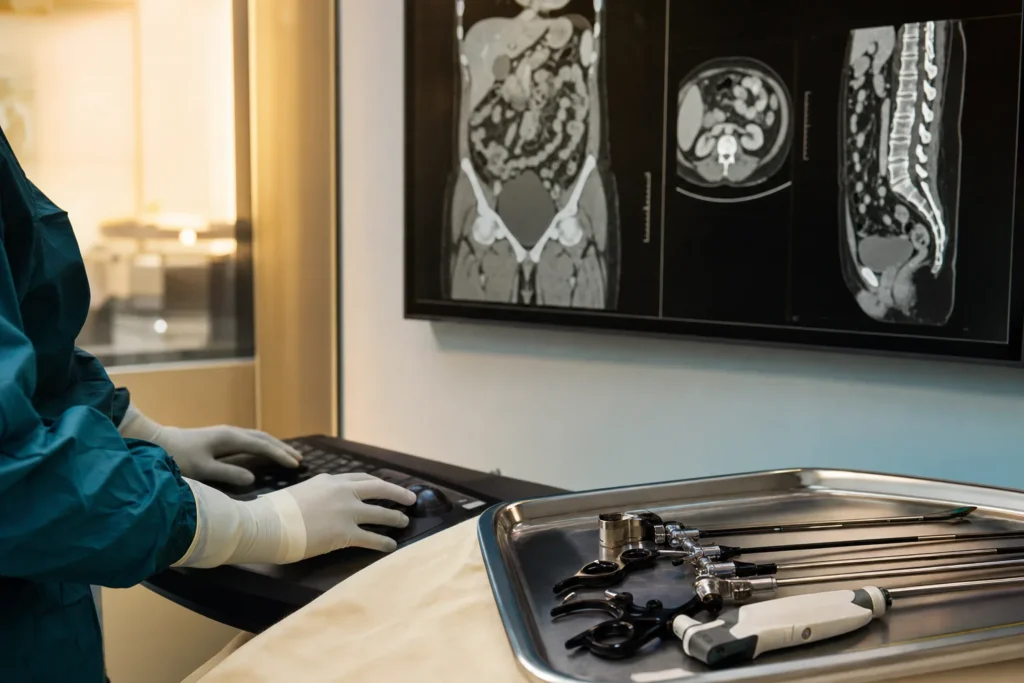
Revision bariatric surgery
If your weight-loss surgery hasn't worked the way you hoped, or it has caused new problems, a second operation may help. This plain-language guide explains what revision bariatric surgery is, who it suits, the main techniques, what recovery feels like, the realistic results, and how to choose a safe clinic and surgeon if you are considering treatment in Turkey.
- Anaesthesia
- General anaesthesia (you are fully asleep)
- Duration
- Roughly 1.5 to 4 hours, depending on complexity
- Recovery
- Most daily activities in 2 to 4 weeks; full healing over several weeks
- Hospital stay
- Usually 2 to 4 nights (longer if open surgery is needed)
Minimum price, for reference only — the final cost is calculated individually after your records are reviewed. You pay the hospital’s price; our service is free for you.
What revision bariatric surgery is
Bariatric surgery is weight-loss surgery. It changes the size of your stomach, the path food takes through your gut, or both, so that you feel full sooner and absorb fewer calories. The most common first operations are the sleeve gastrectomy (where most of the stomach is removed, leaving a slim tube), the Roux-en-Y gastric bypass (where a small stomach pouch is connected directly to the lower small intestine), and the older adjustable gastric band (a silicone ring around the top of the stomach).
Revision bariatric surgery is a follow-up operation for people who have already had one of these procedures. The word "revision" is an umbrella term. Surgeons usually sort these second operations into three groups: a correction (fixing or adjusting the original surgery), a conversion (changing one type of operation into another, for example turning a sleeve into a bypass), or a reversal (undoing the original surgery and returning the anatomy closer to normal).
It is more common than many people expect. Long-term studies suggest that roughly 15 to 20 percent of weight-loss surgery patients eventually need some kind of revisional procedure, with rates varying by the original operation and how long patients are followed. The goal is to either restart weight loss, fix a complication, or relieve troublesome symptoms such as severe heartburn.
Who is a good candidate (and who should wait or avoid it)
Revision surgery is considered when the first operation has not delivered, or has caused problems. The most common reasons are:
- Weight regain (also called weight recurrence). Over the years, a stomach pouch or sleeve can stretch, and the body's hormones and metabolism adapt. People then feel less full and may regain weight.
- Inadequate weight loss (sometimes called surgical nonresponse). Some people never lose the expected amount. As a rough guide, an international expert consensus defines surgical nonresponse as losing less than 10 percent of total body weight at 12 months, and many surgeons regard losing less than about 20 percent as a suboptimal result.
- Complications of the first surgery. Examples include a slipped or eroded gastric band, ulcers, a narrowing (stricture), a hiatal hernia, or a leak between staple lines (a fistula).
- Side effects that won't settle. Severe acid reflux or heartburn after a sleeve is one of the most frequent reasons surgeons convert a sleeve to a bypass.
- Malnutrition. Rarely, an operation causes too much malabsorption, leading to stubborn vitamin or protein deficiencies that need correcting or reversing.
You may not be a good candidate, or may need to wait, if the real issue is eating patterns or untreated emotional and behavioural factors that surgery alone cannot fix, since these often need addressing first. Surgery is also riskier if you have poorly controlled heart or lung disease, an active infection, untreated severe psychiatric illness, an ongoing alcohol or substance problem, or if you are unable to commit to lifelong follow-up, vitamins and dietary changes. A careful assessment, usually including an endoscopy (a camera test) and imaging, helps confirm whether revision is the right step.
Types and techniques
There is no single "revision operation." What is offered depends on your first surgery and the problem being solved. Common paths include:
After an adjustable gastric band
Bands are now used much less often because they frequently cause problems or stop working. They are commonly removed and converted to a sleeve gastrectomy or a gastric bypass. Sometimes this is done in two stages (band removed first, conversion later) to let inflammation settle and lower the risk.
After a sleeve gastrectomy
If the issue is weight regain or persistent reflux, options include converting to a Roux-en-Y gastric bypass (often chosen when reflux is the main problem), a one-anastomosis gastric bypass (OAGB), a SADI (single-anastomosis duodeno-ileal bypass), or a biliopancreatic diversion with duodenal switch. Less commonly, the sleeve is re-made if it stretched.
After a gastric bypass
Revision here is more delicate. Surgeons may repair a stretched pouch or an enlarged join (the gastrojejunostomy), close an abnormal connection (a gastrogastric fistula), or convert to a more powerful malabsorptive procedure such as a duodenal switch. Some pouch and outlet revisions can even be done endoscopically (through a tube passed down the throat, no external cuts), though the extra weight loss from this is usually modest.
How it is done (anaesthesia, steps and how long)
Revision bariatric surgery is performed under general anaesthesia, which means you are completely asleep and feel nothing. Most operations are done laparoscopically (keyhole surgery): the surgeon works through several small cuts using a camera and long instruments, and increasingly with robotic assistance. Compared with open surgery, keyhole techniques usually mean less pain, smaller scars and a faster recovery.
In broad terms, the surgeon first inspects the previous anatomy, then carefully frees up scar tissue from the first operation. This is the part that makes revisions trickier than a first-time procedure: scarring makes tissues stick together and bleed more easily. The surgeon then carries out the planned correction, conversion or reversal, tests the new joins for leaks, and closes the small incisions.
Because of that scar tissue, revisions tend to take longer and carry a slightly higher chance of needing to switch to an open operation (one larger incision) for safety. A straightforward revision may take around 1.5 to 2 hours, while a complex conversion can run to 3 to 4 hours. Your surgeon will give you a realistic estimate for your specific case.
Recovery, step by step
Recovery is similar to a first bariatric operation but can take a little longer. A typical path looks like this:
- Day of surgery: You wake in recovery, are encouraged to start gentle walking the same day to lower the risk of blood clots, and sip small amounts of fluid.
- Hospital stay (often 2 to 4 nights): You progress from clear fluids to a liquid diet. Pain is managed and the team checks for early problems. An open operation usually means a longer stay.
- Weeks 1 to 4: A staged diet of liquids, then purees, then soft foods, guided by your dietitian. Most people return to light daily activities and desk-type work within 2 to 4 weeks.
- Weeks 4 to 8: Gradual return to normal textured food in small portions, and to exercise and heavier work as your surgeon advises. Avoid heavy lifting until cleared.
Throughout, you will be asked to take vitamin and mineral supplements, keep your protein intake up, stay well hydrated, and attend follow-up appointments. Eating slowly and chewing well becomes a lifelong habit.
Risks and possible complications
Every operation carries risk, and it is honest to say that revision surgery generally has higher complication rates than a first-time bariatric operation, because the surgeon is working through scar tissue. That is why it should be done by an experienced bariatric team. Possible problems include:
- Bleeding and infection at the wounds or inside the abdomen.
- Leaks from a staple line or a new join, which can be serious and sometimes need a further procedure.
- Blood clots in the legs (deep vein thrombosis) or lungs (pulmonary embolism). Early walking, compression stockings and sometimes blood-thinning injections lower this risk.
- Strictures (narrowing) or ulcers at a join.
- Risks of general anaesthesia, which are uncommon but real.
Longer term, operations that bypass part of the gut can cause nutritional deficiencies (iron, vitamin D, vitamin B12, folate and others) and need lifelong supplements and blood-test monitoring. Dumping syndrome can occur after a bypass, where sugary or rich food causes nausea, sweating, dizziness, cramping or diarrhoea. Tell your surgeon promptly about a fast heartbeat, fever, severe pain, breathlessness, or being unable to keep fluids down.
Results and how long they last
It is important to set realistic expectations. Revision surgery can restart weight loss and relieve symptoms, but on average the extra weight loss is usually less than after a first operation, and the results vary more from person to person.
As a rough illustration from published studies: converting a band to a bypass tends to produce more weight loss than converting it to a sleeve; converting a sleeve to a bypass or to a SADI/duodenal switch can give meaningful additional total weight loss over two to three years. Endoscopic tightening of a stretched bypass outlet usually gives only modest, smaller gains.
How long results last depends heavily on what happens after surgery. The operation is a tool, not a cure. Lasting results come from combining surgery with permanent changes to eating habits, regular physical activity, supplements and long-term medical follow-up. People who stay engaged with their team and their lifestyle plan tend to keep their results far better. No surgeon can promise a specific weight or guarantee that weight will never return.
Costs (indicative ranges and what changes the price)
In Turkey, revision bariatric surgery is typically offered to international patients in the region of roughly 5,000 to 14,000 EUR, often as a package that may include the operation, hospital stay, surgeon and anaesthetist fees, standard tests and follow-up. These figures are indicative only and not a quote — the real price varies by case, surgeon and clinic.
What pushes the price up or down:
- The type of revision. A simple band removal sits at the lower end; a complex conversion to a bypass or duodenal switch costs more.
- How complex your case is — the amount of scar tissue, previous complications, and your overall health.
- Hospital and surgeon — accreditation, reputation and experience.
- Length of hospital stay and whether open surgery is needed.
- Extra services such as accommodation, airport transfers, interpreters and longer aftercare.
Always ask exactly what is and is not included, and what happens to the cost if a complication means extra treatment or a longer stay. Get the full package in writing before you travel.
Why people travel to Turkiye, and how to choose a safe clinic and surgeon
Turkey (Turkiye) is a well-known destination for weight-loss surgery because of high patient volumes, modern private hospitals, and prices that are often lower than in many Western countries. Lower cost should never be the only factor, though — revision surgery in particular needs an experienced team. Here is what to verify before committing:
- Hospital accreditation. Look for internationally recognised accreditation such as Joint Commission International (JCI), which signals that the facility meets defined safety and quality standards.
- Surgeon credentials. Confirm the surgeon is properly board-certified and specialises in metabolic and bariatric surgery, with specific experience in revision cases (these are harder than first operations).
- Case volume and outcomes. Ask how many revisions they perform, and about their complication and leak rates.
- Honest assessment. A trustworthy team will request your previous operative notes and imaging, may arrange an endoscopy, and will set realistic expectations rather than promising guaranteed results.
- Aftercare and follow-up. Ask who manages complications if they arise after you fly home, and how long-term nutritional follow-up will work.
- Clear written pricing with no vague "extras."
Be cautious of any clinic that promises specific weight outcomes, downplays the higher risks of revision, or pressures you to decide quickly.
How to prepare and what to ask at your consultation
Good preparation makes surgery safer and recovery smoother. Steps usually include gathering your previous surgical records and scans, blood tests, an endoscopy to look at your current anatomy, and a review by a dietitian. You may be asked to follow a special pre-surgery diet to shrink the liver and make the operation safer, to stop smoking, and to pause certain medicines (such as some blood thinners) on medical advice.
Helpful questions to ask your surgeon:
- Why do you recommend this particular type of revision for me, and what are the alternatives?
- How many of these revisions have you done, and what are your complication and leak rates?
- What realistic additional weight loss and symptom relief can I expect?
- What are the specific risks in my case, given my first surgery and health?
- How long is the hospital stay, and what is the recovery plan week by week?
- What supplements and follow-up blood tests will I need long term?
- Exactly what does the price include, and what happens if there is a complication?
- Who do I contact, and how, once I am back home?
Aftercare and travelling for treatment (including when it is safe to fly)
If you travel abroad for revision surgery, plan the trip around safe healing, not just the operation date. Surgeons commonly advise staying near the hospital for several days to a couple of weeks after surgery so any early complication can be caught and treated on the spot.
Flying. Air travel raises the risk of blood clots, and the early period after surgery is when complications are most likely. As a general guide, many surgeons suggest waiting until you are cleared — often around 10 to 14 days for short flights after keyhole surgery, and roughly 6 to 8 weeks for longer or international flights, with longer waits after open surgery. Always get a personal go-ahead from your surgeon, because your case may differ. To lower clot risk on the journey home, stay hydrated, walk and stretch regularly, wear compression stockings, and follow any blood-thinning advice you are given.
Ongoing aftercare. Revision patients need lifelong follow-up: regular blood tests, vitamin and mineral supplements, protein-focused eating, and dietary and exercise support. Before you fly out, arrange who will provide this follow-up locally, and make sure your home doctor receives a clear summary of what was done. Keep emergency contact details for the clinic, and know the warning signs (fever, severe pain, breathlessness, leg swelling, inability to keep fluids down) that mean you should seek urgent care wherever you are.
Frequently asked questions
What is revision bariatric surgery?
Why might I need a second weight-loss operation?
Is revision surgery riskier than my first operation?
How much weight will I lose after a revision?
What kind of anaesthesia is used, and how long does it take?
How long will I stay in hospital and off work?
When is it safe to fly after revision surgery?
Will I need to take vitamins for life?
How much does revision bariatric surgery cost in Turkey?
How do I choose a safe clinic and surgeon abroad?
Can a gastric band always be converted to another procedure?
Can revision be done without large cuts?
Sources
- Yale Medicine — Revisional Bariatric Surgery (fact sheet)
- Annals of Laparoscopic and Endoscopic Surgery — Revisional bariatric surgery for weight recurrence or surgical nonresponse
- American College of Surgeons — Metabolic and Bariatric Surgery Accreditation and Quality Improvement Program (MBSAQIP)
- American Society for Metabolic and Bariatric Surgery (ASMBS) — MBSAQIP
- Mayo Clinic — Bariatric surgery (overview)
- Cleveland Clinic — Gastric Bypass Surgery: What It Is, Requirements and Recovery
- PMC — Complications of bariatric surgery: dumping syndrome, reflux and vitamin deficiencies
- PMC — Revisional Surgeries of Laparoscopic Sleeve Gastrectomy
- PMC — OAGB vs SADI as revisional procedure following Sleeve Gastrectomy (multicenter study)
- PMC — Causes and outcomes of revisional bariatric surgery: initial single-center experience
This article is for general information only and is not medical advice. Always consult a qualified doctor about your individual case.
Specialists in Bariatric Surgery
Doctors of the department we work with directly. Which doctor takes your case is decided after the specialists have reviewed your records — your coordinator confirms it, not this page.



Considering this procedure?
Send us your photos and questions. A BergemHealth coordinator and a senior specialist will review your case and reply with honest, personalised guidance — no obligation.
Free consultation