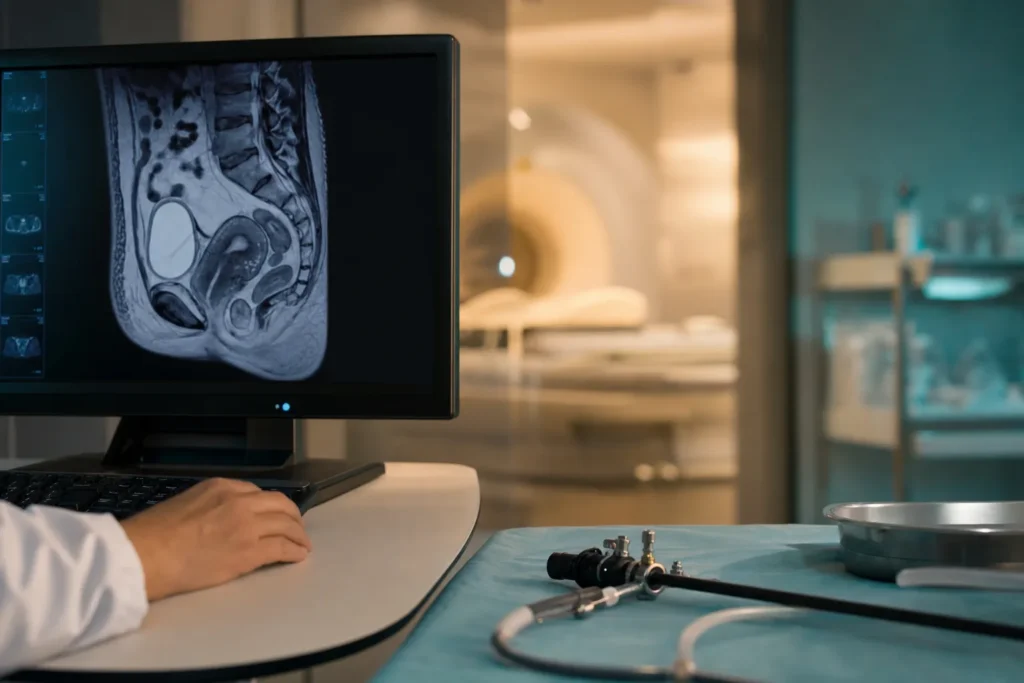
Endometriosis
Endometriosis is a common, long-term condition in which tissue similar to the lining of the womb grows in other parts of the body, often causing period pain, pelvic pain and sometimes fertility problems. It can be frustrating to live with and slow to diagnose, but there are real, effective ways to manage it. This guide explains, in plain language, what endometriosis is, how doctors find it, the treatment choices available, and what to think about if you are considering care in Turkiye.
What endometriosis is
Endometriosis (say it "en-doh-mee-tree-OH-sis") is a condition where tissue similar to the lining of the womb (the uterus) grows in places outside the womb. The lining of the womb is called the endometrium, which is where the name comes from.
Every month, the lining inside the womb thickens and then sheds as a period. The patches of endometriosis tissue that grow elsewhere react to the same monthly hormones, so they also build up and break down. But unlike a normal period, this tissue and the small amounts of blood it produces have no easy way to leave the body. This can lead to inflammation (the body's response to irritation, causing swelling and pain), scar tissue, and bands of sticky tissue called adhesions that can make organs stick together.
These patches most often appear on or around the ovaries, the fallopian tubes (the tubes that carry eggs to the womb), and the lining of the pelvis. Less commonly they can affect the bladder, bowel, and other areas. A related condition called adenomyosis, where womb-lining tissue grows into the muscle wall of the womb itself, sometimes occurs alongside endometriosis.
Endometriosis is common. The World Health Organization estimates it affects roughly 10% of women and girls of reproductive age worldwide, around 190 million people. It can also affect transgender men and non-binary people who menstruate. It is a long-term (chronic) condition, but it is manageable, and symptoms often ease after menopause.
Types and where it grows
Doctors often describe endometriosis by where it is found and how deep it goes, rather than by neat "types." The main patterns are:
- Superficial peritoneal endometriosis: small patches on the peritoneum, the thin lining covering the inside of the pelvis and abdomen. This is the most common form.
- Ovarian endometriomas: fluid-filled cysts on the ovaries, sometimes called "chocolate cysts" because of the dark old blood inside them.
- Deep endometriosis (deep infiltrating endometriosis): tissue that grows more deeply, often behind the womb and near or into the bowel, bladder, or the ligaments that support the womb. This form can cause more complex symptoms.
To describe how widespread the disease is, surgeons often use a four-stage system from the American Society for Reproductive Medicine: Stage I (minimal), Stage II (mild), Stage III (moderate), and Stage IV (severe). Higher stages mean more or deeper patches, larger cysts, and more adhesions.
One of the most important things to understand is that the stage does not reliably predict how much pain you will feel. Someone with Stage I disease can have severe pain, while someone with Stage IV can have few symptoms. Staging mainly helps surgeons plan treatment; it is not a measure of how "bad" your experience is.
Causes and risk factors
The honest answer is that the exact cause of endometriosis is not known. Several explanations are being studied, and the truth may be a combination of them. Common theories include:
- Retrograde menstruation: during a period, some menstrual blood flows backwards through the fallopian tubes into the pelvis instead of leaving the body, carrying womb-lining cells that then settle and grow. This is a leading theory, though it does not explain every case.
- Cell changes: cells lining the pelvis may transform into endometrium-like cells, or cells may travel through blood or the immune system to other areas.
- Immune system and genetics: differences in how the immune system clears stray cells, along with inherited factors, may play a part.
Because the cause is uncertain, nothing you did caused your endometriosis. Some factors are linked to a higher chance of developing it, including having a close relative (mother or sister) with the condition, starting periods at an early age, short menstrual cycles (under about 27 days), and heavier or longer periods. Having been pregnant or having breastfed are linked to a somewhat lower chance. These are general patterns, not guarantees in either direction.
Signs and symptoms, and when to see a doctor
Symptoms vary a lot from person to person. Some people have severe symptoms with little disease on imaging, and others have extensive disease with mild symptoms. Common symptoms include:
- Painful periods (the pain may be much worse than typical period cramps)
- Long-term pain in the lower tummy or pelvis
- Pain during or after sex
- Pain when going to the toilet (passing urine or stools), especially during a period
- Heavy periods, or bleeding between periods
- Feeling very tired (fatigue), bloating, or nausea
- Difficulty getting pregnant
Because these symptoms overlap with other conditions, endometriosis is often missed at first. The pain is real and deserves to be taken seriously, even if scans look normal.
It is a good idea to see a doctor if you have ongoing or severe period or pelvic pain, if pain is interfering with work, school, relationships or daily life, if sex is painful, or if you have been trying to conceive without success. Seek urgent medical help for sudden, severe pelvic pain, heavy bleeding that soaks through pads or tampons quickly, or fainting, as these need prompt assessment.
Screening and early detection
There is no routine screening test for endometriosis. Unlike cervical screening or mammograms, there is no simple blood test or scan offered to people without symptoms to catch it early.
The most useful thing you can do is recognise the symptoms and seek help early. Many people endure pain for years before getting answers. The World Health Organization notes that the average time from first symptoms to diagnosis is often several years, in part because painful periods are sometimes wrongly seen as "normal."
Keeping a simple symptom diary can help. Note when pain occurs in your cycle, how severe it is, what makes it better or worse, and how it affects sex, bowel and bladder. Bringing this to your appointment gives the doctor a clearer picture and can speed up assessment. If your concerns are not taken seriously, it is reasonable to ask for a referral to a gynaecologist (a specialist in conditions of the female reproductive system).
How endometriosis is diagnosed
Diagnosis usually begins with a conversation about your symptoms and your menstrual cycle, followed by a gentle internal (pelvic) examination. From there, doctors may use:
- Ultrasound scan: usually a transvaginal scan (a small probe placed in the vagina) that can show ovarian cysts (endometriomas) and signs of deep endometriosis. A normal scan does not rule endometriosis out.
- MRI scan: sometimes used to map deeper disease, especially near the bowel or bladder, and to help plan surgery.
- Laparoscopy: a small operation under general anaesthetic in which a surgeon makes tiny cuts in the tummy and passes a thin camera inside to look directly at the pelvic organs. Suspicious patches can be biopsied (a small sample taken to examine) and often treated at the same time. Laparoscopy has long been the most certain way to confirm endometriosis.
An important shift in modern care, reflected in guidance such as the UK's NICE guideline, is that doctors increasingly make a clinical diagnosis based on symptoms and examination and may start treatment without waiting for surgery. Surgery is not always required to begin care. Because endometriosis can be microscopic, even a normal scan or a normal laparoscopy does not completely exclude it, which is why your reported symptoms matter so much.
Treatment options
There is currently no cure for endometriosis, but treatment can reduce pain, slow the disease, and help with fertility. Care is usually tailored to your symptoms, your stage of life, and whether you are hoping to become pregnant. The main approaches are:
Pain relief
Over-the-counter painkillers such as anti-inflammatory medicines (NSAIDs, for example ibuprofen) can ease period and pelvic pain for some people. Your doctor can advise on safe use and stronger options if needed.
Hormone treatments
These aim to reduce or pause the monthly hormone changes that feed endometriosis. Options include the combined contraceptive pill (sometimes taken continuously to skip periods), progestogen-only treatments (pills, injections, or a hormonal coil/IUD), and GnRH medicines (agonists or antagonists) that temporarily lower estrogen to a low level. Hormone treatments do not affect long-term fertility once stopped, but they are not suitable while trying to conceive.
Surgery
Surgery, usually by laparoscopy (keyhole surgery), can remove or destroy patches of endometriosis, clear cysts, and free organs stuck together by adhesions. This can relieve pain and, in some cases, improve the chance of pregnancy. For severe, persistent disease in people who do not wish to have children, removing the womb (hysterectomy), sometimes with the ovaries, may be considered, though endometriosis can occasionally persist.
The multidisciplinary team
Good endometriosis care often involves more than one specialist working together: a gynaecologist, sometimes a colorectal or urology surgeon for deep disease, a fertility specialist, a pain specialist, a physiotherapist, and mental-health support. This team approach is recommended internationally because the condition affects many parts of life.
Outlook: what to expect
Endometriosis is a long-term condition, but it is one that can usually be managed well, and many people live full, active lives with the right care. Symptoms often improve with treatment, and they tend to ease after menopause, when the body produces less estrogen.
It is honest to say that endometriosis can come back. After surgery, some people have lasting relief, while others find symptoms return over the following years and may need further treatment. Finding the combination of approaches that works for you can take time and some trial and error.
You may read that endometriosis is linked to a slightly higher chance of certain ovarian cancers. It is important to keep this in perspective: research summarised by the US National Institutes of Health found that, although the relative risk is increased, ovarian cancer remains uncommon, and the great majority of people with endometriosis will never develop it. This is population-level information, not a prediction about you. If you are worried, discuss your individual situation with your specialist.
Living with endometriosis and follow-up
Living well with endometriosis usually means combining medical treatment with day-to-day strategies and good follow-up care. Things that many people find helpful include:
- Tracking symptoms and triggers so you and your doctor can fine-tune treatment
- Gentle, regular movement and pelvic-floor physiotherapy, which can help with pain
- Heat (such as a hot-water bottle), rest during flare-ups, and stress-reduction techniques
- Support for sleep, mood and energy, since fatigue and low mood are common and valid
Endometriosis can affect relationships, intimacy, work and mental health. This is not a sign of weakness, and emotional support, counselling, or a patient support group can make a real difference. If pain is affecting your mood, tell your care team, as help is available.
Follow-up is usually ongoing rather than a one-off. You may have regular reviews to check how treatment is working, adjust medicines, monitor any cysts on scans, and discuss fertility plans. If your symptoms change or worsen, contact your team rather than waiting for the next scheduled appointment.
Planning treatment abroad: what affects cost and how to prepare
Some people choose to have endometriosis investigation or surgery in another country, often combined with fertility care. If you are considering treatment in Turkiye, it helps to understand what shapes the overall cost so you can plan and compare fairly. We do not list prices here, because every case is different; the most accurate way to know is to request a personalised estimate through a free consultation.
Factors that influence cost typically include:
- The complexity of your disease (superficial patches versus deep endometriosis involving the bowel or bladder, which may need more than one surgeon)
- The type of procedure (diagnostic laparoscopy, excision surgery, cyst removal, or hysterectomy)
- Whether fertility treatment such as IVF is part of your plan (in Turkiye, IVF is available only to married couples using their own eggs and sperm)
- Length of hospital stay, anaesthesia, scans and lab tests, and any follow-up
- Accommodation, transfers and an interpreter, if needed
To prepare your records, gather your symptom diary, previous scan and MRI images and reports, any operation notes from earlier surgery, a list of medicines you take, and results of recent blood tests. Sharing these in advance allows a specialist to give a more accurate plan and estimate, and to advise whether travelling for treatment is right for your situation.
Why Turkiye, and how to choose a good centre
Turkiye has become a well-known destination for gynaecological and fertility care, with many hospitals experienced in treating international patients and offering coordinated services in one place. Rather than focusing on any single hospital, it is wise to judge a centre on clear, verifiable standards.
When choosing where to have endometriosis care, it is reasonable to check:
- Accreditation: whether the hospital holds recognised quality accreditation, such as Joint Commission International (JCI), which sets international standards for patient safety.
- Specialist experience: whether the gynaecologist regularly treats endometriosis, especially deep or complex disease, and whether the centre has access to colorectal and urology surgeons and a fertility unit when needed.
- Multidisciplinary care: whether pain management, physiotherapy and psychological support are available.
- Clear information: whether you receive a written treatment plan, an explanation of risks and alternatives, and transparent details on what is and is not included.
- Aftercare: how follow-up will work once you return home, and how the team will communicate with your local doctor.
A good centre will welcome your questions and will not pressure you into a quick decision. Taking time to compare options, and seeking a second opinion if you wish, is a sign of careful planning, not distrust.
Self-care, prevention and second opinions
There is no proven way to prevent endometriosis, because its cause is not fully understood. So the focus is on early help and supportive self-care rather than prevention. The most valuable steps are recognising symptoms, seeking assessment, and not dismissing severe period pain as something you simply have to endure.
Day-to-day self-care that many people find supportive includes balanced nutrition, regular gentle exercise, good sleep, heat for pain, and techniques to manage stress, alongside any treatment your doctor recommends. These do not cure the condition, but they can help you feel more in control and may ease some symptoms.
Finally, you are entitled to a second opinion. Endometriosis care involves real choices, between watchful waiting, medicines, and surgery, and reasonable specialists may suggest different paths. If you feel unsure, unheard, or are facing a major operation, asking another qualified specialist to review your case is a sensible and common step. The right care is care you understand and feel comfortable with.
Frequently asked questions
Is endometriosis serious?
Can endometriosis be cured?
How is endometriosis diagnosed?
Does endometriosis always cause infertility?
Does the stage of endometriosis tell me how bad my symptoms will be?
Will I need surgery?
Does endometriosis increase the risk of cancer?
Can diet or lifestyle prevent or cure endometriosis?
What happens to endometriosis after menopause?
Why does endometriosis take so long to diagnose?
What should I prepare before a consultation for treatment abroad?
Sources
- NHS – Endometriosis
- World Health Organization – Endometriosis fact sheet
- Cleveland Clinic – Endometriosis
- MedlinePlus – Endometriosis
- NICHD (NIH) – Endometriosis: Treatment
- NICE – Endometriosis: diagnosis and management (NG73)
- NIH Research Matters – Endometriosis types and ovarian cancer risk
- Mayo Clinic – Endometriosis
- ACOG – Endometriosis FAQ
This article is for general information only and is not medical advice. Always consult a qualified doctor about your individual case.
Specialists in Gynaecology
Doctors of the department we work with directly. Which doctor takes your case is decided after the specialists have reviewed your records — your coordinator confirms it, not this page.

Considering this procedure?
Send us your photos and questions. A BergemHealth coordinator and a senior specialist will review your case and reply with honest, personalised guidance — no obligation.
Free consultation