Paediatric urology
Paediatric urology is the branch of medicine that cares for problems of the urinary system and the male genitals in babies, children, and teenagers. Many of these conditions are present from birth, many are mild, and a great number get better either on their own or with a single, well-planned operation. If your child has been referred to a paediatric urologist, it is natural to feel worried, but the large majority of these conditions are familiar, well understood, and treatable. This guide explains, in everyday language, what paediatric urology covers, the most common conditions and their symptoms, how they are diagnosed and treated, and what to think about if you are considering care abroad in Turkiye.
What paediatric urology is
Paediatric urology is a specialty that focuses on the urinary system and, in boys, the genital organs in people from birth up to the late teenage years. The urinary system is the body's drainage network. It includes the two kidneys (which filter the blood and make urine), the two ureters (thin tubes that carry urine down from each kidney), the bladder (the muscular bag that stores urine), and the urethra (the tube through which urine leaves the body).
A paediatric urologist is a surgeon who has trained specifically in children's urinary and genital problems. This matters because children are not simply small adults: their bodies are still growing, their organs are tiny and delicate, and many of their conditions are congenital (present from birth) rather than caused by ageing or lifestyle. The same specialist often works alongside paediatric kidney doctors (nephrologists), paediatricians, nurses, and sometimes geneticists, so that the whole child is cared for, not just one organ.
Some conditions are found before birth on a routine pregnancy ultrasound scan, some at the newborn check, and others later when a parent or doctor notices a symptom. The point of this specialty is to protect two things over a lifetime: how well the kidneys and bladder work, and, where relevant, future fertility. Most children seen in paediatric urology do very well.
Common conditions and types
Paediatric urology covers many conditions. Some of the most common include:
- Undescended testicle (cryptorchidism) - one or both testicles have not moved down into the scrotum. Testicles normally descend before birth.
- Hypospadias - a boy is born with the opening of the urethra on the underside of the penis rather than at the tip, often with a hooded foreskin and sometimes a slight downward bend.
- Vesicoureteral reflux (VUR) - urine flows the wrong way, back up from the bladder towards the kidneys. It is graded from 1 (mild) to 5 (more severe) depending on how far the urine travels and how much the ureter is widened.
- Hydronephrosis and ureteropelvic junction (UPJ) obstruction - the kidney or its drainage tube is swollen with urine because of a narrowing or partial blockage. UPJ obstruction affects roughly 1 in 1,500 children.
- Urinary tract infections (UTIs) - bacterial infections of the bladder or kidneys, which can sometimes be the first sign of an underlying drainage problem.
- Bedwetting (nocturnal enuresis) and daytime wetting - common bladder-control issues, often a normal part of development.
- Phimosis - a tight foreskin that cannot be pulled back; usually normal in young boys.
Conditions are often grouped by where they sit. Upper-tract problems involve the kidneys and ureters (such as hydronephrosis and reflux). Lower-tract problems involve the bladder and urethra (such as wetting and some blockages). Genital problems include hypospadias and undescended testicles. Some children have more than one issue at the same time.
Causes and risk factors
For many paediatric urology conditions, the honest answer is that doctors often do not know exactly why they happen. Most are not caused by anything the parents did or did not do during pregnancy.
That said, some patterns are recognised:
- It happened during development. Conditions such as hypospadias, undescended testicles, and UPJ obstruction form while the baby is growing in the womb, usually for reasons that are not fully understood.
- Family history. Some conditions, including undescended testicles, are a little more common when a close male relative had the same problem.
- Being born early or small. Premature birth (before 37 weeks) and low birth weight raise the chance of an undescended testicle, because the testicles descend in the final weeks of pregnancy.
- The way the body is built. Vesicoureteral reflux is often primary - the valve where the ureter meets the bladder has not formed perfectly. It can also be secondary, caused by a blockage or by the bladder not emptying well.
- Constipation and bladder habits. Long-standing constipation and holding urine can contribute to wetting and to repeated infections.
According to the NHS and children's hospital sources, hypospadias affects roughly 1 in every 200 to 300 boys, and about 3 in every 100 baby boys are born with an undescended testicle. These are common findings, not rare misfortunes.
Signs, symptoms, and when to see a doctor
Symptoms depend entirely on the condition. Some are visible at birth; others only show as a child grows.
- Hypospadias is usually spotted at the newborn examination: the urethral opening is on the underside of the penis, the foreskin may look hooded, and the urine stream may point downwards.
- An undescended testicle is found when one or both testicles cannot be felt in the scrotum, often noticed at the newborn check or a later baby review.
- Vesicoureteral reflux often causes no symptoms at all. It is frequently discovered only because a child has had a urinary tract infection.
- A urinary tract infection in a child can show as a high temperature, pain or burning when passing urine, going more often, tummy or back pain, smelly or cloudy urine, vomiting, irritability, or simply seeming unwell. In babies, signs can be vague: a fever, poor feeding, being unsettled, or not gaining weight.
- Bedwetting is the involuntary passing of urine during sleep.
It is worth contacting your doctor if your child has an unexplained fever, especially under three months of age, has pain or burning when passing urine, passes blood in the urine, or seems generally unwell. The NHS advises that any child aged 15 or under with UTI symptoms should be assessed promptly. Trust your instincts: if something seems wrong, it is always reasonable to ask for a review.
Screening and early detection
There is no single, population-wide screening programme for most paediatric urology conditions. Instead, several routine checks act as a safety net, so problems are often picked up early without any special effort from parents.
- Pregnancy ultrasound scans. Routine scans during pregnancy can reveal swelling of a baby's kidney (antenatal hydronephrosis), which is then followed up with scans after birth. Many of these cases settle on their own.
- The newborn physical examination. In the first days of life, a clinician checks the genitals and feels for both testicles, which is how hypospadias and undescended testicles are commonly found.
- Baby and child reviews. Health-visitor and routine appointments give further chances to notice an undescended testicle that has not settled or other concerns.
- After a urinary infection. A child who has had a urinary tract infection, particularly a young child or one with repeated infections, may be offered imaging to look for an underlying cause such as reflux.
Because there is no formal screening for things like reflux, parents play an important role simply by attending routine checks and by mentioning symptoms early. Catching a drainage problem before it damages the kidney is one of the main reasons these checks exist.
How conditions are diagnosed
Diagnosis usually starts with a careful history and a physical examination. From there, paediatric urologists choose tests that give the most information with the least discomfort and, importantly, the least radiation. Children's imaging is designed to be as gentle as possible.
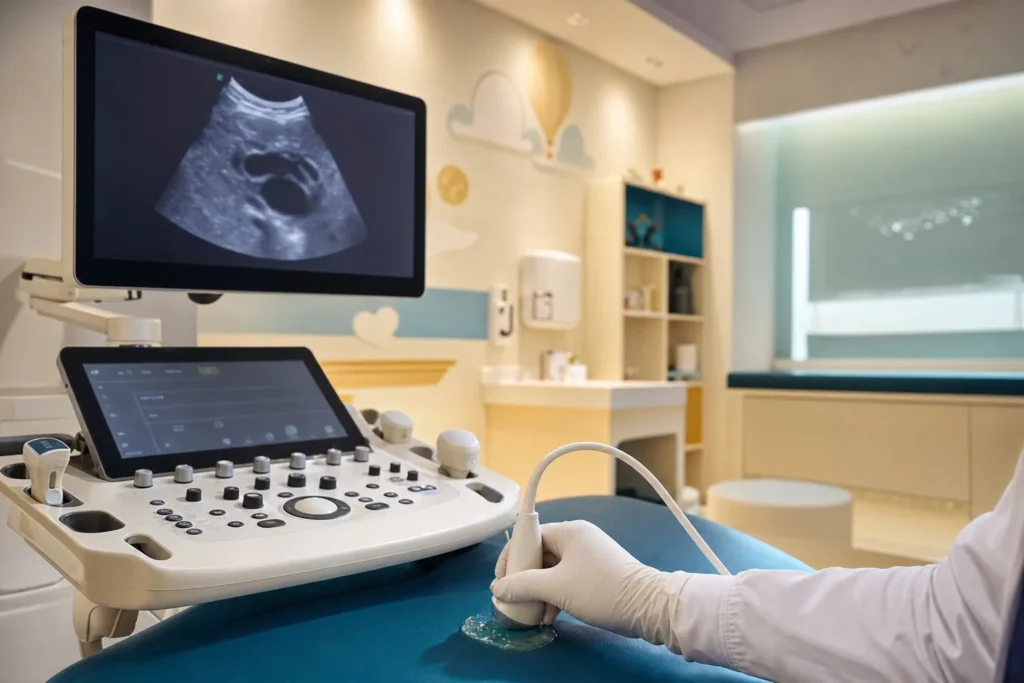
- Ultrasound scan. This is the workhorse of paediatric urology. It uses sound waves, involves no radiation and no needles, and shows the kidneys, ureters, and bladder. It is used to check for swelling (hydronephrosis), to look at the testicles, and to monitor conditions over time.
- Voiding cystourethrogram (VCUG / MCUG). A small soft tube is placed in the bladder, which is gently filled with a contrast liquid, and X-ray pictures are taken as the child passes urine. This is the main test for diagnosing and grading vesicoureteral reflux.
- Nuclear medicine scans (such as DMSA and MAG3). These use a very small, safe amount of a tracer to show how well each kidney works and whether there is any scarring or a true blockage.
- Urine tests. A urine sample can confirm a urinary tract infection and identify the bacteria, guiding antibiotic choice.
- Blood tests and, occasionally, genetic tests. These may be used to check kidney function or, when several genital differences appear together, to look for an underlying cause.
Not every child needs every test. The aim is a clear diagnosis and a plan, using the simplest tests that answer the question.
Treatment options
Treatment is tailored to the specific condition, its severity, and the child's age. A reassuring theme runs through paediatric urology: many conditions need watchful waiting rather than immediate surgery, because the body often corrects itself as the child grows.
Watching and waiting. Mild hydronephrosis seen before birth, lower grades of reflux, and bedwetting in younger children are often monitored with regular ultrasound scans or simple measures, because they frequently resolve on their own.
Medicines and non-surgical measures. Low-dose preventive antibiotics may be used for a time in some children with reflux to protect the kidneys from infection while the reflux improves. Bedwetting is often managed first with a bedwetting alarm and good fluid and toilet routines, and sometimes with a medicine called desmopressin that reduces urine made overnight. Constipation, when present, is treated because it often improves bladder symptoms.
Procedures and surgery. When an operation is needed, common ones include:
- Orchidopexy - a short operation to bring an undescended testicle down into the scrotum and fix it in place, usually recommended between about 6 and 18 months of age.
- Hypospadias repair - reconstructive surgery to reposition the urethral opening to the tip, straighten any bend, and tidy the foreskin, often done around 6 to 18 months of age, in one stage for milder cases.
- Deflux (a gel injected at the ureter opening) or ureteral reimplantation for reflux that does not settle.
- Pyeloplasty - surgery to widen a narrowed kidney-ureter junction in UPJ obstruction.
Many of these can be done with minimally invasive techniques (keyhole or robotic-assisted surgery) in suitable cases. Decisions are usually made by a multidisciplinary team - surgeon, kidney specialist, anaesthetist, and specialist nurses - working together with the family.
Outlook: what to expect
For most paediatric urology conditions, the outlook is good, and this is one of the genuinely reassuring features of the field.
Lower grades of vesicoureteral reflux frequently disappear on their own, often within a few years, and most children come through without long-term complications when infections are prevented and the kidneys are protected. Most children with mild hydronephrosis seen before birth improve without any operation. Hypospadias repair, when performed by experienced paediatric surgeons, generally gives a normal-looking and well-functioning penis, with most children making a full recovery; a minority need a further small procedure, such as for a fistula (an unwanted small opening) or narrowing, which surgeons watch for at follow-up.
For undescended testicles, treatment timing matters. Authoritative sources note that bringing the testicle down earlier supports better testicular growth and helps protect future fertility. There is also a recognised, modest increase in the lifetime risk of testicular cancer compared with the general population; surgery does not entirely remove this, which is one reason boys are taught testicular self-checks in their teens. These are population-level statements, not predictions for any individual child, and your child's own outlook depends on their specific situation. A paediatric urologist who knows your child is the right person to explain what to expect.
Living with the condition and follow-up
Even after successful treatment, paediatric urology is often a journey rather than a single event, because doctors want to be sure the kidneys and bladder keep working well as the child grows.
Follow-up visits. After surgery such as orchidopexy, hypospadias repair, or pyeloplasty, your child will usually be reviewed to confirm healing, check the result, and catch any complication early. Some children have a series of ultrasound scans over months or years.
Day-to-day care. For bladder-related conditions, sensible routines help: regular trips to the toilet, drinking enough water through the day, treating constipation, and unhurried, complete bladder emptying. For boys after genital surgery, brief wound and dressing care at home is usually all that is needed for a short while.
Emotional wellbeing. Wetting and genital conditions can affect a child's confidence and a parent's peace of mind. It helps to keep the tone calm and blame-free, to avoid punishing a child for bedwetting, and to reassure older children that these are common, treatable issues. Many families find that simply understanding the plan reduces a lot of anxiety.
Knowing when to call. Contact your team if your child develops a fever, pain on passing urine, a swollen or red wound, or a sudden change in their stream after surgery.
Planning treatment abroad: what affects cost and preparing records
If you are considering arranging your child's urology care in Turkiye, planning ahead makes everything smoother. We do not quote prices in this guide, because every child's situation is different and an accurate figure can only come from a personalised assessment. Instead, here is what genuinely shapes the cost and the plan.
Factors that affect cost include:
- The exact diagnosis and its severity (for example, a mild distal hypospadias versus a severe proximal one needing staged surgery).
- Whether the condition needs surgery at all, or can be monitored.
- The type of operation and technique (open, keyhole, or robotic-assisted).
- The number of stages or procedures required.
- Anaesthesia, hospital stay length, scans, and laboratory tests.
- Follow-up appointments and any rehabilitation.
- Translation, accommodation, and travel for the family.
To prepare your child's records, gather: previous ultrasound and other scan images and reports, any VCUG/MCUG or nuclear scan results, urine and blood test results, a list of past infections and antibiotics used, operation notes if any surgery has already been done, the antenatal scan findings if relevant, your child's growth and immunisation records, and a short written summary from your current doctor. Having these translated, or sharing them in advance, lets the team give a clear opinion and a realistic, personalised estimate.
The best next step is a free consultation, where the team reviews your child's records and explains the recommended approach and what it involves before you travel.
Why Turkiye and how to choose a good centre
Turkiye has become a well-known destination for medical care, including children's surgery, because it combines experienced specialists, modern hospitals, and strong infrastructure for international families. Many Turkish hospitals hold Joint Commission International (JCI) accreditation, an internationally recognised quality and patient-safety standard, and Turkiye is among the countries with a high number of JCI-accredited facilities.
Accreditation alone, however, is not the whole story when the patient is a child. When choosing a centre, it is sensible to verify:
- A dedicated paediatric urologist - a surgeon specifically trained in children's urology, not only in adult urology.
- Paediatric anaesthesia - anaesthetists experienced with babies and children, which is important for safe surgery in the very young.
- Child-centred facilities - paediatric wards, child-sized equipment, and play and family support.
- A multidisciplinary team - access to paediatric kidney specialists, radiology, and nursing experienced with children.
- Clear communication - interpreters or English-speaking staff, written information you understand, and a named contact.
- Transparent aftercare - a defined follow-up plan, and a way to reach the team once you return home.
It is reasonable to ask how many of a particular operation the surgeon performs, what their complication and repeat-surgery rates are, and how follow-up is handled across borders. A good centre will welcome these questions. Avoid anyone promising guaranteed outcomes; honest specialists talk in terms of likely results and possible risks.
Prevention, self-care, and getting a second opinion
Most congenital paediatric urology conditions cannot be prevented, because they form before birth for reasons that are usually unknown. There is no need for parents to feel responsible. However, several sensible habits genuinely help with the bladder-related problems and reduce complications.
- Treat and prevent constipation, which is one of the most common contributors to wetting and to repeated urinary infections.
- Encourage good fluids and regular toilet trips during the day, and complete, unhurried bladder emptying.
- Practise gentle hygiene, teaching front-to-back wiping for girls, which lowers the chance of infection.
- Act early on symptoms, seeking review for fevers without an obvious cause, pain on passing urine, or blood in the urine, so that any underlying problem is found before it affects the kidneys.
- Teach testicular awareness to teenage boys, especially those who had an undescended testicle, so changes are noticed early.
Finally, you are always entitled to a second opinion. For a planned operation, or when advice from different doctors seems to differ, asking another qualified paediatric urologist to review the same scans and records is a normal, sensible step - not a sign of distrust. A good specialist will support your wish to feel fully confident before any treatment for your child.
Frequently asked questions
What does a paediatric urologist treat?
Are these conditions usually serious?
When should an undescended testicle be treated?
Does my son's hypospadias need surgery?
What is vesicoureteral reflux and how is it found?
Will my child's reflux need surgery?
Is bedwetting something to worry about?
Are the scans and tests safe for children?
Could an undescended testicle affect fertility or cancer risk later?
What records should I bring when planning treatment abroad?
How do I choose a good hospital in Turkiye for my child?
Can paediatric urology conditions be prevented?
This article is for general information only and is not medical advice. Always consult a qualified doctor about your individual case.
Considering this procedure?
Send us your photos and questions. A BergemHealth coordinator and a department-head specialist will review your case and reply with honest, personalised guidance — no obligation.
Free consultation