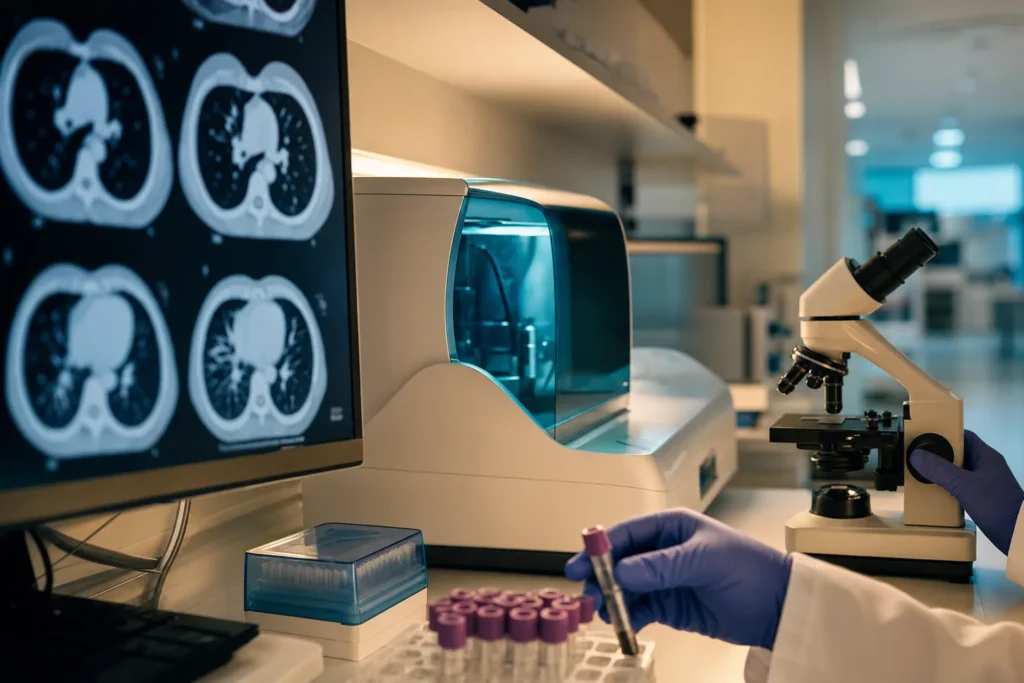
Pulmonary tuberculosis
Pulmonary tuberculosis is a lung infection caused by bacteria. It can sound frightening, but it is curable with the right medicines taken for the full course. This guide explains, in plain language, what TB is, how it is found and treated, what recovery looks like, and how to prepare if you are arranging care in Turkiye.
What pulmonary tuberculosis is
Tuberculosis, usually shortened to TB, is an infection caused by a germ (a type of bacteria) called Mycobacterium tuberculosis. Pulmonary simply means "of the lungs," so pulmonary tuberculosis is TB that is mainly affecting the lungs. This is the most common form of the disease, and it is the form that can spread from person to person through the air.
It helps to understand that TB comes in two very different states. In latent (inactive) TB, the germs are in your body but your immune system is keeping them quiet. You feel completely well, you have no symptoms, and you cannot pass TB to anyone else. The World Health Organization estimates that about a quarter of the world's population carries TB germs in this dormant way, and most of these people will never become ill. In active TB disease, the germs have started to multiply and cause illness. This is when symptoms appear and, if the lungs are affected, when a person can spread the infection to others.
The most important thing to know up front is this: TB is treatable, and in the great majority of people who take their full course of medicine correctly it is curable. It is a serious illness that needs proper medical care, but it is not a hopeless one.
Types and subtypes of TB
Doctors describe TB in a few different ways, depending on where it is in the body and how it behaves.
- Latent TB infection versus active TB disease - the difference between sleeping germs (no symptoms, not contagious) and active illness, explained above.
- Pulmonary TB - TB that is in the lungs. This is the focus of this article and the form that can be passed to others through the air.
- Extrapulmonary TB - TB that affects parts of the body other than the lungs. According to Cleveland Clinic and the NHS, it can settle in the lymph glands, bones and joints, the kidneys, the lining around the brain, or other organs. Some people have both pulmonary and extrapulmonary TB at the same time.
- Miliary (disseminated) TB - an uncommon but serious form in which the germs spread widely through the bloodstream to many parts of the body at once. It is named after the tiny millet-seed-sized spots it can create on a chest scan.
A further distinction matters for treatment. Most TB is drug-susceptible, meaning the standard medicines work well against it. A minority is drug-resistant, meaning the germs no longer respond to one or more of the usual drugs. The main types are multidrug-resistant TB (MDR-TB), resistant to the two most powerful first-line drugs (isoniazid and rifampicin), and extensively drug-resistant TB (XDR-TB), which is resistant to a wider range. These forms are harder to treat but, as discussed later, newer regimens have improved the outlook considerably.
Causes and risk factors
Pulmonary TB is caused by breathing in Mycobacterium tuberculosis germs. When a person with active TB in their lungs coughs, sneezes, speaks, sings or laughs, they release tiny droplets into the air. The CDC notes that these germs can linger in the air for several hours, especially in indoor spaces with poor ventilation. Someone who breathes them in can become infected. It is worth being clear about what does not spread TB: you cannot catch it from shaking hands, sharing food or drink, touching surfaces, toilet seats, or kissing. TB usually requires fairly close or prolonged contact with someone who is contagious.
Breathing in the germs does not automatically mean you will become ill. In most people the immune system contains them, leading to latent infection. The CDC estimates that, without treatment, about 1 in 10 people with latent TB will go on to develop active disease at some point in their lives, often when something weakens their defences.
Some factors make it more likely that TB germs are encountered or that latent TB turns active:
- Living with, or in close contact with, someone who has active TB.
- Living in, or coming from, a part of the world where TB is common.
- A weakened immune system - for example from HIV (the WHO notes people living with HIV are far more likely to develop active TB), from medicines that suppress immunity, after an organ transplant, or during cancer chemotherapy.
- Diabetes, chronic kidney disease, or undernutrition.
- Smoking tobacco, heavy alcohol use, or injected drug use.
- Very young children and older adults, whose immune systems may be less able to contain the germs.
- Living or working in crowded settings such as shelters, prisons, or some healthcare environments.
Having a risk factor does not mean you will get TB. These simply help doctors decide who may benefit from testing.
Signs and symptoms, and when to see a doctor
Latent TB causes no symptoms at all. The symptoms below relate to active pulmonary TB, and they often come on slowly over weeks rather than suddenly.
- A cough that lasts three weeks or more. The NHS and CDC both highlight a persistent cough as the classic sign.
- Coughing up phlegm, and sometimes coughing up blood.
- Chest pain, or pain when breathing or coughing.
- Feeling tired or weak much of the time.
- A high temperature or fever.
- Night sweats - waking up with soaked bedclothes.
- Loss of appetite and unintentional weight loss.
These symptoms can be caused by many other, less serious conditions, so having them does not mean you have TB. But because TB needs treatment and can spread, it is worth getting checked.
See a doctor in a non-urgent way if you have a cough lasting more than three weeks, or unexplained weight loss, fever, night sweats or persistent tiredness. The NHS advises seeking urgent medical help if you cough up blood. Seek emergency care for a severe headache with a stiff neck, confusion, or a fit, as these can be signs that TB has affected the lining of the brain. Importantly, the WHO notes that some people with active TB have few or no symptoms yet can still spread it, which is why testing close contacts of a known case matters.
Screening and early detection
There is no routine TB screening for the general population in most countries, because for most people the risk is low. Instead, testing is targeted at people who are more likely to have been exposed or to develop disease. This is sometimes called active case finding among contacts.
Two tests are used to find TB infection (they tell you the germs are present, but not whether the disease is active):
- The tuberculin skin test (TST), also called the Mantoux test - a small amount of fluid is injected just under the skin of the forearm, and a nurse checks the spot after two to three days for a raised reaction.
- The TB blood test (IGRA, interferon-gamma release assay) - a single blood sample tested in a laboratory. The CDC notes the blood test is often preferred for people who have had the BCG vaccine, because it is less likely to give a misleading positive result.
Screening of this kind is commonly offered to close contacts of someone with active TB, to people moving from countries where TB is common, to healthcare workers, and to people with conditions that weaken the immune system. A positive test prompts further checks (such as a chest X-ray) to find out whether the infection is latent or active. Finding and treating latent TB is one of the main ways the spread of the disease is reduced.
How pulmonary TB is diagnosed
Diagnosing active pulmonary TB usually combines a few steps, because no single test tells the whole story. Your doctor will ask about your symptoms, recent travel, and any contact with TB, and will examine you.
- Chest X-ray or CT scan. Imaging can show changes in the lungs typical of TB, such as patches of inflammation or cavities.
- Sputum tests. You cough up a sample of phlegm from deep in the lungs, often more than one, on different days. In the laboratory it is examined under a microscope (smear) and grown in a culture to confirm the germ and to test which drugs will work against it. Culture is very reliable but can take several weeks, because TB bacteria grow slowly.
- Rapid molecular tests (NAAT). Nucleic acid amplification tests look for the genetic material of the TB germ. The WHO recommends rapid molecular tests as the first test in people with signs of TB, because they can confirm TB and detect resistance to rifampicin within about 48 hours, far faster than culture.
If TB outside the lungs is suspected, doctors may take a sample of fluid or tissue from the affected area for testing. Unlike many cancers, pulmonary TB is not formally "staged" with a number; instead, care focuses on confirming the germ, checking the extent in the lungs, and finding out whether it is drug-susceptible or drug-resistant, since that decides which medicines are used.
Treatment options
Pulmonary TB is treated with a combination of antibiotics taken for several months. Using several drugs together is essential: it both kills the germs more effectively and prevents resistance from developing. The cornerstone of care is finishing the entire course, even after you feel well, because stopping early lets surviving germs return, sometimes in a drug-resistant form.
For drug-susceptible TB, the standard approach uses a group of first-line medicines often remembered as RIPE: rifampicin (rifampin), isoniazid, pyrazinamide and ethambutol. The WHO describes daily treatment over roughly four to six months. A shorter four-month regimen using rifapentine and moxifloxacin is now an option for some adults and children with drug-susceptible disease, according to CDC and the joint ATS/CDC/ERS/IDSA guidelines.
For latent TB infection, shorter courses are used - the CDC now prefers three- or four-month rifamycin-based regimens because more people complete them.
For drug-resistant TB, treatment has improved markedly. The WHO now recommends an all-oral six-month regimen known as BPaLM (bedaquiline, pretomanid, linezolid and moxifloxacin) for many people with multidrug-resistant or rifampicin-resistant TB - a major advance over the older treatments that could last 18 to 24 months.
To help people complete treatment, services often use directly observed therapy (DOT), where a healthcare worker watches each dose being taken, in person or by video. Supportive care matters too: good nutrition, treating other conditions such as diabetes or HIV, stopping smoking, and managing medication side effects. Surgery is rarely needed for pulmonary TB and is reserved for selected complications. Care is usually delivered by a multidisciplinary team - chest physicians (pulmonologists), infectious-disease specialists, specialist nurses, pharmacists, microbiologists and, where relevant, public-health staff who help trace and test contacts.
Outlook and what to expect
The outlook for pulmonary TB is generally good when it is found and treated properly. MedlinePlus states plainly that treatment "will almost always cure you if you take your pills the right way," and the CDC similarly notes that almost all patients recover and are cured with appropriate treatment. The WHO reports that global TB control efforts have saved an estimated 83 million lives since the year 2000.
For drug-resistant TB, which used to be much harder to treat, outcomes have improved with the newer regimens. In the clinical trial that supported the six-month BPaLM regimen, treatment success was reported at around 89%, compared with a wide range for older approaches.
It is important to understand how to read figures like these. They describe what happens across whole populations of patients, not a prediction for any one person. Your own outlook depends on many factors - how early the disease was found, whether the germs are drug-susceptible or resistant, your overall health and any other conditions, and how fully you are able to complete treatment. The single most powerful thing within your control is taking the full course exactly as prescribed. Your own specialist is the right person to discuss what to expect in your particular case.
Living with TB and follow-up
Most people with pulmonary TB are treated at home rather than in hospital. In the early weeks of treatment for contagious lung TB, your team will advise you on how to avoid passing it on - typically staying home from work or school for a period, covering your mouth when coughing, keeping rooms well ventilated, and avoiding close contact until you are no longer infectious. Reassuringly, effective treatment usually makes people non-contagious within a few weeks, well before the full course is finished, though only your team can confirm when that point has been reached.
During treatment you can expect regular follow-up. This may include repeat sputum tests to confirm the germs are clearing, blood tests to monitor the liver (some TB drugs can affect it), eye checks if you are taking ethambutol, and conversations about how you are managing the tablets. Tell your team promptly about side effects such as yellowing of the skin or eyes, persistent nausea, changes in vision, tingling in the hands or feet, or a rash, rather than stopping the medicine on your own.
It is normal to feel tired, low or anxious during a long course of treatment. Appetite and energy usually return gradually as the infection clears. Eating well, resting, gentle activity as you are able, and leaning on family and support services all help. Public-health teams will also offer testing to close contacts, which protects the people around you.
Planning treatment abroad: what affects cost and how to prepare your records
If you are considering arranging TB diagnosis or treatment in Turkiye, it helps to understand what shapes the overall cost, so you can ask informed questions and plan realistically. We do not quote prices here, because every situation is different; instead, here are the main factors that influence what care involves.
- What stage you are at. Investigating symptoms or a positive contact test is different from managing confirmed, complex disease.
- Whether the TB is drug-susceptible or drug-resistant. Drug-resistant TB needs different, longer and more specialised medicines and monitoring.
- The tests required - chest imaging, repeated sputum tests, rapid molecular tests, cultures and drug-sensitivity testing.
- The length of treatment and follow-up, which for TB is measured in months.
- Other health conditions, such as diabetes or HIV, that need managing alongside TB.
- Practical needs for an international patient - interpreter support, accommodation, and travel.
To prepare, gather your medical records: any previous chest X-rays or CT scans and reports, sputum or laboratory results, a list of medicines you take, your vaccination history including BCG, and notes on any known TB contact or previous treatment. Having these ready helps a specialist give accurate advice. A free consultation is the right starting point to discuss your situation and request a personalised estimate based on what you actually need.
A note on travel: active, contagious pulmonary TB can affect whether and when it is safe to fly, so always seek medical advice before travelling.
Why Turkiye, and how to choose a good centre
Turkiye has become a well-established destination for international patients, with many hospitals experienced in caring for people who travel for treatment and in coordinating the practical side of an overseas medical trip. For a condition like TB, what matters most is the quality and coordination of medical care, not the country itself. Here is what to verify when choosing where to be treated.
- Accreditation. Look for recognised hospital accreditation, such as Joint Commission International (JCI), which signals adherence to international standards of safety and quality.
- The right specialist team. TB is best managed by pulmonology and infectious-disease specialists working together, with access to a proper microbiology laboratory for culture and drug-sensitivity testing.
- Laboratory and diagnostic capability. Confirm the centre can perform rapid molecular tests, cultures and resistance testing, and has appropriate infection-control measures.
- A clear plan for follow-up. Because TB treatment lasts months, ask how monitoring and the remainder of your course will be handled, especially if part of it will continue after you return home.
- Transparent communication. A good centre will explain the diagnosis, the treatment plan, expected duration and likely costs clearly, and provide interpreter support if you need it.
Be cautious of anyone promising a guaranteed cure or describing themselves with superlatives; responsible clinicians explain probabilities and your individual circumstances rather than making promises. A concierge service can help you compare accredited centres, understand what each proposes, and organise records, appointments and logistics.
Prevention and self-care
Several practical steps reduce the chance of catching or passing on TB and support your recovery.
- Treat latent TB when advised. Taking a preventive course if you have latent infection greatly lowers the chance of it becoming active disease later - one of the most effective forms of prevention.
- The BCG vaccine. The NHS offers BCG to babies and others at higher risk in areas where TB is more common; it mainly helps protect young children from severe forms of TB. The CDC notes that BCG is not generally used in the United States. Whether it is right for you depends on your circumstances and local guidance.
- If you have active TB, complete your full course of medicine and follow your team's advice on staying away from others until you are no longer contagious.
- Respiratory hygiene. Cover your mouth and nose when coughing or sneezing, and keep indoor spaces well ventilated.
- Look after your general health. Not smoking, limiting alcohol, eating well and managing conditions such as diabetes all help your immune system keep TB in check.
- Get checked if you have been in contact with someone who has active TB, even if you feel well.
Above all, remember that TB is treatable and, in most people who complete treatment, curable. Working closely with a qualified specialist, and finishing your medicines, gives you the best chance of a full recovery.
Frequently asked questions
Is pulmonary tuberculosis curable?
How is TB spread, and is it always contagious?
What is the difference between latent and active TB?
What are the first signs of pulmonary TB?
How long does TB treatment take?
How is TB diagnosed?
What is drug-resistant TB, and can it still be treated?
Does the BCG vaccine prevent TB?
Will I need to stay in hospital for TB treatment?
What happens if I stop taking my TB medicines early?
Can I travel or fly with TB?
What should I prepare before a consultation about TB treatment abroad?
This article is for general information only and is not medical advice. Always consult a qualified doctor about your individual case.
Considering this procedure?
Send us your photos and questions. A BergemHealth coordinator and a department-head specialist will review your case and reply with honest, personalised guidance — no obligation.
Free consultation