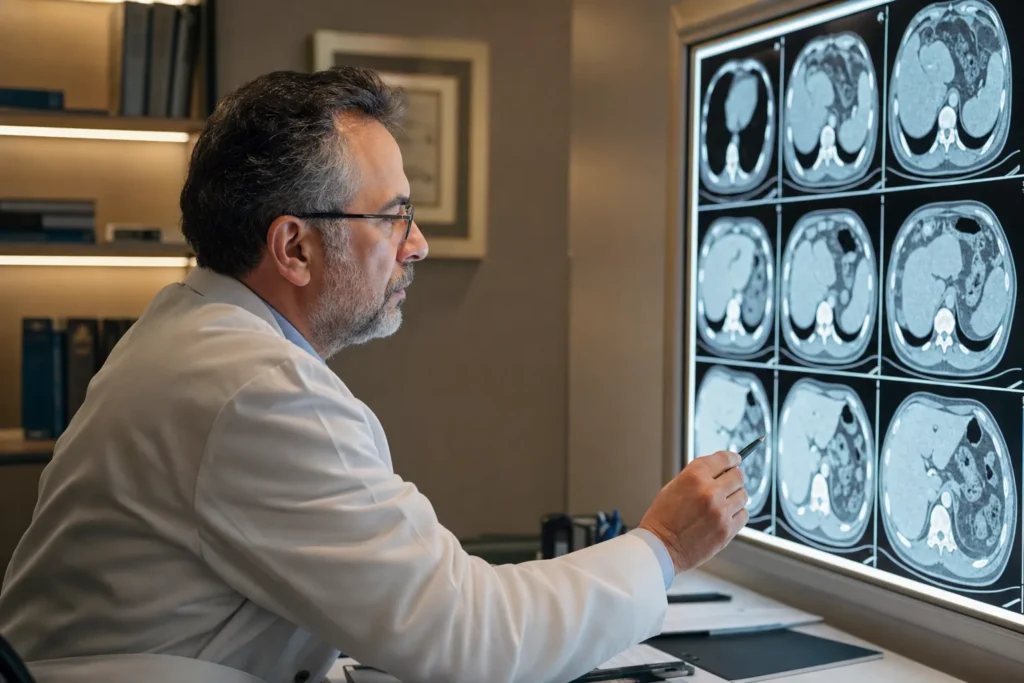
- A remote <a href="https://bergemhealth.com/blog/cancer-second-opinion-abroad/">second opinion most often confirms your existing diagnosis and plan — that certainty is valuable before major treatment.
- It works from your existing pathology and imaging — you usually do not need a new biopsy.
- You receive a written opinion in days, reviewed by a named oncology professor — not a chatbot or a sales manager.
- With us it is free to you: the hospital pays our commission, never you.
Why a second opinion is the right first step
Facing a cancer diagnosis, the instinct is to act — fast. A remote second opinion lets you do exactly that without travelling, paying, or committing to anything. It runs in parallel with whatever your own team has advised, so it never delays your care.
- Confirmation. In most cases the review confirms your diagnosis and treatment plan. That is the most common — and most reassuring — outcome: you go into treatment certain, not second-guessing.
- A fresh expert eye. A high-volume oncology professor may see a different angle on staging, the sequence of treatment, or whether a newer option is worth raising with your own oncologist. This is never about implying your doctors missed something — it is a second set of experienced eyes on a decision that matters.
- Peace of mind, on your terms. You read the written opinion at home, with your family, and decide what to do next. There is no pressure and no obligation to be treated abroad.
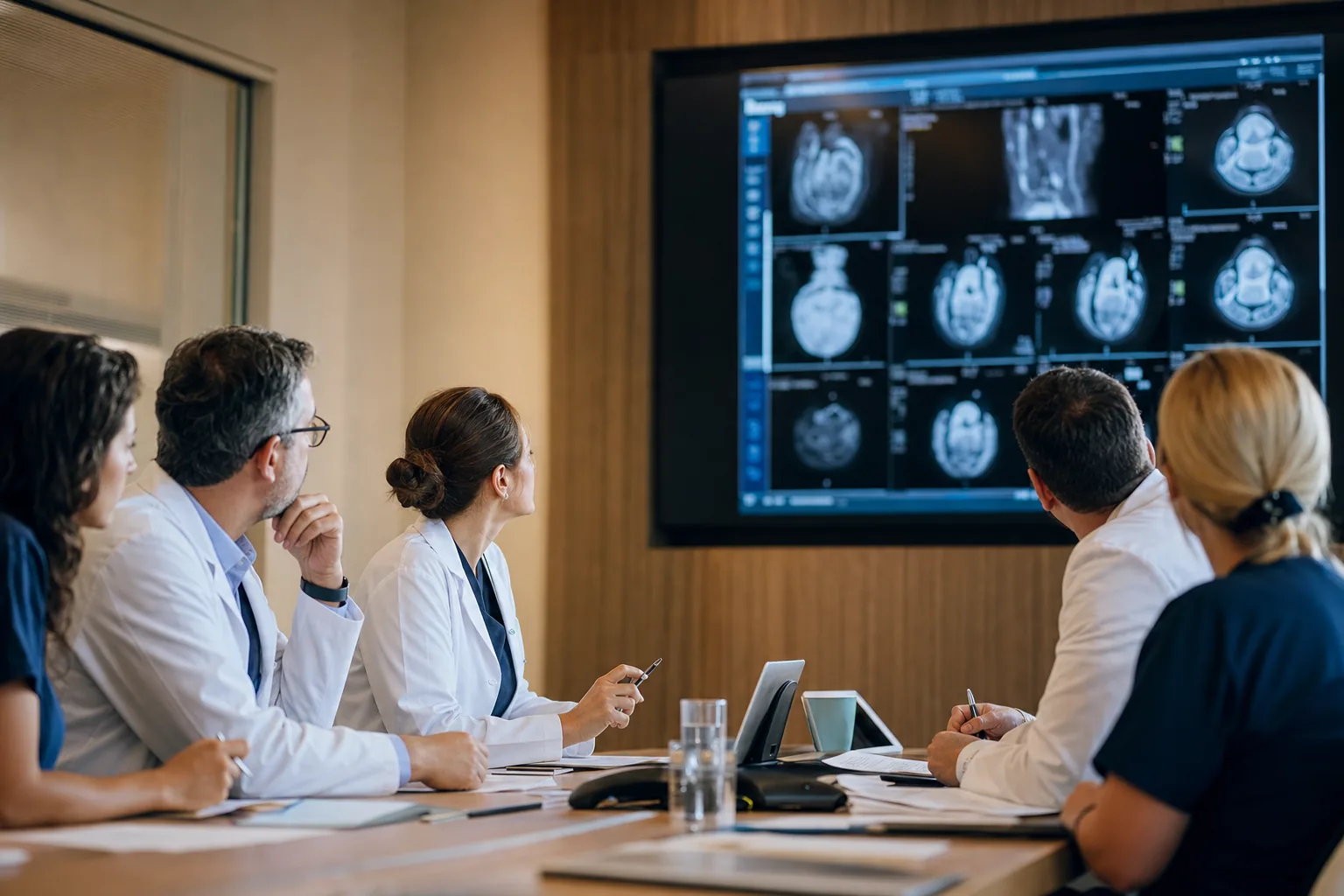
No re-biopsy: how a remote review uses what you already have
One of the biggest worries patients raise is, "Will I have to go through a biopsy again?" Almost always, the answer is no. A remote second opinion is built on the medical material you already possess:
- Your pathology report and, where the experts need to re-examine the tissue, your existing histology slides or blocks — the same glass slides and paraffin blocks your original biopsy produced.
- Your imaging — CT, MRI or PET scans, ideally the actual image files (on a CD or DICOM) and not only the reports.
- Your treatment history so far and the questions on your mind.
Because the review re-reads existing tissue and images, you usually avoid repeating invasive tests. If anything genuinely needs to be redone, the professor will say so clearly — and explain why.
How to get your histology slides or blocks
You have a right to your own medical records, and that includes the physical material from your biopsy. The process is simpler than most people expect:
- Contact the laboratory or hospital that performed your original biopsy — this is where the slides and tissue blocks are stored.
- Ask in writing for your histology slides and/or paraffin blocks to be released to you on loan (many labs return them afterwards). We give you a ready-made request template.
- Collect them in person or have them couriered. They travel safely at room temperature.
Exact rules differ from country to country and lab to lab, so we walk you through what your specific hospital requires. You never have to figure this out alone.
How it works — four steps, days not weeks
- Send your records. Upload your reports, scans and pathology details through our secure form. We tell you exactly what to gather — and how to request your histology slides or blocks if they are needed.
- Expert review. A named oncology professor reviews your case. Our medical reviewer for oncology is Prof. Dr. Ali Murat Tatlı, Professor of Medical Oncology at Memorial Antalya — a real partner professor, not a faceless "medical team." Complex cases are taken to a multidisciplinary tumour board.
- Written opinion. You receive a clear written second opinion and, where relevant, treatment options and an indicative cost range — in a few working days. If you want, you can have a video call with the doctor who actually looked at your scans.
- You decide, no pressure. Discuss the opinion with your home oncologist. If you choose to be treated abroad, we coordinate everything. If you don't, that is completely fine — the second opinion is still yours to keep.
Start your free second opinion → Upload your records and a named professor will review them.
What "free" really means — and why we are not an aggregator
If you have looked for help online, you have probably met intermediaries that turned out to be bots, vanished after taking a payment, marked the hospital's price up steeply, or offered no aftercare at all. Our model is the direct answer to exactly that.
What we do
- Free to you. Our help costs you nothing — the hospital pays our commission. If you go on to treatment, you pay the hospital directly, at its own price, with no markup from us.
- A real professor, not a sales bot. You can speak with the doctor who reviewed your scans, before you commit to anything.
- One named coordinator who stays with you — including after you return home, for continuity with your local oncologist.
- A medical interpreter at every step — a person, not an app.
- Direct to the professor and hospital. We never auction your case to clinics.
JCI accredits individual hospitals, not networks: among our partners, Liv Hospital Ulus, Liv Hospital Vadistanbul and Memorial Bahçelievler hold JCI accreditation, and you can check any hospital in the JCI registry of accredited organisations. Türkiye has several dozen JCI-accredited hospitals, one of the largest clusters in the world. Accreditation is the single most useful filter when choosing oncology care abroad.
When the news is hard: an honest word on advanced disease
Not every second opinion is about finding a new cure, and we will never pretend otherwise. If the realistic path is comfort, symptom control and quality of life rather than aggressive treatment, an honest second opinion can be just as valuable — to confirm that the right palliative plan is already in place, or to help your family understand the options.
We do not sell hope that isn't there. If a review points toward palliative care, we say so plainly and help you find the right support — not a treatment package. That honesty is the whole point of asking a real professor in the first place.