Mini-gastric bypass
Mini-gastric bypass, also called one-anastomosis gastric bypass (OAGB), is a weight-loss operation that turns the stomach into a slim tube and reroutes part of the small intestine using a single connection. It is technically simpler than a traditional bypass yet produces strong, lasting weight loss and often improves type 2 diabetes. This guide explains, in everyday language, what the surgery involves, who it suits, how recovery works, what it costs, and what to check before travelling for treatment.
- Anaesthesia
- General anaesthesia (you are fully asleep, with a breathing tube)
- Duration
- Roughly 1 to 2 hours of keyhole (laparoscopic) surgery
- Recovery
- Light activity within days; back to normal eating over about 8 to 12 weeks; avoid heavy lifting for around 6 weeks
- Hospital stay
- Usually 1 to 3 nights in hospital
What a mini-gastric bypass actually is
A mini-gastric bypass is a type of weight-loss (bariatric) surgery. Doctors also call it one-anastomosis gastric bypass, often shortened to OAGB, and sometimes "omega-loop" bypass. The word anastomosis simply means a surgical join between two parts of the digestive tract. "One anastomosis" tells you the key feature: the surgeon makes just one new connection, instead of the two used in the older, traditional bypass.
The operation does two things at once. First, the surgeon staples the stomach into a long, narrow tube (a small "pouch"), so it holds far less food. Second, they reroute the small intestine so that food skips the first stretch of it. Because food bypasses part of the gut, your body absorbs fewer calories and nutrients from each meal.
There is also a third, less obvious effect. Changing the route food takes alters the gut hormones that control hunger and fullness. Levels of the "hunger hormone" ghrelin tend to fall, while hormones that signal fullness (such as GLP-1 and PYY) rise. Many people find they simply feel less hungry and satisfied sooner. This hormone shift is also why bypass surgery so often improves type 2 diabetes, sometimes within days.
The technique was introduced in 1997 by surgeon Robert Rutledge as a quicker, simpler alternative to the standard bypass. Today it is one of the more common bariatric operations performed worldwide.
Who is a good candidate, and who should think twice
Bariatric surgery is not a cosmetic quick fix. It is a treatment for obesity that carries real health risks, so doctors use clear criteria to decide who is likely to benefit.
You may be considered a candidate if you have a body mass index (BMI) of 40 or above, or a BMI of 35 or above together with a weight-related health condition such as type 2 diabetes, high blood pressure, high cholesterol, or obstructive sleep apnoea (where breathing repeatedly stops during sleep). Some guidelines also consider surgery for people with a BMI of 30 and above who have type 2 diabetes that is hard to control. BMI is your weight in kilograms divided by your height in metres squared; it is a rough screening number, not the whole picture.
Beyond the numbers, good candidates are people who have genuinely tried diet, exercise and other non-surgical options without lasting success, and who are ready to commit to permanent changes in how they eat and to lifelong vitamin supplements and follow-up.
Who should avoid it, or wait. Surgery may not be advisable if you have a condition that makes any major operation too risky (for example, severe heart or liver failure), an active, untreated mental-health or substance-use problem, or an inflammatory bowel disease such as Crohn's disease. The mini-bypass specifically is not suitable if you have a very short small intestine, because it removes more of the gut from the food path. Pregnancy, and planning pregnancy in the near future, are also reasons to delay. This is why a thorough assessment, usually including a psychological evaluation, comes before any operation.
Types and techniques: how the mini-bypass compares
It helps to see where the mini-gastric bypass sits among the main weight-loss operations.
- Mini-gastric bypass (OAGB): one stomach tube, one new connection to the small intestine. Combines a smaller stomach with reduced absorption.
- Traditional gastric bypass (Roux-en-Y): a small stomach pouch with two connections, arranged in a Y-shape. It is the long-established "gold standard" but is technically more involved.
- Sleeve gastrectomy: a large part of the stomach is removed to leave a banana-shaped tube. It works mainly by restricting food and hormone changes, without rerouting the intestine.
- Gastric band: an adjustable band placed around the upper stomach. It is used less often today.
The mini-bypass appeals to surgeons and patients because it usually takes less time in theatre and involves only one join, which means fewer places for a leak to occur. Studies report broadly similar, sometimes slightly higher, weight loss compared with the traditional bypass. The main trade-off is a particular complication called bile reflux, explained in the risks section below. Which operation is right for you depends on your weight, health conditions, anatomy and surgeon's advice, not on which sounds simplest.
How the operation is done
A mini-gastric bypass is performed under general anaesthesia, meaning you are completely asleep and a tube helps you breathe throughout. You will not feel or remember anything during the surgery.
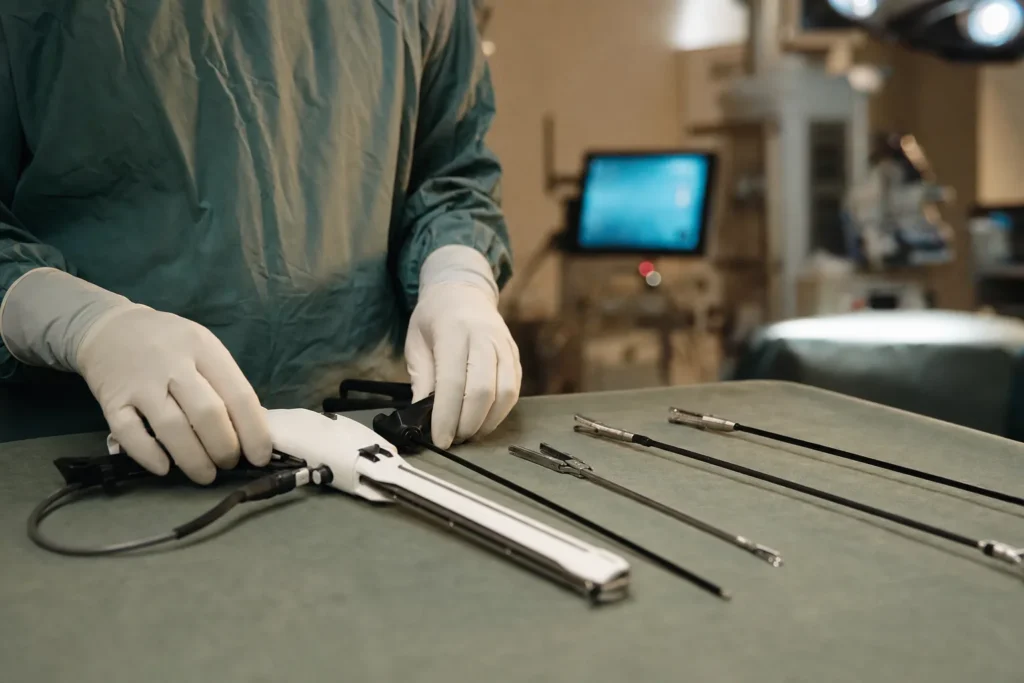
It is almost always done by keyhole (laparoscopic) surgery, and in some hospitals with robotic assistance. The surgeon makes about five or six small cuts in the abdomen, inflates the belly with gas to create working space, and passes a tiny camera and slim instruments through the openings. Keyhole surgery means smaller scars, less pain and faster recovery than a single large incision.
The main steps are:
- The surgeon uses a stapling device to divide the stomach into a long, narrow tube along its inner edge. This new pouch is typically around 15 to 18 cm long and holds only a small volume, so you feel full quickly.
- They measure along the small intestine, usually about 150 to 200 cm from a fixed landmark, and bring up a loop of intestine.
- They make a single connection (the anastomosis) between the bottom of the stomach tube and this loop, so food now bypasses the first stretch of intestine. Plenty of intestine is always left in the food path so that you can still absorb enough nutrition.
The whole procedure usually takes about one to two hours. Afterwards you wake up in a recovery area and are encouraged to get up and walk soon, which helps prevent blood clots.
Recovery, step by step
Recovery happens in stages, and your eating changes more dramatically than your scars heal.
In hospital (usually 1 to 3 nights). Nurses help you stand and walk within hours, manage your pain, and start you on small sips of fluid. Walking early is one of the most important things you can do to reduce the risk of blood clots.
The first weeks: a staged diet. Your stomach needs time to heal, so food is reintroduced gradually. A common pattern is:
- Liquids only for the first days to a couple of weeks (water, broth, thin protein drinks).
- Pureed, smooth food for roughly the next few weeks, eaten in tiny portions several times a day.
- Soft food for a further couple of weeks.
- Normal textures reintroduced carefully, usually by around 8 to 12 weeks.
It is vital not to rush these stages. Eating solid food too early can damage the healing tissue or the new join. Aim to sip fluids steadily through the day (often around 1.5 to 2 litres), but avoid drinking during meals.
Activity and work. Most people manage light walking within days and return to a desk-based job within about two to four weeks. Avoid heavy lifting and strenuous exercise for around six weeks while the internal tissues knit together. Your team will give advice tailored to you.
Risks and possible complications
Every operation carries risks, and being clear-eyed about them is part of giving informed consent. Serious complications are uncommon, but they are real.
Early risks (around the time of surgery):
- Leak from the staple line or the new join. This is uncommon but serious and may need further treatment.
- Bleeding and infection.
- Blood clots in the legs or lungs, which is why early walking and sometimes blood-thinning medication are used.
- The general risks of anaesthesia.
Later risks:
- Bile reflux. This is the complication most specifically linked to the mini-bypass. Digestive juices (bile) can wash back up into the stomach tube, causing burning, pain or nausea. It affects a small percentage of people and can usually be managed, occasionally by converting to a different type of bypass.
- Marginal ulcers at the join, more likely if you smoke.
- Nutrient deficiencies. Because the gut absorbs less, you can become short of iron, vitamin B12, calcium and fat-soluble vitamins. Lifelong supplements and blood tests are essential, not optional.
- Dumping syndrome: cramps, sweating, nausea or diarrhoea after sugary or fatty foods, because they pass through too quickly.
- Gallstones, which can form during rapid weight loss.
Choosing an experienced surgeon and following the aftercare plan reduce these risks but cannot remove them entirely.
Results and how long they last
The mini-gastric bypass produces substantial, durable weight loss for most people. Published studies report that patients typically lose in the region of 60 to 80 percent of their excess weight (the weight above a healthy range) within the first one to two years, and that much of this is sustained over five years. Results vary from person to person.
Just as important as the number on the scales are the health improvements. Bariatric surgery, including the mini-bypass, often leads to remission or marked improvement of type 2 diabetes in a large share of patients, along with better blood pressure and cholesterol, and improvements in sleep apnoea and joint pain.
None of this is automatic or permanent on its own. Weight regain is possible, especially if old eating habits return or supplements and follow-up are neglected. Think of the operation as a powerful tool that resets your appetite and metabolism, while your daily choices around food, activity and follow-up decide how well that tool keeps working over the years.
Costs: indicative ranges and what changes the price
In Turkey, all-inclusive packages for a mini-gastric bypass commonly fall in the region of €3,200 to €6,500. By comparison, the same surgery at a private hospital in Western Europe or the UK can run to many times that figure. These numbers are indicative ranges only; the price varies by case, surgeon and clinic, and this is not a quote. Always ask a clinic for a written, itemised price for your specific situation.
What moves the price up or down:
- What the package includes: surgeon and anaesthetist fees, hospital stay, pre-operative tests, hotel nights, airport transfers and aftercare. A low headline price may exclude things a higher one bundles in.
- The surgeon's and hospital's reputation and the level of accreditation.
- Your medical complexity: a higher BMI, prior abdominal surgery, or revision surgery (correcting a previous operation) usually costs more.
- Length of stay and any extra tests or treatment needed.
- Currency movements, which can shift quoted prices over time.
When comparing offers, compare like for like: a slightly higher price that includes thorough follow-up, nutrition support and clear arrangements if something goes wrong can be far better value than the cheapest option.
Why people travel to Turkiye, and how to choose a safe clinic
Turkiye (Turkey) has become a leading destination for bariatric surgery because it combines modern, high-volume hospitals with prices well below those in much of Europe and North America, often within convenient travel and supported by all-inclusive packages. Lower cost, however, should never come at the expense of safety. The way to protect yourself is to verify, not assume.
Before you book, check the following:
- Hospital accreditation. Look for internationally recognised accreditation, such as Joint Commission International (JCI), which signals that the facility meets defined safety and quality standards.
- The surgeon's credentials. Confirm they are a qualified, board-certified bariatric or general surgeon, ideally a member of a recognised body such as IFSO (the global federation of obesity-surgery societies). Ask how many mini-gastric bypasses they perform each year; experience matters.
- Clear, written information, including an itemised cost, the named surgeon, and what happens if a complication arises after you go home.
- A proper pre-operative assessment, not just a few online questions. A responsible clinic checks your suitability carefully.
- Genuine aftercare and follow-up, including who you contact for problems and how your nutrition is monitored long term.
Be cautious of clinics that promise specific results, rush you, or quote a price that seems far below everyone else without explaining what is left out.
How to prepare and what to ask at your consultation
Good preparation makes the surgery safer and recovery smoother. Your team will guide you, but in general you can expect to:
- Complete blood tests and other checks to confirm you are fit for surgery.
- Follow a pre-surgery diet in the days or weeks beforehand. Surgeons often prescribe a low-calorie or liquid diet to shrink the liver, which makes the operation safer.
- Stop smoking well in advance; smoking raises the risk of ulcers and slows healing.
- Review your medicines with your doctor, as some may need adjusting.
- Arrange the support you will need at home afterwards.
Bring questions to your consultation. Useful ones include:
- Why are you recommending the mini-bypass for me rather than another operation?
- How many of these do you perform each year, and what are your complication rates?
- Exactly what is included in the price, and what is not?
- What is the plan if I develop a complication after I return home?
- What vitamins and follow-up tests will I need, and for how long?
- How will my diet change in the first three months?
A trustworthy surgeon will welcome these questions and answer plainly.
Aftercare and travelling for treatment (including when it is safe to fly)
Aftercare is lifelong, and this is especially important to plan when you have had surgery abroad. You will need permanent vitamin and mineral supplements and regular blood tests to catch any deficiencies early. Arrange before you travel who will provide this monitoring once you are home, whether your GP, a local specialist or the clinic's remote follow-up service.
Flying after surgery. A major operation plus the long sitting and lower cabin pressure of a flight raises the risk of a blood clot in the legs (deep vein thrombosis), which can be dangerous if it travels to the lungs. Many bariatric teams advise staying near the clinic for several days first and only flying once your surgeon confirms you are well, often after around 7 to 14 days; some advise a longer wait. Plan your trip with a buffer rather than booking the earliest return.
To reduce clot risk on the flight itself: stay well hydrated, wear compression stockings if advised, walk the aisle regularly, and do simple ankle and foot movements while seated. Your surgeon may prescribe blood-thinning medication. Always confirm your travel plans with your surgical team before booking your return.
Finally, carry a summary of your operation and a contact number for your clinic, and know the warning signs that need urgent attention: fever, severe or worsening abdominal pain, persistent vomiting, breathlessness, or pain and swelling in a calf. If any of these occur, seek medical help straight away rather than waiting until you are home.
Frequently asked questions
What is the difference between a mini-gastric bypass and a normal gastric bypass?
How much weight will I lose?
Is a mini-gastric bypass reversible?
Will I need to take vitamins forever?
How long does the operation take and how long will I stay in hospital?
When can I fly home after surgery in Turkey?
What is bile reflux and how serious is it?
How much does a mini-gastric bypass cost in Turkey?
Does a mini-gastric bypass help with type 2 diabetes?
What can I eat after the surgery?
Am I a candidate for the mini-gastric bypass?
How soon can I go back to work?
This article is for general information only and is not medical advice. Always consult a qualified doctor about your individual case.
Considering this procedure?
Send us your photos and questions. A BergemHealth coordinator and a department-head specialist will review your case and reply with honest, personalised guidance — no obligation.
Free consultation