Breast reconstruction
Breast reconstruction rebuilds the shape of a breast after it has been removed or changed by cancer surgery. It is a personal choice, not a medical must, and there is more than one way to do it. This guide explains the main options in everyday language, what each involves, how recovery really goes, and what to check before travelling for treatment.
- Anaesthesia
- General anaesthesia (you are fully asleep)
- Duration
- About 1-3 hours for implants; 4-8 hours for flap (own-tissue) reconstruction
- Recovery
- Most daily activities in 6-8 weeks; full healing can take a year or more
- Hospital stay
- 1-2 nights for implants; often 3-7 nights for flap reconstruction
What breast reconstruction is
Breast reconstruction is surgery to rebuild the shape of a breast after part or all of it has been removed. Most often this follows a mastectomy (removal of the whole breast) or a large lumpectomy (removal of a lump and surrounding tissue) done to treat or prevent breast cancer. The goal is to restore a breast shape that looks and feels as natural as reasonably possible, helping clothes and swimwear fit comfortably and supporting how a person feels about their body.
It helps to know what reconstruction is not. It does not bring back the original breast, and a rebuilt breast usually has reduced or absent feeling, because the nerves that carry sensation are cut during mastectomy. It is also not treatment for the cancer itself; it is a separate, optional step. Many women choose it, many choose a breast form (a soft shaped insert worn in a bra) instead, and either choice is valid.
One more important point: reconstruction is often a journey rather than a single operation. The main surgery may be followed by smaller "touch-up" procedures over several months, such as evening out the two sides, fat grafting (moving small amounts of your own fat to smooth contours), and rebuilding the nipple and the darker skin around it.
Who is a good candidate (and who should wait or avoid it)
Most people who have had or will have a mastectomy can be considered for reconstruction. There is no strict age limit; what matters more is general health and the ability to heal well. Your surgeon will look at your overall fitness, the size and position of the cancer, how much breast surgery you need, and whether you will also have radiation or chemotherapy.
Reconstruction may be a good fit if you:
- want to restore breast shape after mastectomy or a large lumpectomy;
- are having a preventive (risk-reducing) mastectomy because of a high genetic risk;
- are in reasonable health and able to manage a recovery period.
It may need to be delayed or rethought if you:
- smoke - smoking badly reduces blood supply to healing tissue and raises the risk of wounds breaking down and tissue dying; most surgeons ask you to stop weeks before surgery;
- have poorly controlled diabetes, a high body weight, or conditions that slow healing;
- are planning or recovering from radiation, which can affect skin and is a common reason to delay, especially with implants;
- have not yet finished cancer treatment that takes priority.
This is a quality-of-life decision. It is completely reasonable to take time, get a second opinion, and decide that reconstruction is not for you.
Types and techniques
There are two broad families of reconstruction. Many people are suitable for one, some for both, and the two are sometimes combined.
Implant-based reconstruction
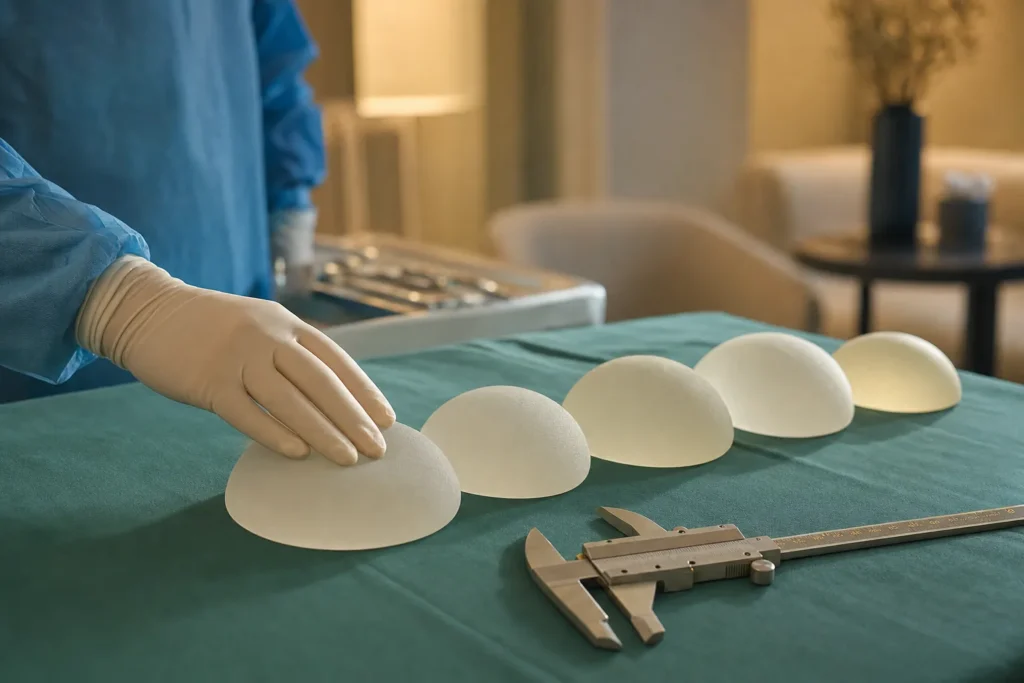
This rebuilds the breast with a silicone or saline (salt-water) implant. It is often done in two stages: first a tissue expander (an adjustable balloon-like device) is placed and slowly filled over weeks to stretch the skin, then it is swapped for the final implant. Sometimes a one-stage "direct-to-implant" approach is possible. Implant surgery is shorter and avoids a second surgical site, but implants are man-made devices that may need replacing or revising over the years.
Flap (autologous) reconstruction - using your own tissue
Here the breast is rebuilt from your own skin, fat, and sometimes muscle taken from another part of the body. This tends to look and feel more natural and ages more like a real breast, but it is a bigger operation with a second healing site (the "donor" area). Common types:
- DIEP flap - uses skin and fat from the lower tummy and spares the muscle; needs microsurgery (joining tiny blood vessels under a microscope).
- TRAM flap - uses lower-tummy tissue and includes some abdominal muscle.
- Latissimus dorsi (LD) flap - uses skin, fat, and muscle from the back, often combined with an implant for extra volume.
- Buttock and thigh flaps (such as SGAP, IGAP, PAP, TUG) - alternatives when there is not enough tummy tissue.
Flaps can be "pedicled" (tissue stays attached to its original blood supply and is tunnelled to the chest) or "free" (tissue is fully detached and reconnected by microsurgery). Free-flap work often needs a surgeon specifically trained in microsurgery.
Timing: immediate or delayed
Immediate reconstruction happens during the same operation as the mastectomy. Delayed reconstruction is done months or years later, once the area has healed and any radiation is finished. Radiation often pushes the decision towards delayed and towards using your own tissue.
How it is done: anaesthesia, the steps, and how long
All forms of breast reconstruction are done under general anaesthesia, meaning you are fully asleep and feel nothing during surgery. You will meet an anaesthetist beforehand to review your health and medicines.
In broad terms:
- You are admitted, marked up by the surgeon while standing, and taken to theatre.
- For implant reconstruction, the surgeon places either a tissue expander or the implant, often supported by a layer of special mesh or matrix, in a pocket on the chest. This typically takes around one to three hours.
- For flap reconstruction, tissue is carefully raised from the donor site, shaped into a breast mound, and (for free flaps) its blood vessels are joined to vessels in the chest under a microscope. This is longer and more delicate, commonly four to eight hours.
- Thin drains (soft tubes that remove fluid) are usually placed, and you wake up in recovery with dressings and a support bra.
Hospital stay is usually one to two nights for implants and often three to seven nights for flap surgery, partly so staff can monitor the blood supply to a flap in the first crucial days. Nipple reconstruction and tattooing, when wanted, are smaller procedures done later, sometimes under local anaesthetic.
Recovery, step by step
Recovery is gradual, and timelines differ a lot between implant and flap surgery and from person to person.
First days
Expect soreness, swelling, tightness, and bruising. You will have pain relief, dressings, and usually drains. Nurses will show you how to care for drains if any go home with you. Flap patients also have a healing donor site (tummy, back, or thigh) to look after.
First weeks
Drains are removed once output drops, often within one to two weeks. Many people feel noticeably better by two to three weeks but are still advised to avoid heavy lifting, vigorous exercise, and reaching high overhead. A supportive bra is usually worn day and night for several weeks as instructed.
Six to eight weeks and beyond
Most people are back to normal daily activities and lighter work around six to eight weeks, though flap recovery is generally slower than implant recovery. Tummy-flap patients may feel tightness when standing fully upright at first. Complete internal healing, final softening, and settling of the shape can take a year or more. Scars fade over many months but never disappear entirely.
Follow-up visits matter: they let the team check healing, plan any touch-up surgery, and continue your cancer follow-up care.
Risks and possible complications
Reconstruction is generally safe in experienced hands, but like any major surgery it carries risks. Knowing them helps you give proper informed consent and spot problems early.
Risks that apply to most types:
- Infection, bleeding, and collections of fluid (seroma) or blood (haematoma);
- Blood clots in the legs or lungs, a particular concern with longer surgery and travel;
- delayed wound healing, especially in smokers and people with diabetes;
- changes in or loss of skin and nipple sensation;
- asymmetry, scarring, and the possible need for revision surgery.
Implant-specific risks include capsular contracture (the scar capsule around an implant tightening and making the breast firm or misshapen), implant rupture, rippling, and the need for future replacement. There is also a rare cancer of the immune system linked to certain textured implants, called breast implant-associated ALCL; discuss implant type with your surgeon.
Flap-specific risks include partial or, rarely, complete flap loss (the transferred tissue not getting enough blood supply), fat necrosis (firm lumps where some fat does not survive), and donor-site problems such as weakness, bulging, or hernia, particularly with muscle-containing flaps. Seek urgent advice for fever, spreading redness, a leaking wound, calf pain or swelling, or breathlessness.
Results and how long they last
A well-done reconstruction can closely match the look of a natural breast under clothing and restore a balanced silhouette. Results keep improving over the first year as swelling settles and scars mature, and minor touch-ups can refine symmetry, nipple position, and contour.
How long results last depends on the method. Own-tissue (flap) reconstructions are living tissue, so they tend to last for life and change naturally with your body, including with weight gain or loss. Implants are devices with a finite lifespan; they do not have a fixed expiry date, but many people will need a revision or replacement at some point over the years if problems such as rupture or capsular contracture develop.
Two honest expectations: a reconstructed breast usually has much less feeling than before, and it will not perfectly match the other side, especially in movement. Importantly, reconstruction does not raise the risk of cancer coming back, and your team will continue regular cancer follow-up. Routine screening mammography is generally not performed on an implant or flap reconstruction; the area is monitored by examination and other imaging as advised.
Costs: what to expect and what changes the price
In Turkey, indicative self-pay prices for breast reconstruction commonly range from roughly EUR 4,000 to EUR 15,000, and complex microsurgical flap reconstruction can sit at or above the top of that band. Simple implant-based reconstruction is at the lower end; multi-stage or free-flap work is at the higher end.
These figures are indicative ranges only - they vary by case, surgeon, hospital and what is included, and they are not a quote. Always ask for a written, itemised quote.
What moves the price:
- Technique - implants are cheaper than flap surgery; free flaps with microsurgery cost more because they take longer and may need two surgeons;
- Number of stages - expander then implant, plus later nipple reconstruction and fat grafting, each add cost;
- Implant type and any mesh or matrix used;
- Hospital stay length and level of care (flap patients stay longer);
- Surgeon and hospital reputation and city;
- Extras such as consultations, scans, medicines, compression garments, and follow-up.
For travelling patients, check whether the quote is a package and what it covers: airport transfers, hotel nights, interpreter, post-op checks, and what happens (and who pays) if a complication needs extra treatment.
Why people travel to Turkiye, and how to choose a safe clinic and surgeon
Turkiye has become a major destination for reconstructive and aesthetic breast surgery because of lower prices, short waiting times, modern private hospitals, and a large number of internationally accredited facilities. Lower cost should never be the only factor; safety and surgeon skill matter most for a result you will live with for years.
Before you book, verify these things yourself:
- Hospital accreditation - look for JCI (Joint Commission International) accreditation and confirm it on the official JCI directory. Make sure the actual hospital where you will be operated on is the accredited one.
- Surgeon board certification - confirm the surgeon is a qualified plastic and reconstructive surgeon, for example through membership of the Turkish Society of Plastic, Reconstructive and Aesthetic Surgeons (TSPRAS) and respected international bodies such as ISAPS.
- Microsurgery experience - if you want a DIEP or other free flap, ask specifically how many the surgeon performs and their flap-success rate.
- Health tourism licensing - clinics treating international patients in Turkiye should hold the Ministry of Health International Health Tourism Authorisation.
- Full hospital setting - major reconstruction should be done in a hospital with intensive monitoring available, not a small day clinic.
Also ask to see before-and-after photos of the surgeon's own patients, read independent reviews, and make sure there is a clear plan for follow-up once you are home.
How to prepare and what to ask at your consultation
Good preparation makes surgery safer and recovery smoother. In the weeks before:
- Stop smoking as early as possible - this is one of the single most important things you can do to reduce wound and flap complications;
- tell the team about all medicines and supplements; some, such as blood thinners, may need adjusting;
- optimise health conditions like diabetes and blood pressure, and aim for a stable weight;
- arrange help at home and time off work, and organise loose front-opening clothing and a supportive bra.
Bring these questions to your consultation:
- Given my anatomy and any radiation, which technique do you recommend, and why?
- Immediate or delayed - what fits my cancer treatment plan?
- How many operations will I likely need in total?
- What are the realistic risks for me, and what is your complication and revision rate?
- What will scars and sensation be like?
- How long is the hospital stay and the full recovery?
- What does the written quote include, and what is the plan if a complication occurs?
- Who manages my follow-up after I return home?
Aftercare and travelling for treatment, including when it is safe to fly
Aftercare is part of the result. Expect to wear a support garment as instructed, care for incisions and any drains, take prescribed pain relief and antibiotics, and gently build up movement while avoiding heavy lifting and strenuous exercise for several weeks. Attend every follow-up so the team can catch problems early and plan touch-ups.
If you are travelling for surgery, flying needs special care because both major surgery and long flights raise the risk of blood clots (deep vein thrombosis, DVT). Clot risk is highest in roughly the first one to two weeks after surgery and stays raised for some weeks. General guidance is to avoid long-haul flights for several weeks; many surgeons advise waiting longer for longer flights and only flying once a post-op check shows no infection, bleeding, or unusual swelling.
Practical steps to lower clot risk when you do fly:
- get medical clearance from your surgeon for your specific case before booking return travel;
- plan to stay in Turkiye long enough for at least one post-op review (flap patients should plan a longer stay);
- wear compression stockings, keep well hydrated, walk the aisle and do calf exercises every hour, and avoid alcohol.
Finally, make sure you have written discharge instructions, a contact for urgent questions, and a named doctor at home who can continue your care and cancer follow-up. The safest medical trip is the one planned around recovery, not just the surgery date.
Frequently asked questions
Is breast reconstruction necessary after a mastectomy?
What is the difference between implant and flap reconstruction?
Should I have reconstruction at the same time as my mastectomy or later?
Will my reconstructed breast have normal feeling?
How long does recovery take?
How long do the results last?
How much does breast reconstruction cost in Turkey?
How do I check that a Turkish hospital and surgeon are safe?
When is it safe to fly after breast reconstruction?
Will reconstruction make it harder to detect cancer coming back?
Does smoking affect breast reconstruction?
Can the nipple be rebuilt too?
This article is for general information only and is not medical advice. Always consult a qualified doctor about your individual case.
Considering this procedure?
Send us your photos and questions. A BergemHealth coordinator and a department-head specialist will review your case and reply with honest, personalised guidance — no obligation.
Free consultation