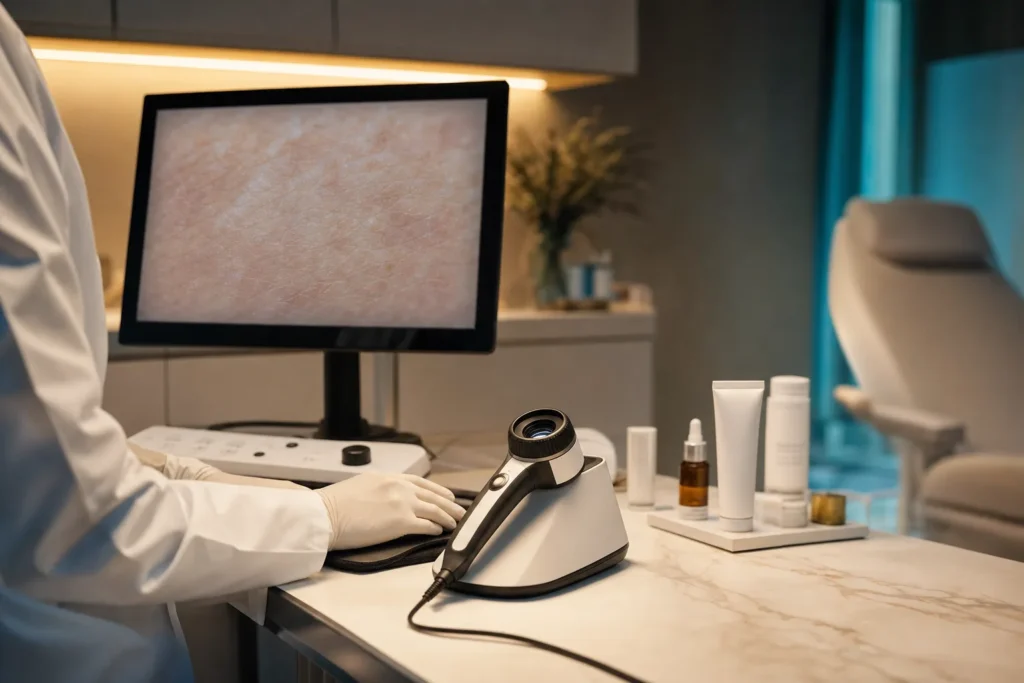
Atopic dermatitis (eczema)
Atopic dermatitis, the most common form of eczema, makes skin dry, itchy, and inflamed, often in a cycle of flare-ups and calmer periods. It is not contagious, it is very common, and although there is no cure, modern treatment can control it well for most people. This guide explains what it is, why it happens, how doctors diagnose and treat it, how to live with it day to day, and what to consider if you are thinking about seeing a dermatology team abroad.
What atopic dermatitis (eczema) is
Atopic dermatitis is a long-term (chronic) skin condition that makes the skin dry, itchy, and inflamed. It is the most common type of eczema, which is a general word for several conditions that cause irritated, itchy skin. The word atopic refers to a tendency to develop allergy-related conditions, such as asthma and hay fever, which often run in the same families.
The condition usually appears in childhood, frequently between about 2 months and 5 years of age, but it can begin at any age. It tends to come and go: there are flare-ups, when the skin becomes more inflamed and itchy, and quieter periods when the skin settles down. Common spots include the insides of the elbows, the backs of the knees, the hands, the neck, and, in babies, the face and scalp.
Two points are worth saying plainly and early. First, atopic eczema is not contagious — you cannot catch it from someone else or pass it on by touch. Second, while it cannot currently be cured, treatment can manage the symptoms well, and many children find it improves a great deal, or clears, as they grow up. For some people it continues into adult life, and that is also normal and manageable.
Types and how eczema is grouped
Atopic dermatitis is one member of a larger family of conditions often called eczema or dermatitis. Knowing the difference helps because the treatments can overlap but are not identical. Other common types include:
- Contact dermatitis — skin reacting to something it touches, either an irritant (such as a harsh soap) or an allergen (such as nickel in jewellery).
- Dyshidrotic eczema — small, intensely itchy blisters, usually on the hands and feet.
- Seborrhoeic dermatitis — scaly, sometimes greasy patches on the scalp, face, and chest (cradle cap in babies is a form of this).
- Nummular (discoid) eczema — coin-shaped patches, often on the limbs.
Atopic dermatitis itself is usually described by how severe it is rather than by fixed subtypes. Doctors may call it mild, moderate, or severe, based on how much skin is involved, how intense the itch is, and how much it affects sleep and daily life. The pattern also changes with age: babies tend to have it on the face and the outer parts of the limbs, older children behind the knees and inside the elbows (the skin creases), and adults often on the hands, eyelids, and skin folds.
Causes and risk factors
There is no single cause. Most experts describe atopic dermatitis as the result of genes and the environment acting together. Three threads are involved:
- A weakened skin barrier. The outer layer of skin normally works like a brick wall that keeps moisture in and irritants out. In atopic dermatitis this barrier does not seal as well, so the skin loses water and dries out, and irritants and allergens get in more easily. Changes in genes that control skin proteins — one well-known example is a protein called filaggrin — can make the barrier weaker.
- An overactive immune response. The immune system tends to react too strongly, producing inflammation in the skin even when there is no real danger.
- Environmental triggers. These do not cause the condition but can set off flare-ups.
Common triggers reported by patients and clinicians include soaps and detergents, fragrances, certain fabrics such as wool, house dust mites, pollen, pet dander, tobacco smoke and air pollution, sweat and heat, very dry or cold air, stress, and sometimes specific foods in younger children. Triggers vary a lot from person to person, which is why part of management is learning your own.
Risk factors include a personal or family history of eczema, asthma, or hay fever; starting in early childhood; and living in a drier or more polluted environment. Some studies note it is more common in certain groups, including non-Hispanic Black children, and slightly more common in girls and women. Having atopic dermatitis is not your fault and is not caused by poor hygiene.
Signs and symptoms — and when to see a doctor
The leading symptom is itch, which can be intense and is often worse at night. Scratching brings short-lived relief but tends to make the skin more inflamed, which makes it itch more — a frustrating loop sometimes called the itch–scratch cycle.
Other common signs include:
- Dry, cracked, or scaly skin.
- Rashes that may look red or pink on lighter skin, and brown, purple, grey, or ashen on darker skin — colour changes can be easy to miss on darker skin, so look for dryness, bumps, and changes in skin texture too.
- Small raised bumps, oozing, or crusting, especially after scratching.
- Thickened, leathery skin (called lichenification) in areas scratched over a long time.
- Skin that feels sensitive, sore, or swollen during flares.
It is sensible to see a doctor or pharmacist if the rash is uncomfortable and not settling with simple moisturising, if it is affecting sleep or daily life, or if you are unsure what it is. Seek prompt medical advice if the skin becomes infected — signs include increasing pain, warmth, swelling, weeping yellow fluid or pus, golden crusts, or feeling generally unwell with a fever. A rapidly spreading, painful rash with blisters can occasionally be a more serious infection (for example with the cold sore virus) and should be assessed urgently.
Screening and early detection
There is no routine population screening test for atopic dermatitis, and none is needed. It is not a hidden condition that requires a scan or blood test to find — it shows itself on the skin, and it is recognised by its appearance, where it appears, and the history of itch and flare-ups.
What matters instead is early recognition and good early care. Treating dryness and inflammation promptly, and starting a regular moisturising routine, can reduce the number and severity of flare-ups and help protect the skin barrier. In families with a strong history of eczema, asthma, or hay fever, parents are often more alert to the first signs in a baby's skin, which can help care begin sooner.
If symptoms are present, the right step is not screening but assessment by a doctor, who will confirm the diagnosis and check for anything else that could look similar. For people with possible food or contact triggers, targeted allergy testing may be arranged — but this is investigation of a known problem, not screening of healthy skin.
How it is diagnosed
Atopic dermatitis is usually a clinical diagnosis, which means a doctor can identify it by examining the skin and asking about your history, without needing complex tests. Clinicians often look for a combination of features such as an itchy skin condition, involvement of the skin creases (or the cheeks in babies), a history of generally dry skin, a personal or family history of asthma or hay fever, and onset in early childhood.
Your doctor will typically ask about when it started, where it appears, what seems to trigger flares, how it affects sleep and daily life, and what treatments you have already tried. The skin is examined to assess the pattern, severity, and any signs of infection.
Extra tests are used selectively, not routinely:
- Patch testing — small amounts of common allergens are applied to the skin (usually the back) for a couple of days to check for contact allergy, useful when contact dermatitis is suspected alongside or instead of atopic eczema.
- Allergy (blood or skin-prick) testing — sometimes considered, particularly in children where a food trigger is suspected, though results must be interpreted carefully because a positive test does not always mean the food causes the eczema.
- Skin swabs — taken if infection is suspected, to guide treatment.
Severity is described in plain terms (mild, moderate, severe) and sometimes with standard scoring tools, which helps the team choose treatment and track progress over time.
Treatment options
The goal of treatment is to calm inflammation, relieve itch, repair and protect the skin barrier, reduce flare-ups, and improve quality of life. Care is usually built up in steps, from gentle everyday measures to stronger treatments for more severe disease. A dermatologist (skin specialist) often leads care for moderate or severe cases, working with general practitioners, specialist nurses, allergists, and sometimes paediatricians, pharmacists, and psychologists — a multidisciplinary team.
Everyday foundation care
- Emollients (moisturisers) — creams, lotions, ointments, and gels applied generously and often (commonly at least twice a day, and more during flares), including washing with soap-free cleansers. These are the cornerstone of treatment and should continue even when the skin looks clear.
- Trigger avoidance — reducing contact with your personal irritants and allergens.
Anti-inflammatory treatments applied to the skin
- Topical corticosteroids — steroid creams and ointments used on inflamed areas during flares. They come in different strengths, and a doctor matches the strength to the body area and severity, using them for limited periods as directed.
- Topical calcineurin inhibitors (such as tacrolimus and pimecrolimus) — non-steroid creams useful for sensitive areas like the face and eyelids, or as an alternative to steroids.
- Newer topical agents — additional non-steroid creams are available in some countries for mild to moderate disease.
Treatments for more severe or stubborn eczema
- Phototherapy — controlled ultraviolet light treatment given in a clinic.
- Biologic medicines — for example dupilumab, an injection that targets specific parts of the immune response (the IL-4 and IL-13 signalling pathways) involved in atopic dermatitis; used for moderate to severe disease.
- Oral JAK inhibitors — newer tablets that dampen immune signalling, used in some patients with moderate to severe disease, with monitoring.
- Other systemic medicines and short courses of steroid tablets — sometimes used for severe flares, under specialist supervision.
Supportive care includes treating infections promptly, managing itch and sleep, wet-wrap dressings in some cases, and support for the emotional impact of a visible, itchy condition. Always follow a clinician's instructions on which products to use and for how long.
Outlook — what to expect
Atopic dermatitis is generally a condition that can be controlled rather than cured, and the outlook is reassuring for most people. According to national health authorities, it often begins in childhood and improves with age: many children find it gets much better, or clears, by the teenage years. For some, it continues into adulthood or returns later, and a smaller number have more persistent or severe disease that needs ongoing specialist care.
The natural course is one of ups and downs — flares followed by calmer spells — rather than a steady line. Good daily skin care and prompt treatment of flares can make a real difference to how often and how badly symptoms appear. Because eczema is part of the wider "atopic" picture, some people also develop asthma or hay fever, which is why a doctor may ask about these.
It is important to understand that the general patterns above describe groups of people, not a prediction for you or your child. Everyone's experience is different, and a qualified dermatologist who knows your history is the best person to give you a realistic picture of what to expect and the most useful plan to keep your skin comfortable.
Living with it and follow-up
Living well with atopic dermatitis is largely about steady routines and a few practical habits that protect the skin between appointments:
- Moisturise consistently, not just during flares. Keep emollients handy and reapply through the day.
- Bathe gently — use lukewarm (not hot) water, fragrance-free cleansers, and pat the skin dry, then moisturise soon after.
- Reduce scratching — keep nails short, consider soft cotton clothing, and treat itch promptly to break the itch–scratch cycle. Cool environments can help.
- Learn your triggers — keeping a simple diary of flares can reveal patterns (a particular soap, fabric, season, or stressful period).
- Mind the emotional side — itch, poor sleep, and visible skin changes can affect mood, confidence, and concentration. This is common and worth raising with your care team.
Follow-up usually involves reviewing how well treatment is working, adjusting it as the skin changes, checking technique (for example how emollients and steroid creams are applied), and monitoring for side effects of stronger medicines. People on biologics or JAK inhibitors are followed more closely. Bringing a list of your current products, triggers, and questions to each review makes appointments more productive.
Planning treatment abroad: what affects cost and how to prepare your records
Atopic dermatitis is a medical condition managed mostly with consultations, prescribed creams, and — for more severe cases — specialist treatments, rather than a single fixed-price operation. If you are considering dermatology care abroad, the overall cost depends on several factors rather than one number:
- Severity and treatment type — a consultation and a basic moisturiser-and-steroid plan is very different from ongoing phototherapy, biologic injections, or JAK inhibitor tablets, which involve more visits and monitoring.
- Tests required — patch testing, allergy testing, or skin swabs add to the workup when needed.
- Number and length of visits — chronic conditions usually need review appointments, not a one-off.
- Medicines and monitoring — some advanced treatments need regular blood tests and follow-up.
- Hospital or clinic and specialist seniority, and any translation or coordination services.
To prepare, gather your records before you travel: a list of treatments you have already tried and how they worked, any allergy or patch-test results, recent photographs of flares, a current medication list, and notes on your triggers and how the condition affects your sleep and daily life. Clear records help the dermatology team avoid repeating tests and tailor a plan faster. Because the right plan — and therefore the cost — depends entirely on your individual situation, the most reliable way to understand what your care would involve is to request a personalised estimate through a free consultation, where the team can review your history first.
Why Turkiye, and how to choose a good centre
Turkiye (Turkey) has become a well-known destination for international patients seeking specialist care, with many private hospitals offering modern dermatology departments, English- and other-language support, and coordinated services for visitors. As with anywhere, quality varies between centres, so it is worth checking a few things rather than choosing on price or marketing alone.
When comparing centres, consider verifying:
- Accreditation — recognised quality standards such as Joint Commission International (JCI) accreditation, and the country's own Ministry of Health licensing for international health tourism.
- The specialist team — that care is led by a qualified, board-certified dermatologist, ideally with experience in moderate-to-severe atopic dermatitis and access to the full range of treatments (topical, phototherapy, biologics, and systemic options).
- Access to a multidisciplinary team — allergists, paediatric dermatology for children, and specialist nurses where relevant.
- Continuity of care — how follow-up, prescriptions, and monitoring will work after you return home, since eczema is a long-term condition.
- Clear, written information — a transparent plan, costs explained in advance, and honest, non-exaggerated communication. Be cautious of anyone promising a guaranteed "cure."
Ask plenty of questions before committing, and make sure you understand who to contact if you have a flare or a side effect after treatment. A good centre will welcome these questions.
Prevention and self-care
Atopic dermatitis cannot always be prevented, especially when it runs strongly in a family, but day-to-day self-care can reduce how often and how badly it flares. The most useful habits are simple and consistent:
- Keep skin moisturised every day with fragrance-free emollients — this supports the skin barrier, which is the heart of the problem.
- Use gentle, soap-free cleansers and avoid harsh soaps, bubble baths, and strongly fragranced products.
- Avoid your known triggers where you can, whether that is a fabric, a detergent, dust, heat, or sweat.
- Manage temperature and humidity — overheating and very dry air can both aggravate skin.
- Treat flares early rather than waiting, and follow your prescribed plan fully.
- Look after stress and sleep, which can influence flares for many people.
- Protect against infection — keep nails short and seek advice early if skin looks infected.
If over-the-counter moisturisers and gentle care are not enough, or if eczema is affecting your sleep, mood, work, or a child's wellbeing, see a doctor or dermatologist. Asking for a second opinion is reasonable and common, especially before starting long-term medicines — a good clinician will support you in understanding all your options.
Frequently asked questions
Is atopic dermatitis (eczema) contagious?
Can atopic dermatitis be cured?
What is the difference between eczema and atopic dermatitis?
What triggers eczema flare-ups?
How do doctors diagnose atopic dermatitis?
What are the main treatments for eczema?
Will my child grow out of eczema?
When should I see a doctor about eczema?
Is it safe to use steroid creams for eczema?
How much does eczema treatment abroad cost?
Does diet cause eczema?
Sources
This article is for general information only and is not medical advice. Always consult a qualified doctor about your individual case.
Specialists in Dermatology
Doctors of the department we work with directly. Which doctor takes your case is decided after the specialists have reviewed your records — your coordinator confirms it, not this page.



Considering this procedure?
Send us your photos and questions. A BergemHealth coordinator and a senior specialist will review your case and reply with honest, personalised guidance — no obligation.
Free consultation