Vitiligo
Vitiligo is a common, long-term skin condition in which patches of skin lose their natural colour and turn pale or white. It is not painful, not contagious, and not dangerous to your physical health, but for many people it affects confidence and emotional wellbeing. This guide explains, in plain language, what vitiligo is, why it happens, how doctors diagnose it, and the treatment and support options available today, including practical advice if you are considering care abroad.
What vitiligo is
Vitiligo (pronounced vit-il-EYE-go) is a long-term skin condition in which areas of skin lose their colour and become pale or white. These lighter areas are sometimes called macules (if small) or patches (if larger). The colour loss happens because the cells that give skin its colour stop working or are destroyed.
Your skin colour comes from a natural pigment called melanin, which is made by special cells called melanocytes. In vitiligo, these melanocytes are lost or stop producing melanin, so the affected skin no longer has its usual colour. Hair growing in an affected patch can also turn white or grey.
It is important to understand a few reassuring facts at the start. Vitiligo is not contagious, you cannot catch it or pass it on through touch. It is not a form of skin cancer, and according to the American Academy of Dermatology it does not increase your risk of skin cancer. It is not painful in itself. Vitiligo is also fairly common, affecting roughly 0.5 to 1% of people worldwide, across all skin tones and all genders. It tends to be more noticeable on darker or tanned skin simply because of the greater contrast.
People often search for terms like "vitiligo symptoms" or "vitiligo treatment" because the condition is visible and many want to understand what is happening and what can be done. The honest answer is that vitiligo cannot currently be cured, but there are real, evidence-based treatments that can restore colour for many people and help slow its spread, alongside support for the emotional side.
Types and subtypes
Doctors usually divide vitiligo into a few main types, based on where the patches appear and how they behave. Knowing the type helps guide treatment and gives a rough idea of how it may progress.
Non-segmental vitiligo (also called generalised vitiligo) is by far the most common form, making up around 90% of cases. The patches usually appear on both sides of the body in a roughly symmetrical pattern, for example on both hands, both knees, or both sides of the face. Common areas include the backs of the hands, the face (especially around the eyes and mouth), arms, knees, elbows, and feet. This type often develops slowly over years and may flare and stabilise at different times.
Segmental vitiligo is less common overall but more frequent in children. It affects only one part or one side of the body, such as one arm or one side of the face. It tends to start earlier, spread for a period of roughly 6 to 12 months, and then often becomes stable and stops expanding. Segmental vitiligo is thought to respond particularly well to certain surgical (transplant) techniques once it is stable.
Other ways the condition is described include focal (one or a few small patches that do not follow a clear pattern), mucosal (affecting the lips and the moist linings of the mouth or genitals), and universal (a rare form where most of the skin loses pigment). You may also hear the term mixed vitiligo, where features of both segmental and non-segmental types occur together.
Causes and risk factors
Researchers do not yet fully understand exactly why vitiligo develops, but the most widely accepted explanation is that it is an autoimmune condition. "Autoimmune" means the body's own defence system, which normally fights infections, mistakenly attacks healthy tissue, in this case the melanocytes that make skin pigment. When these cells are damaged or destroyed, colour is lost.
Genetics play a role too. Vitiligo can run in families, and about one in five people with vitiligo has a close relative who also has it. Scientists have identified more than 30 different genes that, in various combinations, can make a person more likely to develop the condition. Having these genes does not guarantee you will get vitiligo, it simply raises the likelihood.
Several things may act as triggers in people who are already prone to it. Reported triggers include significant emotional or physical stress, sunburn, skin injury or friction, and exposure to certain industrial chemicals. Vitiligo is also linked with other autoimmune conditions: around 15 to 25% of people with vitiligo have at least one other autoimmune disorder, most commonly thyroid disease. Others include type 1 diabetes, pernicious anaemia, Addison's disease, rheumatoid arthritis, psoriasis, and lupus.
It is worth being clear about what does not cause vitiligo. It is not caused by diet, by poor hygiene, or by anything you did wrong, and it cannot be passed from person to person.
Signs and symptoms (and when to see a doctor)
The main sign of vitiligo is one or more patches of skin that become lighter than your usual colour or turn completely white. The patches often have a fairly clear border, which may be smooth, irregular, or sometimes slightly red or darker than the surrounding skin.
Common features include:
- Pale or white patches that may start small and stay the same for a long time, or gradually grow and spread.
- Patches appearing first in areas exposed to the sun, such as the face, hands, arms, and feet, or in skin folds like the armpits and groin.
- Hair on the scalp, eyebrows, eyelashes, or beard turning white or grey early.
- Loss of colour in the moist lining of the mouth or nose, or around the eyes.
- Occasionally, mild itching in an area before it loses colour.
Because affected skin has little or no melanin, it offers less natural protection from the sun and can burn more easily, so sun protection becomes especially important.
You should see a doctor or dermatologist (a skin specialist) if you notice areas of skin, hair, or the lining of your mouth or nose losing colour. A specialist can confirm whether it is vitiligo or another condition and discuss your options early, which can matter because some treatments work better when started sooner. Seek prompt advice if patches are spreading quickly, and consider speaking to your doctor if the condition is affecting your mood, confidence, or daily life, support is available and valid.
Screening and early detection
There is no routine population screening test for vitiligo, in the way there are organised screening programmes for some cancers. Vitiligo is usually noticed by the person themselves or spotted during an ordinary medical appointment, because the change in skin colour is visible.
What specialists do recommend is paying attention to new or changing pale patches and seeking advice early rather than waiting. Early assessment has two benefits. First, it allows the diagnosis to be confirmed and other conditions to be ruled out. Second, treatments aimed at restoring colour often respond better when patches are newer and when the condition is treated before it becomes widespread.
Because vitiligo is associated with other autoimmune conditions, particularly thyroid disease, doctors may suggest blood tests to check for these even if you feel well. This is not screening for vitiligo itself, but a sensible check for related conditions that can be easily treated if found. If you have a family history of vitiligo or autoimmune disease, it is reasonable to mention this to your doctor so they can keep it in mind.
How it is diagnosed
In most cases, a doctor or dermatologist can diagnose vitiligo simply by examining your skin and asking about your history, when the patches appeared, whether they are spreading, any family history, and any other health conditions you have.
To help confirm the diagnosis, a specialist often uses a Wood's lamp. This is a handheld device that shines a particular type of ultraviolet (UV) light onto the skin in a darkened room. Under this light, areas of vitiligo stand out clearly, which helps distinguish it from other conditions that also cause pale patches. The examination is quick and painless.
Sometimes additional tests are arranged. Blood tests may be done to look for associated autoimmune conditions, especially thyroid problems, and to check overall health. Less commonly, a small skin biopsy (taking a tiny sample of skin to look at under a microscope) may be used if the diagnosis is unclear, to confirm that melanocytes are absent. Unlike many cancers, vitiligo is not "staged", instead, doctors describe it by type, by how much of the body is involved, and by whether it is currently stable or actively spreading, as this guides treatment choices.
Treatment options
Treatment for vitiligo is a personal choice. The condition is not harmful to physical health, so some people choose not to treat it at all, while others want to restore colour or even out their appearance for their own comfort and confidence. There is no single "right" decision, and good care is best planned with a dermatologist who can tailor the approach to your type of vitiligo, the areas affected, and your goals. Often a multidisciplinary team is involved, including dermatologists, nurses, and, where helpful, psychological support.
Topical (applied to the skin) medicines are often the first step:
- Corticosteroid creams can help restore colour in some patches, but they are used for limited periods because long-term use can thin the skin or cause stretch marks.
- Calcineurin inhibitors (such as tacrolimus and pimecrolimus) are creams that calm the immune attack and are often used on the face and neck, where they tend to work well and can be used for longer than steroids.
- Ruxolitinib cream is a newer treatment in a group called JAK inhibitors, approved in some countries for people aged 12 and over. In studies cited by the American Academy of Dermatology, about 30% of patients regained 75% of their skin colour in treated areas by 24 weeks, and about 15% regained 90%, showing meaningful but variable results that build slowly.
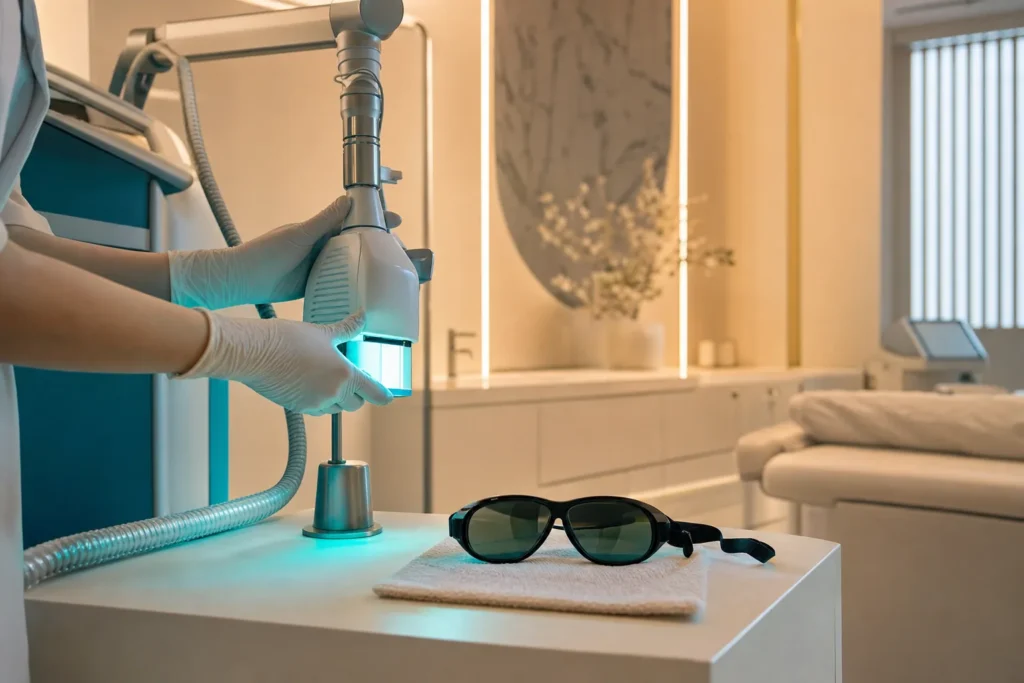
Light therapy (phototherapy) uses controlled UV light, often narrowband UVB, sometimes combined with medication (PUVA) or delivered by laser. It can encourage colour to return and is generally most effective on the face and neck, while fingertips and toes respond least well. It usually requires repeated sessions over months.
Surgical options may be considered for stable vitiligo (patches that have not changed for some time), especially segmental vitiligo. These involve moving healthy pigment-producing skin or cells to the affected area, for example skin grafts, blister grafting, or cellular (melanocyte) transplant techniques. Results vary, and most of the new colour from transplanted cells appears within about six months.
Depigmentation is a different approach used rarely, when vitiligo is very widespread, the remaining normal skin colour is gradually lightened to match the white areas for a more even appearance. This is a major, usually permanent decision made carefully with a specialist.
Supportive options include skin camouflage (specialised cosmetics), self-tanning products, and, importantly, sun protection to prevent burning and reduce contrast. Counselling or peer support can be a valuable part of treatment given the emotional impact.
Outlook: what to expect
Vitiligo behaves differently from person to person, which makes it hard to predict precisely. Some people have a few patches that stay stable for years. In others, patches gradually spread, and new ones appear in different places. As the American Academy of Dermatology notes, there is currently no way to know for certain whether existing patches will grow or new ones will form.
The realistic picture on colour return is mixed but genuinely hopeful for many. According to the Cleveland Clinic, roughly 10 to 20% of people fully regain their skin colour, and this is more likely in those who develop vitiligo before the age of 20, whose condition spread quickly at first, and who have patches mainly on the face. Repigmentation tends to be less complete for patches on the lips, hands, and feet, and for those whose vitiligo began later in life. Even when full colour return is not achieved, partial improvement is common with treatment.
These figures describe groups of people, not any single individual, and they are not a prediction for you personally. Your own outlook depends on the type of vitiligo, where it is, how long it has been present, and how it responds to treatment, all of which a dermatologist can discuss with you. It is also worth remembering that vitiligo does not damage your general health, and many people live full, active lives, whether or not they choose treatment.
Living with vitiligo and follow-up
Living well with vitiligo is partly practical and partly emotional. On the practical side, sun protection matters a great deal, because skin without pigment burns more easily and sunburn can also trigger new patches. Using a high-factor broad-spectrum sunscreen, covering up in strong sun, and seeking shade all help. Sun protection also reduces the contrast between affected and unaffected skin by limiting tanning of the surrounding areas.
Many people find skin camouflage products, self-tanners, or simple cosmetic coverage useful for areas they prefer to disguise, and these can be a confidence boost without any medical risk. If you use treatments such as creams or phototherapy, follow-up appointments allow your dermatologist to check progress, adjust the plan, and watch for any side effects.
The emotional side deserves equal attention. Because vitiligo is visible, it can affect self-esteem, mood, and social confidence, and some people experience anxiety or low mood. This is a normal and valid response, not a weakness. Talking to your doctor, connecting with patient support groups, or speaking with a counsellor can all help. Because vitiligo is linked to other autoimmune conditions, especially thyroid disease, your doctor may also keep an eye on these over time and arrange occasional blood tests.
Planning treatment abroad: what affects cost and how to prepare your records
Some people choose to seek vitiligo care abroad, for example in Turkiye (Turkey), to access dermatology specialists, phototherapy, or surgical (transplant) techniques. If you are considering this, it helps to understand what shapes the overall cost and how to prepare, so you can request an accurate, personalised estimate rather than relying on generic figures.
The main factors that affect the cost of vitiligo care include:
- The treatment approach. Creams, phototherapy courses, and surgical transplant procedures differ greatly in what they involve. Vitiligo treatment is usually a course over time rather than a one-off, so the number of sessions matters.
- How much skin is involved and where. Larger or multiple areas, and harder-to-treat sites, may need more sessions or more complex procedures.
- The type of vitiligo and whether it is stable, which determines whether surgical options are even suitable.
- Consultations, diagnostic tests, and follow-up, such as Wood's lamp examination, blood tests, and review appointments.
- Travel and stay, including length of stay needed for a treatment course and any return visits.
To prepare your records, gather a clear written summary of when your vitiligo started and how it has changed, any previous treatments and how they worked, recent photographs of the affected areas, a list of your other medical conditions and medications, and any recent blood test results (for example thyroid tests). Sharing these in advance lets a specialist assess whether a treatment is appropriate and give you a realistic, individualised plan. Because every case differs, the most reliable way to understand cost is to request a personalised estimate through a free consultation rather than assuming a fixed price.
Why Turkiye, and how to choose a good centre
Turkiye has become a well-known destination for medical travel, including dermatology, with many internationally experienced specialists and clinics that are used to caring for patients from abroad. As with anywhere, the quality of individual centres varies, so the goal is to choose carefully and verify the things that matter, rather than relying on reputation alone.
When assessing a centre for vitiligo care, it is sensible to check:
- Accreditation and licensing. Look for recognised national licensing and, where available, international accreditation of the facility.
- A qualified specialist team. Confirm that care is led by a board-certified dermatologist with specific experience in vitiligo, and ask who will perform any procedure.
- A proper diagnostic process. A good centre will assess your type of vitiligo and whether it is stable before recommending treatment, not offer a one-size-fits-all package.
- Realistic, honest expectations. Be cautious of anyone promising a guaranteed cure or complete colour return, vitiligo cannot currently be cured, and results vary.
- Clear follow-up arrangements, including what happens after you return home, since vitiligo treatment is usually ongoing.
A trustworthy concierge or clinic will be happy to answer these questions, share specialist credentials, and explain the plan in writing. Taking the time to verify these points helps you make a calm, informed decision.
Self-care, support, and getting a second opinion
While vitiligo cannot be prevented or cured, there is a lot you can do to look after your skin and wellbeing. Daily sun protection is the single most useful habit: it guards skin that lacks pigment from burning and may reduce the chance of new patches triggered by sunburn. Avoiding skin trauma where possible, treating cuts and grazes promptly, and being gentle with your skin can also help.
For appearance, camouflage cosmetics and self-tanners are safe, simple tools that many people find empowering. Looking after the emotional side is just as important as the skin itself, support groups (in person or online), counselling, and open conversations with people you trust can make a real difference. If low mood or anxiety persist, your doctor can help.
Finally, you are entitled to a second opinion. Vitiligo treatment is evolving, with newer options such as JAK inhibitor creams now available in some countries, so if you are unsure about a recommendation or want to explore other approaches, asking another qualified dermatologist is completely reasonable and often reassuring. Whatever you decide, including choosing not to treat, the right path is the one that fits your health, your goals, and your peace of mind, made together with a specialist you trust.
Frequently asked questions
Is vitiligo contagious?
Can vitiligo be cured?
What causes vitiligo?
Does vitiligo spread, and how fast?
Is vitiligo dangerous or linked to skin cancer?
What is the most effective treatment for vitiligo?
How is vitiligo diagnosed?
Will my skin colour come back?
Is there any screening test for vitiligo?
What should I prepare before a consultation about treatment abroad?
Does vitiligo affect mental health?
This article is for general information only and is not medical advice. Always consult a qualified doctor about your individual case.
Considering this procedure?
Send us your photos and questions. A BergemHealth coordinator and a department-head specialist will review your case and reply with honest, personalised guidance — no obligation.
Free consultation