Crohn's disease
Crohn's disease is a long-term condition in which part of the digestive tract becomes inflamed. It can feel overwhelming at first, but with the right treatment and support most people manage it well and live full, active lives. This plain-language guide explains what Crohn's disease is, how it is diagnosed and treated, and what to think about if you are considering care abroad.
What Crohn's disease is
Crohn's disease is a long-term (chronic) condition in which part of your digestive tract becomes swollen and irritated. Doctors call this swelling inflammation. The digestive tract is the long tube that runs from your mouth to your bottom and breaks down the food you eat. In Crohn's disease, the body's immune system (the natural defence system that normally fights infection) mistakenly causes inflammation in the gut wall.
Crohn's disease belongs to a group of conditions called inflammatory bowel disease (IBD). The other main type of IBD is ulcerative colitis. They are different conditions, although they share some features. A key difference is that Crohn's disease can affect any part of the digestive tract, from the mouth to the anus, while ulcerative colitis affects only the large intestine.
There is currently no cure for Crohn's disease, but this does not mean it cannot be controlled. Treatment can calm the inflammation, ease symptoms, and help many people stay well for long periods. According to Cleveland Clinic, life expectancy for people with Crohn's disease is generally normal, and most people are able to lead active lives with the right care.
Crohn's disease often comes and goes. Periods when symptoms are active are called flare-ups (or flares), and periods when symptoms ease or disappear are called remission. The condition affects everyone differently, which is one reason it can take time to understand and manage.
Types and subtypes
Crohn's disease is usually grouped by which part of the digestive tract it affects. Knowing the location helps your medical team choose the right treatment and predict which symptoms you are likely to have. Cleveland Clinic describes five main types:
- Ileocolitis - the most common type. It affects the end of the small intestine (the ileum) and the large intestine (the colon).
- Ileitis - affects only the end of the small intestine (the ileum).
- Crohn's colitis - affects only the large intestine (the colon).
- Gastroduodenal Crohn's disease - affects the stomach and the first part of the small intestine (the duodenum).
- Jejunoileitis - causes patchy inflammation in the upper half of the small intestine (the jejunum).
A feature of Crohn's disease is that the inflammation is often patchy, with healthy areas of gut in between inflamed ones. It can also affect the full thickness of the bowel wall. This is different from ulcerative colitis, where the inflammation is usually continuous and limited to the inner lining of the colon.
Doctors may also describe Crohn's disease by how it behaves over time - for example, whether it mainly causes inflammation, narrowing of the bowel (strictures), or tunnels between organs (fistulas). These patterns can change, which is why long-term follow-up matters.
Causes and risk factors
The exact cause of Crohn's disease is not fully understood. Most experts believe it develops from a combination of factors rather than a single cause. According to the U.S. National Institute of Diabetes and Digestive and Kidney Diseases (NIDDK), three things are thought to play a role together:
- The immune system - in Crohn's disease, the immune system appears to overreact, causing inflammation in the gut. Cleveland Clinic describes this as the immune system reacting in a way that harms healthy tissue.
- Genes - the condition can run in families, so having a close relative with Crohn's disease raises your chance of developing it.
- The gut microbiome - the natural community of bacteria and other microbes in the gut may be involved.
Several things are linked to a higher risk, though having them does not mean you will get Crohn's disease:
- Age - it most often starts between the teens and the thirties, although it can begin at any age.
- Family history of Crohn's disease.
- Smoking - the NHS and MedlinePlus list smoking as a risk factor, and MedlinePlus notes it may roughly double the risk. Smoking can also make the disease harder to control.
- Ancestry - it is more common in people of Northern European ancestry.
- Certain medicines - such as non-steroidal anti-inflammatory drugs (NSAIDs, a common type of painkiller).
It is worth being clear about what does not cause Crohn's disease. MedlinePlus states that stress and certain foods may make symptoms worse, but they do not cause the disease. You did not bring this on yourself.
Signs and symptoms (and when to see a doctor)
Symptoms vary a lot from person to person and depend on which part of the gut is affected. They often come and go in flares. Common symptoms described by the NHS, Cleveland Clinic, and MedlinePlus include:
- Diarrhoea, sometimes lasting weeks
- Stomach (abdominal) pain and cramping
- Blood or mucus in your stool (poo)
- Extreme tiredness (fatigue)
- Losing weight without trying
- Loss of appetite
- Fever
- Mouth sores
Crohn's disease can also cause symptoms outside the gut, because the inflammation can affect other parts of the body. These can include joint pain, sore or red eyes, skin changes, and anaemia (a low level of red blood cells, which can cause tiredness and breathlessness).
In children, Crohn's disease may also slow growth and delay development, because the body struggles to absorb enough nutrients.
When to see a doctor
See a doctor if you have persistent changes in your bowel habits, ongoing stomach pain, blood in your stool, unexplained weight loss, or you keep feeling unusually tired. These symptoms can have many causes, but they should always be checked. Getting assessed early can help avoid complications and start you on the right treatment sooner.
Screening and early detection
There is no routine population screening test that finds Crohn's disease before symptoms appear. Unlike, for example, bowel cancer screening, there is no national programme that tests healthy people for Crohn's disease. Diagnosis usually begins when someone notices symptoms and sees a doctor.
What does exist is surveillance for complications once you already have a diagnosis. The most important example is monitoring for bowel cancer. The NHS explains that long-standing inflammation in the bowel can slightly increase the risk of bowel cancer over time, and that people considered to be at higher risk may be offered regular colonoscopies (a camera test that looks inside the bowel) to check for early changes.
If you have a close family member with Crohn's disease and you develop suspicious symptoms, it is reasonable to mention the family history to your doctor, as it may prompt earlier investigation. But for people without symptoms, there is no standard test recommended simply because of family history.
How it is diagnosed
There is no single test that confirms Crohn's disease. As the NHS and NIDDK explain, doctors use a combination of tests, alongside your medical and family history and a physical examination, to make the diagnosis and rule out other conditions. The process can take time, partly because symptoms vary and overlap with other gut problems.
Tests your doctor may arrange include:
- Blood tests - to look for signs of inflammation and anaemia.
- Stool tests - a sample of poo is checked for signs of inflammation and to rule out infections. A marker called faecal calprotectin is often used.
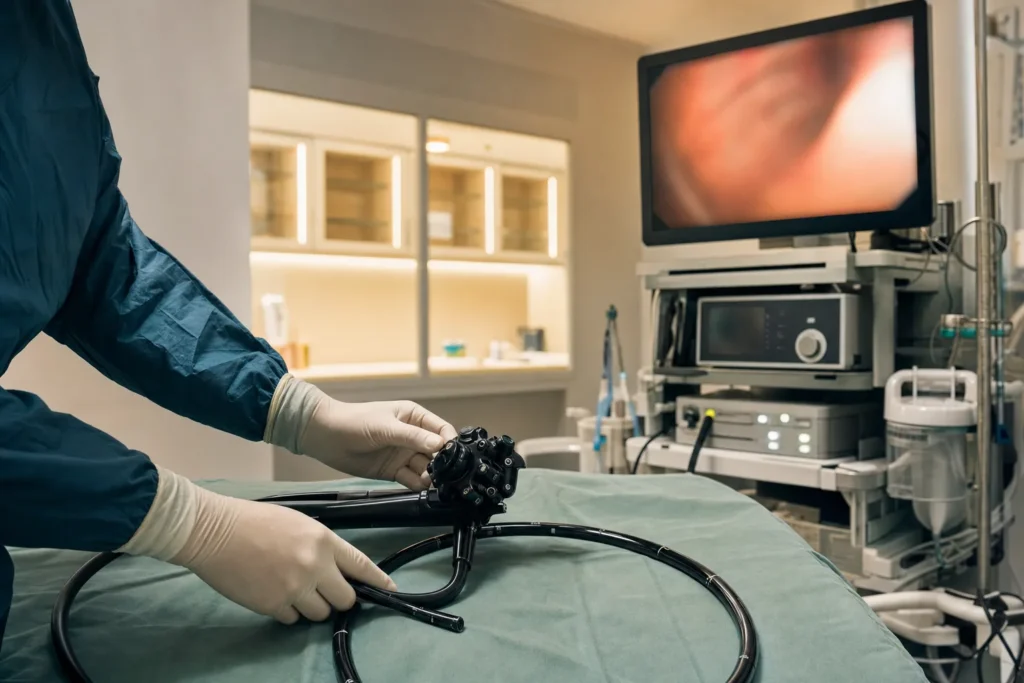
- Colonoscopy - a thin, flexible tube with a camera is passed into the bowel to look at the lining directly. Small tissue samples (biopsies) are usually taken and examined under a microscope.
- Endoscopy - a similar camera test for the upper part of the digestive tract.
- Imaging scans - such as CT or MRI scans, which can show parts of the small intestine that cameras cannot easily reach, and reveal complications such as narrowing or abscesses.
Unlike many cancers, Crohn's disease is not given a numbered "stage." Instead, doctors describe how active the disease is, where it is located, and whether complications such as strictures or fistulas are present. This picture guides your treatment plan.
Treatment options
There is no cure for Crohn's disease, but treatment can be very effective at calming inflammation, easing symptoms, and keeping the disease in remission. As NIDDK puts it, the goals of treatment are to reduce inflammation, prevent flares, and keep you in remission. Treatment is usually tailored to you and may change over time.
Crohn's disease is best managed by a multidisciplinary team - a group of professionals working together. This often includes a gastroenterologist (a gut specialist), a colorectal or general surgeon, specialist nurses, a dietitian, and sometimes a pharmacist and mental health support.
Medicines
- Anti-inflammatory medicines - including corticosteroids (steroids) to settle flares, and in some cases aminosalicylates such as mesalazine.
- Immunomodulators - medicines that calm an overactive immune system.
- Biologic therapies - newer medicines that target specific parts of the immune system involved in inflammation.
- JAK inhibitors - another type of medicine that acts on the immune response, used in some cases.
- Other medicines - such as antibiotics for certain complications, and treatments to manage symptoms.
Nutrition therapy
For some people, especially children and young people, a special liquid diet (enteral nutrition) is used to reduce inflammation and improve nutrition. A dietitian can also help with food choices, supplements, and managing weight.
Surgery
Surgery may be recommended when medicines do not control the disease, or when complications develop. According to the NHS and Cleveland Clinic, common operations remove a damaged section of bowel (resection) or treat blockages, fistulas, and abscesses. Surgery does not cure Crohn's disease, as it can return in another part of the gut, but it can greatly improve symptoms and quality of life.
Outlook: what to expect
Crohn's disease is a lifelong condition, and it affects each person differently. Some people have mild symptoms with long stretches of remission, while others have more frequent or severe flares. The course is hard to predict for any one individual.
The encouraging news from authoritative sources is reassuring. Cleveland Clinic states that life expectancy for people with Crohn's disease is generally normal, and that most people are able to lead active lives with appropriate treatment and monitoring. The NHS describes Crohn's disease as a condition that can be controlled, even though it cannot currently be cured.
Modern treatments, including biologic therapies, have given doctors more tools than ever to keep the disease in check. Staying in touch with your medical team, taking medicines as prescribed, and attending follow-up appointments all improve the chances of long, settled periods. If complications such as strictures or fistulas develop, they can usually be treated.
It is also normal for a long-term condition to affect how you feel emotionally. Many people experience worry, frustration, or low mood at times. This is understandable, and support is available - from your medical team, patient organisations, and others living with Crohn's disease.
Living with it and follow-up
With the right routine, many people with Crohn's disease live full lives - working, travelling, exercising, and raising families. Living well usually means a mix of good medical care and day-to-day self-management.
- Take medicines as prescribed, even when you feel well. Stopping treatment during remission can trigger a flare. Talk to your team before making any changes.
- Attend follow-up appointments and tests. Regular monitoring, including colonoscopies when advised, helps catch problems early.
- Watch your nutrition. Because Crohn's disease can affect how the gut absorbs nutrients, you may need supplements or vitamins. A dietitian can help you eat well and identify foods that worsen your symptoms - which differ from person to person.
- If you smoke, getting support to stop is one of the most helpful things you can do, as smoking can make Crohn's disease worse.
- Look after your mental wellbeing. Stress does not cause Crohn's disease, but it can affect how you feel. Counselling, peer support, and good sleep can all help.
- Know your flare warning signs so you can contact your team early.
Keeping a simple record of symptoms, medicines, and test results is useful - and especially valuable if you ever seek care in another country.
Planning treatment abroad: what affects cost and how to prepare your records
Some people choose to have part of their Crohn's care - such as a diagnostic work-up, a specialist opinion, or surgery for a complication - in another country. If you are considering this, it helps to understand what shapes the overall cost so you can ask the right questions and get a clear, personalised estimate.
Factors that affect the cost of Crohn's disease care include:
- What you need - a consultation and tests are very different from surgery. Diagnostic work-ups, biologic medicines, and operations each carry their own costs.
- The type of procedure - for example, a straightforward bowel resection differs from more complex surgery for fistulas or strictures, and from minimally invasive (laparoscopic or robotic) approaches.
- Hospital stay and aftercare - length of stay, follow-up visits, and any medicines included.
- Diagnostics - blood tests, stool tests, colonoscopy, endoscopy, and scans such as CT or MRI.
- Travel and accommodation for you and anyone travelling with you, plus interpreting services if needed.
Because Crohn's disease is so individual, there is no single price. The best way to understand your options is to request a personalised estimate through a free consultation, where a specialist can review your situation and outline a clear plan.
Preparing your medical records
Having your records ready makes assessment faster and safer. Try to gather: a summary of your diagnosis and history; recent blood and stool test results; colonoscopy and endoscopy reports (with biopsy results if available); imaging reports and, ideally, the actual scan images; a list of current and past medicines with doses; and details of any previous surgery. Translations into the treating team's language can be helpful. Always keep copies for yourself.
Why Turkiye, and how to choose a good centre
Turkiye (Turkey) has become a well-known destination for medical care, including gastroenterology and inflammatory bowel disease. Many hospitals have international accreditation, experienced specialist teams, and modern facilities, and they are used to caring for patients from abroad.
Rather than relying on rankings or claims of being the "best," focus on objective things you can verify:
- Accreditation - look for internationally recognised quality accreditation, such as Joint Commission International (JCI). This signals that a hospital meets defined safety and quality standards.
- The right specialist team - Crohn's disease is best handled by a multidisciplinary team. Check that the centre has gastroenterologists experienced in IBD, colorectal surgeons, and supporting specialists who work together.
- Experience with your specific need - ask how often the team manages cases like yours, whether medical or surgical.
- Clear communication - confirm what interpreting and patient-coordination support is available, and that you will receive written reports you can share with doctors at home.
- Continuity of care - ask how follow-up will work once you return home, and what happens if you need further treatment.
- Transparent information - a trustworthy centre will explain the plan, the risks, and the costs clearly, and will give you time to decide.
It is wise to keep your doctor at home informed throughout, so your ongoing care stays joined up.
Self-care, second opinions, and clinical trials
While Crohn's disease cannot be prevented, there is a lot you can do to help keep it settled and to feel more in control.
- Avoid smoking. If you smoke, stopping is one of the most beneficial steps, as smoking is linked to worse Crohn's disease.
- Eat well and stay nourished. Work with a dietitian to maintain a balanced diet, manage flares, and use supplements if your gut is not absorbing nutrients well.
- Be cautious with certain painkillers. NSAIDs can aggravate Crohn's disease in some people; ask your team what is safe for you.
- Stay up to date with recommended vaccinations and monitoring, as some treatments affect the immune system.
Getting a second opinion
Crohn's disease decisions - especially about biologic medicines or surgery - can be major. Seeking a second opinion is a normal and reasonable thing to do. A fresh expert view can confirm a plan or offer alternatives, and good doctors welcome it.
Clinical trials
Research into Crohn's disease is active, and clinical trials test new treatments and approaches. Joining a trial is a personal choice and not right for everyone, but it can give access to emerging therapies and contribute to better care for others. Ask your gastroenterologist whether any suitable trials are available, and make sure you understand the possible benefits and risks before deciding.
Frequently asked questions
Is Crohn's disease curable?
What is the difference between Crohn's disease and ulcerative colitis?
What causes Crohn's disease?
What are the first signs of Crohn's disease?
How is Crohn's disease diagnosed?
Does Crohn's disease shorten life expectancy?
Is there a screening test for Crohn's disease?
Will I need surgery for Crohn's disease?
Can diet cure or cause Crohn's disease?
Does smoking affect Crohn's disease?
What does it cost to treat Crohn's disease in Turkiye?
This article is for general information only and is not medical advice. Always consult a qualified doctor about your individual case.
Considering this procedure?
Send us your photos and questions. A BergemHealth coordinator and a department-head specialist will review your case and reply with honest, personalised guidance — no obligation.
Free consultation