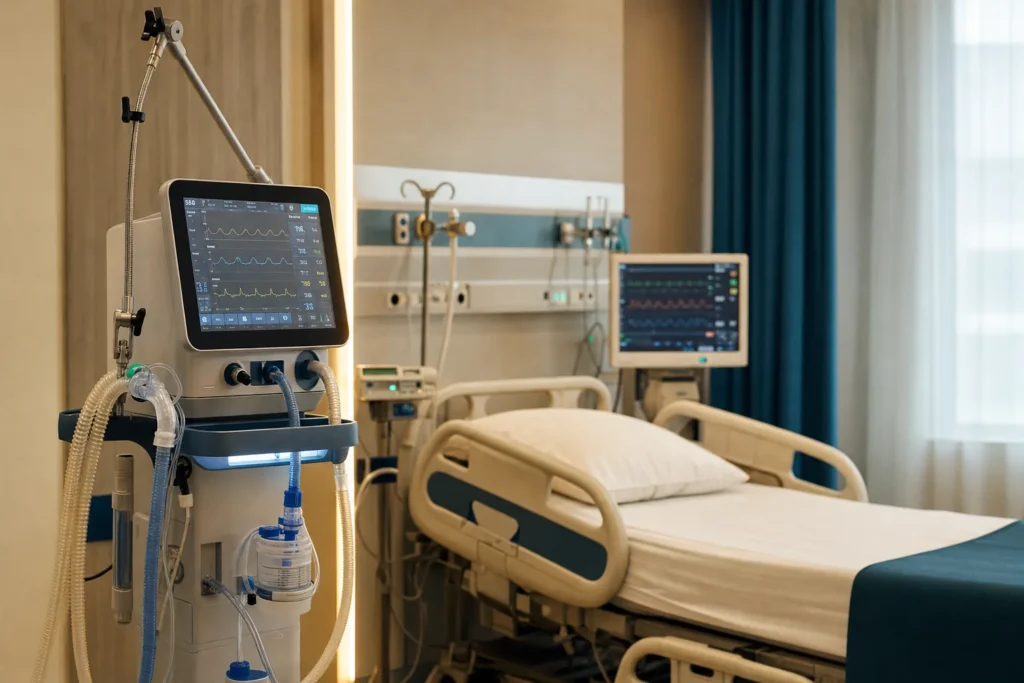
ARDS & severe pneumonia
ARDS (acute respiratory distress syndrome) and severe pneumonia are serious lung conditions usually treated in an intensive care unit. This guide explains, in plain words, what they are, why they happen, how they are diagnosed and treated, what recovery can look like, and how to prepare if a loved one needs care abroad.
What ARDS and severe pneumonia are
Pneumonia is an infection that inflames the lungs. It causes the tiny air sacs deep in the lungs (called alveoli — the small pockets where oxygen passes into the blood) to fill with fluid or pus. Most pneumonia is mild and people recover at home in two to four weeks. Severe pneumonia simply means the infection has become serious enough that a person needs hospital care, extra oxygen, or treatment in an intensive care unit (ICU).
ARDS stands for acute respiratory distress syndrome. It is not an infection itself but a sudden, severe reaction of the lungs to another illness or injury. In ARDS, the walls of the tiny air sacs become damaged and leaky, so fluid from nearby blood vessels seeps in. The lungs become heavy and stiff, and it becomes hard for oxygen to pass into the bloodstream. This is why the main problem in ARDS is dangerously low blood oxygen.
The two conditions are closely linked. Severe pneumonia is one of the most common triggers of ARDS. Think of it this way: pneumonia is the fire, and ARDS is the wider damage that can follow when the lungs become overwhelmed. Both are managed in intensive care, often with the same team and many of the same treatments, which is why they are discussed together here.
These are genuinely serious conditions, and it is natural to feel frightened. But modern intensive care has tools to support the lungs while the body heals, and many people recover. The sections below explain each step calmly so you know what to expect.
Types and severity
Types of pneumonia. Doctors often describe pneumonia by where and how it was caught:
- Community-acquired pneumonia — caught in everyday life, outside a hospital. This is the most common kind.
- Hospital-acquired pneumonia — develops during a hospital stay for another reason. It can involve harder-to-treat bacteria.
- Ventilator-associated pneumonia — develops in someone who is being helped to breathe by a machine (a ventilator).
- Aspiration pneumonia — caused by accidentally breathing food, drink, vomit or saliva into the lungs, for example after a stroke or while unconscious.
Pneumonia can be caused by bacteria (such as Streptococcus pneumoniae), viruses (such as influenza, RSV or the virus that causes COVID-19), or, less often, fungi.
Severity of ARDS. Doctors grade ARDS as mild, moderate or severe. The grade is based on how low the blood oxygen is compared with how much extra oxygen the person is being given — a measure doctors call the PaO2/FiO2 ratio. Under the internationally used Berlin definition, a lower oxygen ratio means more severe ARDS. The grade helps the team decide how much breathing support is needed and is one of the things they watch as the situation changes day by day.
ARDS also tends to move through stages over time: an early inflammatory and fluid-leakage phase, a healing phase, and in some people a later phase where some scar tissue forms in the lungs. Not everyone passes through every stage.
Causes and risk factors
ARDS is almost always set off by another serious illness or injury, either in the lungs themselves or elsewhere in the body. Common triggers include:
- Severe pneumonia and other lung infections (including influenza, RSV and COVID-19).
- Sepsis — a dangerous, body-wide response to infection. This is one of the most common causes of ARDS.
- Aspiration — breathing stomach contents or chemicals into the lungs.
- Major trauma — serious injuries, broken bones, or burns.
- Acute pancreatitis (sudden severe inflammation of the pancreas).
- Near-drowning, smoke inhalation, or breathing in harmful substances.
- Large blood transfusions or some major surgeries.
Certain things make a person more likely to develop pneumonia or ARDS, or to have a more serious course. These include older age (over 65), being very young, smoking, heavy alcohol use, long-term lung disease such as COPD or asthma, heart disease, diabetes, and a weakened immune system. Being already in hospital for another illness also raises the risk. Having a risk factor does not mean a person will develop ARDS — most people with pneumonia never do.
Signs and symptoms — and when to seek help
The symptoms of pneumonia can include a cough (sometimes bringing up yellow, green or blood-streaked mucus), fever, chills, chest pain that is worse when breathing or coughing, fatigue, loss of appetite, and feeling short of breath. In older adults, confusion is sometimes the main sign.
ARDS develops quickly, often within hours to a day or two of the triggering illness. Its hallmark is severe, rapidly worsening shortness of breath, along with fast, labored breathing and a fast heartbeat. Because the blood oxygen falls, the lips or fingertips can turn bluish. Many people who develop ARDS are already very unwell in hospital and may not be able to describe how they feel, so the medical team relies on monitors and tests.
When to get urgent help. Seek emergency care (call your local emergency number) if you or someone else has:
- Severe difficulty breathing or breathlessness at rest.
- Blue, grey or very pale lips, face or fingertips.
- New confusion, drowsiness, or difficulty staying awake.
- Chest pain that does not ease, or a very high fever with rapid breathing.
Do not wait to see whether it passes. With pneumonia and ARDS, getting help early gives the best chance of a smoother recovery.
Screening and early detection
There is no routine screening test for ARDS, and there is no screening programme for pneumonia in healthy people. These are conditions that are found when someone becomes ill and is examined, not through a regular check-up.
What does make a real difference is acting early on symptoms and treating the underlying cause promptly. For example, treating pneumonia, sepsis or a serious injury quickly and thoroughly can reduce the chance that ARDS develops or becomes severe. In people already in intensive care for another reason, the team monitors breathing and oxygen levels continuously so that any deterioration is picked up as soon as possible.
The most effective form of "early protection" is prevention through vaccination against common causes of pneumonia (such as pneumococcus, influenza, RSV and COVID-19), not smoking, and managing long-term health conditions well. These steps lower the risk of the infections that can lead to severe pneumonia and ARDS in the first place.
How it is diagnosed
Because ARDS and severe pneumonia can look similar at first, doctors use several tests together to understand what is happening and to rule out other problems such as heart failure.
- Listening to the lungs with a stethoscope, which may reveal crackling or bubbling sounds.
- Pulse oximetry — a painless clip on the finger that measures blood oxygen.
- Arterial blood gas test — a blood sample (usually from the wrist) that measures oxygen and carbon dioxide precisely. This is how doctors calculate the oxygen ratio used to grade ARDS.
- Chest X-ray — in ARDS this typically shows fluid spread across both lungs.
- CT scan — a more detailed picture of the lungs when needed.
- Blood tests and cultures, sputum (phlegm) tests — to find the cause and check for infection or sepsis.
- Echocardiogram (heart ultrasound) or ECG — to check the heart, since heart problems can cause similar breathlessness.
For ARDS specifically, doctors look for three things together: breathing trouble that came on suddenly (within about a week of a known trigger), fluid in both lungs on imaging that is not caused by the heart, and low blood oxygen. There is no single "ARDS test" — the diagnosis is made by putting these pieces together.
Treatment options
There is no medicine that switches ARDS off. Instead, the goal of treatment is to support the lungs and the rest of the body while treating the underlying cause, giving the lungs time to recover. This care is delivered in an intensive care unit by a multidisciplinary team — intensive care doctors, specialist nurses, respiratory and physiotherapy staff, pharmacists, dietitians and others.
Treating the cause. If severe pneumonia or sepsis is the trigger, antibiotics (for bacteria), antivirals or antifungals (when appropriate), and treatment of the source of infection are central. Removing or correcting the trigger is essential for the lungs to heal.
Oxygen and breathing support. Extra oxygen is the foundation. It may be given through nasal prongs or a mask, through high-flow oxygen, or through non-invasive masks (such as CPAP or BiPAP). In more severe cases, a breathing machine (ventilator) takes over the work of breathing through a tube in the windpipe, while the person is sedated for comfort.
Lung-protective ventilation. When a ventilator is used, the team deliberately delivers small, gentle breaths (low tidal volume) to avoid stretching and further injuring the fragile lungs. Strong evidence supports this approach for ARDS.
Prone positioning. Turning the person to lie face-down for many hours at a time can help oxygen reach more of the lung. In moderate to severe ARDS, prone positioning for prolonged sessions is recommended and is widely used.
ECMO. In the most severe cases, when a ventilator is not enough, a machine called extracorporeal membrane oxygenation (ECMO) can temporarily do the work of the lungs — adding oxygen to the blood and removing carbon dioxide outside the body — to buy time for the lungs to recover. ECMO is used in selected patients at specialised centres.
Supportive care. The team also manages fluid carefully (sometimes using diuretics to remove excess fluid from the lungs), prevents blood clots with blood thinners, provides nutrition (often through a feeding tube), protects the stomach, manages pain and sedation, and starts gentle physiotherapy early to limit muscle weakness.
Outlook — what to expect
ARDS is a serious condition, and it is honest to say that some people do not survive it, particularly when several organs are affected. Published figures from medical sources describe in-hospital death rates for ARDS of roughly one-third to around 40 percent across all severities. These are population-level averages drawn from large groups of patients; they are not a prediction for any one person. An individual's outlook depends on many things — the cause, the severity, age, other health conditions, and how the body responds to treatment — and only the medical team caring for a specific patient can give meaningful, personalised information.
The encouraging side is that survival has improved over the years, and many people who develop ARDS do recover. Most survivors regain most of their lung function over time, often within the first year, although some are left with mild long-term effects.
For most people with pneumonia that has not progressed to ARDS, the outlook is good. With treatment, symptoms often begin to improve within a few days, though tiredness and a lingering cough can last for several weeks.
Living with it and follow-up
Recovery from ARDS and a long intensive care stay is often a gradual process that continues well after leaving hospital. It is normal for this to take weeks to many months, and to need patience and support.
Survivors of critical illness may experience a cluster of after-effects sometimes called post-intensive care syndrome. This can include:
- Physical weakness — muscles waste quickly during a long ICU stay, so people can feel very weak and easily tired. Strength returns gradually with activity and physiotherapy.
- Breathlessness on exertion, which usually eases as the lungs recover.
- Memory, attention and "thinking" problems (sometimes called brain fog).
- Mood and mental-health effects such as anxiety, low mood, or post-traumatic stress, which are common after a frightening illness and are treatable.
Follow-up care is important. This may include outpatient clinic visits, breathing (lung function) tests, chest imaging if needed, pulmonary rehabilitation (a supervised programme of exercise and education), help to stop smoking, and psychological support. Family members can be affected too, and support is available for them. Recovery is rarely a straight line — good days and harder days are to be expected.
Planning treatment abroad: what affects cost and how to prepare
ARDS and severe pneumonia are emergencies that are treated wherever the person becomes ill — they are not conditions you plan a trip for. However, some families do consider transferring a stable patient to another country for continued intensive care or rehabilitation, or already have a loved one receiving care abroad. If you are exploring this, it helps to understand what drives the cost of intensive care so you can request a realistic, personalised estimate.
Because every case is different, we do not list prices here. Instead, here are the main factors that affect the cost of treating ARDS or severe pneumonia:
- Level and length of care — a ward bed, a high-dependency bed, or a full ICU bed cost very differently, and the number of days is the single biggest factor.
- Type of breathing support — oxygen alone, non-invasive support, full ventilation, or ECMO, which is the most resource-intensive.
- Medications and tests — antibiotics and antivirals, repeated scans and laboratory tests, and treatment of complications.
- Specialist input — intensive care doctors, infectious-disease and other consultants, and round-the-clock specialist nursing.
- Rehabilitation — physiotherapy and pulmonary rehab after the acute phase.
- Logistics — medical transfer or repatriation, interpreters, and accommodation for family.
How to prepare your records. Gather, in English where possible: a discharge or transfer summary, recent chest X-rays and CT scans (with the image files, not just reports), blood test and blood gas results, the list of current medicines and infusions, microbiology results showing which organism is involved and which antibiotics it responds to, and details of any ventilator or ECMO settings. Accurate, up-to-date records let a receiving team give safe advice and a meaningful estimate. We can help you organise these and arrange a free consultation to discuss a personalised plan.
Why Turkiye, and how to choose a good centre
Turkiye has a large number of modern hospitals with well-equipped intensive care units, and some centres offer advanced support such as ECMO. For families considering care here, the priority should not be marketing claims but verifiable quality and a clear, honest plan of care.
When choosing a centre for ARDS or severe pneumonia care, it is reasonable to check:
- Accreditation — for example, recognised national accreditation or international accreditation such as Joint Commission International (JCI), which signals attention to patient-safety standards.
- A genuine intensive care unit with the ability to provide mechanical ventilation, and, if relevant to the case, ECMO and 24-hour specialist staffing.
- A multidisciplinary team — intensive care specialists, infectious-disease and pulmonology input, and dedicated ICU nursing.
- Clear communication — interpreters, a named contact, and willingness to share the plan and answer questions honestly, including about risks.
- Rehabilitation services for the recovery phase.
A trustworthy team will set realistic expectations rather than promise outcomes, will explain why each treatment is recommended, and will keep you informed as things change. As a concierge, our role is to help you compare suitable centres, arrange records and translation, and coordinate logistics — not to push any single hospital. We encourage you to ask questions and seek a second opinion whenever you feel you need one.
Prevention and self-care
While ARDS itself cannot always be prevented, you can meaningfully lower the risk of the infections and illnesses that lead to severe pneumonia and ARDS:
- Stay up to date with vaccines — pneumococcal, influenza, RSV (where recommended) and COVID-19 vaccines reduce the risk of severe lung infection, especially for older adults and people with long-term conditions.
- Do not smoke or vape, and avoid secondhand smoke. Smoking damages the lungs' natural defences.
- Keep alcohol within moderate limits; heavy drinking raises the risk of pneumonia and ARDS.
- Wash your hands regularly and avoid close contact with people who are unwell.
- Manage long-term conditions such as diabetes, asthma, COPD and heart disease, and keep regular reviews with your doctor.
- Seek care early for chest infections, especially if you are in a higher-risk group — early treatment is one of the best ways to stop pneumonia becoming severe.
If you are recovering from pneumonia or ARDS, gentle, gradually increasing activity, good nutrition, rest, following your rehabilitation plan, and attending follow-up appointments all support healing. If you smoke, getting help to stop is one of the most valuable things you can do for your lungs.
Frequently asked questions
What is the difference between severe pneumonia and ARDS?
Is ARDS the same as a lung infection?
How long does someone stay on a ventilator with ARDS?
What is prone positioning and why are patients turned face-down?
What is ECMO, and who needs it?
Can you fully recover from ARDS?
What are the chances of surviving ARDS?
What causes ARDS most often?
How is ARDS diagnosed?
Can ARDS or severe pneumonia be prevented?
Is it possible to transfer a critically ill patient to another country for care?
What follow-up is needed after surviving ARDS?
This article is for general information only and is not medical advice. Always consult a qualified doctor about your individual case.
Considering this procedure?
Send us your photos and questions. A BergemHealth coordinator and a department-head specialist will review your case and reply with honest, personalised guidance — no obligation.
Free consultation