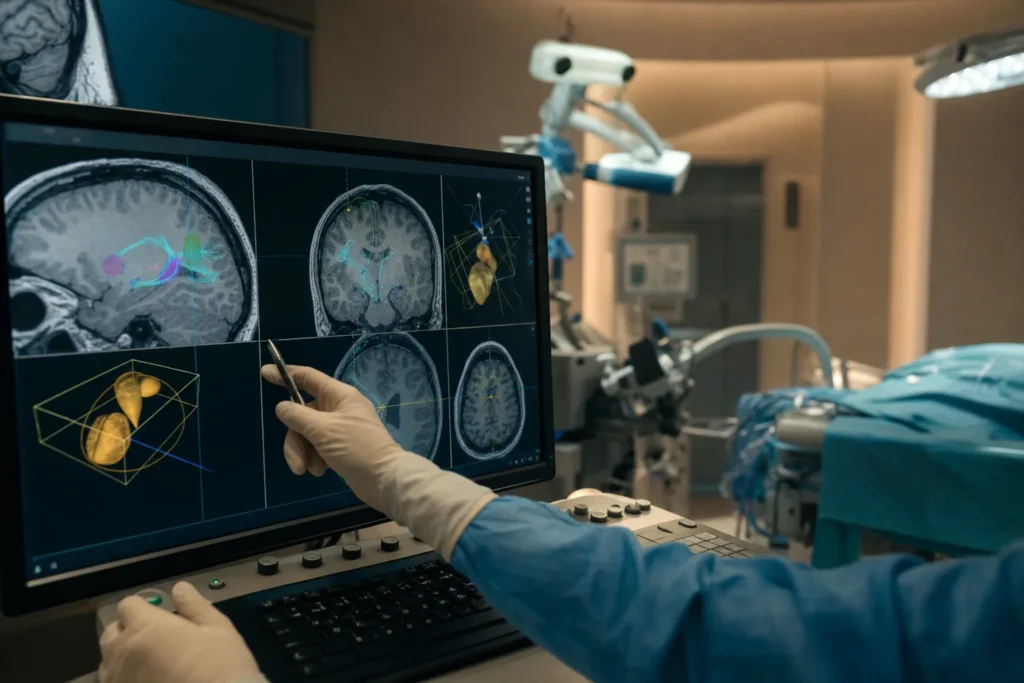
Refractory epilepsy surgery
If seizures continue even after trying two or more epilepsy medicines, it can feel discouraging. The good news is that this situation, called refractory or drug-resistant epilepsy, is well understood, and for many people surgery and other treatments can greatly reduce seizures or stop them altogether. This guide explains, in everyday language, what refractory epilepsy is, how doctors find out whether surgery could help, what the operations involve, and how to prepare if you are considering treatment in Turkiye.
What refractory epilepsy is
Epilepsy is a condition in which a person tends to have repeated seizures. A seizure is a short burst of unusual electrical activity in the brain. It can show up in many ways, from a brief blank stare or unusual feeling to shaking of the whole body. Most people with epilepsy do well on medicine: at least half of those newly diagnosed become free of seizures with the very first medicine they try.
Refractory epilepsy (also called drug-resistant, intractable, or uncontrolled epilepsy) is the term used when seizures keep happening despite good treatment. The International League Against Epilepsy (ILAE), the main worldwide body of epilepsy specialists, defines it as a failure to become and stay seizure-free after fairly trying two suitable anti-seizure medicines, taken either alone or together, at proper doses. Around one in three people with epilepsy fall into this group.
The word "refractory" simply means "not responding to the usual treatment." It does not mean nothing can be done. In fact, reaching this point is exactly when specialists look more closely for treatments, including surgery, that may work where pills have not. Throughout this article, "refractory epilepsy surgery" means an operation or implanted device used to reduce or stop seizures when medicines have not been enough.
Types and subtypes
It helps to know that refractory epilepsy is not a single thing. Doctors group it in two useful ways: by where seizures start, and by what kind of treatment may suit.
By where seizures begin:
- Focal epilepsy means seizures start in one specific area, or focus, on one side of the brain. The temporal lobe (the part near the temple, important for memory and emotion) is the most common single source. Focal epilepsy is the type most likely to be helped by surgery, because there is a clear target.
- Generalised epilepsy means seizures involve wide areas of both sides of the brain from the start. There is no single spot to remove, so treatment is usually different.
By the kind of surgery or device that may help:
- Resective surgery removes the small area causing seizures (for example, a temporal lobe operation or removal of an abnormal patch of tissue).
- Disconnection surgery cuts the pathways that let seizures spread, without removing much tissue.
- Laser ablation (LITT) uses heat from a thin laser probe to destroy a tiny seizure-causing area through a small opening.
- Neuromodulation uses an implanted device, such as a vagus nerve stimulator, deep brain stimulator, or responsive neurostimulator, to calm electrical activity.
Which group you fall into is worked out during a careful assessment, described later.
Causes and risk factors
Why do some people develop epilepsy that resists medicine? There is no single answer, and often no one is to blame. Some recognised factors include:
- A structural change in the brain. A scar, an area of tissue that formed differently before birth (called a cortical malformation), the after-effects of a head injury, a stroke, an infection of the brain, or a slow-growing benign tumour can all create a fixed source of seizures. Hardening of part of the temporal lobe, known as hippocampal sclerosis, is a common finding.
- Genetic factors. Some epilepsies are linked to gene differences. Knowing the gene can sometimes guide which medicines to use or avoid.
- The type of seizures. Certain syndromes are simply harder to control than others.
- How long seizures have gone untreated or uncontrolled. The longer seizures continue, the harder they can be to settle, which is one reason specialists encourage timely assessment.
It is also worth knowing that seizures sometimes seem "drug-resistant" for reasons that are fixable. The original diagnosis may have been something other than epilepsy; the chosen medicine may be wrong for that seizure type; the dose may be too low; doses may be getting missed; or triggers such as severe lack of sleep or heavy alcohol use may be undermining good medicine. A specialist epilepsy centre checks all of this before concluding the epilepsy is truly refractory.
Signs and symptoms (and when to see a doctor)
The main "symptom" of refractory epilepsy is straightforward: seizures keep happening even though you are taking your medicine as prescribed. Seizures themselves vary widely and may include any of the following:
- Staring spells with loss of awareness
- Strange rising sensations, smells, tastes, or a feeling of fear or déjà vu just before a seizure (often called an aura)
- Lip-smacking, fumbling, or repeated movements the person is not aware of
- Sudden stiffening and rhythmic jerking of the body, sometimes with loss of consciousness
- Brief drop attacks, where the person suddenly falls
When to seek prompt medical advice: contact your epilepsy team if seizures become more frequent or different in character, if medicine side effects are hard to live with, or if your seizures are affecting work, study, driving, mood, or daily safety.
When to call emergency services: a single seizure lasting longer than five minutes, repeated seizures without recovery in between, a first-ever seizure, a seizure causing injury or breathing difficulty, or a seizure during pregnancy or after a head injury all need urgent care. Prolonged seizures are a medical emergency. If you are unsure, it is always reasonable to call for help.
Screening and early detection
There is no routine population screening test for epilepsy, and none for refractory epilepsy specifically. You cannot, for example, take a simple blood test to predict who will develop seizures that resist medicine.
Instead, the practical equivalent of "early detection" is timely referral. The recognised principle, supported by the ILAE and major epilepsy centres, is this: once two suitable anti-seizure medicines have failed to control seizures, the person should be referred, wherever possible, to a comprehensive epilepsy centre for a fresh, in-depth evaluation. This matters because the chance of becoming seizure-free with each additional medicine after the first two falls considerably, while a thorough assessment may reveal a treatable cause or a surgical option that pills alone could never address.
If you or a family member has been on two or more epilepsy medicines and seizures continue, that itself is the signal to ask your doctor about referral to a specialist centre. Asking early is reasonable and sensible, not premature.
How it is diagnosed and evaluated
Working out whether surgery can help is a careful, step-by-step process, usually called a pre-surgical evaluation. The aim is to answer two questions: where do the seizures start, and can that area be treated safely without harming important functions such as speech, memory, movement, or vision. The team gathers information from several tests, then pieces it together.
Common tests include:
- EEG and video-EEG monitoring. An EEG (electroencephalogram) records the brain's electrical activity through small discs on the scalp. In video-EEG, you stay in hospital for several days while the EEG runs and cameras record your seizures, so the team can match the brain activity to what the seizure looks like.
- MRI scan. A detailed magnetic-resonance picture of the brain's structure, looking for a scar, malformation, or other cause.
- PET and SPECT scans. These show how the brain uses energy or blood flow and can point to a seizure-producing area even between seizures.
- Functional MRI and the Wada test. These map where language and memory live in your brain, so surgeons can plan to protect those areas.
- Neuropsychological testing. Pen-and-paper and computer tasks that assess memory, language, and thinking, giving a baseline and helping predict effects of surgery.
- Intracranial monitoring (SEEG or grids). If the surface tests are not precise enough, fine electrodes may be placed inside or on the surface of the brain for a short period to pinpoint the focus exactly.
Unlike many cancers, epilepsy is not given a number-based "stage." Instead, the team builds a picture of the seizure source and weighs the likely benefit against the risk for each individual.
Treatment options
Treatment is always decided by a multidisciplinary team, typically including a neurologist who specialises in epilepsy (an epileptologist), a neurosurgeon, a neuroradiologist, a neuropsychologist, and specialist nurses. They review all the test results together before recommending anything.
Medical treatment first. Even when epilepsy is refractory, medicines remain part of care. The team may adjust doses, change combinations, or trial a newer anti-seizure medicine. Most people continue some medication after surgery, at least for a time.
Resective surgery. If seizures come from one well-defined area that can be removed safely, the surgeon removes it. A temporal lobe operation is the most common and best-studied example. The goal here can be freedom from seizures.
Laser ablation (LITT). A minimally invasive option in which a thin laser probe, guided by MRI, heats and destroys a small seizure-causing target through a tiny opening rather than open surgery. It may suit selected people and usually involves a shorter recovery.
Disconnection surgery. Operations such as corpus callosotomy cut the pathways that let seizures spread. This is often used to reduce severe drop attacks rather than to stop all seizures.
Neuromodulation devices. When removal is not possible, an implanted device may help. Vagus nerve stimulation (VNS) places a small generator under the skin of the chest, wired to a nerve in the neck; it does not aim to end seizures but commonly reduces how often they happen. Deep brain stimulation (DBS) and responsive neurostimulation (RNS) deliver electrical pulses within the brain to lower seizure frequency.
Supportive options. A medically supervised ketogenic diet (high fat, low carbohydrate) helps some people, especially children. Counselling, treatment of low mood or anxiety, and seizure first-aid education for family are all part of good care.
Outlook and what to expect
Outlook depends heavily on the type of epilepsy and the treatment chosen, so the figures below are population-level averages from medical studies, not a prediction for any one person. Your own team can give you a realistic picture for your situation.
For carefully selected people with temporal lobe epilepsy, resective surgery is well supported by evidence. In a landmark randomised trial published in the New England Journal of Medicine, 58% of people who had surgery were free of awareness-impairing seizures at one year, compared with 8% of those who continued medicine alone. Other published series report seizure-freedom in roughly the 60 to 70 percent range for suitable temporal lobe cases, though results vary with the cause and the centre.
Neuromodulation devices work differently: they usually reduce seizure frequency rather than end seizures. Mayo Clinic notes that vagus nerve stimulation can typically cut seizures by about 20 to 40 percent, and benefit often grows over the first couple of years.
Reaching the full effect of surgery takes time; doctors often say it can take around two years to judge the complete result, and some people are gradually able to reduce medication if they stay seizure-free. It is also fair to say that not everyone becomes seizure-free, and a minority do not benefit. A specialist can explain the likely range of outcomes for your specific findings.
Living with it and follow-up
Whatever path you take, follow-up is an ongoing partnership rather than a single event. After surgery or device implantation you can expect regular clinic visits, repeat scans or EEGs as needed, and reviews of medication. If a device such as a VNS is fitted, the settings are adjusted gradually over visits to find what works best.
Day-to-day life with refractory epilepsy is helped by some practical habits, supported by epilepsy organisations:
- Take medicines exactly as prescribed and never stop suddenly without medical advice; a pill organiser and phone reminders help.
- Keep a simple seizure diary, noting the date, type, duration, and any possible trigger. This is genuinely useful information for your team.
- Protect your sleep, manage stress, and be cautious with alcohol, as these are common triggers.
- Wear a medical alert bracelet and teach those around you basic seizure first aid.
- Look after mood. Depression and anxiety are common in refractory epilepsy and deserve attention in their own right, not only because they can affect seizure control.
Rules about driving, certain jobs, and activities differ by country and by whether you are seizure-free; check the rules where you live with your doctor.
Planning treatment abroad: what affects cost and how to prepare your records
If you are considering treatment in another country, it helps to understand what shapes the overall cost, even though we do not quote prices here. The right figure depends entirely on your individual case, which is why a personalised estimate after a records review is the only reliable number.
Factors that influence cost and complexity include:
- The amount of evaluation needed. Some people arrive with most tests done; others need video-EEG monitoring, advanced scans, or invasive electrode monitoring, each of which adds time and resources.
- The type of treatment. An implanted device involves the hardware itself; open resective surgery, laser ablation, and disconnection procedures differ in theatre time and inpatient stay.
- Length of hospital stay and intensive monitoring.
- Imaging, laboratory tests, anaesthesia, and the specialist team's involvement.
- Travel, accommodation, interpreting, and follow-up visits for you and a companion.
To get an accurate, individualised estimate, prepare your medical records in advance: a clear seizure history (with your seizure diary), a full list of every anti-seizure medicine tried with doses and the result, copies of EEG and video-EEG reports, MRI and any PET or SPECT images on disc, neuropsychology reports, and a summary letter from your current neurologist. Having these ready lets a specialist abroad review your case properly and tell you whether surgery is realistic for you. The most sensible first step is a free consultation in which your documents are reviewed and a personalised plan and estimate are prepared.
Why Turkiye and how to choose a good centre
Turkiye has become a well-known destination for medical travel, with many internationally accredited hospitals, experienced neurosurgical and neurology teams, and established services for international patients including interpreting and travel coordination. Rather than focusing on any claim of being the best, the wiser approach is to verify a centre against objective markers of quality.
Questions and checks worth making before you commit anywhere:
- Accreditation. Look for international accreditation such as Joint Commission International (JCI). You can confirm a hospital's current status directly on the accrediting body's own website rather than relying on a brochure.
- A genuine comprehensive epilepsy programme. Refractory epilepsy is best handled by a true multidisciplinary team with access to video-EEG monitoring, advanced imaging, neuropsychology, and the ability to perform intracranial monitoring when needed.
- Specialist experience. Ask how regularly the team performs the specific procedure you are considering, and what their own outcome and complication figures are. Reputable teams are open about this.
- Clear pre-surgical evaluation. Be cautious of any offer of surgery without a proper work-up; the assessment is what makes surgery safe and worthwhile.
- Written information and follow-up. A good centre explains the plan, risks, and aftercare in a language you understand, and sets out how follow-up will work once you return home.
A reputable concierge service can help gather your records, arrange a specialist review, and coordinate logistics, while leaving all medical decisions to qualified doctors.
Second opinions, clinical trials, and self-care
Refractory epilepsy is a situation where seeking a second opinion is entirely reasonable and often encouraged. Because the decision about surgery rests on interpreting many tests together, a review at a comprehensive epilepsy centre can confirm the diagnosis, check that the best medicines have truly been tried, and clarify whether a procedure could help. A second opinion is not a sign of distrust; it is good practice for a complex, life-shaping decision.
Clinical trials and emerging treatments. Research is active in this field, including newer minimally invasive techniques and refinements of brain-stimulation devices. If standard options are limited for your epilepsy type, ask your specialist whether any well-run clinical trials might be appropriate. Reputable centres can explain what a trial would involve and its possible risks and benefits.
Self-care that genuinely helps alongside medical treatment, as advised by epilepsy organisations: get consistent sleep, take medication reliably, limit alcohol, avoid smoking, stay physically active within safe limits, manage stress, and look after your mental health. None of these replaces specialist treatment, but together they support better seizure control and quality of life. Most importantly, stay connected with a qualified epilepsy specialist who knows your case, so that your plan can be adjusted as your situation changes.
Frequently asked questions
What does refractory or drug-resistant epilepsy actually mean?
Does surgery cure epilepsy?
Am I a candidate for epilepsy surgery?
What is the difference between resective surgery, laser ablation, and a device?
How risky is epilepsy surgery?
How long does recovery take?
Will I still need to take medicine after surgery?
What should I do if two medicines have not controlled my seizures?
Could my seizures be something other than epilepsy?
What records should I gather before seeking treatment abroad?
How do I choose a good epilepsy surgery centre in Turkiye?
Is it worth getting a second opinion?
This article is for general information only and is not medical advice. Always consult a qualified doctor about your individual case.
Considering this procedure?
Send us your photos and questions. A BergemHealth coordinator and a department-head specialist will review your case and reply with honest, personalised guidance — no obligation.
Free consultation