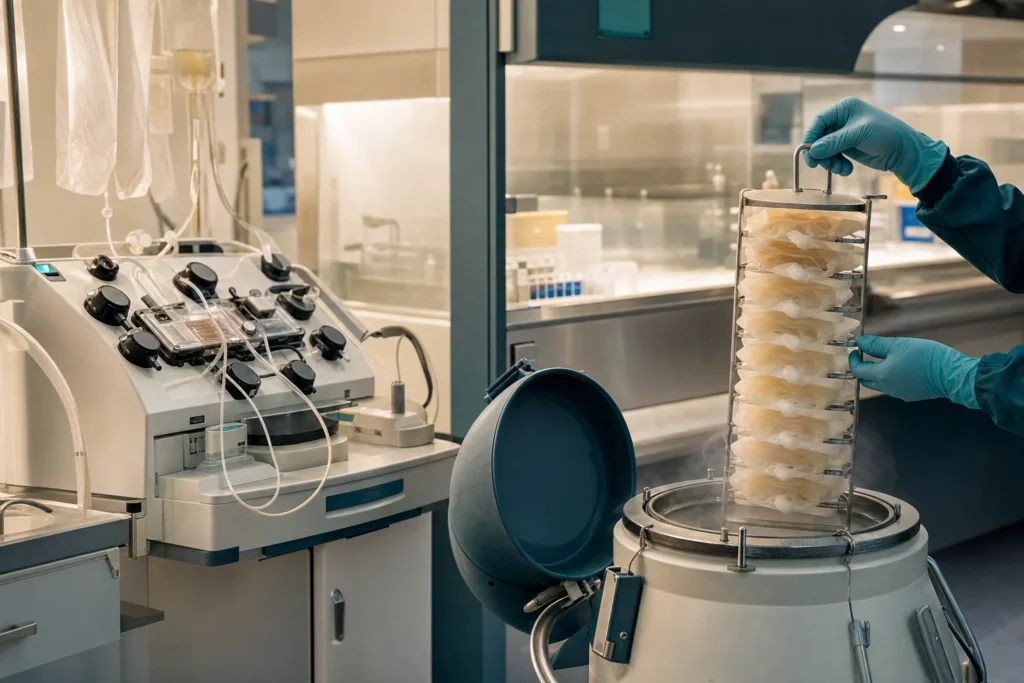
Allogeneic bone marrow transplant
An allogeneic bone marrow transplant replaces a person's diseased blood-forming system with healthy stem cells from a donor. It is one of the most powerful treatments in modern medicine, used mainly for blood cancers and serious blood and immune disorders. This guide explains, in plain language, what the procedure involves, who it can help, what recovery really looks like, and how to choose a safe clinic if you are considering treatment abroad.
- Anaesthesia
- No anaesthesia for the stem cell infusion itself (like a transfusion); a donor giving bone marrow is asleep under general anaesthetic.
- Duration
- The infusion takes about 30 minutes to a few hours; conditioning treatment before it usually runs about 1-2 weeks.
- Recovery
- New blood cells usually appear in about 10-21 days; the immune system can take 1-2 years to rebuild, with full recovery often taking a year or more.
- Hospital stay
- Typically several weeks in hospital, often in a single protected room, until blood counts recover (some centres use closely monitored outpatient care).
What an allogeneic bone marrow transplant is
Deep inside your bones is a soft, spongy tissue called bone marrow. This is the body's blood factory. It contains blood stem cells (also called haematopoietic stem cells) — master cells that constantly produce red blood cells (which carry oxygen), white blood cells (which fight infection), and platelets (which help blood clot).
In some diseases, this factory either makes faulty cells or is taken over by cancer. An allogeneic bone marrow transplant — often called an allogeneic stem cell transplant or allogeneic HSCT — aims to fix this by replacing your blood-forming system with healthy stem cells from another person, the donor. The word allogeneic simply means "from a genetically different person," in contrast to an autologous transplant, which uses your own cells.
The process has two jobs. First, strong treatment (chemotherapy and sometimes radiotherapy) clears out the diseased marrow. Then the donor's healthy stem cells are given into a vein, travel to the bone marrow, settle in, and start producing new, healthy blood. Because the new cells come from a donor, the donor's immune system can also recognise and attack any remaining cancer cells — a helpful bonus known as the graft-versus-tumour (or graft-versus-leukaemia) effect.
Despite the name, the cells do not always come from bone marrow. They can also be collected from the donor's bloodstream or from donated umbilical cord blood. "Bone marrow transplant" and "stem cell transplant" are used to describe the same family of treatments.
Who is a good candidate (and who should avoid it)
An allogeneic transplant is a serious treatment reserved for serious conditions, usually when other treatments have not worked or when a disease is very likely to come back. According to NHS and Cleveland Clinic information, it is used to treat:
- Blood cancers such as acute myeloid leukaemia (AML), acute lymphoblastic leukaemia (ALL), some lymphomas, and myelodysplastic syndromes (where the marrow makes too few healthy cells).
- Myeloproliferative neoplasms — conditions where the marrow makes too many of one type of blood cell, such as myelofibrosis.
- Non-cancerous blood disorders such as aplastic anaemia (where the marrow stops making enough cells), sickle cell disease, and thalassaemia.
- Inherited immune system and metabolic disorders, particularly in children.
A good candidate generally has a disease that responds to a transplant, a suitable matched donor, and is well enough to withstand the demanding conditioning treatment. Before approving a transplant, the team runs detailed tests of the heart, lungs, kidneys, and liver.
This treatment may not be suitable for people whose organs are too weak to tolerate high-dose chemotherapy, those with an uncontrolled active infection, or those whose general health (often summarised by age plus fitness) makes the risks outweigh the benefits. It is always a careful, individual decision made by a specialist transplant team — not by age alone. The arrival of gentler "reduced-intensity" conditioning has made transplants possible for many older and less fit patients who would not have been candidates in the past.
Types and techniques
Allogeneic transplants vary in two main ways: where the donor cells come from and how strong the preparatory treatment is.
Where the cells come from (the donor source)
The key to a successful allogeneic transplant is matching. Doctors compare proteins on the surface of cells called HLA (human leukocyte antigen) markers — a kind of biological fingerprint. The closer the match, the lower the risk of complications. Donor options include:
- A matched sibling. A brother or sister has roughly a 1 in 4 chance of being a full match, making them a common first choice.
- A matched unrelated donor. If no relative matches, registries hold millions of volunteer donors worldwide.
- A haploidentical (half-matched) donor. A parent, child, or some siblings share half the HLA markers. Modern techniques have made these "haplo" transplants increasingly successful and widen the pool of available donors.
- Umbilical cord blood. Stem cells from donated cord blood, banked at birth, can be used and tolerate a less perfect match.
How the cells are collected
- Peripheral blood stem cells. The most common method. The donor has injections of a growth factor for several days to push extra stem cells into the bloodstream, which are then filtered out by a machine.
- Bone marrow harvest. Marrow is drawn from the donor's hip bones with a needle, done under general anaesthetic so the donor feels nothing.
- Cord blood. Collected from the umbilical cord and placenta after a baby is born and stored frozen.
How strong the conditioning is
- Myeloablative (full-intensity) conditioning uses high-dose treatment to wipe out the marrow completely. It is powerful but harder on the body.
- Reduced-intensity conditioning (RIC), sometimes called a "mini-transplant," uses lower doses. It relies more on the donor cells themselves to clear the disease and is gentler, which suits older or less fit patients.
How it is done, step by step
A transplant is a process that unfolds over weeks, not a single operation. It usually has five stages.
1. Tests and preparation. The team checks your heart, lungs, kidneys, and liver to confirm you can tolerate treatment, and searches for the best donor.
2. Harvesting. The donor's stem cells are collected by one of the methods above. This happens shortly before your transplant.
3. Conditioning. You receive high-dose chemotherapy, sometimes with radiotherapy, to clear out the diseased marrow and quiet your immune system so it does not reject the donor cells. Conditioning usually lasts about one to two weeks, and you stay in hospital throughout.
4. The transplant (infusion). This is the simplest-looking step. The donor stem cells are given into a vein through a thin tube already placed in your chest or arm (a central line), much like a blood transfusion. You are awake and need no anaesthetic. The infusion typically takes about 30 minutes to a few hours. The cells then find their own way to the bone marrow.
5. Engraftment and recovery. Over the following days you have very few blood cells and are highly vulnerable to infection, so you are usually cared for in a single, protected room. Engraftment — when the new cells settle in and begin making blood — usually starts around 10 to 21 days after the infusion. The day of transplant is often called "day zero," and your recovery is counted from there.
Recovery, step by step
Recovery from an allogeneic transplant is gradual and is measured in months and years, not days. It helps to think of it in phases.
In hospital (roughly the first few weeks). You wait for the new stem cells to start producing blood. During this window your blood counts are very low, so you may need blood and platelet transfusions and antibiotics, and you are protected from infection. Many people feel tired, sore in the mouth and throat, and lose appetite. Some specialist centres now manage carefully selected patients largely as outpatients, with daily monitoring instead of a long inpatient stay.
The first 100 days. This is the most delicate period. Even after you leave hospital, you usually stay close by for frequent check-ups, blood tests, and adjustment of anti-rejection medicines. The risk of infection and of acute graft-versus-host disease (explained below) is highest now.
Months to a year. Energy slowly returns and blood counts stabilise, but the immune system is still rebuilding. It can take up to a year, and often longer, for the immune system to recover — and one to two years for it to function fully. Childhood vaccinations are usually given again because the old immunity is lost.
Beyond a year. Most people continue to regain strength. The team watches for late effects and for chronic graft-versus-host disease. Full recovery commonly takes a year or more, and patience is part of the treatment.
Risks and possible complications
An allogeneic transplant carries significant risks, which is why it is reserved for serious conditions. Your team will explain how these apply to you.
Graft-versus-host disease (GVHD). This is the main complication unique to allogeneic transplants. The donor's immune cells (the "graft") see your body (the "host") as foreign and attack healthy tissue. Acute GVHD tends to appear in the first weeks to months and commonly affects the skin (rash), the gut (diarrhoea, nausea, belly pain), and the liver (jaundice). Chronic GVHD usually develops within the first year, but can appear later, and may affect the skin, eyes, mouth, lungs, joints, and other organs. The lower the donor match, the higher the risk. GVHD is treated with medicines that calm the immune system, often steroids. A milder version can be helpful, since the same donor cells that cause GVHD also attack any remaining cancer.
Infection. While the new immune system is weak, even ordinary germs can cause serious illness. Fever or chills must be reported to the team straight away.
Graft failure. Occasionally the donor cells do not settle in or are rejected, and the marrow does not recover as hoped.
Organ effects and late effects. High-dose conditioning can affect the lungs, liver, kidneys, and other organs. Possible long-term effects include reduced fertility, cataracts, hormone or thyroid changes, and a small increased risk of a second cancer later in life.
Relapse. The original disease can sometimes return despite the transplant.
Results and how long they last
For the right person with the right disease, an allogeneic transplant can be curative — it can put a blood cancer into long-term remission or correct a disorder of the blood or immune system for good. This is one of the few treatments capable of that.
Outcomes vary a great deal depending on the disease, how advanced it was, the patient's age and fitness, how close the donor match is, and whether complications occur. Published figures from individual centres can look encouraging — for example, Cleveland Clinic reports long-term survival rates for certain leukaemias treated this way — but these reflect specific groups of patients and should not be read as a promise for any one person. There are no guarantees with any transplant.
When a transplant works and the disease stays away, the benefit can last indefinitely: the new blood-forming system is permanent. The most useful guide to your own likely outcome is an honest conversation with your transplant team, who can give numbers based on your exact diagnosis and situation rather than general averages.
Costs and what changes the price
An allogeneic transplant is one of the more involved treatments in medicine, and its cost reflects that. Because it spans many weeks of inpatient care, specialist drugs, donor work-up, and intensive monitoring, prices vary widely between countries and even between clinics in the same city. For this reason, any figure you see online should be treated as a rough starting point, and you should ask each clinic for a written, itemised quote.
The main things that change the price include:
- Donor type and search. Using a matched sibling is generally simpler than searching international registries for an unrelated donor or arranging a haploidentical or cord-blood transplant.
- Conditioning intensity and the specific drugs and radiotherapy used.
- Length of hospital stay and whether intensive care is needed.
- Complications. Treating GVHD or serious infections, with their extra medicines and longer monitoring, can add substantially to the total.
- Pre-transplant tests, the central line procedure, and long-term follow-up.
When comparing quotes, check exactly what is included — the donor search, the conditioning, the hospital stay, medicines, follow-up, and a clear plan for what happens (and what it costs) if complications arise. A low headline figure that excludes complications can be misleading.
Why people travel to Turkiye, and how to choose a safe clinic
Turkiye has become a well-known destination for medical care, including complex treatments, because it combines large specialist hospitals, experienced teams, and costs that are often lower than in Western Europe or North America. For an allogeneic transplant, however, the most important thing is not the country — it is the quality, safety, and continuity of care. A transplant is a long relationship with a team, not a one-off appointment, so choose carefully.
Before committing, verify the following:
- Hospital accreditation. Look for internationally recognised accreditation (for example, Joint Commission International, JCI) alongside national licensing. Accreditation signals that safety and quality processes have been independently checked.
- The transplant unit's experience. Ask how many allogeneic transplants the centre performs each year, for your specific disease, and what their outcomes and complication rates are.
- The doctors' credentials. Confirm that the haematologists and transplant physicians are board-certified specialists. Ask to see their qualifications.
- Donor sourcing. Ask how they will find your donor and which registries they use, especially if no family match exists.
- GVHD and emergency care. Check that the unit has intensive care support and a clear protocol for managing GVHD and infections.
- Follow-up and communication. Because much recovery happens after you leave, ask how follow-up works once you return home and how they coordinate with your local doctors.
Be cautious of any clinic that promises a cure, quotes a price without seeing your records, or downplays the risks. A trustworthy team will be frank about both benefits and dangers.
How to prepare and what to ask at your consultation
Good preparation makes a hard treatment more manageable. Before your transplant you will have a thorough work-up — blood tests, heart and lung checks, and organ-function tests — to confirm you are fit for conditioning. The team will also place a central line for giving medicines and taking blood. It is wise to discuss fertility preservation before conditioning starts, since treatment can affect fertility. Sorting out dental care, stopping smoking, and arranging practical support at home all help.
Bring a written list of questions to your consultation. Useful ones include:
- Why is an allogeneic transplant the right option for me, and what are the alternatives?
- What type of donor and conditioning do you recommend, and why?
- Based on my exact diagnosis, what are my realistic chances of success and of relapse?
- What is the risk of GVHD for me, and how would you treat it?
- How long will I be in hospital, and how long should I stay nearby afterwards?
- How many transplants like mine does this centre perform each year?
- What will follow-up look like once I go home, and who do I contact in an emergency?
- What is included in the price, and what happens to the cost if complications occur?
Taking a trusted family member or friend with you to appointments helps you remember the answers and share decisions.
Aftercare and travelling for treatment, including when it is safe to fly
Aftercare is a major part of a transplant, not an afterthought. Expect frequent blood tests, careful management of anti-rejection medicines, strict attention to avoiding infection, and re-vaccination once your team advises it. Watch for warning signs — fever, a new rash, diarrhoea, jaundice, breathlessness — and report them promptly, as they may signal infection or GVHD.
If you are travelling abroad for the transplant itself, plan for a long stay. The first 100 days are the most fragile, and many centres ask patients to remain close by for daily or near-daily monitoring during this period. Travelling home too soon, before your immune system has begun to recover, carries real risk.
When is it safe to fly? Guidance from transplant charities such as Anthony Nolan suggests most people are usually able to travel and fly somewhere between 6 and 12 months after an allogeneic transplant, once blood counts have recovered — but only with clearance from the transplant team, because timing depends entirely on individual recovery. Two extra points matter for air travel: your old vaccinations no longer protect you, and you cannot have certain "live" vaccines while your immune system is weak, which may limit where you can safely go. It is also worth arranging specialist travel insurance, carrying a letter and your medicines in hand luggage, and protecting your skin from the sun, since skin can be more vulnerable after a transplant.
The safest approach is simple: do not book flights until your transplant team confirms, in writing if possible, that travel is safe for you.
Frequently asked questions
What is the difference between an allogeneic and an autologous transplant?
Is a bone marrow transplant the same as a stem cell transplant?
Does the transplant itself hurt?
How long does the whole process take?
How do doctors find a donor for me?
What is graft-versus-host disease?
Am I too old for an allogeneic transplant?
Can an allogeneic transplant cure my disease?
How long will I be in hospital?
When can I fly home or travel after a transplant?
Why might someone travel to Turkiye for this treatment?
What should I ask before agreeing to treatment abroad?
Sources
- Cleveland Clinic - Allogeneic Stem Cell Transplantation
- NHS - Stem cell and bone marrow transplants: What happens
- NHS - Stem cell or bone marrow transplants (overview)
- National Cancer Institute (NCI) - Stem Cell Transplant
- NMDP - Graft-versus-host disease (GVHD) symptoms
- NORD - Graft versus Host Disease
- NHS England - Haematopoietic Stem Cell Transplantation policy
- Anthony Nolan - Travelling abroad after a stem cell transplant
This article is for general information only and is not medical advice. Always consult a qualified doctor about your individual case.
Considering this procedure?
Send us your photos and questions. A BergemHealth coordinator and a senior specialist will review your case and reply with honest, personalised guidance — no obligation.
Free consultation