Mammoplasty
Mammoplasty is the family of operations that change the size, shape or position of the breasts. It covers three distinct goals: enlarging with breast augmentation, removing excess tissue with breast reduction, and repositioning with a breast lift. This guide explains how each works, the implant and incision options, realistic recovery and risks, indicative breast augmentation cost ranges, and what to verify if you are considering surgery in Turkiye or elsewhere abroad.
- Anaesthesia
- General anaesthesia for most cases; some smaller procedures may use local anaesthesia with sedation, decided by your surgeon and anaesthetist.
- Duration
- Roughly 1-3 hours depending on the procedure (augmentation often 60-90 minutes; reduction and lift typically longer).
- Recovery
- Light daily activity within days to 2 weeks; most normal activities by about 6 weeks, with swelling and final shape settling over several months.
- Hospital stay
- Day case to 1-2 nights, depending on the procedure (augmentation often same-day or one night; reduction commonly 1-2 nights).
Minimum price, for reference only — the final cost is calculated individually after your records are reviewed. You pay the hospital’s price; our service is free for you.
What mammoplasty is
Mammoplasty is the surgical reshaping of the breast. It is an umbrella term covering three different goals that are sometimes confused with one another:
- Breast augmentation (augmentation mammoplasty) increases breast size and fullness using breast implants or fat transfer. The American Society of Plastic Surgeons (ASPS) describes it as using implants or fat transfer to increase the size of the breasts; it can also improve balance and restore volume lost after pregnancy or weight change.
- Breast reduction (reduction mammaplasty) removes fat, glandular tissue and skin to make large breasts smaller, lighter and more proportionate. Mayo Clinic notes it is among the most common procedures plastic surgeons perform.
- Breast lift (mastopexy) raises and reshapes the breast by removing excess skin and tightening tissue; it does not significantly change breast size.
The key distinction, as ASPS puts it, is that augmentation addresses size and shape and does not correct severely drooping breasts, while a lift addresses position and will not increase volume. Reduction addresses excess size and weight. Understanding which goal applies to you is an important first step, because it determines the operation, the recovery and the risks.
Who is a candidate
Suitable candidates for any form of mammoplasty are generally in good physical health, at or near a stable weight, non-smoking (or able to stop around surgery), and able to set realistic expectations. ASPS emphasises that breast surgery is highly individualised and should be done for yourself, not to meet someone else's expectations.
Augmentation may suit people who want more volume or improved symmetry, or who wish to restore fullness lost after pregnancy or weight reduction. It does not lift sagging breasts; ASPS notes a lift may be required along with augmentation for drooping breasts to look fuller and lifted.
Reduction is often considered for symptomatic breast enlargement. Mayo Clinic and the NHS describe candidates who have back, neck and shoulder pain, skin irritation under the breasts, posture problems, or difficulty with physical activity related to breast weight.
Lift suits those whose breasts have descended or lost firmness through pregnancy, breastfeeding, weight changes, ageing and gravity, but who are content with their volume.
Relative contraindications include unstable weight, active infection, untreated bleeding disorders, smoking (which raises wound-healing and tissue-loss risks), and certain medical conditions. People planning future pregnancy or breastfeeding should discuss timing, as reduction in particular can affect the ability to breastfeed. Your surgeon will review your medical history, examine you, and may recommend imaging before proceeding.
Types and techniques
Because mammoplasty covers three goals, the techniques differ.
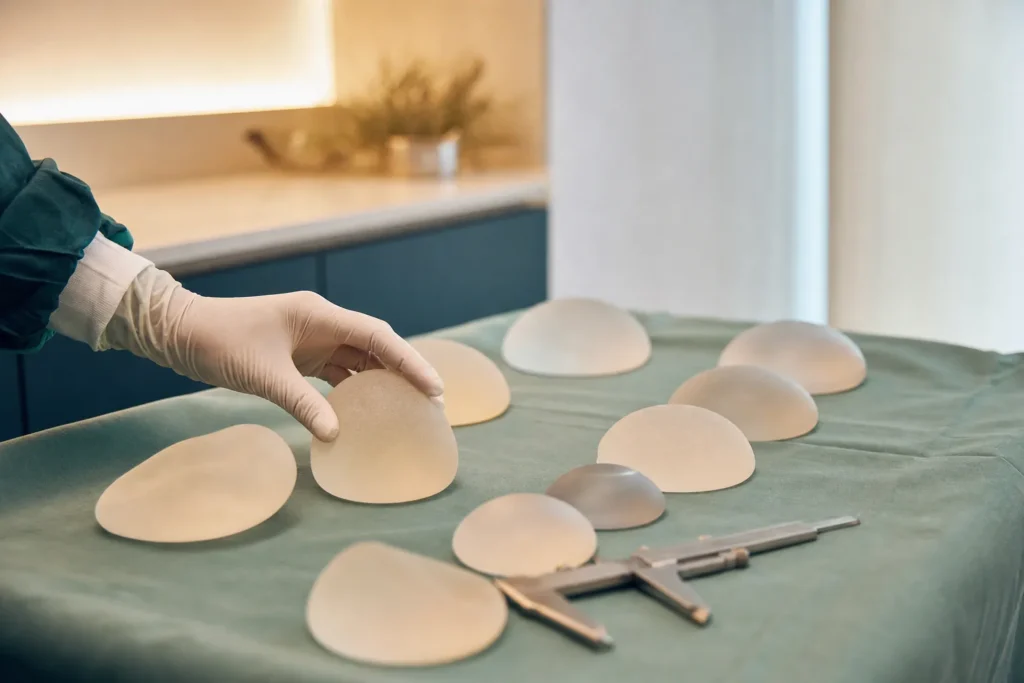
Augmentation uses either implants or your own fat. Implant options, per ASPS, include:
- Saline implants — a silicone shell filled with sterile salt water; if the shell leaks the implant collapses and the saline is absorbed by the body. Available in the US to women 18 and older.
- Structured saline implants — saline with an internal structure intended to feel more natural.
- Silicone gel implants — filled with gel that more closely mimics natural breast tissue; available in the US to women 22 and older. A leak may not be obvious, so monitoring (for example ultrasound or MRI) is advised.
- Form-stable ("gummy bear") implants — thicker, firmer gel that holds shape even if the shell breaks; these generally need a slightly longer incision.
Implants also vary by shape (round versus anatomical/teardrop) and surface (smooth versus textured). Round implants are the same shape all over, so rotation is not a concern; anatomical implants taper toward the top, but a rotation may distort the shape. Smooth implants feel soft but can show some palpable or visible rippling; textured surfaces develop adhesion to reduce movement, but ASPS notes BIA-ALCL, a rare lymphoma, occurs most frequently in patients with textured-surface implants. Brand names such as Motiva or Mentor are examples of manufacturers, not endorsements.
Fat-transfer augmentation uses liposuction to harvest your own fat and inject it into the breast. It gives a modest, natural increase without an implant, but the volume change is limited and some grafted fat is reabsorbed.
Reduction and lift use incision patterns rather than implants: periareolar (around the areola), vertical or "lollipop", and inverted-T or "anchor" for larger reductions. In reduction the surgeon removes tissue and skin and repositions the nipple-areola; in a lift, tissue is reshaped and skin tightened without removing significant volume. Liposuction alone is sometimes used for limited reduction.
Implant placement and incision choices
For implant-based augmentation, two technical decisions shape the result: where the implant sits and where the incision is made.
Placement options include:
- Subglandular — behind the breast tissue but in front of the chest (pectoralis) muscle.
- Submuscular — partly or fully behind the pectoralis muscle. ASPS notes that placing the implant below the muscle, with adequate tissue cover and appropriate sizing, helps prevent or minimise rippling, and that submuscular placement with silicone can be preferable in people with little natural breast tissue.
- Dual-plane — a hybrid in which the upper part of the implant sits under the muscle and the lower part under the gland, aiming to combine soft tissue cover with a natural lower-pole shape.
Incision options include inframammary (in the fold under the breast), periareolar (around the areola edge), and transaxillary (in the armpit). The NHS describes placing the implant through a cut next to or below the breast, positioned either between breast tissue and muscle or behind the muscle. Form-stable implants generally need a longer incision. The best combination depends on your anatomy, implant choice and goals, and should be discussed with your surgeon.
How the surgery is performed
Most mammoplasty is done under general anaesthesia; some smaller procedures may use local anaesthesia with sedation. Your anaesthetist will confirm the plan.
In augmentation, the surgeon makes the chosen incision, creates a pocket either under the gland or under the muscle, places and positions the implant (or injects harvested fat for fat-transfer), then closes and dresses the incision. The NHS states breast enlargement typically takes between 60 and 90 minutes.
In reduction, the surgeon removes excess breast tissue, fat and skin, reshapes the remaining breast, and repositions the nipple and areola; thin drains may be placed temporarily to remove fluid. In a lift, excess skin is removed, the tissue is reshaped and supported, and the nipple-areola is raised to a higher position. Reduction and lift generally take longer than augmentation and more often involve an overnight stay; the NHS notes a reduction usually requires one or two nights in hospital, with drains removed after a day or two before discharge.
A combined augmentation with lift ("augmentation-mastopexy") raises the breast and adds volume in one operation. A lift can also be combined with a reduction. These combinations are longer and more complex than a single procedure.
Recovery timeline
Recovery varies by procedure and individual. The stages below are typical, not guaranteed.
- First days: Expect soreness, swelling and bruising, controlled with prescribed pain relief. A support or surgical bra is usually worn. For augmentation, the NHS advises taking a week or two off work and not driving for at least a week.
- Weeks 1-2: Stitches (if not dissolvable) are often removed at 1-2 weeks. Many reduction patients can resume many daily activities within a few weeks, and the NHS notes full reduction recovery can take 2-6 weeks with 2-3 weeks off work.
- Weeks 3-6: Heavy lifting and strenuous exercise are usually avoided for around 4-6 weeks. The NHS advises returning to most normal activities by about 6 weeks after augmentation.
- Months 1-6: Swelling settles and the breasts gradually take their final shape over several months. Scars continue to mature and fade over a year or more.
Follow your surgeon's specific instructions on bras, scar care, activity and follow-up, as these take priority over general timelines.
Risks and complications
All surgery carries risk. General surgical risks named by the NHS include bleeding, blood clots, infection, poor wound healing, scarring and reactions to anaesthesia.
Implant-specific risks (NHS, ASPS) include capsular contracture (scar tissue tightening so the breast feels hard), implant rupture or leakage, rippling, implant rotation, and changes in nipple or breast sensation ranging from heightened sensitivity to permanent numbness. The NHS states that breast implants do not last a lifetime and are likely to need replacing at some point, with some women needing further surgery after about 10 years.
Two implant-associated conditions deserve specific mention. BIA-ALCL is a cancer of the immune system (not a type of breast cancer) linked mainly to textured implants; ASPS reports it usually appears at least more than a year after surgery, on average after 8-10 years, and treatment for disease around the implant involves removing the implant and the surrounding scar capsule. Breast implant illness (BII) is a term for systemic symptoms some patients report, such as fatigue, "brain fog", joint pain and rash. The FDA advises that women with implants do not need to change routine medical care or follow-up.
For reduction and lift, the NHS describes risks including loss of blood supply to skin, fat or nipple (which can cause tissue death, or necrosis), haematoma (bleeding in the breast), wound-healing problems, asymmetry and visible scarring. Nipple sensation can be altered temporarily or permanently. Breastfeeding may not be possible afterwards, though some women do succeed.
Results and longevity
Mammoplasty can produce lasting changes, but it does not stop the breast from ageing. Outcomes depend on technique, anatomy, weight stability and lifestyle.
For augmentation, it is common for women to start thinking about their implants around the 10-15 year mark, as discussed by ASPS; implants are not lifetime devices and may need replacement or removal. Capsular contracture, rupture, rippling or simply a wish to change size can prompt further surgery. The NHS similarly notes that implants do not last a lifetime and some women need additional surgery after roughly a decade.
For reduction, relief of physical symptoms such as back, neck and shoulder pain is often durable, and many patients report improved comfort and ability to be active (Mayo Clinic). For a lift, results can last for years, but pregnancy, breastfeeding, weight changes and gravity will continue to affect breast position over time.
Scars are permanent for reduction and lift and for the incision used in augmentation; they typically fade but do not disappear. Final shape and scar maturation take many months. No reputable source can promise a specific, permanent outcome, and individual results vary.
Costs: ranges, factors and disclaimer
Costs vary widely by procedure, country, surgeon, implant type and whether anaesthesia, hospital stay and aftercare are included. The figures below are indicative ranges to aid planning, not quotes.
- Breast augmentation cost is commonly the lower end of the range. In the UK the NHS cites roughly £3,500-£8,000 for breast implant surgery, excluding consultations and follow-up. Publicly reported all-inclusive packages in Turkiye are frequently quoted in the region of about EUR 2,500-4,500, often bundling implants, hospital stay and transfers.
- Breast reduction and breast lift commonly fall in a broadly similar to somewhat higher range than augmentation, reflecting longer operating time; the NHS cites private breast reduction at around £6,500 plus consultations and follow-up. Reduction may sometimes be funded by health systems when medically indicated; the NHS funds it only in specific circumstances.
Factors that move the price include implant brand and type, surgical complexity, surgeon experience, facility and anaesthesia fees, and aftercare. A headline package price can omit revision surgery, complications management or extended follow-up.
Disclaimer: All prices here are indicative ranges that vary by case, surgeon and clinic, and are not a quote. Always obtain a written, itemised quotation that states exactly what is and is not included, including what happens if a complication or revision is needed.
Why Turkiye, and choosing a qualified surgeon
Turkiye (Turkey) is one of several destinations patients consider for breast surgery, often cited for lower package prices and high procedure volumes. As with any country, quality varies between providers, so the decision should rest on the surgeon and facility rather than price or location alone. The keyword "breast augmentation Turkey" returns many marketing pages; treat these critically and verify independently.
Whatever the destination, verify credentials directly. ISAPS advises checking that your surgeon is properly board-certified in plastic surgery and trained for the specific procedure. In Europe, the European Board of Plastic, Reconstructive and Aesthetic Surgery (EBOPRAS) maintains a register of Fellows who have passed its examination, and you can confirm a surgeon's status on its website; membership of ISAPS is another marker. Ask which hospital is accredited, who provides anaesthesia, and what the surgeon's specific experience is.
Be aware of the risks of operating abroad. The NHS and BAPRAS warn that standards and follow-up may differ, that it can be hard to verify training, and that combining surgery with air travel raises the risk of blood clots. A survey cited by BAPRAS found a 16.5% complication rate among patients who had cosmetic surgery abroad, with 8.7% needing further treatment once home. Plan in advance who will manage any complications once you return.
Preparing and what to ask at consultation
Good preparation improves safety and satisfaction. Before surgery you will typically have a consultation and examination, a review of your medical history and medications, and possibly imaging or blood tests. You may be advised to stop smoking, adjust certain medications (such as blood thinners), and arrange help at home for the first days.
Useful questions to ask include:
- Are you board-certified in plastic surgery (for example EBOPRAS Fellow, ISAPS member), and how often do you perform this specific procedure?
- Which procedure do you recommend for my goals: augmentation, lift, reduction, or a combination, and why?
- For augmentation: what implant type, shape, surface and placement do you propose, and what are the trade-offs? Is fat transfer an option for me?
- What incision pattern will you use and where will my scars be?
- What are the specific risks in my case, and what is your approach to complications such as capsular contracture, infection or revision?
- What is the all-inclusive cost, what does it cover, and who pays if a revision is needed?
- What anaesthesia will be used and is the hospital accredited?
- What is the realistic recovery, and when can I fly home and return to work and exercise?
Take time to decide; a reputable surgeon will not pressure you and will give realistic, individualised information.
Aftercare, follow-up and travelling for surgery
After mammoplasty you will usually wear a support or surgical bra, keep incisions clean and dry, limit arm and chest strain, and attend follow-up appointments for stitch or drain removal and wound checks. Implant patients should follow advice on monitoring (silicone implants may warrant periodic imaging) and report any new pain, swelling, fluid collection, asymmetry or skin changes, given the rare possibility of late complications including BIA-ALCL.
If you travel for surgery, plan the journey carefully. Major surgery and long flights both increase the risk of deep vein thrombosis (DVT). The NHS recommends not flying for 5 to 7 days after breast surgery, and longer journeys (over about 4 hours) add to clot risk, so your surgeon may advise waiting longer; the NHS notes the overall risk of travel-related DVT is low but is increased by recent surgery, and suggests discussing your individual risk with a doctor. Practical measures during travel include staying hydrated and moving regularly. Stay in the destination long enough for an initial wound check before flying, follow your surgeon's specific clearance to travel, and arrange in advance who will provide follow-up and manage any complications once you are home.
Frequently asked questions
What is the difference between breast augmentation, reduction and lift?
Should I choose silicone or saline breast implants?
What is the difference between round and teardrop (anatomical) implants?
Where are breast implants placed?
How long does recovery take?
What are the main risks of breast surgery?
Will breast implants need to be replaced?
Can I breastfeed after breast surgery?
How much does breast augmentation cost?
When is it safe to fly after breast surgery?
What is BIA-ALCL?
Is it safe to have breast surgery abroad, for example in Turkiye?
Sources
- ASPS — Breast Augmentation
- ASPS — Types of Breast Implants
- ASPS — Breast Lift (Mastopexy)
- ASPS — Breast augmentation vs breast lift
- ASPS — BIA-ALCL Summary / Breast Implant Safety
- NHS — Breast enlargement (cosmetic surgery)
- NHS — Breast reduction (female)
- Mayo Clinic — Breast reduction surgery
- NHS — Cosmetic surgery abroad
- ISAPS — Choosing Your Surgeon
- EBOPRAS — Fellows register
- BAPRAS — Risks of travelling abroad for cosmetic surgery
This article is for general information only and is not medical advice. Always consult a qualified doctor about your individual case.
Specialists in Plastic & Aesthetic Surgery
Doctors of the department we work with directly. Which doctor takes your case is decided after the specialists have reviewed your records — your coordinator confirms it, not this page.



Considering this procedure?
Send us your photos and questions. A BergemHealth coordinator and a senior specialist will review your case and reply with honest, personalised guidance — no obligation.
Free consultation