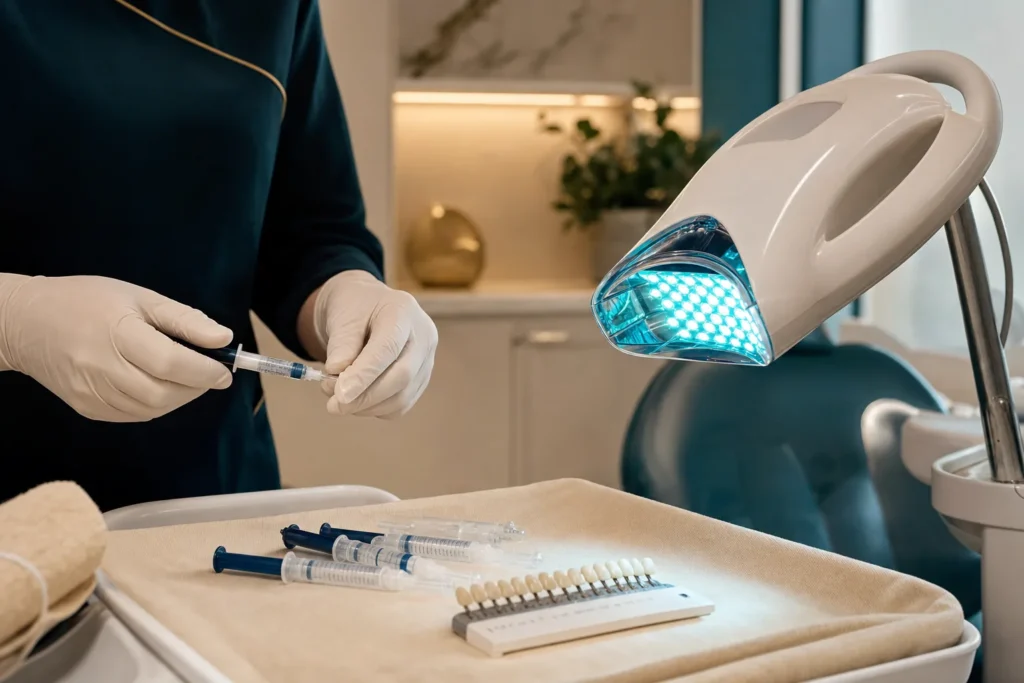
Teeth whitening
Professional teeth whitening lightens the natural colour of your teeth using a peroxide gel applied by a dental professional. This guide explains how it really works, what it can and cannot fix, what it costs, and how to whiten your teeth safely whether you do it at home or travel for treatment.
- Anaesthesia
- None required; whitening is not painful, though a desensitising gel may be used.
- Duration
- In-office session about 30-90 minutes; at-home dentist-supervised trays worn over 2-4 weeks.
- Recovery
- No downtime; mild tooth sensitivity may last 24-48 hours.
- Hospital stay
- None; whitening is an outpatient dental visit with no overnight stay.
Minimum price, for reference only — the final cost is calculated individually after your records are reviewed. You pay the hospital’s price; our service is free for you.
What teeth whitening is
Teeth whitening (also spelled teeth whitening or, in the UK, tooth whitening) is a cosmetic dental treatment that lightens the colour of your natural teeth. It does not remove any tooth structure and it does not change the shape of your teeth — it simply makes them several shades brighter.
The treatment works through a chemical called a bleaching agent. The two agents used in dentistry are hydrogen peroxide and carbamide peroxide (which breaks down into hydrogen peroxide once it touches the tooth). These peroxides seep into the tiny pores of the enamel — the hard outer shell of the tooth — and break apart the dark-coloured molecules that cause staining. Dentists call these molecules chromogens. As the peroxide splits them into smaller pieces, the stain becomes less concentrated and the tooth looks whiter.
It is worth being clear about one thing from the start: whitening only works on natural tooth enamel. It cannot change the colour of crowns, veneers, white fillings, bridges, dentures or implants. If you have these in visible places, they will stay the same shade while your natural teeth lighten around them.
Who is a good candidate (and who should avoid it)
The best candidates are people with healthy teeth and gums whose teeth have yellowed from everyday life — coffee, tea, red wine, berries, tobacco, or simply ageing, which thins the enamel and lets the naturally yellow layer underneath (the dentin) show through. These surface or extrinsic stains respond best to whitening.
Stains that start inside the tooth — called intrinsic stains — are harder to shift. These come from things like childhood antibiotics (tetracycline), too much fluoride in childhood, injury to a tooth, or certain medical treatments. Some whitening can lighten intrinsic stains a little, but they may need other options such as bonding or veneers.
You should usually avoid or postpone whitening if you:
- Are under 18, as official guidance restricts whitening to adults
- Are pregnant or breastfeeding (most dentists advise waiting, as a precaution)
- Have untreated tooth decay, gum disease, exposed roots or cracked teeth — these must be treated first
- Have very sensitive teeth (whitening can make this worse)
- Have crowns, veneers or fillings on your front teeth and expect them to match
A grey or brown tint, rather than yellow, can be a sign of a deeper problem. A dentist should check the cause before any whitening begins.
Types and techniques
There are several ways to whiten teeth, and they differ mainly in the strength of peroxide used and how the treatment is supervised.
In-office (chair-side) whitening. A dental professional applies a high-strength peroxide gel directly to your teeth after carefully protecting your gums with a rubber barrier or a painted-on protective resin. Some clinics shine a light or laser on the gel; the evidence that the light adds much benefit is mixed, but the high gel concentration produces the fastest, most noticeable change — often in a single visit.
Dentist-supplied take-home trays. Your dentist takes impressions and makes custom trays that fit your teeth exactly. You wear them at home with a lower-strength gel for a set time each day over two to four weeks. Because the trays fit well, less gel leaks onto the gums. Many dentists combine this with one in-office session.
Over-the-counter products. Whitening toothpastes, rinses, strips and gels are sold in pharmacies. Toothpastes and rinses mostly remove surface stains and may brighten teeth by only a shade or two. Strips and gels contain peroxide and can work, but they fit everyone the same way, so results and comfort vary. Products carrying an independent quality mark, such as the American Dental Association (ADA) Seal of Acceptance, have been tested for safety and effectiveness.
Health authorities warn against strong DIY kits bought online or whitening offered by non-dental beauty salons — the chemicals are powerful and, used wrongly, can damage teeth and gums.
How it is done, step by step
Whitening does not need any anaesthetic and is not a surgical procedure — it is a straightforward dental visit.
In-office whitening usually goes like this:
- The dentist records your starting shade so you can compare results afterwards.
- Your teeth are cleaned and the gums are isolated with a protective barrier so the gel only touches the teeth.
- The peroxide gel is painted onto the front teeth and left to work, sometimes in several short rounds, occasionally with a light.
- The gel is rinsed off and your new shade is checked. The whole appointment typically takes about 30 to 90 minutes.
With take-home trays, your dentist fits the custom trays, shows you how much gel to use, and you wear them daily as instructed — commonly 30 minutes to a few hours, or sometimes overnight, for two to four weeks. The key safety point is the same in both methods: the gel must stay on the enamel and off the gums.
Recovery, step by step
There is no real recovery period — you can go straight back to your day. What you may notice is short-lived sensitivity.
- First 24-48 hours: some people feel brief, sharp twinges with cold air or cold drinks. This is because the gel temporarily dries out the tooth. It is common and usually settles on its own.
- First couple of days: to avoid new staining while the enamel is more porous, many dentists suggest a "white diet" — avoiding coffee, tea, red wine, dark sauces and tobacco.
- Managing discomfort: a toothpaste for sensitive teeth, fluoride gel, or simply spacing out treatments helps. If trays cause sore gums, you may be using too much gel.
If sensitivity is strong or lasts more than a few days, contact your dentist rather than pushing on with more whitening.
Risks and possible complications
When done by a trained professional, whitening has been used safely for decades and is not linked to long-term harm. The most common issues are temporary:
- Tooth sensitivity — the most frequent side effect, usually mild to moderate and fading within days.
- Gum irritation — soreness or temporary white patches where gel has touched the gums; good gum protection reduces this.
- Uneven results — teeth may whiten at different rates, and any crowns or fillings will not change colour.
- Sore throat from swallowing small amounts of gel during in-office treatment.
The more serious risks come from misuse: overusing products, leaving gel on too long, or using strong unregulated kits can irritate or burn the gums and, in extreme cases, damage enamel. This is exactly why having teeth examined first, and following instructions, matters so much.
Results and how long they last
Most people see teeth brighten by several shades, with in-office treatment giving the quickest, most dramatic change. The result is not permanent. Teeth gradually pick up new stains from food, drink and smoking, and continue to age.
Typical guidance suggests results can last from several months up to around three years, depending heavily on your habits. Heavy coffee, tea, red wine or tobacco use shortens this; good oral hygiene and avoiding staining habits extend it. Many people use occasional "top-up" treatments — for example, a short tray session once or twice a year — to keep the colour up. Whitening can be repeated, but it should not be overdone.
Costs and what changes the price
Teeth whitening is almost always a private, cosmetic treatment and is rarely covered by public health systems. Prices vary widely by country, clinic and method.
As an indicative guide, professional whitening in Turkey often falls in the region of €120 to €450, with simple take-home trays at the lower end and single-visit in-office laser whitening toward the higher end. In Western Europe and the UK the same treatment commonly costs several times more.
What changes the price:
- Method — in-office laser whitening usually costs more than take-home trays
- The brand and strength of the whitening system used
- Whether a cleaning or check-up is needed first
- The clinic's location, reputation and the dentist's experience
- Whether top-up trays or repeat sessions are included
These figures are general ranges to help you plan, not a quote. The actual price varies by case, by dentist and by clinic, and only a personal assessment can give you a real cost.
Why people travel to Turkiye, and how to choose a safe clinic
Turkiye has become a popular destination for cosmetic dentistry, including teeth whitening, because treatment is often more affordable than in Western Europe, modern clinics are easy to find, and whitening pairs naturally with a short trip. Whitening itself is low-risk, but the same care in choosing a provider applies as for any dental work.
Before you book, verify:
- That the treatment is carried out by a registered, qualified dentist — not a beautician or salon. Whitening chemicals are strong and should only be used by dental professionals.
- The clinic's hygiene standards and, ideally, recognised accreditation or international quality certification.
- Clear, written before-and-after expectations, including the shade guide used and what the gel will and will not change.
- Honest information about your crowns, veneers or fillings — a trustworthy clinic will tell you these will not whiten.
- Genuine patient reviews and clear, itemised pricing with no pressure to add unnecessary extras.
Be cautious of offers that promise a dramatic, guaranteed result very cheaply — a careful dentist gives realistic expectations, not promises.
How to prepare and what to ask in your consultation
A good whitening result starts with a check-up. Tell the dentist your full medical and dental history, including pregnancy, sensitive teeth, and any past dental work. Have any decay or gum problems treated first, and a professional clean often improves the result and evenness.
Useful questions to ask:
- Are my teeth and gums healthy enough to whiten right now?
- What is causing my discolouration — surface stains, ageing, or something internal?
- Will my existing crowns, veneers or fillings match my whitened teeth?
- Which method do you recommend for me, and why?
- How many shades of change is realistic in my case?
- What will you do to reduce sensitivity and protect my gums?
- How long should the result last, and what does a top-up cost?
Aftercare and travelling for treatment
Aftercare is simple. For the first day or two, follow a "white diet" and avoid smoking so fresh stains do not set into the more porous enamel. Use a sensitive-teeth toothpaste if you feel twinges, keep up good brushing and flossing, and attend routine dental check-ups. Cutting back on coffee, tea, red wine and tobacco is the single biggest thing you can do to make the result last.
If you are travelling for whitening, the good news is that it has no downtime and no surgical recovery — there is no medical reason that whitening alone would stop you flying, even on the same day. You can comfortably fit it into a short trip. Allow time, though, for any preparatory cleaning or check-up, and for a quick follow-up if you choose take-home trays so the dentist can confirm the fit before you leave. Keep your treatment notes and the details of the system used, in case your dentist at home wants them for future top-ups.
Frequently asked questions
Does teeth whitening damage your enamel?
Why are my teeth yellow?
Will whitening work on crowns, veneers or fillings?
How long do the results last?
Is teeth whitening painful?
In-office whitening or take-home trays — which is better?
Are over-the-counter whitening kits safe?
Can I whiten my teeth if they are sensitive?
Can I whiten my teeth while pregnant?
How much does teeth whitening cost in Turkey?
Can I fly straight after teeth whitening?
Can whitening fix deep, internal stains?
Sources
- NHS — Teeth whitening
- Cleveland Clinic Health Essentials — How To Whiten Your Teeth Safely
- Cleveland Clinic Health Essentials — Is Teeth Whitening Safe?
- Cleveland Clinic — Tooth Discoloration: Causes & Treatment
- American Dental Association — MouthHealthy: Whitening
- American Dental Association — ADA Seal of Acceptance
- Colgate (UK) — Is Teeth Whitening Safe?
- NIH/NLM PMC — Dental sensitivity during in-office and at-home whitening
This article is for general information only and is not medical advice. Always consult a qualified doctor about your individual case.
Specialists in Dentistry
Doctors of the department we work with directly. Which doctor takes your case is decided after the specialists have reviewed your records — your coordinator confirms it, not this page.


Considering this procedure?
Send us your photos and questions. A BergemHealth coordinator and a senior specialist will review your case and reply with honest, personalised guidance — no obligation.
Free consultation