Pulmonary hypertension
Pulmonary hypertension means raised blood pressure in the arteries that carry blood from your heart to your lungs. It is uncommon, often slow to be recognised, and easy to confuse with other conditions because breathlessness and tiredness can have many causes. This guide explains, in plain words, what pulmonary hypertension is, why it happens, how doctors find it, and the treatments that can help you breathe more easily and protect your heart. It is general information, not personal medical advice, and it is written to help you have better conversations with a qualified specialist.
What pulmonary hypertension is
Your heart has two pumps working side by side. The left side pumps oxygen-rich blood out to your whole body. The right side has a gentler job: it pumps blood the short distance into your lungs, where the blood picks up oxygen and drops off carbon dioxide. The blood vessels that carry blood into the lungs are called the pulmonary arteries ("pulmonary" simply means "relating to the lungs").
Pulmonary hypertension means the blood pressure inside those lung arteries is higher than it should be. This is not the same as the ordinary high blood pressure people are tested for at the clinic, which is the pressure in the arteries of the body as a whole. Pulmonary hypertension is a separate, less common problem affecting only the lung circulation.
When the lung arteries become narrowed, stiff or blocked, blood does not flow through them easily. The right side of the heart then has to push much harder to move blood into the lungs. Over time this extra strain can make the right side of the heart enlarge and weaken, which doctors call right-sided heart failure. That is why the condition is taken seriously and why finding it early matters.
Doctors define pulmonary hypertension using a precise measurement called the mean pulmonary artery pressure (the average pressure in the lung arteries). It is diagnosed when this average pressure is above 20 mmHg (millimetres of mercury, the standard unit for blood pressure), measured directly during a specialised test. For comparison, the normal average is well below that level. You do not need to memorise the number; the point is that the diagnosis rests on a real, measurable pressure rather than on symptoms alone.
Pulmonary hypertension is uncommon. Estimates suggest it affects roughly 1% of the world's population, with the figure rising in older people and in those who have heart or lung disease. It can affect adults of any age, and it is somewhat more common in women.
Types and subtypes (the five WHO groups)
"Pulmonary hypertension" is really an umbrella term. The raised pressure can arise for very different reasons, and the cause matters enormously because it decides the treatment. The World Health Organization sorts the condition into five groups based on the underlying mechanism.
- Group 1 — Pulmonary arterial hypertension (PAH). Here the small lung arteries themselves become narrowed and thickened. Some cases have no identifiable cause (called idiopathic). Some run in families and involve inherited gene changes (such as a gene called BMPR2). Others are linked to connective tissue diseases such as scleroderma or lupus, to HIV infection, to liver disease with raised pressure in the liver's veins (portal hypertension), to congenital heart defects present from birth, to certain drugs, or to a parasitic infection called schistosomiasis. PAH is rare but is the group most of the specialised "PAH medicines" are designed for.
- Group 2 — Due to left-sided heart disease. If the left side of the heart is weak or stiff, or a heart valve is not working well, blood backs up into the lungs and raises the pressure there. In many countries this is the most common type overall.
- Group 3 — Due to lung disease or low oxygen. Long-term lung conditions such as chronic obstructive pulmonary disease (COPD), scarring of the lungs (interstitial lung disease), obstructive sleep apnoea, or living at high altitude can lead to raised lung pressures.
- Group 4 — Due to blocked lung arteries. Old blood clots that do not fully clear can leave the lung arteries narrowed or obstructed. This form is called chronic thromboembolic pulmonary hypertension (CTEPH). It is important to identify because, unlike most other forms, it can sometimes be largely corrected with surgery.
- Group 5 — Unclear or mixed causes. This group covers cases linked to blood disorders, metabolic conditions, sarcoidosis, kidney disease and other situations where several factors combine.
Because the groups behave so differently, a treatment that helps one group can be unhelpful or even harmful in another. Sorting out the correct group is one of the main aims of the diagnostic process.
Causes and risk factors
As the five groups show, pulmonary hypertension is usually a consequence of something else rather than a disease that appears entirely on its own. Understanding the common contributors can help you and your doctor look in the right place.
Heart-related causes. Left-sided heart failure, stiffening of the heart muscle, and faulty heart valves are among the most frequent reasons the lung pressure rises. Congenital heart defects (present from birth) can also lead to it over time.
Lung-related causes. COPD, emphysema, pulmonary fibrosis and other scarring conditions, and untreated sleep apnoea can all play a part. Long periods of low blood oxygen cause the lung arteries to tighten.
Clots and other vessel problems. Blood clots that travelled to the lungs (pulmonary embolism) and did not fully dissolve can leave lasting blockages.
Other medical conditions. Connective tissue diseases (such as scleroderma), HIV, chronic liver disease, sickle cell disease and other long-standing blood conditions are recognised associations.
Factors that may increase the risk include a family history of the arterial form, certain prescription and recreational drugs, and exposures such as asbestos. Being a woman, increasing age, and in some data being of older age or Black ethnicity are also associated with higher rates. In a large share of pulmonary arterial hypertension cases worldwide, no specific cause is ever found. Having a risk factor does not mean you will develop the condition, and many people with pulmonary hypertension have no obvious risk factor at all.
Signs and symptoms (and when to see a doctor)
The symptoms of pulmonary hypertension are real but, frustratingly, they are not specific — they overlap with many ordinary conditions, which is one reason the diagnosis is often delayed. The most common early symptom is shortness of breath, especially during activity such as climbing stairs or walking uphill. Many people first notice they simply cannot do as much as they used to.
Other symptoms can include:
- Unusual tiredness or low energy
- Dizziness or light-headedness, sometimes with fainting, particularly on exertion
- Chest pain or a feeling of pressure
- A racing or pounding heartbeat (palpitations)
- Swelling in the ankles, legs, or tummy, caused by fluid building up when the right side of the heart is under strain
- A bluish tinge to the lips or skin in more advanced cases
In the arterial form (Group 1), symptoms may not appear until the condition is fairly advanced, which is exactly why a thoughtful work-up matters when breathlessness has no clear explanation.
When to see a doctor. Make an appointment with your GP or doctor if you have breathlessness that is getting worse, that limits your daily activities, or that you cannot explain. Seek urgent medical help if you faint, have severe or sudden chest pain, or experience breathlessness that comes on suddenly. These symptoms can have many causes, most of them not pulmonary hypertension — but they always deserve assessment by a qualified clinician rather than guesswork at home.
Screening and early detection
There is no general population screening programme for pulmonary hypertension, the way there is for some cancers. Because the condition is uncommon, testing everyone would not be useful. Instead, doctors practise what might be called targeted screening: keeping a close eye on people who are at higher risk.
For example, people with scleroderma and certain other connective tissue diseases may be offered periodic heart scans (echocardiograms) because they are known to have a higher chance of developing the arterial form. People with congenital heart disease, advanced liver disease being considered for transplant, sickle cell disease, or a known family history of heritable pulmonary arterial hypertension may also be monitored. People who have had a pulmonary embolism (a clot in the lungs) and still feel breathless months later should be assessed for the clot-related form (CTEPH), because catching it changes what can be done about it.
If you fall into one of these higher-risk groups, ask your specialist whether monitoring is appropriate for you. For everyone else, the most valuable form of "early detection" is simply not ignoring persistent, unexplained breathlessness and bringing it to a doctor's attention so the cause can be sorted out.
How it is diagnosed
Diagnosing pulmonary hypertension is a two-stage process: first, look for clues that the pressure may be raised; second, confirm it and pin down the cause. Because the early signs are vague, getting to a diagnosis can take time, and being referred to a specialist centre often speeds things up.
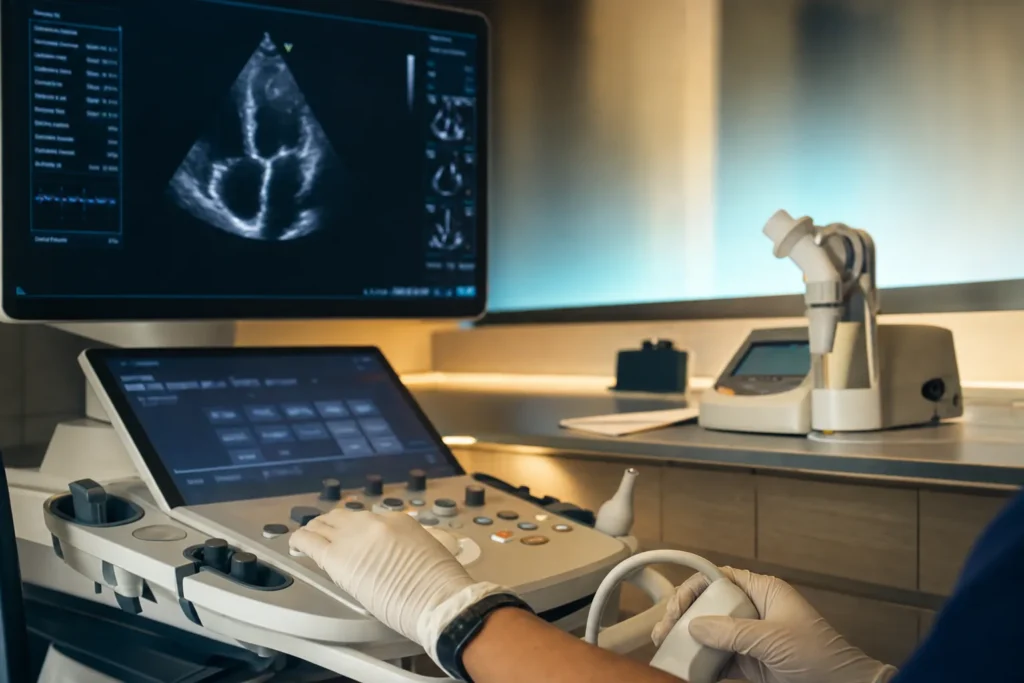
Echocardiogram. This is usually the first key test — an ultrasound scan of the heart that is painless and uses no radiation. It can estimate the pressure in the lung arteries and show how the right side of the heart is coping. It is an excellent screening tool, but on its own it cannot confirm the diagnosis.
Right heart catheterisation. This is the definitive test, considered the gold standard. A thin, flexible tube (catheter) is passed through a vein, usually in the neck or groin, and guided into the right side of the heart and the lung arteries to measure the pressures directly. This is how the mean pulmonary artery pressure is actually measured, and it also helps distinguish the different groups (for instance, separating arterial causes from those due to the left side of the heart).
Other tests help build the full picture and find the cause:
- Blood tests, including a marker called BNP that reflects strain on the heart, and tests for connective tissue diseases, HIV and liver problems.
- Electrocardiogram (ECG) and chest X-ray for an overview of the heart and lungs.
- Breathing (lung function) tests to look for lung disease.
- A ventilation–perfusion (V/Q) scan, which checks for clots blocking the lung arteries — essential for spotting the surgically treatable clot-related form.
- CT or MRI scans of the chest and heart for more detail.
- A six-minute walk test, which measures how far you can walk in six minutes. It is a simple way to gauge how the condition affects you and to track progress over time.
Doctors also describe how much the condition limits you using a four-level scale called the WHO functional class, from Class I (no limitation of ordinary activity) up to Class IV (symptoms at rest). This grading helps guide treatment and follow-up.
Treatment options
Treatment depends heavily on which group you fall into. A central principle runs through all of it: treat the underlying cause wherever possible. If the pressure is driven by left-sided heart disease, lung disease or sleep apnoea, then managing that condition is the priority and is often the most effective step. The specialised "PAH medicines" described below are mainly for Group 1, and using them in the wrong setting is not recommended.
Supportive and general treatments. These may include diuretics (water tablets) to clear excess fluid and reduce swelling, oxygen therapy at home if blood-oxygen levels are low, and anticoagulants (blood thinners) in selected cases to reduce the risk of clots. Doctors may advise on activity, vaccinations, and, importantly, avoiding pregnancy in some forms because it can be dangerous.
Medicines for pulmonary arterial hypertension (Group 1). Over the past three decades, several classes of drug have been developed that relax and widen the lung arteries and slow the disease. They include:
- Calcium channel blockers (for example nifedipine, diltiazem, amlodipine) — but only for the small minority of patients who pass a special test during catheterisation showing they will respond.
- Endothelin receptor antagonists (such as bosentan, ambrisentan, macitentan), which block a substance that narrows the arteries.
- Phosphodiesterase-5 inhibitors (sildenafil, tadalafil), which help the arteries relax.
- Soluble guanylate cyclase stimulators (riociguat), working through a related pathway.
- Prostacyclin-type medicines (epoprostenol, iloprost, treprostinil), given by inhaler, injection or a continuous pump, often for more severe disease.
Treatment is increasingly tailored and sometimes combines drugs from different classes. A newer class of medicine has recently been approved that works in a different way again, reflecting how the field continues to advance.
Procedures and surgery. For the clot-related form (CTEPH, Group 4), an operation called pulmonary endarterectomy removes the old clot material from the lung arteries and can substantially improve, and in some patients essentially resolve, the condition — making it the rare form with a potentially curative surgical option. For people who are not suitable for that surgery, balloon pulmonary angioplasty can be used, in which a tiny balloon is threaded into the narrowed vessels and inflated to reopen them. In selected, advanced cases, a lung transplant or combined heart–lung transplant may be considered, and a procedure called atrial septostomy is occasionally used as a bridge.
The multidisciplinary team. Good care is rarely down to one person. It typically involves pulmonologists (lung specialists) and cardiologists (heart specialists), specialist nurses, radiologists, rheumatologists where a connective tissue disease is involved, surgeons for the clot-related form, pharmacists, and physiotherapists. This is why expert pulmonary hypertension centres, where these specialists work together, are so valuable.
Outlook: what to expect
It is honest to say that most forms of pulmonary hypertension cannot be cured, and equally honest to say that the outlook today is considerably better than it was a generation ago. Before the mid-1990s there were no specific medicines for the arterial form; now there are several classes, and they have improved both how people feel and how long they live. The clot-related form, as noted, can sometimes be largely corrected with surgery.
The outlook varies a great deal from person to person and depends on which group you have, the underlying cause, how early it was found, how the right side of the heart is functioning, and how well the condition responds to treatment. Doctors use the WHO functional class (how much you are limited) and tests such as the six-minute walk distance and the BNP blood marker to estimate risk and adjust treatment.
Published survival figures come from large patient registries and describe groups of people, not individuals. For example, one major registry of people with pulmonary arterial hypertension reported around 91% surviving at one year from enrolment, with five-year survival differing by how limited people were at the start — broadly more favourable for those with milder limitation and less favourable for those with severe symptoms at rest. These are population-level averages from past data; they are not a prediction for any one person, they pre-date some newer treatments, and your own situation can only be assessed by your specialist. The most useful thing to take from such figures is that earlier diagnosis and appropriate, expert treatment are associated with better outcomes — which is a reason for hope and for action, not for alarm.
Living with it and follow-up
Pulmonary hypertension is usually a long-term condition that is managed over years, with regular review at a specialist centre. Follow-up appointments typically repeat tests such as the echocardiogram, the six-minute walk test and blood markers to check that treatment is working and to fine-tune it. Knowing what to expect can make daily life feel more manageable.
Practical points that many people find helpful, and that you can discuss with your team:
- Stay as active as you safely can. Gentle, regular activity within your limits is encouraged, and supervised rehabilitation programmes can help. Avoid pushing to the point of severe breathlessness, dizziness or chest pain.
- Keep on top of your medicines and never stop a pulmonary hypertension drug suddenly without advice, as some can have rebound effects.
- Plan pregnancy carefully. In several forms, pregnancy carries serious risks to the mother, so reliable contraception and a frank conversation with your specialist are important.
- Mind everyday infections. Ask about vaccinations (such as flu and pneumonia) and seek care promptly for chest infections.
- Check before flying or travelling to altitude, as lower oxygen can affect you; your team can advise.
- Look after your emotional health. A long-term diagnosis can be a lot to take in, and support from specialist nurses, patient organisations and others living with the condition can make a real difference.
Carrying a summary of your diagnosis and medicines, and keeping your specialist centre's contact details handy, is sensible — especially if you travel.
Planning treatment abroad: what affects cost and how to prepare your records
Some people choose to seek diagnosis or treatment for pulmonary hypertension outside their home country, whether to access a specialist centre, reduce waiting times, or arrange a particular procedure. If you are considering this, it helps to understand what shapes the overall cost and how to prepare so that any assessment abroad is safe and efficient. We do not quote prices here because they depend entirely on your individual situation; the right next step is a personalised estimate after your records have been reviewed.
Factors that affect cost include:
- Which group and cause you have, since this determines the tests and treatments needed
- Whether you need diagnostic work-up (echocardiogram, right heart catheterisation, V/Q scan, imaging) or ongoing treatment, or both
- The type of treatment — long-term medicines differ greatly in cost from procedures such as pulmonary endarterectomy or balloon pulmonary angioplasty
- How severe the condition is and whether intensive monitoring or a hospital stay is required
- Follow-up needs, and any travel, accommodation and interpreting support
Preparing your records. Bringing a complete, well-organised medical file makes the assessment faster and safer and avoids repeating tests unnecessarily. Useful items to gather, ideally with English translations, include: recent clinic letters and your diagnosis; any echocardiogram and right heart catheterisation reports; V/Q scan, CT or MRI results and the images themselves; lung function and six-minute walk test results; recent blood tests; a current list of all your medicines with doses; and a summary of other health conditions. Because pulmonary hypertension is complex and some forms make travel itself risky, always confirm with your current specialist that you are fit to travel before making firm plans.
For your personal circumstances, the most reliable way to understand what is involved is to request a free consultation, share your records securely, and receive a tailored estimate and plan.
Why Turkiye, and how to choose a good centre
Turkiye has become a well-known destination for international patients, supported by large, modern hospitals, experienced cardiovascular and respiratory specialists, and a substantial number of facilities that hold international quality accreditation. The country is among the world's leaders for hospitals accredited by Joint Commission International (JCI), an independent body that assesses quality and patient safety, with many such hospitals concentrated in Istanbul. For a condition as specialised as pulmonary hypertension, however, the destination matters less than the specific centre and team you choose.
When weighing up any centre — in Turkiye or anywhere else — it is sensible to verify:
- Recognised accreditation, such as JCI, as a baseline indicator of quality and safety standards.
- A dedicated, experienced pulmonary hypertension team that brings together pulmonology and cardiology, with access to right heart catheterisation and the full range of diagnostic tests.
- Experience with your specific form. If you have the clot-related form (CTEPH), ask specifically about experience with pulmonary endarterectomy and balloon pulmonary angioplasty, which are highly specialised.
- Clear, written information about the proposed plan, the doctors' qualifications, and what happens if complications arise.
- A workable follow-up arrangement, since pulmonary hypertension needs ongoing review. Ask how care will be coordinated with your doctors at home.
- Transparent communication in a language you understand, including interpreting support where needed.
A good centre will welcome these questions and will want to review your records carefully before recommending anything. Be cautious of any service that promises a cure, uses superlative marketing claims, or proposes treatment without a thorough assessment first.
Prevention, self-care and getting a second opinion
Because most pulmonary hypertension develops as a result of other conditions, the strongest "prevention" is looking after your heart and lungs and managing any underlying illness well. Steps that support this include not smoking (and getting help to stop if you do), keeping physically active within your ability, maintaining a healthy weight, having sleep apnoea diagnosed and treated, controlling ordinary high blood pressure and heart conditions, and attending recommended monitoring if you have a higher-risk condition such as scleroderma. None of these guarantees you will never develop pulmonary hypertension, but each supports your overall cardiovascular health.
Day-to-day self-care for people already diagnosed means taking medicines exactly as prescribed, attending follow-up appointments, watching for warning signs such as worsening breathlessness or increased swelling and reporting them promptly, and being careful with over-the-counter medicines and supplements, which can interact with pulmonary hypertension treatments — always check with your team or pharmacist first.
Second opinions. Pulmonary hypertension is uncommon and complex, the group and cause can be genuinely difficult to determine, and the right treatment differs sharply between groups. For these reasons, seeking a second opinion from an expert pulmonary hypertension centre is reasonable and often encouraged, particularly before starting long-term specialised medicines or considering surgery. A second opinion is not a sign of distrust; it is good practice for a condition where getting the diagnosis exactly right changes everything that follows. Above all, work with qualified specialists, and use this guide to ask better questions rather than to replace their advice.
Frequently asked questions
Is pulmonary hypertension the same as ordinary high blood pressure?
Can pulmonary hypertension be cured?
What is usually the first symptom?
How is pulmonary hypertension diagnosed?
Why does it so often take a long time to diagnose?
What treatments are available?
What is the outlook for someone with pulmonary hypertension?
Is pulmonary hypertension inherited?
Is it safe to exercise or fly with pulmonary hypertension?
Why does the type or WHO group matter so much?
Should I get a second opinion?
This article is for general information only and is not medical advice. Always consult a qualified doctor about your individual case.
Considering this procedure?
Send us your photos and questions. A BergemHealth coordinator and a department-head specialist will review your case and reply with honest, personalised guidance — no obligation.
Free consultation