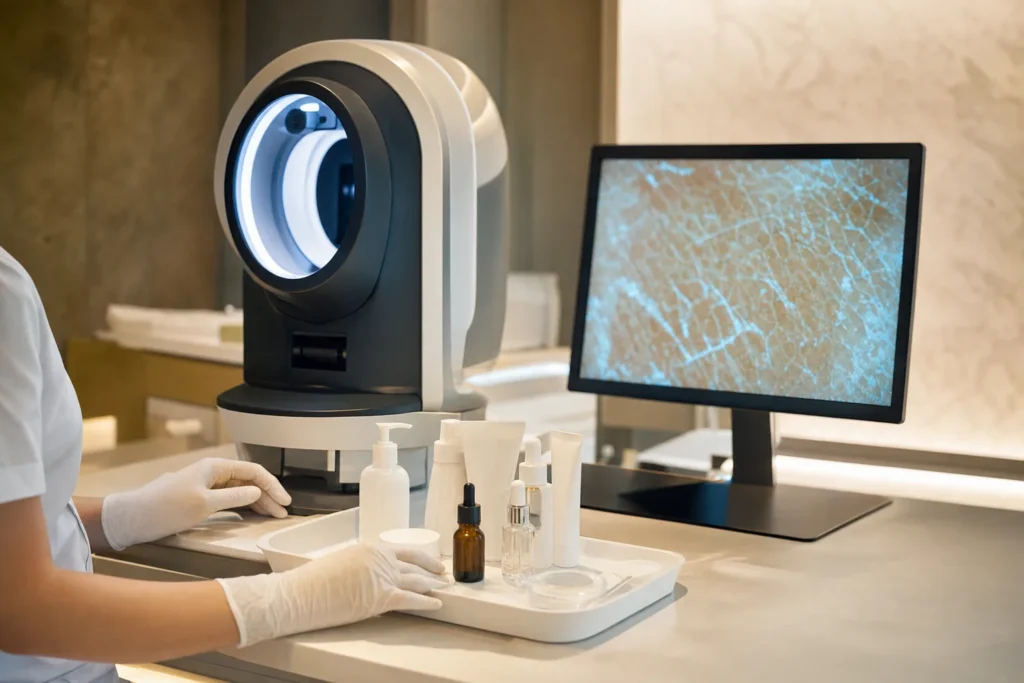
Acne
Acne is one of the most common skin conditions in the world, and almost everyone has lived with it at some point. If you are dealing with spots that will not settle, or marks left behind, this guide explains in plain language what acne is, why it happens, and the many ways it can be treated. The aim is to help you feel informed and calmer about your next steps, whether that means a visit to a pharmacist, a dermatologist, or arranging care abroad.
What acne is
Acne is a common skin condition that causes spots, oily skin, and sometimes skin that feels hot or tender to the touch. It usually appears on the face, but it is also very common on the back, chest, neck, and shoulders, because these areas have the most oil-producing glands.
To understand acne, it helps to picture a single pore. Each pore on your skin is the opening of a tiny tube called a hair follicle, and attached to that follicle is a small gland (the sebaceous gland) that makes an oily substance called sebum. Sebum normally travels up the follicle and onto the skin to keep it soft and protected. Acne develops when this system gets blocked. Dead skin cells and excess oil clog the opening, a normal skin bacterium grows inside, and the surrounding skin becomes inflamed, which means red, swollen, and sometimes sore.
Acne is extremely widespread. The UK's NHS notes that about 95% of people aged 11 to 30 are affected by acne to some degree. It is most common in the teenage years but can start, continue, or return well into adulthood. It is not caused by poor hygiene or dirty skin, and it is not contagious. While acne is rarely dangerous to your physical health, it can affect confidence and mood, and that is a completely valid reason to seek help.
Types and subtypes of acne
Acne is not just one thing. The word covers several kinds of spots, and most people have a mix of them. Dermatologists often divide these into two broad groups.
Non-inflamed spots (comedones):
- Blackheads are small, open clogged pores. The dark colour is not dirt; it is the trapped material reacting with air at the surface.
- Whiteheads are similar clogged pores but closed over with a thin layer of skin, so they look like small flesh-coloured or white bumps.
Inflamed spots:
- Papules are small, tender red bumps.
- Pustules are similar to papules but have a visible white or yellow centre of pus.
- Nodules are large, hard lumps that build up deep under the skin and can be painful.
- Cysts are the most severe type: large, pus-filled lumps that feel like boils and carry the greatest risk of scarring.
Doctors also describe acne by how severe it is, often as mild (mostly blackheads and whiteheads with a few inflamed spots), moderate (more widespread papules and pustules), and severe (many inflamed spots plus nodules or cysts, often on the body as well as the face). A common subtype is hormonal acne, which tends to flare along the lower face and jawline and is often linked to the menstrual cycle. Recognising your pattern matters because it guides which treatment is likely to help most.
Causes and risk factors
Most acne comes down to four things happening together in the pore, as described by the Mayo Clinic and Cleveland Clinic:
- Too much sebum (oil) being produced.
- Dead skin cells that do not shed normally and instead clog the follicle.
- Bacteria (a normal skin germ called Cutibacterium acnes) multiplying in the blocked pore.
- Inflammation, the body's response to the blockage and bacteria, which produces the redness and swelling.
The biggest single driver is hormones. During puberty, a rise in hormones called androgens (such as testosterone, which everyone has in differing amounts) makes the oil glands larger and more active. This is why acne so often begins in the teenage years. Hormone shifts around the menstrual cycle, pregnancy, and some medical conditions can also trigger flare-ups.
Other factors that can raise your risk or make acne worse include a family history (if your parents had acne, you are more likely to as well), certain medicines, friction or pressure from tight clothing, helmets or face coverings, humid conditions, and oily or heavy cosmetic products. Research links some dietary factors, such as a high-sugar diet and skimmed milk, to acne in some people, though the effect is modest and varies a lot from person to person. Importantly, the NHS and MedlinePlus are clear that acne is not caused by dirty skin or by eating chocolate or greasy food, and stress does not cause acne, though it can make an existing flare worse.
Signs, symptoms, and when to see a doctor
The signs of acne are the spots themselves: blackheads, whiteheads, red bumps, pus-filled spots, and in more severe cases deeper nodules or cysts. The skin may look oily and feel sore or warm. Acne can range from a few spots that come and go to widespread, persistent breakouts.
Mild acne can often be managed at home or with help from a pharmacist, who can recommend over-the-counter products. It is sensible to see a doctor or dermatologist if any of the following apply:
- Over-the-counter products have not helped after a couple of months of regular use.
- Your acne is moderate to severe, or you have painful nodules or cysts.
- Spots are leaving marks or scars, or you are tempted to pick or squeeze them.
- The acne is affecting your confidence, mood, or daily life.
- Acne appears suddenly and severely in adulthood, or comes with other symptoms such as irregular periods or excess hair growth, which may point to an underlying hormonal cause worth checking.
Seeking help early is not an overreaction. Getting the right treatment sooner can ease distress and reduce the chance of lasting scars.
Screening and early detection
There is no screening test for acne and no need for one. Unlike conditions such as some cancers, acne is not something that is hidden inside the body and found through routine checks; it shows itself on the skin, so it is diagnosed simply by looking.
The closest thing to early detection is paying attention to your own skin. Treating acne early, while it is still mild, gives the best chance of keeping it under control and of preventing the deeper inflammation that leads to scarring. If you notice spots becoming more frequent, more inflamed, or starting to leave marks, that is a good moment to step up your skincare or seek professional advice rather than waiting for it to worsen.
For adults, particularly women, who develop sudden or unusual acne, a doctor may look beyond the skin to check for hormonal causes. This is not screening in the formal sense, but a sensible investigation when the pattern of acne suggests something more than ordinary breakouts.
How acne is diagnosed
Acne is almost always diagnosed by a simple physical examination. A doctor or dermatologist looks at the affected skin, notes the types of spots present (comedones, papules, pustules, nodules, or cysts), and judges how severe the acne is and which areas are involved. No laboratory test is usually needed to confirm acne.
The clinician will also ask questions to understand the bigger picture. According to the Cleveland Clinic, this may include your family history, how long you have had acne, any medicines you take, your skincare and cosmetic habits, and, for women, your menstrual pattern. These details help work out whether hormones or other factors are playing a part.
Occasionally further tests are appropriate. If acne appears suddenly and severely in an adult, or comes alongside signs such as irregular periods, unwanted hair growth, or other symptoms, a doctor may order blood tests to look for a hormonal condition. There is no formal staging system for acne the way there is for some diseases; instead, doctors grade it as mild, moderate, or severe to guide treatment choices and to track how well it responds over time.
Treatment options
The good news is that acne is highly treatable, and there are many options. The right choice depends on the type and severity of your acne, and finding the best fit can take some trial. A key point from every major source: most treatments take time. The AAD notes it usually takes at least 6 to 8 weeks before you see fewer breakouts, and some treatments work over several months. Patience and consistency matter.
Skincare and over-the-counter products. Gentle washing twice a day with a mild cleanser, avoiding heavy oil-based or pore-clogging products, and not squeezing spots are sensible first steps. Pharmacy products containing benzoyl peroxide (an antiseptic that reduces bacteria and inflammation) or salicylic acid (which helps unclog pores) can clear mild acne.
Topical prescription treatments (applied to the skin) include:
- Topical retinoids (vitamin A derivatives) that help clear and prevent clogged pores. They are not used in pregnancy.
- Topical antibiotics, which reduce bacteria and inflammation and are usually combined with benzoyl peroxide to limit antibiotic resistance.
- Azelaic acid, which unclogs pores and reduces bacteria, with generally mild side effects.
Oral (tablet) treatments for moderate to severe acne include:
- Oral antibiotics, often a tetracycline, used for a limited period alongside topical treatment.
- Hormonal treatments for women, such as certain combined contraceptive pills or spironolactone, a medicine that reduces the effect of androgens and can help stubborn hormonal acne along the jawline.
- Isotretinoin, a powerful oral medicine for severe acne that has not responded to other treatments. It reduces oil production, unclogs pores, and lowers bacteria. Because it has significant possible side effects and must not be taken in pregnancy, it is prescribed and monitored only by specialists.
In-clinic procedures can support medical treatment. These include corticosteroid injections to calm large painful cysts, professional extraction of blackheads and whiteheads, chemical peels, and laser or light-based therapies. Acne is best managed by a coordinated team, which may include a dermatologist, a pharmacist, a nurse, and, where hormones are involved, an endocrinologist (a hormone specialist) or gynaecologist.
Outlook: what to expect
For most people, the outlook is genuinely reassuring. Acne tends to improve with time and very often settles by the mid-twenties, though some people experience it for longer or have it return in adulthood. With appropriate treatment, the great majority of people see clearer skin; the AAD states that virtually everyone can achieve clearer skin with proper care, even if it sometimes takes more than one approach to find what works.
It is realistic to expect a gradual improvement rather than an overnight change. Because treatments work over weeks to months, the clearest sign of progress is fewer new spots appearing, not the disappearance of existing ones straight away. Some treatments may cause initial dryness or irritation that eases as your skin adjusts.
The main long-term concern is scarring and marks. Inflamed, deep spots, and picking or squeezing, increase the risk of permanent scars. The flat brown or red marks left after a spot heals (known as post-inflammatory pigmentation) are different from true scars and usually fade over months. Treating active acne well is the single best way to protect against scarring, which is why early, effective treatment is so worthwhile.
Living with acne and follow-up
Living well with acne is partly about steady daily habits and partly about looking after how you feel. Day to day, a gentle routine helps: wash affected skin twice a day with a mild product, avoid scrubbing hard, choose makeup and sunscreen labelled non-comedogenic (meaning they are less likely to clog pores), and resist the urge to pick or squeeze, which worsens inflammation and scarring.
Follow-up is an important part of treatment because acne medicines act slowly and sometimes need adjusting. Your clinician will usually review progress after several weeks to see whether the plan is working, manage any side effects, and step treatment up or down as needed. If you are on oral antibiotics, these are used for a defined period rather than indefinitely. If you are taking isotretinoin or hormonal treatment, regular monitoring is part of safe care.
The emotional side deserves attention too. Acne can affect self-esteem, mood, and social confidence, and these feelings are real and common. Talking to your doctor about the impact, not just the spots, is appropriate, and support is available if acne is weighing on your mental health. You are not being vain by wanting to treat it.
Planning treatment abroad: what affects cost and how to prepare
Some people choose to have acne and acne-scar treatment as part of a planned trip abroad, often combining a dermatology consultation with in-clinic procedures. If you are considering this, it helps to understand what shapes the overall cost and how to prepare, so you can request an accurate, personalised estimate.
Several factors affect the cost of acne care:
- Severity and type of acne, since mild acne needing topical treatment differs greatly from severe acne needing oral medication and monitoring.
- Which treatments are chosen: prescription creams, oral medicines, hormonal therapy, or in-clinic procedures such as chemical peels, laser therapy, or extractions.
- Scar treatment, if needed, which often involves several sessions of procedures like laser resurfacing or microneedling and depends on the number and type of scars.
- Number of sessions and follow-up visits, as many treatments are repeated over weeks.
- Consultation and any tests, such as blood tests for a suspected hormonal cause.
To prepare, gather your records before you travel: a list of treatments you have already tried and how your skin responded, any current medicines and allergies, recent blood test results if you have them, and clear photographs of your skin over time. Sharing these in advance helps a clinic give you a realistic plan and a tailored quote. Because every case is different, the most reliable way to understand cost is to request a personalised estimate through a free consultation rather than relying on general figures.
Why Turkiye, and how to choose a good centre
Turkiye has become a well-known destination for dermatology and cosmetic skin care, with many internationally experienced clinics, modern equipment, and care coordinated for international patients. That popularity is a reason to choose carefully rather than quickly, because quality varies between providers anywhere in the world.
When choosing a centre, focus on things you can verify:
- Accreditation and licensing. Look for hospitals or clinics with recognised national licensing and, ideally, international accreditation, which reflects standards of safety and quality.
- A qualified specialist team. Acne should be assessed and treated by a board-certified dermatologist, not by non-medical staff. Where hormones or scarring are involved, access to related specialists is a plus.
- A proper consultation. A good centre examines your skin, takes a history, explains the options and their realistic timelines, and is honest that results take weeks to months.
- Transparency. Clear information on what each treatment involves, possible side effects, the number of sessions, and a written, itemised estimate.
- Continuity of care. Ask how follow-up will work once you return home, since acne treatment is ongoing.
Be cautious of any provider promising a guaranteed cure, instant results, or pressuring you toward the most expensive option. Reputable care is measured, evidence-based, and tailored to you. A trustworthy clinic will welcome your questions and give you time to decide.
Prevention, self-care, and getting a second opinion
You cannot always prevent acne, especially when hormones are the main driver, but everyday self-care can reduce flare-ups and protect your skin. Helpful habits, drawn from the NHS, MedlinePlus, and the AAD, include:
- Washing affected areas gently twice a day and after sweating heavily, using a mild cleanser rather than harsh scrubbing.
- Choosing non-comedogenic, oil-free makeup, sunscreen, and skincare, and removing makeup before bed.
- Not picking, squeezing, or popping spots, which raises the risk of marks and scars.
- Avoiding heavy or greasy hair and skin products on acne-prone areas.
- Sticking with a treatment long enough to judge it, since most need weeks to work.
If your acne is not improving, or you disagree with a recommended plan, seeking a second opinion is reasonable and common. Different dermatologists may suggest different approaches, and acne sometimes needs more than one strategy before the right combination is found. A second opinion is especially worth considering before starting a powerful medicine such as isotretinoin, or before committing to a course of scar-treatment procedures, so you feel confident in the plan. Good clinicians expect and respect this. The goal is care that is safe, suited to your skin, and one you understand and feel comfortable with.
Frequently asked questions
Is acne caused by poor hygiene or not washing enough?
How long does acne treatment take to work?
Does diet, chocolate, or greasy food cause acne?
Should I pop my spots?
When should I see a doctor or dermatologist about acne?
Will my acne leave scars, and can scars be treated?
What is isotretinoin, and is it safe?
Does acne go away on its own?
Is hormonal acne different, and how is it treated?
Can adults get acne, or is it only teenagers?
This article is for general information only and is not medical advice. Always consult a qualified doctor about your individual case.
Considering this procedure?
Send us your photos and questions. A BergemHealth coordinator and a department-head specialist will review your case and reply with honest, personalised guidance — no obligation.
Free consultation