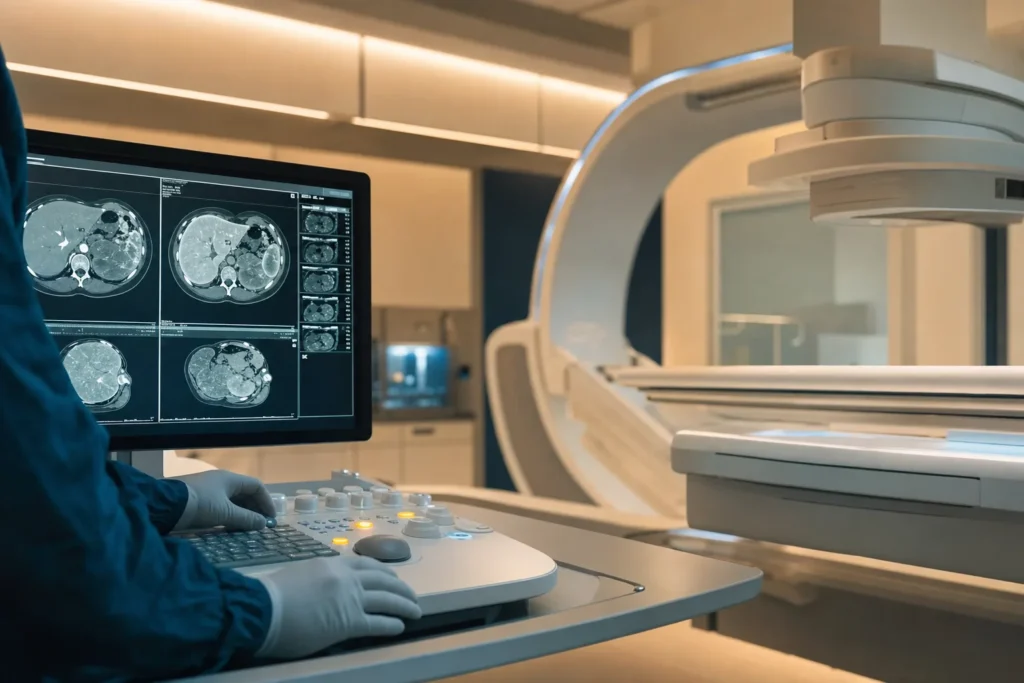
Liver cancer
A liver cancer diagnosis raises many questions, and clear, trustworthy information is one of the most useful things you can have. This guide explains the two main forms of primary liver cancer, hepatocellular carcinoma and cholangiocarcinoma, how they are diagnosed and staged, the full range of treatment options, and the practical steps involved if you are considering care abroad, including in Turkiye. It is written to support informed conversations with your own medical team, not to replace them.
What liver cancer is
Primary liver cancer begins in the cells of the liver itself, rather than spreading there from another organ. (Cancer that starts elsewhere and travels to the liver is called metastatic or secondary liver cancer and is treated differently.) The liver is a large organ in the upper right abdomen that filters blood, processes nutrients, makes bile to help digestion, and removes toxins, so cancer here can affect many body functions.
There are two principal types of primary liver cancer. Hepatocellular carcinoma (HCC) arises from hepatocytes, the main liver cells, and accounts for the large majority of cases, roughly 85 to 90 percent of primary liver cancers. Cholangiocarcinoma, also called bile duct cancer, arises from the cells lining the bile ducts, the network of tubes that carry bile from the liver and gallbladder to the small intestine. Although both are grouped under liver and bile duct cancer, they differ in their biology, risk factors, and treatment, which is why understanding which type you have is an essential first step.
Worldwide, liver cancer is one of the more common causes of cancer-related death, and the number of new cases has been influenced by chronic viral hepatitis and, increasingly, by metabolic and fatty liver disease. Knowing the type and stage of the disease helps a specialist team match treatment to your individual situation.
Types and subtypes
Hepatocellular carcinoma (HCC) is the most frequent primary liver cancer. It usually develops in a liver already affected by chronic injury and scarring (cirrhosis), although it can occur without cirrhosis. A less common variant, fibrolamellar carcinoma, tends to occur in younger people without underlying liver disease and behaves somewhat differently.
Cholangiocarcinoma (bile duct cancer) is classified by where it starts along the bile duct system:
- Intrahepatic cholangiocarcinoma begins in the smaller bile ducts inside the liver. It is the less common form, making up roughly 10 percent of bile duct cancers.
- Perihilar (also called hilar or Klatskin tumour) begins where the right and left ducts join to form the common hepatic duct, just outside the liver. This is the most common form of extrahepatic bile duct cancer.
- Distal cholangiocarcinoma begins in the part of the bile duct nearest the small intestine, passing through the pancreas.
This distinction matters because intrahepatic, perihilar, and distal tumours are surgically and medically managed in different ways, and certain modern targeted treatments apply mainly to intrahepatic tumours that carry specific genetic changes.
Risk factors and causes
Most risk factors for liver cancer work by causing long-term liver inflammation and scarring. For hepatocellular carcinoma, the most important contributors, as described by the American Cancer Society and the National Cancer Institute, include:
- Chronic hepatitis B or hepatitis C infection, which are leading causes worldwide, particularly when they progress to cirrhosis.
- Cirrhosis from any cause, including alcohol-related liver disease and viral hepatitis.
- Heavy alcohol use over many years.
- Metabolic dysfunction-associated steatotic liver disease (MASLD, formerly non-alcoholic fatty liver disease), often linked with obesity and type 2 diabetes.
- Aflatoxins, toxins from a mould that can contaminate poorly stored grains and nuts, especially when combined with hepatitis infection.
- Inherited metabolic conditions such as hereditary haemochromatosis, Wilson disease, and alpha-1 antitrypsin deficiency.
- Tobacco smoking, anabolic steroid use, and certain industrial chemical exposures.
For cholangiocarcinoma, recognised risk factors include primary sclerosing cholangitis (a chronic bile duct inflammation, often associated with inflammatory bowel disease), bile duct stones and chronic biliary inflammation, certain congenital bile duct abnormalities, chronic viral hepatitis and cirrhosis, and, in parts of Asia, infection with liver flukes (parasites such as Opisthorchis viverrini and Clonorchis sinensis). Having a risk factor does not mean cancer will develop, and many people with liver cancer have no identifiable risk factor. Vaccination against hepatitis B, treatment of hepatitis C, limiting alcohol, and managing weight and diabetes are meaningful ways to lower risk.
Signs and symptoms, and when to see a doctor
Early liver cancer often causes no symptoms, which is why surveillance in people at higher risk is so important. When symptoms do appear, they may include:
- Pain or discomfort in the upper right abdomen, or a feeling of fullness.
- Unexplained weight loss and loss of appetite.
- Feeling unusually tired or weak.
- Nausea or vomiting.
- A swollen abdomen (fluid build-up, called ascites).
- Jaundice (yellowing of the skin or whites of the eyes), dark urine, and pale, clay-coloured stools, which are particularly associated with cholangiocarcinoma when a bile duct becomes blocked.
- Itchy skin and, sometimes, fever.
These symptoms can be caused by many conditions other than cancer. If you notice persistent or unexplained symptoms, especially jaundice, new abdominal pain, or unintended weight loss, see a doctor promptly. People with cirrhosis or chronic hepatitis should follow their recommended monitoring schedule even when feeling well.
Screening and early detection
There is no general population screening for liver cancer. Instead, surveillance is recommended for people at increased risk, because finding HCC early can widen the range of treatment options. Major liver disease guidelines, including those of the American Association for the Study of Liver Diseases, recommend surveillance for adults with cirrhosis, typically using abdominal ultrasound, with or without a blood test for alpha-fetoprotein (AFP), about every six months. Some people with chronic hepatitis B are also advised to undergo surveillance even without cirrhosis.
Ultrasound is widely available and safe, though its sensitivity for very small tumours is limited; combining it with AFP can improve early detection. If surveillance finds a suspicious nodule, further imaging with CT or MRI is used to clarify the finding. For cholangiocarcinoma, there is no standard screening for the general population, but people with primary sclerosing cholangitis may be monitored more closely by their specialist. If you have a chronic liver condition, ask your doctor whether surveillance applies to you and how often.
Diagnosis and staging
Diagnosis combines imaging, blood tests, and sometimes a tissue sample. Imaging typically includes ultrasound, multiphase CT, and contrast-enhanced MRI. A distinctive feature of HCC is that, in a person with cirrhosis, the characteristic pattern of contrast enhancement on CT or MRI can be enough to make the diagnosis without a biopsy. Blood tests may include AFP for HCC and CA 19-9 for cholangiocarcinoma, alongside liver function tests, although these markers are not diagnostic on their own. For bile duct cancer, specialised imaging such as magnetic resonance cholangiopancreatography (MRCP) and endoscopic procedures (ERCP) help map the ducts, relieve blockages, and obtain samples. A biopsy (a small tissue sample examined under a microscope) confirms the diagnosis when imaging is not definitive and can be analysed for genetic changes that guide treatment.
For HCC, one widely used framework is the Barcelona Clinic Liver Cancer (BCLC) system, which is valued because it links the stage to recommended treatment. It considers tumour size and number, whether blood vessels or other organs are involved, how well the liver is functioning (often measured by the Child-Pugh score), and the person's general fitness (performance status). BCLC stages are described as 0 (very early), A (early), B (intermediate), C (advanced), and D (terminal/end-stage). For cholangiocarcinoma, the TNM system of the American Joint Committee on Cancer is generally used. Accurate staging is the foundation for choosing therapy, so it is reviewed carefully by the team.
Treatment options
Liver cancer treatment is highly individualised and is best decided by a multidisciplinary tumour board, a meeting of liver surgeons, medical and radiation oncologists, hepatologists, interventional radiologists, and others who together match treatment to the cancer type, stage, and the health of the rest of the liver. Options include:
- Surgery (resection): removing the part of the liver containing the tumour. This is most suitable when the tumour is confined and the remaining liver works well.
- Liver transplant: replacing the diseased liver, an option for selected people with early HCC who meet specific criteria, which treats both the cancer and the underlying liver disease.
- Ablation: destroying small tumours with heat (radiofrequency or microwave), cold (cryoablation), or other techniques, often through the skin.
- Transarterial therapies: TACE (transarterial chemoembolisation) delivers chemotherapy and blocks the tumour's blood supply, while TARE (transarterial radioembolisation, also called Y-90) delivers radiation through the artery. These are commonly used for intermediate-stage HCC.
- Radiation therapy, including precise techniques such as stereotactic body radiotherapy.
- Targeted therapy: drug classes that interfere with tumour blood vessels and growth signals are used for advanced HCC. For intrahepatic cholangiocarcinoma, certain tumours carry specific genetic changes (such as FGFR2 fusions or IDH1 mutations) that may be matched to corresponding inhibitor drugs.
- Immunotherapy: checkpoint inhibitor drug classes, sometimes combined with targeted therapy or chemotherapy, are used in advanced disease.
- Chemotherapy: for cholangiocarcinoma, combinations of chemotherapy drugs (for example a gemcitabine-based regimen), sometimes with immunotherapy, are used for advanced disease.
Drug names mentioned in medical sources are examples of broad classes, not endorsements; the specific regimen depends on your tumour's features and the latest evidence reviewed by your team.
Prognosis and survival
Survival statistics describe what has happened across large groups of people; they are population-level figures, strongly stage-dependent, and cannot predict the outcome for any individual. They also reflect people treated years earlier and may not capture recent advances. With that important caveat, the American Cancer Society reports the following five-year relative survival from the U.S. SEER database.
For liver cancer (mainly HCC), based on people diagnosed 2014 to 2020: localised (confined to the liver) about 37 percent, regional (spread to nearby structures or lymph nodes) about 13 percent, distant (spread to far organs) about 3 percent, and all stages combined about 22 percent.
For intrahepatic bile duct cancer (diagnosed 2015 to 2021): localised about 25 percent, regional about 12 percent, distant about 3 percent, and all stages combined about 10 percent. For extrahepatic bile duct cancer: localised about 19 percent, regional about 20 percent, distant about 2 percent, and all stages combined about 13 percent.
Individual outlook depends on many factors, including the exact stage, how well the rest of the liver functions, your general health, and how the cancer responds to treatment. Your oncologist is the right person to explain how these numbers may, or may not, apply to your situation.
Supportive and follow-up care
Good care extends well beyond treating the tumour. Supportive (palliative) care, which can be provided alongside active treatment at any stage, focuses on relieving symptoms and maintaining quality of life. For liver cancer this may include managing pain, controlling abdominal fluid (ascites), relieving bile duct blockages with a stent to ease jaundice and itching, addressing nausea and poor appetite, and nutritional and emotional support.
After treatment, follow-up typically involves regular clinic visits, blood tests, and imaging to watch for recurrence and to monitor liver function. Because many people with liver cancer also have underlying liver disease, ongoing management of that condition, for example treating hepatitis or avoiding alcohol, is an important part of care. Tell your team promptly about new or worsening symptoms between visits.
Planning treatment abroad: what affects cost and how to prepare records
If you are considering treatment in another country, careful preparation makes the process smoother and helps any team give you accurate guidance. Rather than quoting prices, it is more useful to understand the factors that influence the overall cost and plan of care:
- The type and stage of cancer, and whether the liver is otherwise healthy or affected by cirrhosis.
- The treatment approach recommended, for example surgery, transplant, ablation, transarterial therapy, radiation, or systemic drug therapy, each of which involves different resources.
- The length of hospital stay and intensity of monitoring required.
- The need for genetic or molecular testing of the tumour, which can guide targeted or immunotherapy options.
- Imaging and laboratory work, follow-up visits, medications, and accommodation and travel for you and a companion.
To prepare, gather a complete set of records: recent imaging (CT or MRI) on disc, pathology and biopsy reports, blood test results including liver function and tumour markers, your hepatitis status, a list of medications, and summaries of any treatment already received. Having these ready allows a specialist team to review your case and provide a personalised plan and estimate. Bergem Health can help coordinate this review and arrange a consultation so your individual situation is assessed before any decisions are made.
Care in Turkiye, and choosing a cancer centre
Turkiye (Turkey) is one destination for international patients seeking liver cancer treatment, with hospitals that offer the full range of modern care, including liver surgery, transplantation, interventional radiology, and systemic therapies. The aim of choosing carefully is not to find a single best clinic, an idea that is not meaningful in cancer care, but to find a centre whose capabilities genuinely fit your needs.
When evaluating any cancer centre, in Turkiye or elsewhere, it is reasonable to verify several things:
- Whether the centre runs a true multidisciplinary tumour board that reviews each case across specialties.
- The hospital's accreditation and quality standards.
- Experience and case volume in the specific procedure you may need, for example liver resection, transplant, or transarterial therapy.
- Access to molecular testing and the targeted and immunotherapy options relevant to cholangiocarcinoma.
- Clear communication, including interpretation services, and transparent plans for follow-up and complications.
A concierge service such as Bergem Health can help you compare centres against these criteria, organise a remote review of your records, and coordinate logistics, while your medical decisions remain in the hands of qualified specialists.
Clinical trials and second opinions
Liver cancer treatment is advancing, and clinical trials may offer access to newer approaches under careful supervision. Trials are not only for advanced disease; some study earlier-stage treatment, combinations, or supportive care. Ask your oncologist whether a trial might be appropriate for you and what it would involve.
A second opinion is a normal and constructive part of cancer care, especially before major decisions such as surgery or transplant. Another experienced team may confirm the plan or suggest additional options, which can give you confidence. Seeking a second opinion is your right and does not offend a good clinician; many tumour boards welcome it. Whatever path you choose, the consistent advice across authoritative sources is to make decisions together with a qualified oncologist and multidisciplinary team who know your full medical picture.
Frequently asked questions
What is the difference between HCC and cholangiocarcinoma?
What are the early symptoms of liver cancer?
Who should be screened for liver cancer?
How is liver cancer diagnosed?
What is BCLC staging?
What treatments are available for liver cancer?
Can liver cancer be cured?
What do liver cancer survival statistics mean for me?
How do I prepare records to get treatment abroad?
Should I get a second opinion?
What factors affect the cost of liver cancer treatment?
This article is for general information only and is not medical advice. Always consult a qualified doctor about your individual case.
Considering this procedure?
Send us your photos and questions. A BergemHealth coordinator and a department-head specialist will review your case and reply with honest, personalised guidance — no obligation.
Free consultation