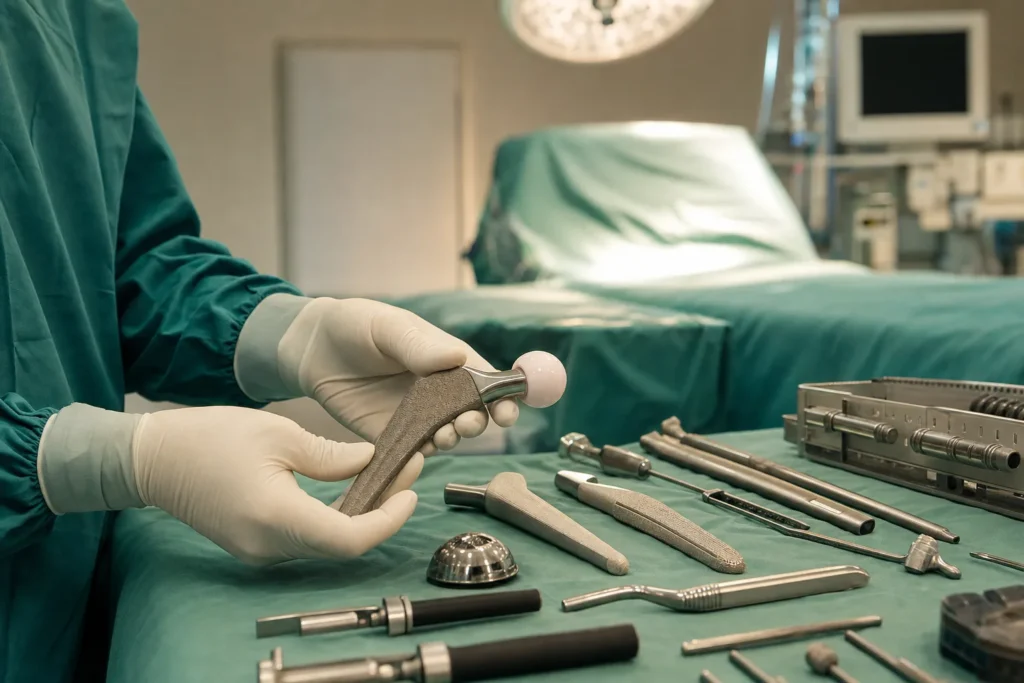
Total hip replacement
If hip pain has started to run your day, deciding what to do about it can feel overwhelming. This guide explains total hip replacement in plain language, from who actually benefits to how the surgery works, what recovery really looks like week by week, the risks worth knowing, how long a modern implant tends to last, and what shapes the cost, including for people considering treatment in Turkiye.
- Anaesthesia
- General anaesthesia or spinal/epidural (numb from the waist down, often with sedation)
- Duration
- Usually about 1 to 2 hours of surgery
- Recovery
- Walking with aids within a day; back to most daily activities in 6 to 12 weeks; fuller recovery over several months
- Hospital stay
- Typically 1 to 3 nights; some fit patients go home the same or next day
What a total hip replacement is
A total hip replacement (doctors call it a total hip arthroplasty) is an operation that swaps a worn-out hip joint for an artificial one. Your hip is a ball-and-socket joint: the rounded top of the thigh bone (the "ball", or femoral head) sits inside a cup-shaped socket in the pelvis. Smooth cartilage normally lets the ball glide painlessly inside the socket.
When that cartilage wears away, bone rubs on bone. The result is pain, stiffness and a hip that no longer moves the way it should. A hip replacement removes the damaged ball and the worn lining of the socket and replaces them with man-made parts: a new socket cup, a smooth liner inside it, a ball, and a stem that anchors into the thigh bone. Together these recreate a gliding joint so you can move with far less pain.
It is one of the most common and reliable orthopedic operations in the world. For people whose hip pain no longer responds to gentler measures, it is often life-changing, restoring sleep, mobility and independence.
Who is a good candidate (and who should think twice)
Surgery is usually considered when hip pain interferes with everyday life and simpler treatments are no longer enough. According to the American Academy of Orthopaedic Surgeons, common reasons to consider it include:
- Hip pain that limits walking, bending or climbing stairs
- Pain that continues even at rest, by day or at night
- Stiffness that makes it hard to lift or move the leg
- Little relief from painkillers, physiotherapy, walking aids or activity changes
The underlying cause is most often osteoarthritis (age-related wear-and-tear of the joint), but it can also be rheumatoid arthritis (where the immune system inflames the joint), osteonecrosis (when the blood supply to the bone is lost), a previous hip fracture, or a childhood hip problem that caused arthritis later.
There are no strict age or weight limits. Most patients are between 50 and 80, but surgeons judge each person individually, and successful replacements have been done at almost any age. Surgery is generally delayed or avoided if you have an active infection, are too unwell for anaesthesia, or if your pain is mild enough to manage other ways. Smoking, poorly controlled diabetes, obesity and weak surrounding muscles all raise the risk of complications, so your team may ask you to address these first to give the new joint the best start.
Types and techniques
"Hip replacement" covers a few related options, and your surgeon will recommend one based on your anatomy, age, bone quality and activity level.
Total vs partial. A total hip replacement replaces both the ball and the socket. A partial replacement (hemiarthroplasty) swaps only the ball and is mainly used for certain hip fractures rather than arthritis.
How the parts are fixed. Implants are either cemented, using a special bone cement that sets quickly, or press-fit (uncemented), where the implant has a textured surface that your own bone grows into over time. Some surgeons use a mix of both (a "hybrid"). Bone quality and age guide the choice.
What the parts are made of. The ball is usually polished metal or ceramic; the liner inside the socket is hard-wearing plastic, ceramic or metal. These pairings are chosen for durability and smooth movement.
Surgical approach. The surgeon reaches the joint from the back (posterior), the side (lateral), or the front (direct anterior). The anterior approach spares more muscle and may mean a slightly quicker early recovery and fewer movement restrictions, while the posterior approach is widely used and very well understood. Studies overall show similar long-term results, so an experienced surgeon working with their preferred, proven approach matters more than the label.
Minimally invasive and robotic-assisted. Some centres use smaller incisions, or computer navigation and robotic guidance to help position the implant precisely. These can be helpful tools, but they are not magic; good outcomes still depend most on the surgeon's skill and experience.
How the operation is done
Anaesthesia. You will have either a general anaesthetic (you are fully asleep) or a spinal/epidural anaesthetic, which numbs you from the waist down, often combined with sedation so you are relaxed and drowsy. Your anaesthetist will discuss which is safer for you; spinal anaesthesia is often favoured and may carry advantages for some patients.
The steps, in plain terms. Once you are comfortable and numb or asleep, the surgeon makes an incision over the hip to reach the joint. They remove the worn ball at the top of the thigh bone and clean out the damaged socket. A new metal cup is fitted into the socket with a smooth liner inside it. A stem is placed into the hollow of the thigh bone, either cemented or press-fit, and a new ball is attached to the top. The surgeon checks that the joint moves smoothly and is stable, then closes the wound with stitches or clips.
How long it takes. The operation itself usually takes around 1 to 2 hours, though this varies with each case. You will then spend time in a recovery area while the anaesthetic wears off and your team monitors you closely.
Recovery, step by step
Recovery is gradual, and the timeline below is typical rather than guaranteed. Your age, fitness and the surgical approach all affect your pace.
Day of surgery to day 1. Nurses and physiotherapists will get you moving surprisingly soon, often standing and taking a few steps with a frame or crutches within a day. Early movement helps prevent blood clots and stiffness.
In hospital (about 1 to 3 nights). You learn to walk safely with aids, climb a few stairs, and practise getting in and out of bed. Many fit patients go home once the wound is settling and they can move around safely; some leave the same or next day.
Weeks 1 to 6 at home. You keep up daily exercises set by your physiotherapist and walk a little more each day. Stitches or clips are usually removed around 10 days. Many people move from crutches to a single stick during these weeks. Expect some bruising and swelling, which settles over time.
Weeks 6 to 12. Most people return to light work around 6 weeks, depending on the job, and can usually drive again after about 6 weeks once they can react safely (always check with your surgeon and insurer). A follow-up appointment is typically scheduled around 6 to 12 weeks to review progress.
Several months. Strength, stamina and confidence keep improving for months. Sticking with your exercises is the single biggest thing you can do to get a strong, well-moving hip.
If you have a posterior or lateral approach, you may be asked to follow precautions for a while: avoid bending the hip past 90 degrees, do not cross your legs, and avoid very low chairs. These reduce the early risk of the new joint slipping out of place.
Risks and possible complications
Hip replacement is generally safe and the risk of a serious complication is low, but no operation is risk-free. It helps to know what your team is actively working to prevent.
- Blood clots. Clots can form in the leg veins (deep vein thrombosis) and, rarely, travel to the lungs. Early walking, blood-thinning medication and compression stockings lower this risk.
- Infection. Infection around the new joint occurs in fewer than about 2 in 100 people. It can appear soon after surgery or, rarely, years later. Antibiotics and careful wound care reduce the risk.
- Dislocation. The new ball can slip out of the socket, with the highest risk in the first few months while tissues heal. Following movement precautions helps prevent it.
- Difference in leg length. Surgeons aim to match leg lengths, but a small difference can occur; a shoe insert usually solves it if needed.
- Loosening or wear. Over many years the implant can loosen or wear, which may eventually need a revision (a second operation).
- Less common problems. These include nerve or blood-vessel injury, bone fracture during surgery, ongoing stiffness or pain, and the usual risks of anaesthesia.
Call your clinic urgently if you notice spreading redness, increasing pain, fever, wound discharge, or a hot, swollen, painful calf, or get emergency help for sudden chest pain or breathlessness.
Results and how long they last
For most people, the biggest reward is reliable pain relief and a return to walking, sleeping and daily life without the joint dominating their thoughts. Function and confidence keep improving over the months after surgery.
How long does the implant itself last? A large 2019 review in The Lancet, drawing on national joint registries, estimated that around 89% of hip replacements were still working at 15 years, about 70% at 20 years, and roughly 58% at 25 years. It is worth knowing that this data included some older implant materials no longer in common use, so modern implants may do at least as well.
Younger and more active people tend to wear implants faster, simply because they use them more. To help your new hip last, surgeons generally encourage low-impact activities such as walking, swimming, cycling, golf and dancing, and suggest avoiding high-impact pursuits like running and jumping, which speed up wear. These are general guidelines, not promises; your own result depends on many personal factors.
Costs and what changes the price
The price of a hip replacement varies widely between countries, hospitals and individual cases, so any figure is a guide, not a quote. As an indicative range, a total hip replacement package in Turkiye commonly falls somewhere around EUR 6,000 to EUR 12,000, often noticeably less than self-pay prices in many Western European or North American private hospitals.
What moves the price up or down:
- Implant type and brand. Premium ceramic or specialist implants cost more than standard ones.
- Technique. Robotic-assisted or computer-navigated surgery can add to the cost.
- Surgeon and hospital. Experience, reputation and accreditation all factor in.
- Your health. Other medical conditions can mean more tests, monitoring or a longer stay.
- What is included. Check whether the price covers the implant, anaesthesia, hospital stay, medicines, physiotherapy, follow-up scans and, for travellers, airport transfers and accommodation.
This range is illustrative only and varies by case, surgeon and clinic; it is not a quote. Always ask for a written, itemised quote so you can compare like with like.
Why people travel to Turkiye, and how to choose a safe clinic
Turkiye has become a major destination for hip replacement because it combines experienced orthopedic surgeons, modern hospitals and prices that are often lower than private care elsewhere, frequently with little or no waiting list. The country has a large number of hospitals holding Joint Commission International (JCI) accreditation, an internationally recognised mark of quality and patient-safety standards.
Cost should never be the only factor. Before you commit, verify the essentials:
- Hospital accreditation. Look for JCI accreditation or an equivalent recognised standard.
- Surgeon credentials. Confirm the surgeon is a qualified, board-certified orthopedic specialist and ask how many hip replacements they perform each year.
- Clear, written quote. Insist on an itemised list of exactly what is and is not included.
- Implant details. Ask which implant will be used and request the documentation, which is useful for future care anywhere in the world.
- The full plan. Understand who manages complications, how follow-up works once you are home, and how to reach the team afterwards.
- Honest communication. A trustworthy clinic discusses risks plainly and never promises a perfect outcome.
Reputable concierge services can help you compare accredited hospitals, arrange interpreters and coordinate the practical side of travel, but the medical decisions should always rest on verified credentials and clear information.
How to prepare and what to ask at your consultation
Good preparation makes recovery smoother. In the weeks before surgery you may be asked to:
- Have blood tests, an ECG and imaging so the team can plan and confirm you are fit for anaesthesia
- Stop smoking and reduce alcohol, which helps wounds heal
- Review your medicines; some blood thinners and anti-inflammatory drugs are paused beforehand
- Reach a healthy weight where possible and build up the muscles around the hip with gentle exercise
- Prepare your home: a firm higher chair, a raised toilet seat, a grabber tool and removing trip hazards all help
- Follow fasting instructions (usually no food or drink for several hours before surgery)
Helpful questions to ask your surgeon:
- Am I a good candidate, and what happens if I wait?
- Which approach and implant do you recommend for me, and why?
- How many of these operations do you do each year, and what are your complication rates?
- What anaesthetic will I have?
- What does recovery look like for someone my age and fitness, and when can I expect to walk, work and travel?
- What is included in the price, and what happens if there is a complication?
Aftercare and travelling for treatment (including when it is safe to fly)
Aftercare is part of the treatment, not an afterthought. Keep up the exercises your physiotherapist gives you, take any prescribed blood thinners exactly as directed, keep the wound clean and dry, and attend follow-up checks. Watch for warning signs of infection or a blood clot and report them promptly.
Flying after surgery. This needs care, because sitting still on a flight raises the risk of blood clots while you are still healing. Many surgeons advise avoiding longer flights in the early period and waiting until they confirm it is safe, commonly around 6 weeks or more, with longer waits often suggested for long-haul travel. If you have travelled abroad for surgery, plan to stay locally for a recovery and review period before flying home rather than leaving immediately. On any flight, move your ankles regularly, walk the aisle when you can, stay well hydrated, and wear compression stockings if advised. Always get individual clearance from your surgeon before booking, as the right timing depends on you.
Travelling for treatment generally. Build extra days into your trip for the operation, the hospital stay and early rehab. Confirm before you go who will manage your follow-up once home, make sure you leave with your implant card and a clear discharge summary, and keep the clinic's contact details to hand. A little planning here protects both your recovery and your peace of mind.
Frequently asked questions
How long does a total hip replacement operation take?
Will I be asleep during the surgery?
How long will I stay in hospital?
When will I be able to walk again?
How long is the full recovery?
How long does a hip replacement last?
What are the main risks?
When is it safe to fly after hip replacement?
What activities should I avoid afterwards?
How much does a hip replacement cost in Turkiye?
How do I choose a safe clinic and surgeon abroad?
This article is for general information only and is not medical advice. Always consult a qualified doctor about your individual case.
Considering this procedure?
Send us your photos and questions. A BergemHealth coordinator and a department-head specialist will review your case and reply with honest, personalised guidance — no obligation.
Free consultation