Rheumatoid arthritis
Rheumatoid arthritis is a long-term condition in which the body's own immune system mistakenly attacks the lining of the joints, causing pain, swelling and stiffness. A diagnosis can feel overwhelming, but it helps to know that today's treatments are far more effective than they once were. With early care from a rheumatologist, many people control their symptoms well and keep doing the things that matter to them. This guide explains, in plain language, what rheumatoid arthritis is, how it is diagnosed and treated, what to expect over time, and how to prepare if you are considering arranging treatment in Turkiye.
What rheumatoid arthritis is
Rheumatoid arthritis (often shortened to RA) is a chronic, meaning long-lasting, autoimmune disease. Your immune system normally protects you by attacking germs. In an autoimmune disease, that same defence system makes a mistake and turns on healthy parts of your own body. In rheumatoid arthritis, it attacks the synovium the thin lining that wraps around your joints and helps them move smoothly.
This attack causes inflammation: the joint lining becomes swollen, warm and painful. Over time, if the inflammation is not controlled, it can wear away the cartilage (the smooth cushioning at the ends of bones) and even the bone itself, which can change the shape of a joint. This is why getting treatment early matters so much it is aimed at calming the inflammation before lasting damage happens.
Rheumatoid arthritis usually affects the small joints first, especially in the hands, wrists and feet, and it tends to affect the same joints on both sides of the body (for example, both wrists rather than just one). It is different from osteoarthritis, the common wear-and-tear arthritis that comes with age and joint use. Rheumatoid arthritis is driven by the immune system, can begin at any age, and can also affect other parts of the body beyond the joints.
Rheumatoid arthritis is more common than many people realise. A large global study estimated that about 17.6 million people worldwide were living with the condition in 2020, roughly 0.2% of the world's population. It affects women about two to three times more often than men.
Types and subtypes
Rheumatoid arthritis is one condition, but doctors describe it in a few different ways that can be useful to understand.
Seropositive and seronegative. When you are tested, your blood may or may not contain certain antibodies (proteins made by the immune system). The two that matter here are rheumatoid factor (RF) and anti-CCP antibodies (also called anti-cyclic citrullinated peptide antibodies).
- Seropositive RA means these antibodies are found in your blood. Most people with rheumatoid arthritis are seropositive.
- Seronegative RA means the antibodies are not detected, even though you have the symptoms and signs of the disease. The diagnosis is then based on your symptoms, examination and other tests.
By age of onset. Doctors sometimes group the condition by when it starts. It most often begins in middle age, but it can appear earlier (sometimes called young-onset, generally before around age 40) or later in life (later-onset, often after about 60).
A related but separate condition, juvenile idiopathic arthritis, affects children and is managed differently. There is also an overlap term, inflammatory arthritis, which is the wider family of joint diseases caused by inflammation that rheumatoid arthritis belongs to.
Causes and risk factors
The honest answer is that doctors do not yet know exactly what causes rheumatoid arthritis. The current understanding is that it comes from a combination of factors rather than a single cause: your genes, your environment, and possibly hormones all play a part. In someone who is genetically susceptible, something in the environment seems to trigger the immune system to start attacking the joints.
Having certain genes (such as variations in the HLA genes, which help the immune system tell the body apart from outside invaders) raises the risk but importantly, having these genes does not mean you will definitely develop the disease. Many people carry them and never get rheumatoid arthritis.
Known risk factors include:
- Sex. Women are affected about two to three times more often than men.
- Age. It can begin at any age but most commonly starts in middle age.
- Family history. Having a close relative with rheumatoid arthritis or another autoimmune condition can raise your risk.
- Smoking. Cigarette smoking increases the chance of developing the disease and can make it more severe; continuing to smoke can make treatment less effective.
- Being overweight. Carrying extra weight appears to raise the risk somewhat.
- Gum disease. Long-standing gum disease (periodontal disease) has been linked to a higher risk.
It is worth saying clearly: rheumatoid arthritis is not contagious you cannot catch it from someone or pass it on, and nothing you did caused it.
Signs and symptoms (and when to see a doctor)
Rheumatoid arthritis often begins gradually, over weeks or months, though it can sometimes come on more quickly. The most common symptoms are:
- Joint pain, swelling, warmth and tenderness often starting in the small joints of the hands, fingers, wrists and feet.
- Morning stiffness joints feel stiff when you wake up or after sitting still, and this typically lasts 30 minutes or longer. (Brief stiffness that eases within a few minutes is more typical of wear-and-tear arthritis.)
- Symmetry the same joints are usually affected on both sides of the body.
- Fatigue a deep tiredness that is not always explained by activity.
- Low fever, loss of appetite, or a general feeling of being unwell.
- Firm bumps under the skin called rheumatoid nodules, often near pressure points such as the elbows.
Symptoms often come and go. A period when symptoms get worse is called a flare; a quieter period is called remission.
When to see a doctor. It is sensible to make an appointment if you have joint pain and swelling, or stiffness that lasts more than about half an hour in the morning, especially if it affects both sides of the body and lasts more than a few weeks. Seeing a doctor early matters because starting treatment promptly gives the best chance of protecting your joints. There is no need to panic many causes of joint pain are not rheumatoid arthritis but it is worth getting checked.
Screening and early detection
There is currently no routine screening test for rheumatoid arthritis the way there is for some cancers. In other words, healthy people are not screened for it in advance. The disease is found when someone notices symptoms and is then examined and tested.
What does make a real difference is early detection once symptoms appear. Interestingly, the anti-CCP antibody can sometimes be present in the blood before joint symptoms begin, which is one reason doctors take early or unexplained joint pain seriously, particularly in people with a family history or other risk factors.
If you have ongoing joint pain and swelling, the most useful step is to see your doctor without long delay. Many health systems aim to refer people with suspected new inflammatory arthritis to a rheumatologist (a specialist in joint and autoimmune conditions) quickly, because the early months are an important window for preventing joint damage.
How it is diagnosed
There is no single test that confirms rheumatoid arthritis. Instead, a doctor usually a rheumatologist puts together several pieces of information to reach a diagnosis.
Medical history and examination. The doctor asks about your symptoms, how long you have had them, how they affect daily life, and whether anyone in your family has a similar condition. They examine your joints for swelling, warmth, tenderness and how well they move.
Blood tests. These help support the diagnosis and measure how active the inflammation is:
- Rheumatoid factor (RF) and anti-CCP antibodies antibodies often found in rheumatoid arthritis.
- ESR (erythrocyte sedimentation rate) and CRP (C-reactive protein) markers that rise when there is inflammation in the body.
- Full blood count which can show anaemia (a low level of red blood cells), common with ongoing inflammation.
It is important to know that blood tests are not perfect. Some people with rheumatoid arthritis have normal antibody results (seronegative RA), and some people without the disease can have a positive rheumatoid factor. That is why the whole picture matters, not one result alone.
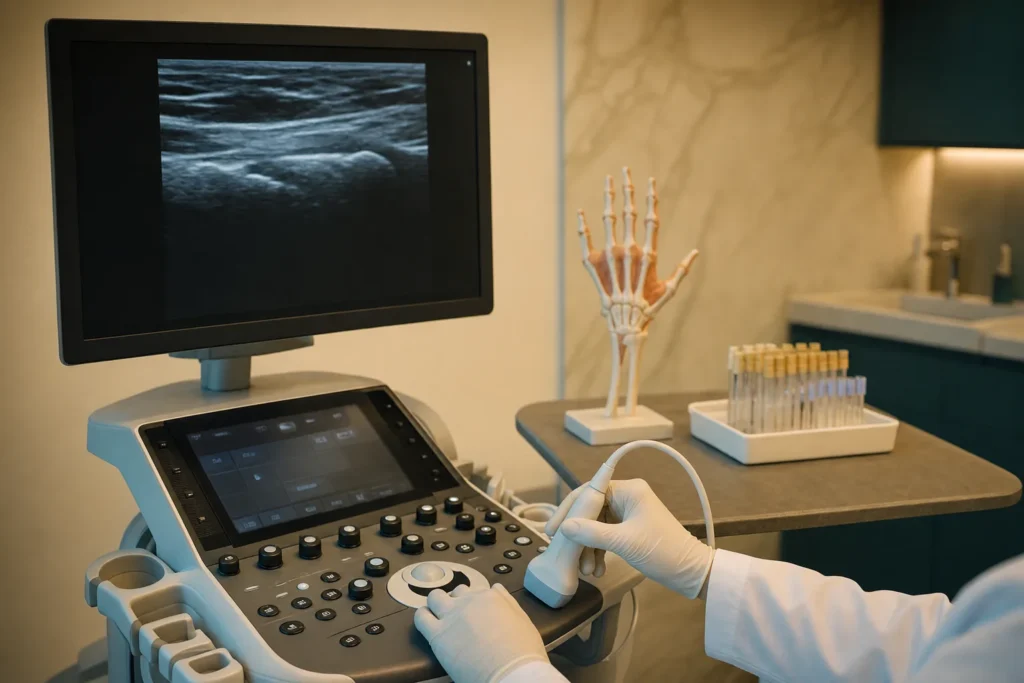
Imaging. X-rays can show joint damage in more advanced disease, while ultrasound and MRI (magnetic resonance imaging) scans can pick up inflammation and early changes that X-rays miss. These scans also help track how the condition responds to treatment.
Doctors often use agreed classification criteria (developed by rheumatology organisations) that score factors such as which joints are involved, the antibody and inflammation results, and how long symptoms have lasted, to help confirm the diagnosis consistently.
Treatment options
There is currently no cure for rheumatoid arthritis, but and this is the encouraging part treatments today are very effective at controlling the disease. The modern goal is to reduce inflammation as much as possible, ideally reaching remission (little or no disease activity) or at least low disease activity, and to protect the joints from damage. This approach is often called treat-to-target: you and your doctor set a goal and adjust treatment, with regular check-ups, until that goal is reached.
Disease-modifying drugs (DMARDs). These are the foundation of treatment. They do not just ease symptoms they slow down the disease itself and help prevent joint damage. Methotrexate is usually the first one tried and is often very effective. It can take a few weeks to work, so patience is needed early on.
Biologic medicines and targeted drugs. If conventional DMARDs are not enough, doctors may add a biologic (a medicine made from living cells that blocks specific parts of the immune attack) or a JAK inhibitor (a targeted tablet that calms the immune signals driving inflammation). These are powerful options that have transformed care for many people.
Medicines for symptoms. NSAIDs (non-steroidal anti-inflammatory drugs) can relieve pain and stiffness. Corticosteroids (steroids) reduce inflammation quickly and are useful for short periods, such as during a flare, but doctors aim to avoid long-term steroid use because of side effects.
Supportive therapies. Physiotherapy keeps joints moving and muscles strong; occupational therapy offers practical ways to protect joints and make daily tasks easier. Staying active, eating well and not smoking all support treatment.
Surgery. Most people never need surgery. When a joint is badly damaged despite medication, procedures such as joint replacement (for example, of the hip or knee) or repair of tendons can relieve pain and restore function.
Care is usually delivered by a multidisciplinary team a rheumatologist working alongside specialist nurses, physiotherapists, occupational therapists, pharmacists and, when needed, orthopaedic surgeons.
Outlook and what to expect
The outlook for rheumatoid arthritis has improved greatly over recent decades, mainly because of earlier diagnosis and better medicines. With modern treatment, many people are able to keep working, stay active and continue doing the things they enjoy, even if some activities need adapting.
It helps to expect a condition that comes and goes rather than follows a straight line. There are likely to be flares (worse periods) and remissions (quieter periods). The aim of treatment is to make remission longer and flares fewer and milder. Some people reach a state where they have little or no disease activity for long stretches.
Because rheumatoid arthritis is driven by inflammation throughout the body, it can sometimes affect more than the joints. Possible complications include thinning of the bones (osteoporosis), dryness of the eyes and mouth (a condition called Sjogren's syndrome), inflammation affecting the lungs, eyes, heart or blood vessels, and a somewhat higher long-term risk of heart disease. Long-standing inflammation is also linked with a small increase in the risk of certain conditions such as lymphoma. These complications are part of why keeping the inflammation well controlled and attending regular check-ups is so valuable they are monitored for and, in many cases, prevented or treated.
Every person's experience is different, and none of these general points is a prediction for any individual. Your rheumatologist is the best person to discuss what your own outlook is likely to be, based on your specific situation.
Living with it and follow-up
Living well with rheumatoid arthritis is very possible, and much of it comes down to a steady partnership with your care team and some helpful daily habits.
Regular follow-up. Expect ongoing appointments to check how active the disease is, review how your medicines are working, and watch for side effects. Some medicines (such as methotrexate and biologics) need periodic blood tests to keep you safe. These reviews are also when treatment is adjusted to keep you at your target.
Movement and rest. Gentle, regular exercise such as walking, swimming or cycling helps keep joints flexible and muscles strong, and can ease fatigue. Balancing activity with rest, and pacing yourself during flares, makes a real difference.
Daily life. Occupational therapists can suggest simple tools and techniques to protect your joints during everyday tasks. Looking after your weight, eating a balanced diet, caring for your teeth and gums, and stopping smoking all support your treatment.
Emotional wellbeing. A long-term condition can affect mood, energy and sleep. Feeling low or anxious at times is common and understandable. Talking to your care team, connecting with patient support groups, or seeking psychological support are all reasonable steps it is part of caring for the whole person, not just the joints.
Planning treatment abroad: what affects cost and how to prepare your records
Rheumatoid arthritis is a long-term condition managed mainly with medicines and regular monitoring, rather than a one-off operation. If you are considering arranging part of your care such as a specialist assessment, advanced imaging, a treatment plan, or joint surgery for an already damaged joint in another country, it helps to understand what shapes the overall cost.
Factors that typically affect the cost of care include:
- The type of care needed a consultation and tests cost very differently from, say, a joint replacement operation.
- Which medicines are used conventional DMARDs, biologics and targeted drugs differ widely in price, and treatment is ongoing.
- Tests and imaging blood tests, X-rays, ultrasound or MRI scans.
- Hospital stay and the team involved whether care is outpatient or involves admission and surgery.
- Follow-up and monitoring the regular reviews and blood tests that this condition requires.
- Travel and accommodation if you are coming from abroad.
To prepare, it helps to gather your medical records in advance: your diagnosis and how it was made, recent blood test results (including RF, anti-CCP, ESR and CRP), any imaging reports or images, a current list of your medicines and doses, and notes on past treatments and how you responded to them. Having these ready lets a specialist give you accurate advice and a realistic plan.
Because the right plan and its cost depend entirely on your individual situation, the most reliable way to understand what your care would involve is to request a personalised estimate through a free consultation, where your records can be reviewed by a specialist team.
Why Turkiye and how to choose a good centre
Turkiye (Turkey) has become a well-known destination for international patients, with a large number of hospitals that hold recognised quality accreditation and experienced specialist teams. For a long-term condition like rheumatoid arthritis, the most important thing is not the destination itself but the quality, continuity and clarity of the care you receive.
If you are choosing a centre, here are sensible things to verify:
- Accreditation. Look for internationally recognised quality accreditation, such as Joint Commission International (JCI).
- National authorisation for international patients. Turkiye regulates health tourism through its Ministry of Health, supported by the state-owned company USHAŞ. Facilities serving international patients are expected to hold an International Health Tourism Authorization Certificate, and there is a public list of authorised hospitals and facilitators you can check.
- A qualified specialist team. Confirm that a rheumatologist will lead your care, supported by the wider multidisciplinary team, and ask about their experience with rheumatoid arthritis specifically.
- Clear communication and follow-up. Because this is a long-term condition, ask how monitoring, prescriptions and follow-up will work once you return home, and how your home doctor will be kept informed.
- Transparent information. A trustworthy centre will explain the plan, the tests involved and the costs clearly, and will give you a written treatment plan.
Be cautious of anyone who promises a cure, uses superlative claims, or pressures you to decide quickly. Good care is measured, evidence-based and built around your individual needs.
Prevention and self-care
There is no proven way to guarantee you will never develop rheumatoid arthritis, because its exact cause is not fully understood and genes play a part you cannot change. However, some steps may lower the risk or reduce the severity of the disease, and they are good for your health overall.
- Don't smoke. Not smoking and quitting if you do is one of the clearest things linked to lower risk and better outcomes.
- Keep a healthy weight. This reduces strain on joints and is associated with lower risk.
- Look after your gums. Good dental and gum care is linked with lower risk.
- Stay active. Regular movement supports joint and overall health.
For people who already have rheumatoid arthritis, the most powerful form of self-care is staying engaged with treatment: taking medicines as prescribed, attending follow-up appointments, keeping active within your limits, and reporting flares or new symptoms early so your plan can be adjusted.
If you have been diagnosed and are unsure about your treatment options, it is always reasonable to seek a second opinion from another qualified rheumatologist. A good doctor will welcome it, and it can help you feel confident in the plan you choose.
Frequently asked questions
Is rheumatoid arthritis the same as osteoarthritis?
Can rheumatoid arthritis be cured?
What are the early warning signs?
Who gets rheumatoid arthritis?
Is rheumatoid arthritis hereditary or contagious?
How is rheumatoid arthritis diagnosed?
What is methotrexate and why is it used first?
What are flares and remission?
Will I need surgery?
Can diet or lifestyle changes help?
What should I prepare before seeing a specialist abroad?
Sources
- NHS Rheumatoid arthritis
- Cleveland Clinic Rheumatoid Arthritis
- Mayo Clinic Rheumatoid arthritis Symptoms and causes
- MedlinePlus Rheumatoid Arthritis
- NIH NIAMS Rheumatoid Arthritis
- NIH NIAMS RA Diagnosis, Treatment and Steps to Take
- 2021 ACR Guideline for the Treatment of Rheumatoid Arthritis
- Arthritis Foundation Rheumatoid Arthritis Treatment Guidelines
- Global Burden of Rheumatoid Arthritis 1990-2020 (Lancet Rheumatology)
- USHAS Hospitals with Health Tourism Authorization Certificates (Turkiye)
This article is for general information only and is not medical advice. Always consult a qualified doctor about your individual case.
Specialists in Rheumatology
Doctors of the department we work with directly. Which doctor takes your case is decided after the specialists have reviewed your records — your coordinator confirms it, not this page.




Considering this procedure?
Send us your photos and questions. A BergemHealth coordinator and a senior specialist will review your case and reply with honest, personalised guidance — no obligation.
Free consultation