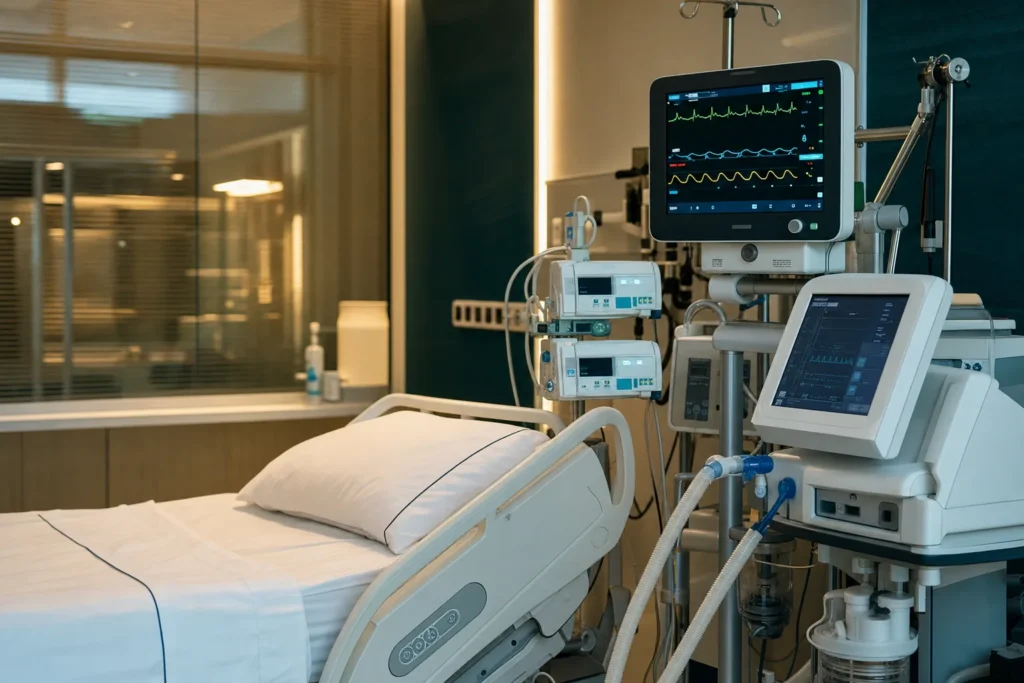
Sepsis & septic shock
Sepsis is a medical emergency in which the body's response to an infection begins to harm its own organs. It can be frightening to read about, but understanding what sepsis is, how to spot it early, and how it is treated can genuinely help. This guide explains it in plain language, calmly and carefully, so you know what matters most: catching it early and getting urgent medical help.
What sepsis and septic shock are
Sepsis is a serious, life-threatening reaction to an infection. Normally, when germs get into the body, the immune system fights them off in a controlled way. In sepsis, that response becomes overwhelming and disordered: instead of staying focused on the infection, the immune system starts to damage the body's own tissues and organs. Doctors describe it as life-threatening organ dysfunction caused by a dysregulated (out-of-balance) response to infection. In plain terms, the body's defence system overreacts and begins to harm the very organs it is meant to protect.
Sepsis is not the same as the infection itself. The infection is the trigger; sepsis is the body's harmful overreaction to it. As part of that reaction, the body can release substances that cause widespread inflammation (swelling and irritation throughout the body), tiny blood clots, and "leaky" blood vessels. This reduces blood flow, so organs do not get enough oxygen and can start to fail.
Septic shock is the most severe form of sepsis. It is diagnosed when, despite being given fluids into a vein, a person's blood pressure stays dangerously low and they need medicines to keep blood circulating, and when a blood test shows a high level of lactate (a chemical that builds up when tissues are starved of oxygen). People in septic shock are among the most seriously ill patients in any hospital and are cared for in an intensive care unit (ICU). Doctors today usually talk about two levels rather than three: sepsis and the more severe septic shock.
The single most important thing to know is that sepsis is a true emergency. It can develop very quickly, and the sooner it is recognised and treated, the better the chances of recovery. That is why this guide focuses so much on spotting it early.
Types and how doctors classify it
Sepsis is not really a disease with separate "types" in the way some illnesses are. Instead, doctors group it in a few useful ways.
By severity. The current international system (often called Sepsis-3) describes two levels. Sepsis means an infection has caused organ dysfunction (one or more organs not working properly). Septic shock is a deeper level in which blood pressure cannot be kept up without medication and lactate is raised, signalling that the circulation is failing. An older system also used the term "severe sepsis," but the modern approach simplifies this to sepsis and septic shock.
By the type of germ. Most cases of sepsis are triggered by bacterial infections, but viruses (including influenza and COVID-19), fungi and, rarely, parasites can also cause it.
By where the infection started. Doctors often describe sepsis by its source, because finding and controlling that source is central to treatment. Common starting points are the lungs (pneumonia), the urinary tract (bladder and kidney infections), the abdomen (such as appendicitis or a bowel or gallbladder infection) and the skin or soft tissues (such as cellulitis or an infected wound).
Where it was caught. Sepsis can begin in the community (most cases start before a person reaches hospital) or as a complication of being in hospital, where it is more likely to involve germs that are harder to treat with antibiotics.
Causes and risk factors
Sepsis always begins with an infection somewhere in the body. Any infection can, in principle, lead to sepsis, but some are far more common starting points. According to health authorities, infections most often begin in four places: the lungs, the urinary tract, the gastrointestinal tract (the gut and nearby organs) and the skin. Common examples include pneumonia, kidney and bladder infections, appendicitis, and infected wounds or cellulitis.
It is important to understand that sepsis is not caused by a person doing something wrong. It is the body's own response that gets out of balance, and that can happen even with an infection that seemed minor at first.
Some people are more likely to develop sepsis than others. Recognised risk factors include:
- Being very young (babies under one year) or older (often described as over 65, and risk rises further with age)
- Being pregnant or having recently given birth
- A weakened immune system, for example from cancer, cancer treatment such as chemotherapy, HIV, or medicines that suppress the immune system
- Long-term conditions such as diabetes, kidney disease, liver disease (cirrhosis) or obesity
- Being in hospital, especially in intensive care, or having recently had surgery
- Having medical devices such as a urinary catheter, an intravenous (IV) line or a breathing tube, which can give germs a way in
- Serious wounds or burns
- Heavy use of alcohol or drugs
Having a risk factor does not mean a person will get sepsis; many people with these factors never do. It simply means it is wise to be a little more alert to infections and to seek advice early if one seems to be getting worse.
Signs and symptoms, and when to get help
Sepsis can be hard to spot because its early signs can look like other illnesses, such as a bad case of flu or a chest or urine infection. There is no single symptom that proves it is sepsis. What matters is the overall picture, especially if someone with an infection is becoming rapidly more unwell.
In adults, warning signs described by health authorities include:
- Confusion, disorientation or slurred speech
- Feeling extremely unwell, with severe pain or discomfort
- Fast breathing or breathlessness
- A high heart rate or weak pulse
- Shivering, feeling very cold, or a fever, or a body temperature that is abnormally low
- Skin that looks pale, mottled, blotchy, blue or grey, or feels clammy and sweaty
- Passing much less urine than usual
In babies and young children, look out for very fast or laboured breathing, a fit or convulsion, skin that looks pale, blue, grey or blotchy, a rash that does not fade when you press a glass against it, being unusually sleepy or hard to wake, or a high or unusually low temperature.
When to get urgent help. Sepsis is a medical emergency. If you think you or someone you are caring for may have sepsis, call your local emergency number or go to an emergency department straight away. It can help to ask directly: "Could this be sepsis?" Trust your instincts. Acting quickly when something feels seriously wrong is exactly the right thing to do, even if it turns out not to be sepsis.
Screening and early detection
There is no routine screening test for sepsis in the way there is for, say, some cancers. You cannot be "screened" for sepsis at a check-up, because it only develops in response to an active infection. Instead, the focus is on early recognition once an infection is present.
In hospitals and clinics, staff use simple bedside tools to flag people who might be developing sepsis. One widely used quick check is sometimes called qSOFA, which looks at three things: fast breathing, low blood pressure and a change in alertness or thinking. None of these on its own means sepsis, but together, in someone with an infection, they prompt staff to look more closely and act fast. Many hospitals also run automatic alerts in their computer systems that warn the team when a patient's vital signs are drifting in a worrying direction.
For the public, "early detection" really means knowing the warning signs in the section above and seeking help quickly. It also means not ignoring an infection that is getting worse instead of better, particularly in someone who falls into a higher-risk group. Many people who develop sepsis had contact with a healthcare service in the days beforehand, so raising the question of sepsis early can make a real difference.
How sepsis is diagnosed
There is no single test that says "yes, this is sepsis." Doctors make the diagnosis by putting together the story, an examination and a set of tests, while at the same time hunting for the infection that started it. Importantly, treatment is usually begun straight away based on suspicion, rather than waiting for every result, because time matters.
Typical tests and steps include:
- Blood tests to look for signs of infection and inflammation, to check how the kidneys, liver and blood-clotting are working, and to measure organ function.
- Lactate level, a blood test that shows whether tissues are short of oxygen. A high lactate is an important sign of severity and is one of the markers used to define septic shock.
- Blood cultures, where samples of blood are sent to grow any germs present so the exact cause can be identified and the right antibiotic chosen. These are usually taken before antibiotics are started, where possible.
- Urine, sputum (phlegm) or wound samples, depending on where the infection might be.
- Imaging such as a chest X-ray, ultrasound or CT scan to find the source, for example pneumonia or an abscess (a pocket of pus).
- Blood pressure and other vital signs, monitored closely, since persistently low blood pressure despite fluids is part of how septic shock is defined.
To classify how severe the illness is, doctors assess how many organs are affected and how badly, looking at things such as blood pressure, oxygen levels, kidney function, the liver and the blood platelets. This helps the team decide on the level of care needed, including whether intensive care is required.
Treatment options
Sepsis is treated as an emergency, and the early hours are critical. The general principles are the same worldwide and are summarised in international guidance (often called the Surviving Sepsis Campaign). The aim is to support the failing body, treat the infection and remove its source.
Immediate treatment usually includes:
- Antibiotics. Broad-spectrum antibiotics (which cover a wide range of likely germs) are given quickly, ideally after blood cultures are taken, and are then narrowed once the exact germ is known. For sepsis caused by viruses or fungi, antiviral or antifungal medicines are used instead or in addition.
- Intravenous fluids. Fluids are given into a vein to support blood pressure and keep blood flowing to the organs.
- Oxygen. Extra oxygen is given if blood oxygen levels are low.
- Measuring lactate and rechecking it to see how the body is responding.
For septic shock and severe cases, intensive care offers further support:
- Vasopressors, medicines given through a drip to tighten blood vessels and raise dangerously low blood pressure when fluids alone are not enough. The usual target is to keep an average (mean) blood pressure at a safe level.
- A breathing machine (ventilator) if the lungs are failing.
- Dialysis if the kidneys are not working, to filter the blood.
- Source control, meaning a procedure or operation to deal with the source of infection where one exists, such as draining an abscess, removing an infected device or treating an infected appendix or gallbladder.
Sepsis is managed by a multidisciplinary team: emergency and intensive care doctors, specialists in infection and microbiology, nurses, pharmacists, physiotherapists and, depending on the source, surgeons. There is no single "magic" drug for sepsis itself; the cornerstones are prompt antibiotics, fluids, careful monitoring and organ support, all working together.
Outlook: what to expect
Sepsis is serious, and it is right to take it seriously, but outcomes have improved as recognition and care have got faster. Many people who develop sepsis and are treated early recover. The outlook depends a great deal on how severe the illness is, how quickly treatment is started, the person's age and any other health conditions, and the type of infection involved.
To give a careful, population-level picture: sepsis is common and, worldwide, a major cause of illness and death. The World Health Organization has estimated tens of millions of cases globally each year and that sepsis contributes to a large share of all deaths. Septic shock, the most severe form, carries a high risk; some authorities note that a substantial proportion of people with septic shock may not survive even with treatment. Studies also show that survivors of severe sepsis can have a raised risk of health problems in the years that follow.
These figures describe large groups of people. They are not a prediction for any individual. A person's own outlook can only be judged by the medical team who know their full situation. The reason early treatment is emphasised so strongly is precisely that it can improve the odds: research consistently links faster, complete delivery of the first-hour treatments with better survival. If you or a loved one is affected, your team is the right source for what to expect in your specific case.
Living with it and follow-up after sepsis
Recovering from sepsis can take time, often weeks or months, and sometimes longer for those who were very ill or spent a long time in intensive care. Many survivors feel surprised at how drained they are even after the infection has gone. This is normal and does not mean something has gone wrong.
A large share of survivors experience what is called post-sepsis syndrome (PSS) as part of recovery. Health charities note it can affect up to half of those who survive. Its effects can be both physical and psychological, and may include:
- Lasting tiredness and weakness, poor sleep, and breathlessness
- Muscle and joint aches, swelling in the limbs, and reduced appetite
- More frequent infections, and sometimes hair loss or skin changes
- Problems with memory, concentration and thinking (sometimes called "brain fog")
- Anxiety, low mood, mood swings, nightmares or flashbacks, and in some people post-traumatic stress
In a smaller number of severe cases, sepsis can lead to lasting damage to organs or, where blood flow to limbs was badly affected, to loss of fingers, toes or limbs. These outcomes are not the norm, but recovery support is important for everyone.
Follow-up usually involves regular reviews with your doctor to check organ recovery, gradual return to activity, and help such as physiotherapy or rehabilitation to rebuild strength. Emotional and psychological support, including counselling, can be just as important as physical recovery. Pacing yourself, setting small goals, and being patient with the process all help. If new or worsening symptoms appear during recovery, it is always worth contacting your healthcare team.
Planning treatment abroad: what affects cost and how to prepare your records
An important note first: sepsis is an emergency and should be treated immediately at the nearest hospital, wherever that is. It is not something to travel for. Where international care becomes relevant is usually different: for example, completing recovery and rehabilitation after sepsis, treating an underlying condition that keeps causing infections, or planning a procedure (such as surgery to deal with a source of infection) in a calm, scheduled way once a person is stable.
For planned, non-emergency care, the cost of intensive or hospital care is shaped by many factors rather than a single price, including:
- The level of care needed (a standard ward versus an intensive care bed)
- How long the hospital stay lasts and how much organ support is involved
- Diagnostic tests, imaging and laboratory work
- Medicines, including antibiotics and any specialised drugs
- Whether a procedure or surgery is needed for source control, and the anaesthetic involved
- Rehabilitation and follow-up after discharge
- Any other health conditions that make care more complex
Because of this, no honest estimate can be given without understanding the individual case. To prepare, it helps to gather your medical records: recent discharge summaries, microbiology and blood test results, imaging reports and discs, a list of current medicines and allergies, and a short summary of your medical history. Sharing these allows a hospital team to advise properly. Rather than relying on a generic figure, the sensible step is to request a personalised estimate after a free consultation, where your situation can be reviewed and a tailored plan and quote prepared.
Why Turkiye, and how to choose a good centre
Turkiye (Turkey) has become a well-known destination for international patients seeking planned hospital care and rehabilitation, with many modern hospitals, experienced intensive care teams and the option of care in several languages. For someone planning recovery support or a scheduled procedure after sepsis, the practical questions are the same as anywhere: is the centre properly equipped, and is the team genuinely experienced?
When choosing a centre, it is worth verifying a few things rather than relying on marketing claims:
- Accreditation. Look for hospitals with recognised quality accreditation, such as Joint Commission International (JCI), an international standard for patient safety and care quality. Turkiye has many JCI-accredited hospitals.
- A genuine intensive care capability. For anything related to sepsis recovery, confirm there is a properly staffed ICU and specialists in infection (infectious diseases and microbiology), as well as the relevant surgical teams if a procedure is planned.
- The specialist team. Ask who will lead your care, their qualifications and experience, and how the multidisciplinary team works together.
- Clear communication. Check that you can communicate in a language you understand, that you will receive written plans and reports, and that records can be shared with your doctors at home.
- Transparency. A trustworthy centre will explain what is and is not included, give you a written estimate, and not pressure you.
A concierge service can help arrange consultations, gather and translate records, and coordinate logistics, but the medical decisions should always rest with qualified specialists. Be cautious of anyone promising guaranteed outcomes; responsible providers do not make such promises.
Prevention and self-care
Because sepsis starts with an infection, much of prevention is simply preventing and promptly treating infections, and knowing the warning signs. Sensible, evidence-based steps include:
- Hand hygiene and good basic hygiene, which reduce the spread of germs.
- Vaccination. Staying up to date with recommended vaccines, such as those against flu, pneumococcal disease and COVID-19, lowers the risk of infections that can lead to sepsis. This is especially worthwhile for older adults and people with long-term conditions.
- Wound care. Keep cuts and grazes clean and covered, and watch for signs of infection such as spreading redness, increasing pain, swelling or pus.
- Treating infections properly. Take antibiotics only when prescribed, and complete the course as directed. Using antibiotics wisely also helps slow antibiotic resistance, which makes infections harder to treat.
- Managing long-term conditions such as diabetes well, which helps the body fight infection.
- Clean water, safe food and good sanitation, which the World Health Organization highlights as important at a community level.
The most powerful piece of self-care, though, is awareness. Learn the warning signs of sepsis, share them with family members and carers, and act quickly if an infection is rapidly getting worse. Asking "Could this be sepsis?" is never an overreaction. Catching it early is the single biggest thing anyone can do to change the outcome.
Frequently asked questions
What is the difference between sepsis and septic shock?
Is sepsis contagious?
How quickly does sepsis develop?
What are the first warning signs I should look out for?
Who is most at risk of sepsis?
How is sepsis diagnosed?
Can sepsis be cured, and how is it treated?
How long does it take to recover from sepsis?
What is post-sepsis syndrome?
How can I reduce the risk of sepsis?
Should I travel abroad for sepsis treatment?
This article is for general information only and is not medical advice. Always consult a qualified doctor about your individual case.
Considering this procedure?
Send us your photos and questions. A BergemHealth coordinator and a department-head specialist will review your case and reply with honest, personalised guidance — no obligation.
Free consultation