BERGEM·HEALTH
Home › Treatments › Neurosurgery
Neurosurgery
SPECIALITY · NEUROSURGERY

Neurosurgery in Türkiye — brain tumours, awake craniotomy, skull base, epilepsy.

Zeiss operating microscopes, intra-operative MRI, stereotactic radiosurgery and endovascular suites.

What you get
  • Awake craniotomy for tumours in eloquent areas
  • Intra-operative MRI control
  • Neurosurgeon + oncologist + radiation oncologist team
3 hospitals · 6 neurosurgery professors · awake-craniotomy programme
SECOND OPINION ONLINE

Second opinion from a neurosurgeon — within 48 hours, free

We review brain and spine MRI; the professor returns a written opinion on the strategy (surgery / stereotactic / observation).

01
Upload your discharge summary
Discharge summaries, CT/MRI discs (DICOM), histology slides if available. Up to 200 MB.
02
Coordinator reviews
Selects 2–3 professors matched to your diagnosis and stage. Sends them your records.
03
Video consultation
The professor responds online — review of histology, protocol, travel plan if needed.
What to send
  • Discharge summaries from inpatient / outpatient care
  • CT or MRI — original DICOM discs
  • Histology report (if available)
  • Slides or blocks for review (optional)
  • Current therapy list
Request a second opinion
Free. Confidential. Anna Moroz reads every request personally.
8 PROCEDURES

What we treat in neurosurgery

CNS tumours, vascular malformations, epilepsy, degenerative spine conditions.

TREATMENT METHODS

Treatment methods

From minimally invasive endoscopic approaches to stereotactic radiosurgery.

Awake craniotomy
Surgery in the conscious patient for tumours in eloquent cortical areas.
2 clinics
Stereotactic radiosurgery (linac)
Linac-based stereotactic radiosurgery and radiotherapy for tumours and metastases.
2 clinics
Gamma Knife
Targeted irradiation for trigeminal neuralgia and pituitary adenomas.
1 clinic
Endovascular
Aneurysm coiling, AVM embolisation, stroke thrombectomy.
3 clinics
Microsurgery
Microdiscectomy, microscope-assisted tumour removal.
3 clinics
Neuroendoscopy
Transsphenoidal pituitary surgery, ventriculoscopy.
3 clinics
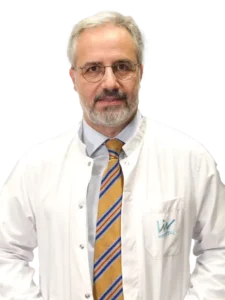
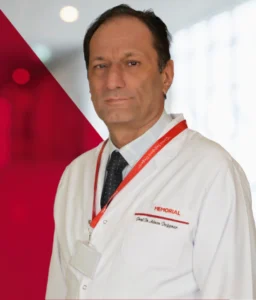
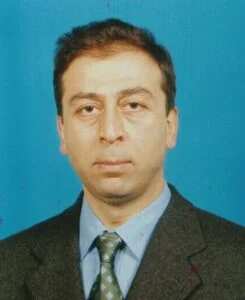
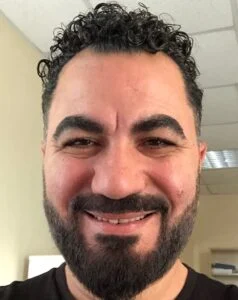
NEUROSURGERY · TEAM

Professors you get direct access to

Professors and senior specialists at Memorial, Liv and Akdeniz. Direct contact, no middlemen.
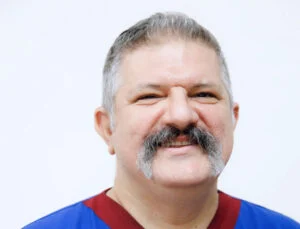
Doç. Dr. Hakan Çakın
Associate professor at the Department of Neurosurgery
Akdeniz University Hospital, Antalya
Prof. Dr. Ebru Apaydın Doğan
Professor at the Department of Neurology
Akdeniz University Hospital, Antalya
Prof. Dr. Serdar Kahraman
Head of the Department of Neurosurgery
Liv Hospital Ulus, Istanbul
Prof. Dr. Şenay Haspolat
Professor and Head of the Paediatric Neurology Unit
Akdeniz University Hospital, Antalya
EÇ
Prof. Dr. Erhan Çelikoğlu
Neurosurgeon, Memorial Bahçelievler Hospital; former education supervisor of the neurosurgery training clinic at SBÜ Fatih Sultan Mehmet Training and Research Hospital
Memorial Bahçelievler Hospital
Doç. Dr. Mustafa Sakar
Associate Professor of Neurosurgery
Memorial Göztepe Hospital
Prof. Dr. Mustafa İbrahim Ziyal
Professor of Neurosurgery
Memorial Göztepe Hospital
Prof. Dr. Adnan Dağçınar
Professor of Neurosurgery
Memorial Göztepe Hospital
Prof. Dr. Mehmet Saim Kazan, MD
Professor of Neurosurgery, Head of Department
Akdeniz University Hospital
Prof. Dr. Murat Altaş, MD
Professor of Neurosurgery
Akdeniz University Hospital
Assoc. Prof. MD. Baran Yılmaz
Associate Professor of Neurosurgery
İSÜ Liv Hospital Bahçeşehir
Assoc. Prof. Dr. Akın Akakın, MD
Associate Professor of Neurosurgery
İSÜ Liv Hospital Bahçeşehir
Assoc. Prof. Dr. İdris Sertbaş, MD
Associate Professor of Neurosurgery
Liv Hospital Vadistanbul
Prof. Dr. Muhittin Emre Altunrende, MD
Professor of Neurosurgery
Liv Hospital Ulus
Prof. Dr. Mahmut Akyüz
Professor of Neurosurgery
Memorial Antalya Hospital
Cenk Ermol, MD
Cenk Ermol, MD
Specialist in Brain and Spinal Surgery
Memorial Antalya Hospital
Prof. Dr. K. Özenç Minareci
Professor of Interventional Neuroradiology
Liv Hospital Ulus / Vadistanbul, Istanbul
DIAGNOSTICS

Neuroimaging and work-up

MRI 3T with contrast, fMRI, DTI, cerebral angiography, video-EEG monitoring.

Brain MRI 3T
With contrast, diffusion-weighted sequences, perfusion.
1 day
fMRI and DTI
Mapping eloquent areas and tractography before awake surgery.
1 day
Cerebral angiography
Digital subtraction angiography for vascular malformations.
1 day
EEG video monitoring
Long-term in-patient monitoring for epilepsy 24/7.
3–7 days
Brain PET/CT
Tumour assessment, distinguishing recurrence from radiation effect.
1 day
Stereotactic biopsy
Minimally invasive sampling for histology.
1 day
PRICE SNAPSHOT

Neurosurgery pricing — Türkiye vs EU/USA

Minimum prices, for reference only. The final cost is calculated individually after the doctors review your records.

Procedure Türkiye EU / USA Savings
Brain tumour resection (craniotomy) from $15 000 $60 000 – 120 000 −78%
Stereotactic radiosurgery (1 session) from $4 500 $25 000 – 45 000 −80%
Gamma Knife (1 session) from $5 000 $30 000 – 50 000 −80%
Aneurysm coiling from $12 000 $45 000 – 80 000 −75%
Microdiscectomy (herniation) from $5 000 $25 000 – 50 000 −82%
Endoscopic pituitary surgery from $10 000 $40 000 – 70 000 −78%
The information on this page is for reference only and does not constitute a medical opinion.
Request a precise quote for my case
QUESTIONS

Frequently asked about Neurosurgery

What is awake craniotomy and when is it used instead of general anesthesia?
Awake craniotomy keeps the patient conscious during tumor resection so the surgeon can map speech, motor, and language areas in real time. It is used when the lesion sits in or near eloquent cortex — typically low-grade gliomas, insular tumors, and dominant-hemisphere lesions. Memorial and Liv perform awake mapping with intraoperative neuropsychological testing and 3T or intraoperative 1.5T MRI.
What is the 5-year survival rate for glioblastoma after surgery in Turkey?
Glioblastoma (WHO grade 4) 5-year survival is 5-10% globally and depends on extent of resection, MGMT methylation status, and Stupp protocol completion (radiotherapy + temozolomide). In clinical trials, patients with MGMT-methylated tumors who complete the Stupp protocol have a median overall survival of around 2 years; individual prognosis depends on age, performance status and extent of resection.
Should I have spine surgery or another steroid injection first?
Surgery is indicated when you have progressive neurological deficit (foot drop, weakness, cauda equina), pain refractory to 6-12 weeks of conservative care, or MRI showing clear nerve-root or spinal-cord compression. If pain is purely axial without radiculopathy, repeat steroid injection or RFA is usually preferred. We arrange a free MDT review before recommending surgery.
Should an intracranial aneurysm be treated with coiling or clipping?
Choice depends on aneurysm location, neck width, and patient age. Endovascular coiling (or flow diversion) is preferred for posterior circulation and narrow-neck aneurysms; microsurgical clipping is preferred for MCA bifurcation aneurysms and patients under 50 with wide-neck morphology. ISAT trial data guides the decision, and both options are available at Memorial and Akdeniz.
How is pediatric Chiari malformation treated?
Symptomatic Chiari I (occipital headache, syringomyelia, sleep apnea) is treated with posterior fossa decompression with or without duraplasty, typically as a 2-3 hour procedure. Hospital stay is 3-4 days and most children return to school in 3-4 weeks. Pediatric neurosurgery teams at Akdeniz and Memorial perform Chiari decompression.
When can I return to work after lumbar fusion surgery?
Desk work resumes at 4-6 weeks, light manual work at 8-12 weeks, and heavy lifting (>10 kg) at 4-6 months once CT confirms bony fusion. Single-level minimally invasive TLIF allows earlier return than open multi-level fusion. A lumbar corset is worn for 6-8 weeks during the day.
How does a second-opinion review for brain or spine surgery work?
You upload MRI/CT (DICOM) and a clinical summary through our secure portal. A neurosurgeon gives a first response within 48 hours; a full written report from an MDT of neurosurgeon, neuro-radiologist, and neuro-oncologist (when relevant) usually follows within 5-7 working days, covering diagnosis, surgical candidacy, alternatives, and quoted price. The second opinion is free of charge and does not commit you to treatment.
REQUEST

Tell me about your case — I’ll read it personally.

Fill in the short form on the consultation page — diagnosis, preferred timing, attached records. We assemble a tumour board for your case and reply within 4 hours.

Open the consultation form
  • Reply within 4 hours during business hours
  • Confidentiality guaranteed
  • Coordinator-translator inside the doctor’s office
  • Tumour board of 2–3 professors within 72 hours